
NEWS
The Fitbit Edge Swaps Its Battery and Drops Wallet
Google’s $179.99 Fitbit Edge is the first Fitbit with a replaceable battery, yet it ships without Wallet and puts blood pressure trends behind Premium.

Google opened preorders on October 12 for the Fitbit Edge, a $179.99 tracker with a replaceable battery and no tap-to-pay chip. The band goes on sale October 27. It is the first screen Fitbit since the Charge 6 in 2023, and it works with Android 11 and iOS 16.4 phones through the Google Health app.
Google is pitching a longer-lived band you can service. The same launch leaves Google Wallet on the older Charge 6, delays turn-by-turn Maps, and puts the new blood pressure and insulin resistance reports on a paid plan.
A Repairable Fitbit That Discourages DIY
Product leads Ryan Krems and Noah Presler put the Edge between Pixel Watch and the screenless Fitbit Air. They also used the line Google wants shoppers to remember.
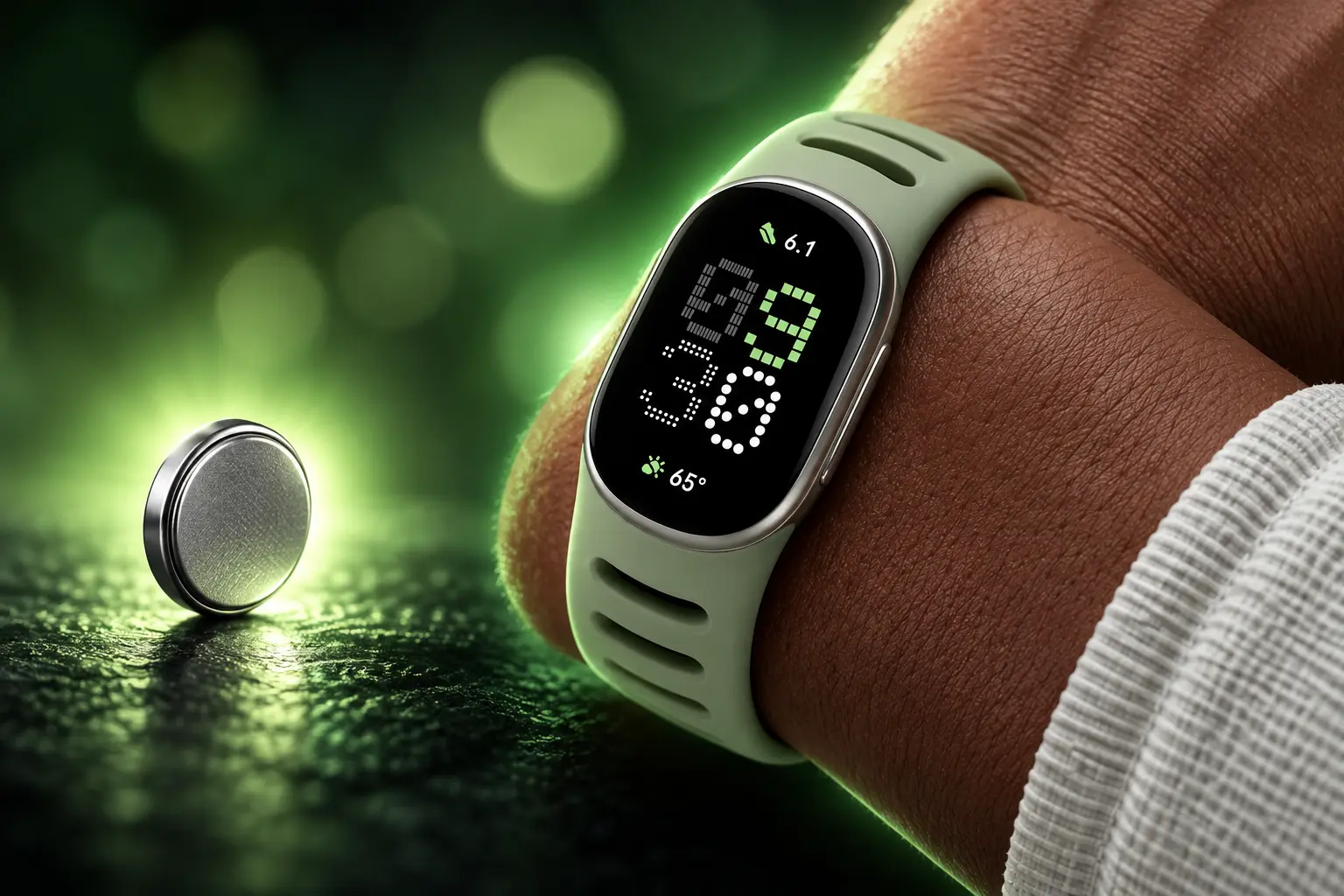
It’s also our first repairable fitness tracker, featuring an internal modular architecture and a replaceable battery designed to extend the life of your device.
Ryan Krems and Noah Presler, Product Leads, Google Wearables
That sentence is doing a lot of work. Fitness bands usually die when the cell fades, because the case is glued shut. Google says the Edge is built so the pack can come out. The Google Store even lists a first repairable fitness tracker as the hardware story, not a footnote.
The setup guide is cooler about it. Repair options vary by region. Self service is not recommended unless you are an adult with the technical skill to open electronics safely. If you still open it, you assume the risk. There is no published spare-battery price, and no public teardown yet that shows how many screws sit under that aluminum shell.
WHAT WE KNOW
- Google’s claim: The Edge has a modular interior and a battery meant to extend the life of the device.
- The warning: The Google Health setup guide says DIY repair is for skilled adults who accept the risk.
- The cell: Store specs list a 65mAh pack that weighs 1.35 g.
- The charger: The Edge uses the Fitbit Air’s magnetic USB-C cable; a 30W adapter is sold separately.
WHAT IS UNCONFIRMED
- Parts price: Google has not listed a replacement cell or a shop labor fee.
- Independent repair: It is not clear which regions will sell parts to outside shops.
- Water seal after a swap: The band is rated 5 ATM and IP68 as it leaves the factory; Google has not said what a home repair does to that rating.
So the marketing word is user-replaceable. The practical path, until parts and a guide show up, is still a service counter.
Wearables Already Won an EU Battery Exemption
The repair pitch lands three months after Brussels made that kind of redesign optional for this product class. On July 14, 2026, the European Commission adopted a delegated act that added wearables to the list of products whose batteries need only be swapped by independent professionals, not by the owner at the kitchen table.
The general rule in Regulation (EU) 2023/1542 still says portable batteries in new products must be removable by the end user from February 18, 2027. The July act carved out smartwatches, fitness trackers, and other small sealed devices where user access could hurt safety, durability, or water resistance. The Commission’s own news note says it fitness trackers from the consumer-swap rule in that round of exemptions.
Google did not say the Edge exists because of that file. It also did not have to ship a DIY pack to sell the band in Europe. It chose a modular story, then told owners not to open the case unless they know what they are doing. Independent shops still matter under the EU text. Owners waiting for a $20 hatch they can pop with a coin will wait longer.
Google Wallet and the Missing Chip
The Charge 6 could pay at a terminal. The Edge cannot. There is no NFC hardware, so Google Wallet is not on the spec sheet. That is the cut Charge 6 owners keep circling, and it is the one Google’s launch film does not mention.
Introducing Fitbit Edge, our next-generation health and fitness tracker. Featuring sleek design, a brilliant display, glanceable fitness guidance and advanced health tracking to support your wellness goals. It's designed for both active lifestyles and everyday wear. pic.twitter.com/DQj21AKSNQ
— Google (@Google) October 12, 2026
Rick Osterloh, Google’s SVP of Platforms and Devices, called the Edge a lightweight tracker with week-long battery life and a range of bands, paired with the Google Health Coach. He did not mention payments. People who actually used the Charge 6 as a wallet are being asked to spend $179.99 and then take their phone out at the register anyway.
Other daily tools move in mixed directions. Music controls now cover whatever is playing on the paired phone; the Charge 6 was tied to YouTube Music. Notifications land on the wrist, and Android phones can send preset quick replies. There is no microphone and no speaker, so calls stay on the phone. Google Maps turn-by-turn is due later in 2026, not in the box on October 27.
Google Wallet on a $160 band was never a mass habit. For the people who built a routine around it, there is no Google tracker in this new stack that keeps the chip. Pixel Watch still does payments. This band does not.
Seven Days on a 65mAh Cell
The hardware Google did ship is a 17.7 g aluminum capsule, 39.22 by 25.56 mm across and 11.58 mm thick, with a 1.34-inch AMOLED panel. Google says that screen offers 46% more viewing area than earlier Fitbit trackers and that the case is 45% lighter than an Apple Watch Series 12. A physical side button replaces the Charge 6’s haptic nub. Four finishes ship with Active bands: Matte Black with Obsidian, Polished Silver with Fog, Satin Pyrite with Olive, and Champagne Gold with Canyon.
Store specs list a replaceable 65mAh lithium-ion battery rated at up to 7 days. Always-on display cuts that to up to 2 days. A low pack can take a 5-minute charge for up to a day of use. A full charge takes about 90 minutes, 30 minutes faster than the Charge 6, using the in-box USB-C cable and a 30W adapter sold separately. The cell uses 100% recycled cobalt and, Google says, 100% recycled lithium for the first time.
On the run, the Edge has its own GPS and Galileo chipset. Google says tracking is up to 40% more accurate than earlier Fitbit generations, helped by nano-molded aluminum around the antenna. An altimeter counts floors and elevation. Optical heart rate, SpO2, a far-field skin temperature sensor, and electrical sensors for an ECG app sit on the back. The ECG app is limited to select countries and is not meant for people under 22.
You can start more than 50 exercise modes on the wrist. Automatic detection, which Google describes as Gemini-powered, can tag up to 100 workout types. A same-day Google Health post says the model expanded from 10 activities, uses location and history when you allow it, and logs a bout that hits a 15-minute default with a raised heart rate. Google’s offline tests claim nearly 2x more accurate detections and more than half as many missed workouts.
EDGE VERSUS CHARGE 6
| Feature | Fitbit Edge | Fitbit Charge 6 |
|---|---|---|
| List price | $179.99 | $159.95 |
| Display | 1.34-inch AMOLED | 1.04-inch |
| GPS | Built-in, up to 40% more accurate (Google) | Built-in |
| Google Wallet | No NFC | Yes |
| Music | Any playback on the phone | YouTube Music |
| Rated battery | Up to 7 days; up to 2 days with always-on | Up to 7 days |
| Full charge | About 90 minutes | About 2 hours |
| Battery swap | Designed in; DIY discouraged | Sealed |
| Side control | Physical button | Haptic nub |
The Edge is water-resistant to 50 meters with 5 ATM and IP68 ratings. Google still says it is not waterproof. Storage holds 7 days of minute-by-minute motion and 30 days of daily totals on 64MB of flash, behind an Ambiq AP5 chip and Bluetooth 5.4.
What $9.99 a Month Unlocks on the Wrist
Buyers get three months of Google Health Premium. After that, the plan is Google Health Premium from $9.99 a month. The free Google Health app still logs steps, sleep, heart rate, and workouts. The features Google used to make the Edge sound like a junior Pixel Watch sit on the paid side for this hardware.
PREMIUM ON FITBIT EDGE
- Health Coach: A Gemini coach that reads sleep, activity, and wellness data and talks in the app, not as a voice on the band.
- Blood pressure trends: A monthly report, not a clinical cuff reading, if you meet the wear days Google sets.
- Insulin resistance trends: Another monthly wellness report, not a glucose number and not a diabetes screen.
- The catch on hardware: Pixel Watch 3, 4, and 5 already get those Guardian trend tools without this extra fee.
Andy Abramson, head of product for Google Health, said Health Guardian features later in October reach Fitbit Air and Fitbit Edge for Premium subscribers. You set up the trends in the app. If you wore the band enough the prior month, a report arrives at the start of the next one. Google’s own footnotes say the tools are not for diagnosis, not for pregnancy, and not for changing medication.
That split is the quiet price of the $179.99 sticker. Pixel Watch owners get the new monthly reports with the watch. Edge and Air owners get the sensors in the hardware, then a paywall on the interpretation. The three-month trial blunts that on day one. It does not change the structure.
After Fitbit Became Google Health
On May 19, 2026, the Fitbit app became the Google Health app. Premium changed names with it. The Edge does not run Wear OS. It uses a tile interface borrowed from Pixel Watch 5, with complications for steps, weather, sleep, and heart rate, and it needs a Google account.
Google also said a phone can hold more than one of these devices at once. A Fitbit Air, a Fitbit Edge, and a Pixel Watch 5 can live on the same Google Health login, so you can sleep in the screenless band and run in the Edge without rebuilding the account. That pairing was not possible with two Fitbits before.
The Fitbit Air remains $99.99 and has no screen and no onboard GPS. Pixel Watch 5 starts at $349.99 and is the one that still behaves like a watch, including payments. The Charge 6 is still on the Google Store at $99.95, marked down from its $159.95 list. The Edge sits $20 above that list. Google is putting new tracker work into Air, Edge, and Pixel Watch. Charge 6 stock is the leftover path for anyone who wants Wallet on a band.
A Stephen Curry Special Edition is $219.99, $40 above the standard Edge. Google, which lists Curry as a Performance Advisor, gave it rye tones, game-day orange, and a water-repellent, moisture-wicking band. Extra bands in Active Sport, Performance Loop, Magnet, and Metal Links styles are sold around the standard four colorways.
Retail Stock Arrives on October 27
Preorders opened October 12 on the Google Store and at retail partners. Google says the Edge will be on shelves October 27, 15 days later. Financing on the store is listed at $15.00 a month over 12 months. The box holds the tracker, small and large Active bands, a USB-C fast-charge cable, and a quick-start guide. Google’s own wear note is fussy in a useful way: the new band latch needs a firm push until it clicks, or the capsule can fall off.
THE EDGE CALENDAR
- May 19, 2026: The Fitbit app becomes the Google Health app, and Fitbit Premium becomes Google Health Premium.
- July 14, 2026: The European Commission adds wearables to the professional-only battery-swap derogation.
- October 12, 2026: Google announces Fitbit Edge and opens preorders at $179.99.
- Later in October 2026: Health Guardian trend reports and the broader automatic workout model reach Edge and Air for Premium subscribers.
- October 27, 2026: Retail sale date for the Edge.
- Later in 2026: Google Maps turn-by-turn is scheduled to reach the band.
The first Fitbit you can theoretically keep past a tired cell still asks you to give up wrist pay, wait on Maps, and subscribe if you want the monthly blood pressure and insulin notes that Google is using to sell the thing. Spare batteries, and a repair path that matches the brochure, are not in the box on October 27.
Disclaimer: This article is news reporting on a consumer fitness tracker and is for information only. It is not medical advice, a diagnosis, or a recommendation to use blood pressure trends, insulin resistance trends, ECG readings, or any other on-wrist metric to change treatment. Speak with a licensed physician or other qualified clinician before you act on wellness data from a wearable, especially if you are pregnant, take medication, or have a heart or metabolic condition. Prices, features, repair options, and subscription terms are those published by Google and the European Commission as of the dates named above and may change.

Cook Hands Democrats the House as Crypto’s Bill Stays Dead

Wicker’s Broken Bed Was the Short Story’s Punch Line

Nvidia’s $500 Billion Financing Plan Draws a $180 Sell

Maserati Bets the Grecale V6 Can Fill Porsche’s Gap

EV Cable Theft Follows the Old Railway Copper Playbook

Aramco Crash Kills 14 Two Days After Oil Restart

Salah Captained Egypt to Their First World Cup Win

Zelda’s 40th Switch 2 Ships Without a Zelda Game

Apple Labor Day Deals Hide June’s Memory Price Hike

Palworld 1.0.4 Adds Palpedia Search After the 1.0 Launch
-
 BUSINESS4 months ago
Aramco Crash Kills 14 Two Days After Oil Restart
-
 NEWS5 months ago
Salah Captained Egypt to Their First World Cup Win
-
 GAMING2 months ago
Zelda’s 40th Switch 2 Ships Without a Zelda Game
-
 NEWS2 months ago
Apple Labor Day Deals Hide June’s Memory Price Hike
-
 GAMING2 months ago
Palworld 1.0.4 Adds Palpedia Search After the 1.0 Launch
-

 NEWS4 months ago
El Niño Puts Israel’s Needed Winter Rain on a Flood Clock
-

 BUSINESS8 months ago
BAE’s 60-Year Saudi Franchise Now Runs Through Taif
-

 BUSINESS8 months ago
Egypt Bets EGP 638 Billion Can Open Sinai to Investors