
ENTERTAINMENT
Caesarion: The Last Pharaoh and the End of Ptolemaic Egypt
Caesarion was 17 when Octavian ordered his death in Alexandria in August 30 BC, ending the Ptolemaic dynasty that had ruled Egypt for nearly 300 years.

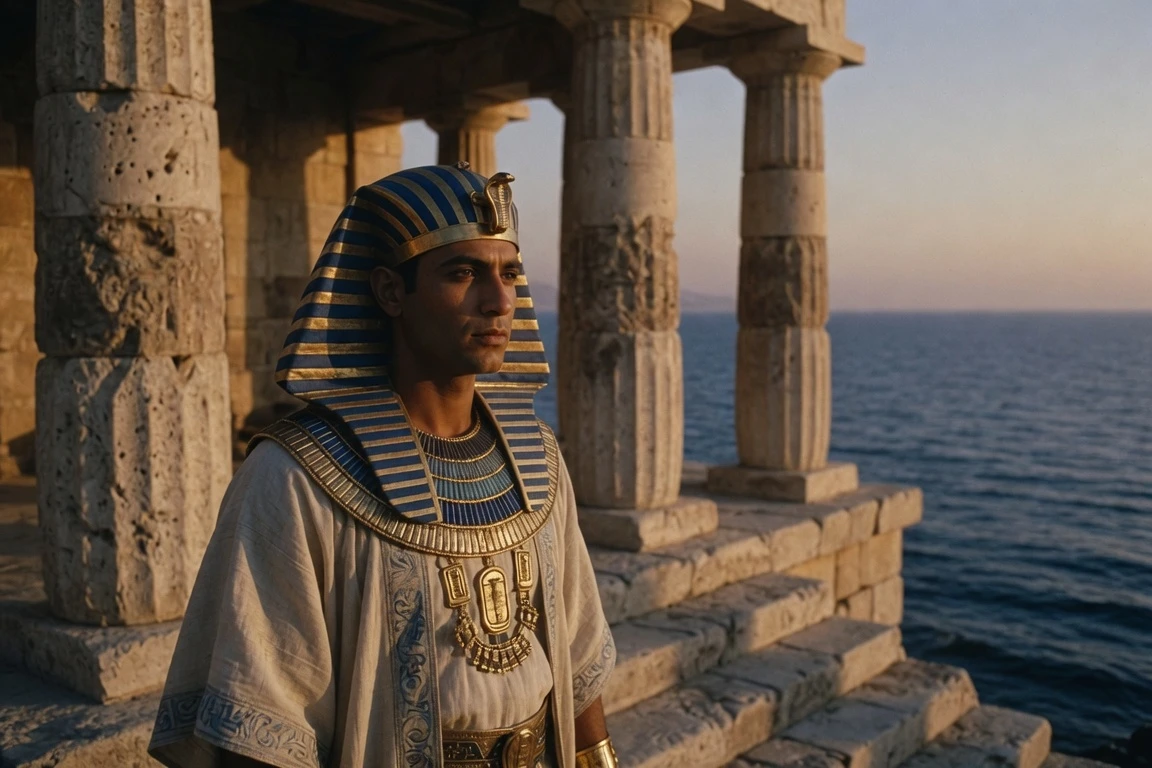
Caesarion was the only known biological son of Julius Caesar and Cleopatra VII. He was executed in Alexandria in late August 30 BC, ending the Ptolemaic dynasty that had ruled Egypt for nearly 300 years. Born in June 47 BC and given the formal name Ptolemy XV Caesar, he was nicknamed ‘Little Caesar’ by the people of Alexandria, and that name has followed him through history. The boy was the last sovereign member of the Ptolemaic line and the last pharaoh of Ancient Egypt, closing more than 3,000 years of traditional kingship. His death came after Octavian entered Alexandria on 1 August and Antony and Cleopatra died on 12 August.
His short life had been a political instrument from birth. Cleopatra built a cult around him that paired mother and son as Isis and Horus, and made him co-ruler of Egypt when he was three. In 34 BC Mark Antony proclaimed him King of Kings in front of a crowd in Alexandria, a title Antony had reserved for Caesarion alone.
Caesarion, the Boy Built to Be a King
Cleopatra VII gave birth to a son in Alexandria in June 47 BC. She named him Ptolemy XV Caesar and presented him to the court as the son of Julius Caesar. Caesar himself never legally recognised the boy, and his supporter Gaius Oppius later wrote a pamphlet arguing the Roman dictator could not have fathered him. Caesar’s own will, opened after his assassination in 44 BC, omitted the child entirely; Caesarion’s biography and key dates detail the omission.
Whether Caesar was the biological father has never been settled. Mark Antony later told the Roman Senate that Caesar had privately acknowledged the boy to his closest associates, and some ancient sources noted a physical resemblance between the two. Caesarion carried his father’s name in Greek, ‘Kaisar,’ and the Alexandrians had shortened it to Kaisarion, ‘Little Caesar.’ Cleopatra took the infant to Rome in late 46 BC at Caesar’s invitation, but Caesar did not publicly acknowledge him as his own. The boy was alive, he carried Caesar’s name, and his mother could put him forward as Rome’s heir whenever it suited her.
Caesarion was born into a kingdom already in its third century of Macedonian-Greek rule, and into a family that had been intermarrying with Romans for two generations. By the time he died, both the dynasty that built him and the kingdom he had nominally co-ruled were gone; he was 16 or 17, and he died shortly after his mother. The Ptolemaic dynasty had ruled Egypt for nearly 300 years by the time of his death, the Ptolemaic dynasty’s three centuries of Egyptian rule documented from 305 BC onward.
- Born: June 47 BC, Alexandria
- Named: Ptolemy XV Caesar
- Made co-ruler: 2 September 44 BC, at age three
- Proclaimed King of Kings: Donations of Alexandria, 34 BC, at age 14
- Executed: late August 30 BC, in Alexandria, aged 16 or 17
Caesar’s Will Wrote Him Out
When Julius Caesar was assassinated on 15 March 44 BC, his will named a different heir. The document Caesar left behind posthumously adopted his grandnephew Octavian and made the eighteen-year-old his primary heir, leaving Caesarion out entirely. Cleopatra and the boy were still in Rome at the time. They were living as official guests in Caesar’s private villa across the Tiber. Cleopatra returned to Alexandria with the two-year-old Caesarion in mid-April 44 BC. Within five months, Caesarion had been made co-ruler of Egypt.
From 44 BC onward, two men would each claim to be Caesar’s heir. Caesar’s Roman adoption gave Octavian a legal claim on Caesar’s name, his property, and the political inheritance that came with being Caesar’s son. Cleopatra’s Egyptian claim gave Caesarion no parallel standing in Roman law. Caesarion had been written out of the will of the man whose name he carried, and his mother was the only one in Egypt who could argue otherwise.
When Antony Crowned Caesarion King of Kings
Mark Antony celebrated a triumphal return to Alexandria in September 34 BC after his Parthian campaign. The ceremony that followed has gone down in history as the Donations of Alexandria.
Cleopatra and Antony sat on golden thrones on a silver platform at the city’s Gymnasium, with their four children on lower thrones beside them. Antony proclaimed Caesarion, then 14, to be the son of the deified Julius Caesar. Cleopatra was hailed as queen of kings; Caesarion was hailed as King of Kings. Octavian, watching from Rome, took the ceremony as a sign that Antony intended his extended family to rule the civilised world.
Caesarion’s half-brothers and sister each received a kingdom at the Donations. Alexander Helios took Armenia and the territory beyond the Euphrates, Cleopatra Selene took Cyrenaica and Libya, and Ptolemy Philadelphus took Syria and Cilicia. Caesarion himself kept Egypt and was granted the additional title Divi filius, son of a god. The four kingdoms together stretched from Cyrenaica in the west to the Euphrates in the east, with the symbolic centre on Caesarion. For the longer Greek-Egyptian story behind this settlement, see how Greek and Egyptian cultures intertwined before Alexander.
Octavian seized Antony’s will from the Temple of the Vestal Virgins and used its contents to turn Roman opinion against Antony and Cleopatra. The Roman Senate declared war on Cleopatra in 32 BC, two years before Octavian’s forces would actually land in Egypt.
| Basis of claim | Octavian | Caesarion |
|---|---|---|
| Relation to Julius Caesar | Adopted son, named in will | Biological son (claimed), not in will |
| Roman citizenship | Yes | No |
| Standing in Roman law | Primary heir of Caesar’s estate and name | No formal standing |
| Status after 34 BC | Master of Rome’s western provinces | Proclaimed King of Kings in Alexandria |
| Outcome in 30 BC | Consolidating power as Augustus | In hiding, then executed |
After Actium, the Year Egypt Stopped Belonging to Itself
The naval Battle of Actium was fought on 2 September 31 BC, off the western coast of Greece. Octavian, with his admiral Marcus Agrippa, met the combined fleets of Antony and Cleopatra in the Ionian Sea. The engagement was a disaster for the Egyptian side: Cleopatra broke from the line with around sixty of her ships and fled toward Egypt, and Antony followed her. The defeat left Antony and Cleopatra without a fleet and Octavian in control of the eastern Mediterranean. Within eleven months, both Antony and Cleopatra would be dead.
Octavian invaded Egypt in the summer of 30 BC and entered Alexandria on 1 August. Antony and Cleopatra died on 12 August 30 BC, traditionally said by suicide. Caesarion, who had been sent away for safety, was now the only member of the Ptolemaic line still alive.
Cleopatra had been preparing for this moment. After Actium she appears to have groomed Caesarion to take over as sole ruler without her, and she may have intended to go into exile with Antony, the way Lepidus had been allowed to retire after his own fall from power. Plutarch records that Cleopatra sent Caesarion, then 17, with much treasure toward India by way of Ethiopia, possibly via the Red Sea port of Berenice on Egypt’s eastern coast. The plan was to keep him out of Octavian’s reach until a deal could be struck.
Rhodon and the Lure Back to Alexandria
Caesarion did not make it to India. Plutarch reports that Rhodon, another of Caesarion’s tutors, persuaded the boy to come back to Alexandria on the ground that Octavian was inviting him to take the kingdom of Egypt. Caesarion turned around at Berenice or shortly after and returned to Alexandria, where Octavian was waiting.
What Rhodon hoped to gain is not recorded. Plutarch treats him as a second tutor alongside Theodorus, and the contrast is clear: one tutor had accompanied the flight, a second tutor lured the boy back. He was 17, dependent on the adults around him, and the most consequential adult in his life had just killed herself. Plutarch also reports that Caesarion’s three older half-siblings were paraded in chains in Octavian’s Roman triumph. Caesarion was never sent to Rome or anywhere else. The Greek-speaking court that had raised him is described in the Greek community that built Alexandria.
Too Many Caesars Is Not Good
Octavian’s decision to have Caesarion killed is recorded in Plutarch. The Greek biographer reports that Octavian settled the question by following the advice of his companion Arius Didymus. The reasoning was delivered in a single sentence that doubled as a pun on Homer.
Too many Caesars is not good.
The line is attributed by Plutarch, in his Life of Antony, to Arius Didymus, a companion of Octavian who doubled as a popular philosopher of the day. The Greek, ouk agathon polukaisarie, plays on a line in the Iliad. Octavian had been adopted as Caesar’s son; Caesarion had been proclaimed Caesar’s true son. Both could not stand.
Caesarion was executed in Alexandria in late August 30 BC, possibly on 29 August, the date that marked the beginning of the Egyptian new year. He was 16 or 17, and the manner of his death is not recorded in surviving sources.
The final weeks of Ptolemaic Egypt, as far as they can be reconstructed from Plutarch and other ancient writers:
- 1 August 30 BC: Octavian enters Alexandria; Egypt is formally annexed to the Roman Republic.
- 12 August 30 BC: Mark Antony and Cleopatra die, traditionally said by suicide.
- Late August 30 BC (possibly 29 August): Caesarion is executed on Octavian’s order.
The execution is covered in detail at Caesarion’s flight to Berenice and Rhodon’s advice to return, the moment that handed him to Octavian.
What Caesarion’s Death Closed
The execution in late August 30 BC ended three things at once. First, the Ptolemaic dynasty: it had ruled Egypt since Ptolemy I took the throne in 305 BC and had lasted almost three centuries. Second, the unbroken tradition of pharaonic rule, which had run for more than 3,000 years from the early dynastic period to Caesarion’s nominal co-regency. Third, the political project Cleopatra had built around Caesarion, a Roman-Egyptian dynasty whose emblem was a boy who carried Caesar’s name. Within months, Egypt had been absorbed into the Roman Republic as a province, governed from Rome by an equestrian prefect and not by a Ptolemaic king.
Egypt’s new status under Augustus was exceptional among Roman provinces. The emperor kept direct personal control of the country, barred senators from setting foot in it without his permission, and used its grain harvest to feed the city of Rome. The Ptolemies’ Alexandria continued as the provincial capital, with its Library and its Lighthouse still standing. Cleopatra and Antony were buried together in the city that had been her dynasty’s seat since its founder Ptolemy I built it on the Mediterranean coast, but Caesarion was buried nowhere recorded.
Frequently Asked Questions
Who was Caesarion?
Caesarion was Cleopatra VII’s youngest child and her only son. Born in Alexandria in June 47 BC and given the formal name Ptolemy XV Caesar, he reigned as co-ruler of Egypt with his mother from September 44 BC until her death in August 30 BC, and was the last pharaoh of the Ptolemaic dynasty.
Was Caesarion really Julius Caesar’s son?
The question has never been settled. Caesar never officially recognised him as a son under Roman law, and his supporter Gaius Oppius wrote a pamphlet arguing Caesar could not have fathered him. Mark Antony later told the Roman Senate that Caesar had privately acknowledged the boy to his closest associates, and some ancient sources record a physical resemblance. Modern scholars treat the biological paternity as probable but not proven.
How old was Caesarion when he died?
Caesarion was 16 or 17 at his death. Born in June 47 BC and executed in Alexandria in late August 30 BC, possibly on 29 August, the date of the Egyptian new year, he had lived through 14 years of his mother’s reign and the last days of Ptolemaic Egypt.
Why did Octavian have Caesarion killed?
Octavian’s decision turned on Caesarion’s claim to be Julius Caesar’s true son, the same status Octavian held by adoption. Plutarch records that he followed the advice of his companion Arius Didymus, who gave the reasoning in a line that punned on Homer. With both Antony and Cleopatra dead by mid-August 30 BC, Caesarion was the only remaining rival claimant to Caesar’s name.
What did Caesarion’s death mean for Egypt?
Caesarion’s execution ended the Ptolemaic dynasty that had ruled Egypt for nearly 300 years and closed the longest unbroken tradition of kingship in the ancient Mediterranean. Egypt was annexed by the Roman Republic on 1 August 30 BC and administered as a personal possession of the emperor Augustus under an equestrian prefect. The country never returned to native pharaonic rule.
When did the Ptolemaic dynasty rule Egypt?
The Ptolemaic dynasty ruled Egypt from 305 BC, when Ptolemy I Soter took the throne after the death of Alexander the Great, until 30 BC. The dynasty’s reign lasted almost three centuries and produced fifteen rulers named Ptolemy, including Caesarion’s formal numbering as Ptolemy XV. All male rulers of the dynasty took the name Ptolemy, and all of them traced their line to Ptolemy I, one of Alexander the Great’s Macedonian generals.

Christa Pike Survived the Execution Tennessee Would Not Pause

Musk’s Oligarch Charge Hits a Queue of Three

Circle Puts USDC and EURC Into SAP Pay Workflows

Ring’s First Smart Lock Skips Home Wi-Fi for Sidewalk

GTA 6 Puts Cash Back on the Story Path

Aramco Crash Kills 14 Two Days After Oil Restart

Salah Captained Egypt to Their First World Cup Win

Apple Labor Day Deals Hide June’s Memory Price Hike

Zelda’s 40th Switch 2 Ships Without a Zelda Game

Palworld 1.0.4 Adds Palpedia Search After the 1.0 Launch
-
 BUSINESS3 months ago
Aramco Crash Kills 14 Two Days After Oil Restart
-
 NEWS4 months ago
Salah Captained Egypt to Their First World Cup Win
-
 NEWS1 month ago
Apple Labor Day Deals Hide June’s Memory Price Hike
-
 GAMING4 weeks ago
Zelda’s 40th Switch 2 Ships Without a Zelda Game
-
 GAMING4 weeks ago
Palworld 1.0.4 Adds Palpedia Search After the 1.0 Launch
-

 NEWS3 months ago
El Niño Puts Israel’s Needed Winter Rain on a Flood Clock
-

 ENTERTAINMENT1 month ago
King Charles Letter Keeps Harry and Meghan as Private Citizens
-

 ENTERTAINMENT3 months ago
A Thousand and One Drops Off Riyadh’s October Calendar