
GAMING
Mika Games Raises $10 Million to Bankroll Early Ad Tests
Flint Capital led a new $10 million round for Mika Games so early mobile studios can run paid tests before lenders will touch them.

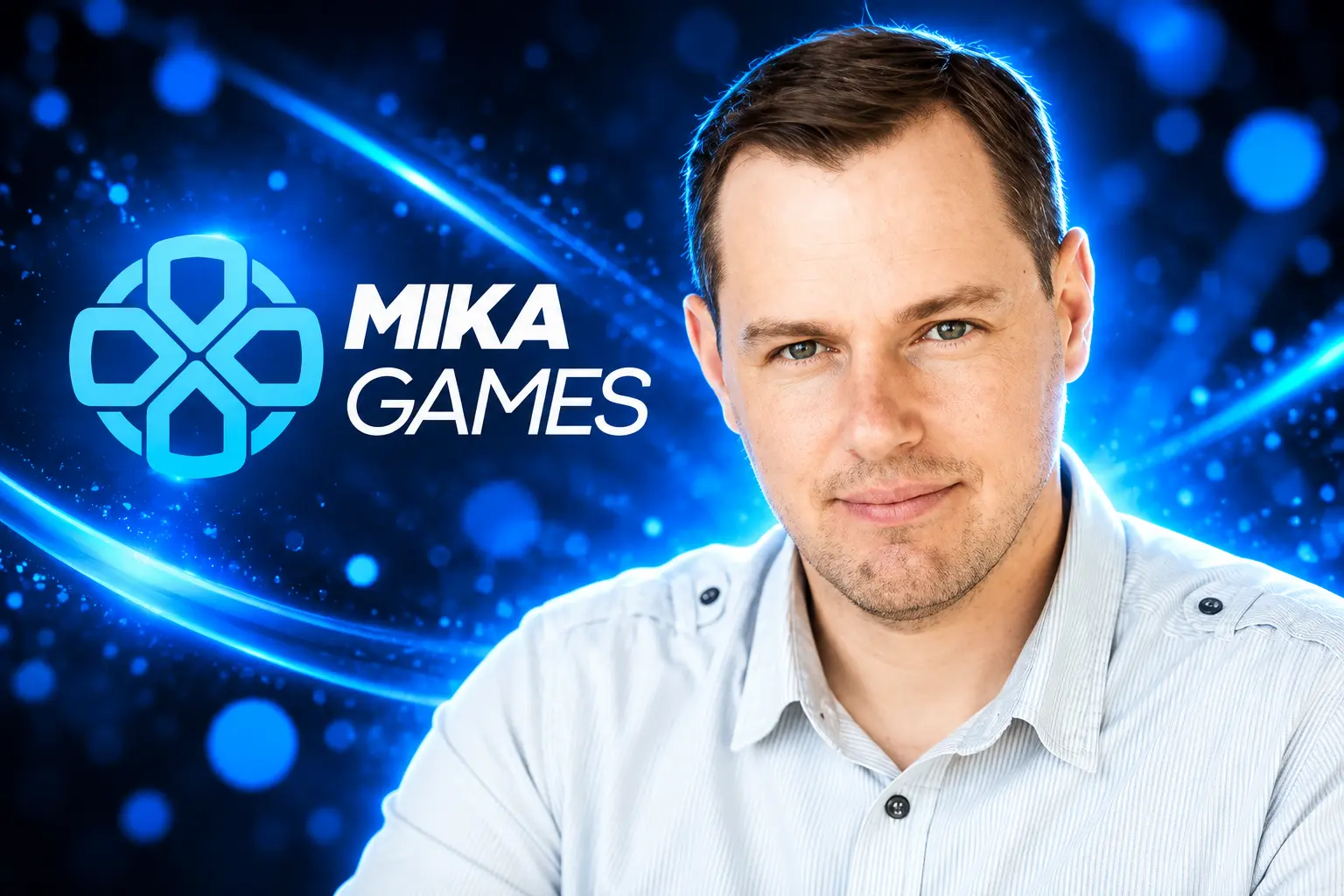
Mika Games, the Cyprus firm started by Wargaming co-founder Nick Katselapov, has raised $10 million to buy early mobile studios their first real ad tests. Flint Capital led the round, announced on October 21, 2026, with several new and existing investors. The cheque is meant to sit in front of a financing gate that now decides which games players ever see.
The Financing Loop That Keeps New Games Invisible
Early mobile teams can often finish a soft launch, a limited test in one market, without a large ad budget. They cannot easily borrow the money to go wider. Specialist user-acquisition lenders want proof that ads already pay back before they fund the next wave of ads, and the proof is expensive to create.
Katselapov described that loop in the new-round statement. Providers typically want several months of campaign history, $300,000 to $500,000 in prior marketing spend, and a predictable payback period. A studio that has not yet spent that much cannot produce the file. A studio that cannot produce the file cannot spend at the level the stores now reward.
Mika’s answer is a split cheque. Equity covers the team, the build, and studio costs. A separate pool pays for larger paid campaigns that measure retention, monetisation, and how long ads take to earn their money back. If those tests look clean, the studio can walk into a conventional UA facility with a track record in hand. If they do not, the firm can stop writing cheques before a full global launch.
That is a different job from making the game. It is a bet that paid tests, not store featuring or word of mouth, are now the filter for which new titles exist in public. Katselapov said as much when he launched the firm in 2023 and repeated a grim industry figure: 83% of mobile games fail within three years, often for lack of money and business support, and he wanted studios to reach $1 million in monthly revenue.
Flint Writes a Second $10 Million Check
The October round is new money, not a rerun of the launch. Mika closed a first $10 million on March 28, 2024, also led by Flint, and said then that it aimed to put $50 million into mobile studios over time. The 2026 cheque is a second raise at the same headline size, again with Flint in front.
Sergey Gribov, general partner at the Boston firm, framed the risk as a portfolio problem rather than a single-game gamble. He said spreading bets across teams and genres, and releasing cash in stages against cohort data, is how Flint sleeps at night while still owning equity early.
Investing before a game’s economics are proven can look risky when each studio is treated as a standalone bet. Mika changes that equation by spreading exposure across teams and genres, deploying capital in stages, and using product and cohort data to determine where to invest further. For Flint, this creates an attractive risk-return profile: diversification and disciplined capital allocation help manage the downside, while equity stakes acquired early preserve a meaningful upside in the studios that scale.
Sergey Gribov, General Partner, Flint Capital
Mika is still a small shop. The site lists Katselapov as founder and CEO, Anton Kolkovskiy as COO and investment director, and Nikita Samuylenkov as operations director. Advisors include Paul Wedgwood, co-founder of Splash Damage, Yury Mazanik, co-founder of Belka Games, and Matej Lancaric, a user-acquisition consultant at Two & a Half Gamers. Lancaric is the tell. The firm is hiring judgement on ads, not only on game feel.
On its own site, Mika offers hands-on support on design and marketing as well as capital, and it invites studios to send a deck or screenshots. It is still an equity investor. The marketing pool is the piece most UA lenders will not touch this early.
MIKA GAMES FROM LAUNCH TO THE NEW ROUND
- 2023: Katselapov founds Mika Games in Nicosia and sets a plan to back free-to-play studios at or before soft launch.
- March 28, 2024: Flint leads a first $10 million raise. First bets are Guli Games and Hot Siberians. The firm says it wants to put $50 million into studios.
- April 10, 2025: Mika puts $2 million into Agonalea Games, the Buenos Aires studio behind Punko.
- 2026: The portfolio grows from three studios to five, adding Bulberry Studio and LevelApp.
- October 21, 2026: Flint leads a second $10 million round for product work and larger paid tests.
Other cheques are landing in the same gap. AppQuantum, a mobile publisher, opened its own $10 million fund in September 2025 for early casual and midcore projects, with tickets from $250,000 to $1.5 million. The bottleneck is crowded because the hit rate on unpaid discovery is so low.
A Smaller Door Into the US Top 1,000
Katselapov’s case for the new money is a set of market figures, not a plea for indie goodwill. He tied rising ad costs to a shrinking list of new games that players actually find.
Global gaming user acquisition spend reached $25 billion in 2025, while ad impressions increased 20%. Meanwhile, the number of new titles in the US top 1,000 by downloads fell from about 200 in 2020 to just over 100 in 2024, and games more than two years old generated over 80% of revenue in most genres. Early marketing capital can therefore influence which games players ever get to discover. Our aim is to give new titles enough runway to reach players.
Nick Katselapov, founder and CEO, Mika Games
THE QUEUE NEW GAMES NOW FACE
- Ad budgets: AppsFlyer’s State of Gaming for Marketers 2026 put global gaming UA spend of $25 billion in 2025, up 3.8% from the year before.
- More ads, not more room: Ad impressions rose 20% and paid installs’ share of all installs rose 10%, so more campaigns chased the same players.
- US chart door: New titles in the US top 1,000 by downloads fell from about 200 in 2020 to just over 100 in 2024.
- Old games keep the till: Games more than two years old generated over 80% of revenue in most genres, in Katselapov’s telling.
AppsFlyer also found that nearly half of that UA money still went to the United States even as US budgets fell about 5%, while spend rose 29% in Turkey and 19% in India. China-headquartered publishers took 35% of gaming UA spend outside China, up 22% year on year. A $10 million European fund does not reverse that map. It only buys a handful of teams a ticket into the same auction those publishers already dominate.
The uncomfortable reading is that discovery has become an allocation of marketing credit. Studios that cannot buy the first tests never generate the numbers later lenders want, so they never appear in the charts that still mint hits. Mika is trying to underwrite that first appearance. It is also choosing, in practice, which five (and later, which next) games get a shot.
Five Studios Now Carry the Same Thesis
Mika went from three portfolio studios to five in 2026. The list now runs from merge-2 farms to competitive strategy, which is Gribov’s diversification point in concrete form. Each team is supposed to hold players for months, then survive a paid test big enough to show a payback curve.
THE FIVE STUDIOS MIKA IS BACKING
| Studio | Game | Genre |
|---|---|---|
| Guli Games | Legendale | 3D farming adventure |
| Hot Siberians | Burning City | Wasteland city builder |
| Agonalea Games | Punko | Roguelike tower defence |
| Bulberry Studio | Wargard | Deck-building real-time PvP |
| LevelApp | Merge Dale and Sea Bloom | Merge-2 farm and island |
Guli’s Legendale has reached more than 3 million players, according to Mika. Agonalea’s Punko has passed 500,000 downloads. Those two figures are the only public traction numbers the firm attached to the new round. Mika’s site also lists Adventure Lands from Guli, an island simulator with farming, renovation, puzzles, and exploration, and Burning City from Hot Siberians, a scavenger-city game. It does not publish spend, retention, or payback for any of them.
Bulberry’s Wargard mixes deck building with direct troop control in player-versus-player fights, a hardcore bet next to LevelApp’s merge-2 farms. In 2025, when Mika put $2 million into Agonalea, Katselapov argued that hybrid-casual could sit between cheap hyper-casual installs and mid-core campaigns whose cost per install often ran past $10 and sometimes $30. Wargard will test whether that more expensive end of the board can still be financed from a seed-stage balance sheet.
None of this yet proves the model. Three million players and half a million downloads are reach, not a published return on ad spend. The new capital is supposed to turn those live games, and the two 2026 additions, into files a later lender can underwrite. Until those files exist, the portfolio is still a collection of soft-launch stories.
What Specialist UA Lenders Demand First
The market Mika is stepping around already has a name: user-acquisition financing, or cohort financing. It is usually non-dilutive. A lender covers a slice of Meta, Google, AppLovin, or TikTok spend and takes repayment from the revenue those specific users generate. The whole product only works if the last campaigns already look like the next ones.
THE BAR BEFORE UA CREDIT
- Mika’s version of the gate: Several months of campaign history, $300,000 to $500,000 already spent on ads, and a payback period a lender can model.
- A financing shop’s version: PvX Partners describes typical candidates as studios with six months of cohort history at scale, generally around $100,000 in monthly spend, with curves that repeat.
- Why the bars differ: Prior spend of $300,000 to $500,000 is a cash-outlay test. A $100,000 monthly run-rate is an operating-scale test. A studio can fail one and still miss the other.
- The cash drain: PvX also notes that many mobile studios already put 50% to 70% of net revenue back into paid UA, which is why they want credit instead of more equity.
Mika is doing the opposite trade. It takes equity early, when the game’s economics are still a guess, and it advances marketing cash that a cohort lender would refuse. That can be cheaper for a founder than signing a publisher who takes the product, or it can be more expensive once dilution and any repayment terms on the ad pool are stacked. Those terms are not in the public round materials, so the comparison with a publisher deal or a Braavo-style facility cannot be finished from the announcement alone.
There is a second hole. A test that looks healthy at a few hundred thousand dollars of spend can break when bids rise, creatives fatigue, or the audience shifts from early adopters to colder users. Flint’s staged model is an attempt to catch that break. It is not a guarantee that a clean soft-launch ROAS will survive a national campaign. Anyone treating Mika as a skip-the-line pass for unproven games is reading more into the round than Gribov actually said.
Paid Traffic Now Buys Most of the Queue
The cost side of Katselapov’s argument shows up in measurement-firm benchmarks. Adjust’s 2026 gaming figures put a global gaming cost per install of $0.56, up 30% year on year, with North America at $1.68 (up 31%) and Europe at $0.53 (up 47%). Those are blended averages, not what a mid-core strategy title pays in the United States, but the direction is the same: each extra player costs more than the last vintage.
Adjust also recorded the paid-to-organic ratio in gaming jumping from 2.07 to 3.33. Paid traffic is no longer a booster around a large organic core. It is the core. AppsFlyer’s 10% rise in paid-install share and 20% rise in impressions describe the same squeeze from the other end: more ads, more paid installs, not more open chart slots for a game that never buys a user.
That is the second-order effect of a $10 million round this small. It will not move global UA prices. It can decide whether Legendale, Punko, Wargard, Merge Dale, or Burning City get a measured shot at those prices, and whether two more unknown teams join that list. For the studios left outside, the old path, ship it and hope the store features you, is the path that produced just over 100 new names in the US top 1,000.
The money will now go into product work and into campaigns large enough to mint, or kill, a payback curve. If the curves hold, later lenders can take over and Mika keeps the equity. If they do not, the firm will have spent a slice of $10 million to learn that in public, which is a dear way to find out, and still cheaper than scaling a game the market cannot see.

Cook Hands Democrats the House as Crypto’s Bill Stays Dead

Wicker’s Broken Bed Was the Short Story’s Punch Line

Nvidia’s $500 Billion Financing Plan Draws a $180 Sell

Maserati Bets the Grecale V6 Can Fill Porsche’s Gap

EV Cable Theft Follows the Old Railway Copper Playbook

Aramco Crash Kills 14 Two Days After Oil Restart

Salah Captained Egypt to Their First World Cup Win

Zelda’s 40th Switch 2 Ships Without a Zelda Game

Apple Labor Day Deals Hide June’s Memory Price Hike

Palworld 1.0.4 Adds Palpedia Search After the 1.0 Launch
-
 BUSINESS4 months ago
Aramco Crash Kills 14 Two Days After Oil Restart
-
 NEWS5 months ago
Salah Captained Egypt to Their First World Cup Win
-
 GAMING2 months ago
Zelda’s 40th Switch 2 Ships Without a Zelda Game
-
 NEWS2 months ago
Apple Labor Day Deals Hide June’s Memory Price Hike
-
 GAMING2 months ago
Palworld 1.0.4 Adds Palpedia Search After the 1.0 Launch
-

 NEWS4 months ago
El Niño Puts Israel’s Needed Winter Rain on a Flood Clock
-

 BUSINESS8 months ago
BAE’s 60-Year Saudi Franchise Now Runs Through Taif
-

 BUSINESS8 months ago
Egypt Bets EGP 638 Billion Can Open Sinai to Investors