
NEWS
Phantom Opens Kalshi Trading While Courts Fence Off Sports
Phantom is piping U.S. users into Kalshi under a CFTC no-action letter, even as appeals courts let states treat Kalshi sports contracts as gambling.

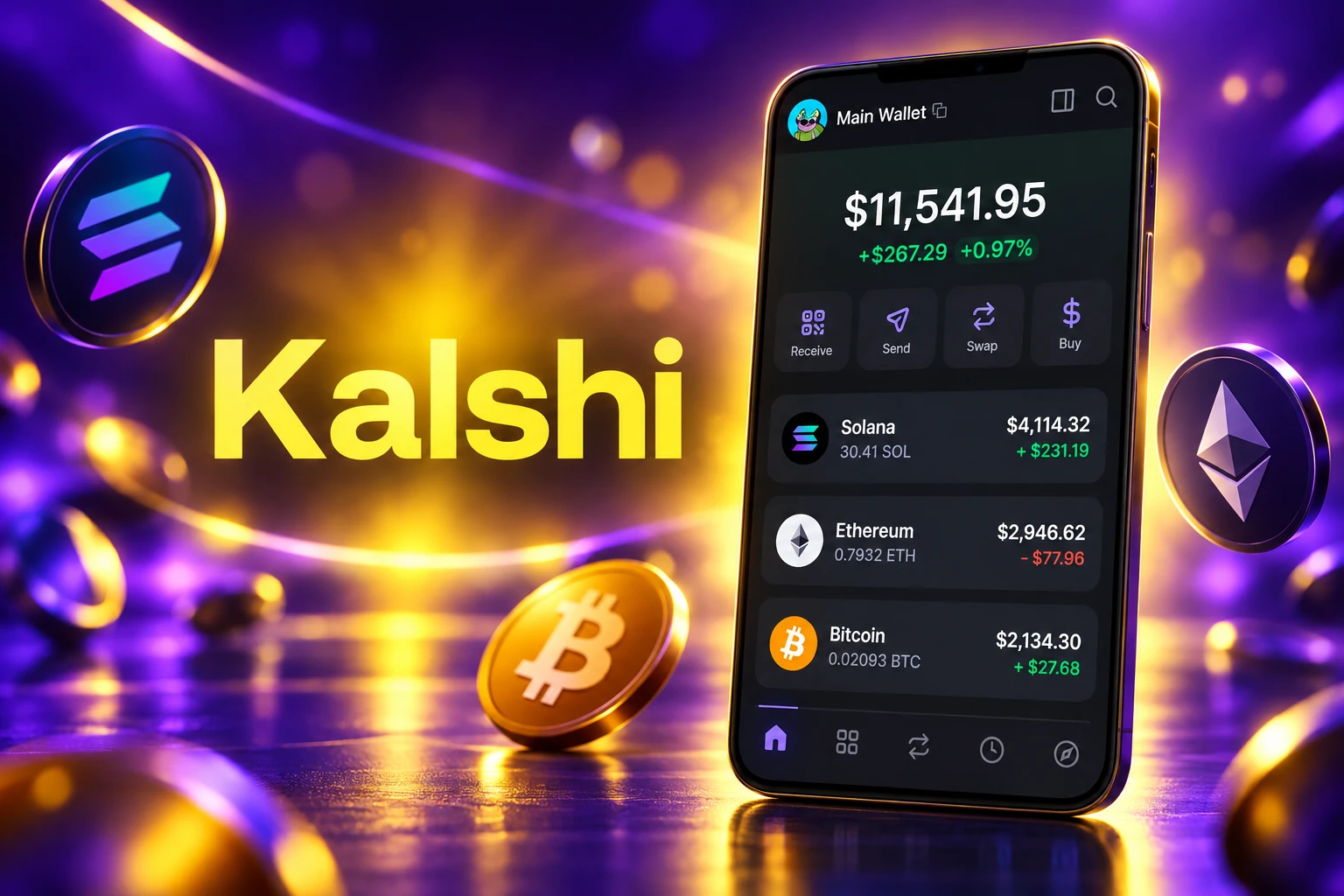
Phantom, the self-custodial crypto wallet, began a staged U.S. rollout of Kalshi prediction markets on Friday, October 23, using a CFTC staff letter that lets the app skip broker registration. Access expands over the next few weeks, general counsel Kevin Jacobs wrote, through what Phantom called its first U.S. integration with Kalshi.
Kalshi keeps the trading accounts. Phantom keeps a cut of exchange fees. Sports, the book that actually prints volume on Kalshi, is the same book two federal appeals courts have already treated as gambling the states can ban.
Staff Letter 26-09, Now a Live Product
Jacobs said Phantom is beginning to roll out prediction markets after asking the CFTC a narrow question: can a non-custodial front end connect people to a registered exchange without registering as an introducing broker, the middleman that solicits and accepts commodity orders? The Market Participants Division’s answer was a no-action position issued in March, Staff Letter 26-09, dated March 17. Phantom became the first passive software provider to get that relief.
Staff Letter 26-09 is staff policy, not a Commission rule, and it lasts only until the agency writes guidance on broker registration for software. In the meantime it does something older technology-vendor letters from 2006 to 2008 refused to do. Those letters assumed a vendor was a dumb pipe between a customer and a futures firm the customer already had. Phantom’s letter lets the wallet pick the venue, pitch the contracts, and get paid when people trade.
WHAT LETTER 26-09 LETS THE WALLET DO
- A named exchange: Phantom can send users to Kalshi even when they have no prior account there.
- A fee on the trade: It can charge users a transaction fee and take a share of Kalshi’s exchange fees.
- A marketing brief: It can promote specific event contracts and the Kalshi hookup, under communications rules written as if it were a registered broker.
- A hard stop: It cannot hold user funds, generate buy or sell signals, or choose how an order is routed or filled.
Those permissions come with ten specific conditions on the relief, including conflict and risk disclosures, recordkeeping, consent to CFTC jurisdiction, and a written undertaking that makes Phantom and each collaborator jointly and severally liable for Commodity Exchange Act violations tied to the hookup. Users must be onboarded as direct Kalshi members and must be able to reach Kalshi without Phantom. The wallet is the screen. The registered exchange is the legal counterparty.
Jacobs was the addressee on the March request. He is also the person now telling users the product is live. That is the point of the letter. It was written for this launch.
September Made Phantom’s Relief a Template
A no-action letter binds the issuing division as to the named firm. Other wallets could read Letter 26-09. They could not rely on it. On September 17, 36 days before this rollout, the same division issued Letter 26-25 and made a similar position broadly available to passive software providers, including shops that do not touch crypto at all.
Phantom’s October post treats that second letter as the payoff for doing the first one. “When the relief was announced, we hoped our engagement would help shape a framework that benefits the industry as a whole,” Jacobs wrote. Kalshi’s pitch is blunter.
Phantom did the regulatory work up front, and it’s a model for how prediction markets can reach more people. We’re excited to bring Kalshi’s CFTC-regulated markets to Phantom’s US users, so they can trade on real-world events without leaving the app.
Max Crowley, VP of Business Development, Kalshi
The model is a wallet that looks non-custodial on the home screen and hands the event-contract account to a designated contract market. Letter 26-25 tells every other qualifying front end it can try the same trade, with the same ten conditions, until the Commission writes the real rule.
How a Kalshi Trade Leaves the Wallet
U.S. users trade event contracts inside Phantom after they create or link a Kalshi account and finish Kalshi’s identity checks. A third-party service collects and stores that identity file. Kalshi approves the account, holds it, and executes the orders the user submits through Phantom. Phantom is not registered with the CFTC. The contracts are offered by KalshiEX LLC.
Funding is supposed to feel like a swap. Trades are meant to be paid mainly with CASH, Phantom’s dollar-pegged stablecoin, from a Phantom Cash account. Those funds move to Kalshi and convert into fiat for settlement. Cash-outs and winnings come back to the Cash account. Phantom has quoted a $0.02 trading fee per contract, a $0.01 platform fee plus Kalshi’s $0.01 exchange fee, plus a small network fee to move the money. More payment rails, Jacobs has said, are coming.
The self-custody story stops at the Kalshi door. Letter 26-09 describes a custodial model of trading. User funds and positions sit with the exchange’s clearinghouse or a futures commission merchant that belongs to it. Phantom’s help pages also warn that linking a Kalshi account does not merge balances. Money in the Kalshi app does not show in Phantom, and money used for Kalshi trades in Phantom does not show on kalshi.com.
WHAT A FIRST U.S. TRADE REQUIRES
- A U.S. phone number: Onboarding starts in the wallet with a verification code.
- Kalshi’s identity file: Legal name, date of birth, residential address, Social Security number, email, and a government ID, with Socure used for an ID capture or live selfie when Kalshi wants a second check.
- A Cash balance: CASH leaves the wallet, becomes fiat at Kalshi, and only then buys the contract.
- A Kalshi membership: The user is Kalshi’s customer. Phantom is the software that submitted the click.
That is the bargain the CASH rail is built to hide. One hop from a token balance to an event contract is the product other wallets will copy. It is also a federal name check sitting in the same app that still holds private keys for everything else.
Sports Still Prints the Volume Courts Keep Blocking
Kalshi is not a side market Phantom is experimenting with. Ticker Tracker, which compiles Kalshi’s published daily totals, put the exchange at $3.3 billion in volume on October 22 and $83.3 billion over the trailing 30 days, with $16.0 billion of that window tagged as sports. The record day in that set was $4.4 billion on October 17.
Sports is also the product states have been winning against. On August 28, the Ninth Circuit held that the Commodity Exchange Act does not preempt Nevada gambling law on Kalshi’s sports event contracts. On September 25, in KalshiEX LLC v. Schuler, the Sixth Circuit held that Kalshi had not shown those sports contracts are swaps, and that even if they were, Ohio and Tennessee gambling laws would still apply. Michigan already has a sports geofence in force, with a $500,000 daily fine attached to violations.
THE SPORTS-LAW MAP KALSHI IS ALREADY ON
| Forum | Date | What the court did |
|---|---|---|
| Ninth Circuit (Nevada) | August 28, 2026 | Held the Commodity Exchange Act does not preempt state gambling law on Kalshi sports event contracts |
| Sixth Circuit (Ohio and Tennessee) | September 25, 2026 | Held Kalshi had not shown the sports contracts are swaps, and state gambling laws still apply |
| Michigan state court | September 1, 2026 | Ordered a sports geofence, with a $500,000 daily fine for violations |
Jacobs said Phantom is “confident and comfortable” going forward and pointed to clear CFTC jurisdiction. The company also said it will follow state-level limits as the cases move, and that it expects the Supreme Court may eventually decide the preemption fight. Crowley’s quote does not mention the dockets. Kalshi is making its full catalog available to Phantom. Phantom decides which markets to show.
Markets remain “subject to availability in certain jurisdictions.” That disclaimer is doing real work. A wallet can be a perfect CFTC front end and still have nothing to display in the category that pays.
Tokenized Markets Stay Off the CFTC Pass
U.S. users are not getting the product Phantom already runs abroad. Prediction markets first showed up in the wallet on December 12, 2025, as tokenized Kalshi positions that were kept away from the United States. On June 1, 2026, new non-U.S. positions moved to World Prediction Markets, a non-custodial Solana protocol that routes orders to liquidity providers and settles through oracles such as Chainlink. Positions are SPL tokens in the user’s wallet. Payouts credit automatically.
Letter 26-09 does not cover that rail. Phantom has said the relief is for a custodial model with a registered exchange partner and does not cover DeFi derivatives or tokenized prediction markets. The U.S. launch is the registered path. The rest of the world stays on-chain.
THE PATH TO THE U.S. ROLLOUT
- December 12, 2025: Phantom launches tokenized Kalshi markets, later restricted for U.S. users.
- March 17, 2026: CFTC staff issue Letter 26-09 to Phantom.
- June 1, 2026: New non-U.S. positions move to World Prediction Markets on Solana.
- September 17, 2026: Letter 26-25 extends the same relief to qualifying passive software providers.
- October 23, 2026: Phantom begins the staged U.S. Kalshi rollout.
Two products now share one Predict tab. One of them required a year of CFTC letters, joint liability paper, and a Social Security number. The other still looks like a token swap. Only the first one is the “model” Crowley is selling.
Kalshi Collects Members, Phantom Collects a Cut
The commercial deal is simple. Users become direct members of Kalshi, a CFTC-registered designated contract market and derivatives clearing organization. Kalshi shares with Phantom a portion of the exchange fees on contracts traded through the Phantom interface. Phantom warned of loss of capital, volatility, thin books, counterparty risk, and regulatory risk. It also warned that a position can be hard to sell even when it shows a profit.
Other wallets no longer need their own staff letter to try this. Letter 26-25 is the copy kit, and the CASH hop is the habit they will want. The same agency has been building other retail-crypto on-ramps, including an optional lane for retail crypto leverage. Event contracts are the consumer version of that impulse: put a regulated market behind a software layer that never holds the money.
The constraint is not the wallet license. Phantom already has the staff relief it asked for, and the September letter invites the rest of the category to follow. The constraint is the map Kalshi is on. Until the Supreme Court, or a Commission rule, settles whether sports event contracts are federal swaps or state bets, the fattest book on that exchange remains a geofence problem inside an app that just taught millions of people where the Predict tab is.
Phantom said the U.S. feature will keep spreading over the coming weeks, and that markets stay subject to availability in certain jurisdictions. That is the live product. The letter made the screen legal. The courts still decide what can appear on it.
Disclaimer: This article is news reporting and analysis of a wallet feature and related CFTC staff letters. It is informational only and is not investment advice, trading advice, or legal advice, and it is not a recommendation to buy, sell, or hold any event contract, stablecoin, or other product. Readers who are considering prediction-market trades or who need to know whether those contracts are lawful where they live should consult a licensed financial adviser and a qualified attorney before acting. Volume figures, fees, product availability, and case outcomes reflect the cited sources as of the dates in this piece and can change as Kalshi, Phantom, the CFTC, and the courts update their positions.

Cook Hands Democrats the House as Crypto’s Bill Stays Dead

Wicker’s Broken Bed Was the Short Story’s Punch Line

Nvidia’s $500 Billion Financing Plan Draws a $180 Sell

Maserati Bets the Grecale V6 Can Fill Porsche’s Gap

EV Cable Theft Follows the Old Railway Copper Playbook

Aramco Crash Kills 14 Two Days After Oil Restart

Salah Captained Egypt to Their First World Cup Win

Zelda’s 40th Switch 2 Ships Without a Zelda Game

Apple Labor Day Deals Hide June’s Memory Price Hike

Palworld 1.0.4 Adds Palpedia Search After the 1.0 Launch
-
 BUSINESS4 months ago
Aramco Crash Kills 14 Two Days After Oil Restart
-
 NEWS5 months ago
Salah Captained Egypt to Their First World Cup Win
-
 GAMING2 months ago
Zelda’s 40th Switch 2 Ships Without a Zelda Game
-
 NEWS2 months ago
Apple Labor Day Deals Hide June’s Memory Price Hike
-
 GAMING2 months ago
Palworld 1.0.4 Adds Palpedia Search After the 1.0 Launch
-

 NEWS4 months ago
El Niño Puts Israel’s Needed Winter Rain on a Flood Clock
-

 BUSINESS8 months ago
BAE’s 60-Year Saudi Franchise Now Runs Through Taif
-

 BUSINESS8 months ago
Egypt Bets EGP 638 Billion Can Open Sinai to Investors