
ENTERTAINMENT
Paging Hezbollah Hands Netanyahu the Authorized Spy Story
Justin Folk’s Paging Hezbollah puts Netanyahu and Mossad on camera, opens after Israel votes, and sells a no-collateral raid the casualty lists still contest.

Paging Hezbollah, a 93-minute documentary, opens in U.S. theaters on October 30 with Prime Minister Benjamin Netanyahu and Mossad director David Barnea on camera. Director Justin Folk says he had to convince both men that his crew was the one to help them tell the story.
The film arrives three days after Israelis elect a new Knesset, from a production company that has not publicly named who paid for it. Hammond Entertainment is distributing a limited run rated PG-13.
How Justin Folk Got Mossad on Camera
Folk’s last features were No Safe Spaces, What Is a Woman?, and Am I Racist?, culture-war documentaries made with Daily Wire talent, including producer Kirby Williamson. Paging Hezbollah is credited to Aveiled Productions, Digital Astronaut, and Domino Effect Movie, with John Miller-Monzon as co-writer and IDF soldier Rotem Avny as a co-producer.
The access was the deal. Folk said he had to persuade the prime minister and Mossad that he was the person to put their version on a cinema screen.
We had to convince the prime minister. We had to convince the director (and) Mossad that we were the ones to tell this story, to help them tell the story.
Justin Folk, director of Paging Hezbollah
He also said the raid was “one of the most incredible intelligence military operations in history,” and “the best Trojan horse horror story that I’ve ever heard, even better than The Odyssey.” Former CIA director David Petraeus, on camera, calls it a “modern-day Trojan horse.” Netanyahu, in the trailer, calls the charges “a handful of TNT that changed the world.”
Folk wanted a theatrical picture, not a talking-head special, so the film leans on dramatic recreations. Early viewers have flagged a few of those scenes as snarky, including Hezbollah men flashing new pagers like gadgets. The official teaser, posted by the film account, sells years of planning and a single hidden operation.
Years of planning. Thousands of devices. One operation hidden in plain sight.
Paging Hezbollah – in theaters October 30. pic.twitter.com/wDTlNzoN5N
— Paging Hezbollah (@paginghezbollah) September 24, 2026
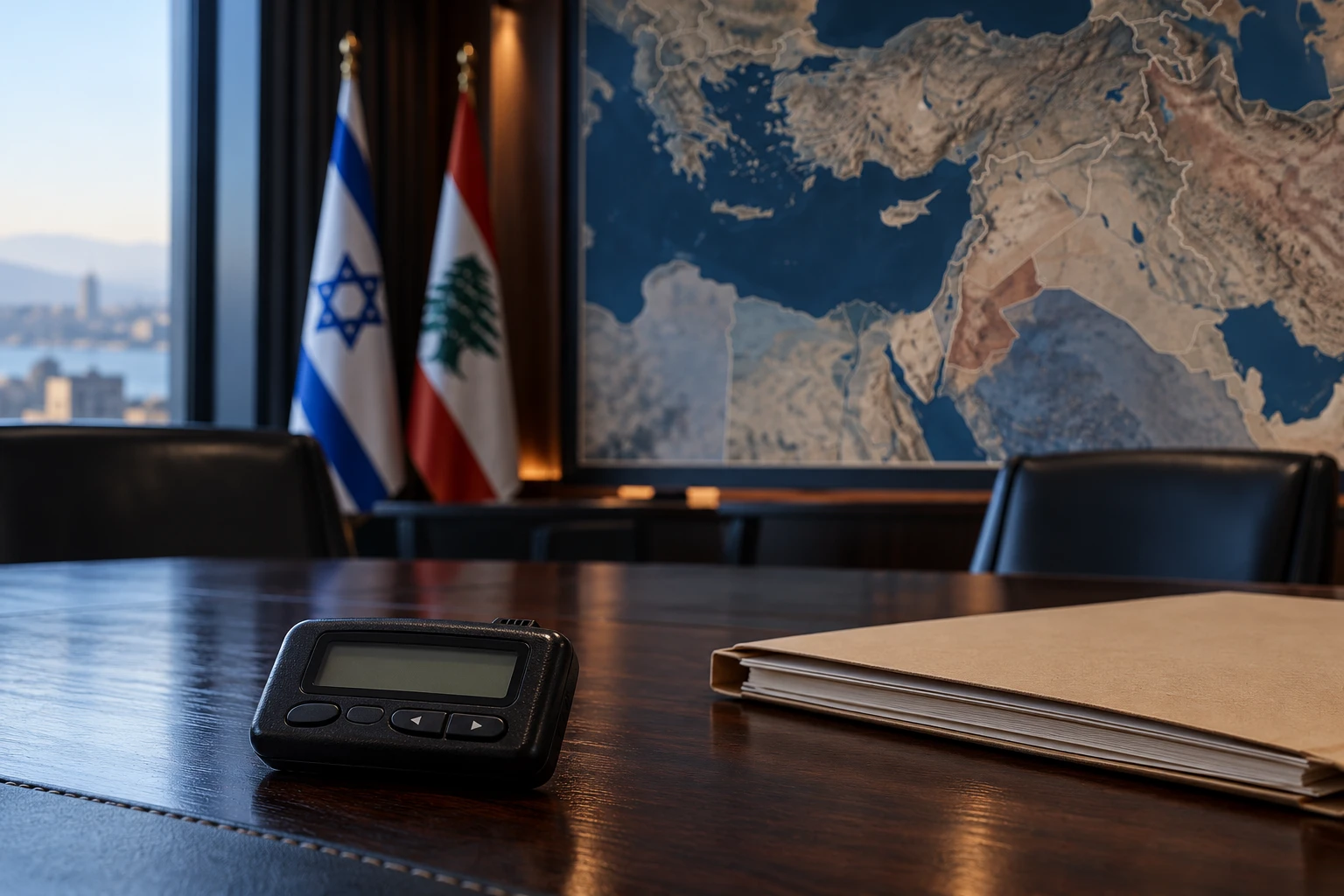
The Rugged Pager Became a Status Symbol
Barnea, speaking on camera for the first time about the raid, walks the plot from a 2014 plan to seed Hezbollah walkie-talkies with explosives to a 2022 shift into pagers. He says Mossad engineers designed the AR-924 at headquarters, then built a fake supply line so the group would buy the larger “rugged” model.
Folk’s account of that pitch is almost more sales than spy craft. Mossad, he said, stood up phony companies, websites, and YouTube ads that praised battery life and waterproofing. A saleswoman already trusted by Hezbollah offered an early lot as a free upgrade. “They called it the rugged pager, and they basically branded these things as the fighters’ pager,” Folk said, until the devices “became a status symbol.”
A Lebanese security official said about 5,000 pagers came into the country roughly five months before the blasts. Gold Apollo founder Hsu Ching-kuang, speaking in New Taipei, said the AR-924 was produced and sold by BAC Consulting KFT in Budapest and that his firm had only licensed the brand. “The product was not ours. It was only that it had our brand on it,” Hsu said. A Budapest consultant tied to that license said she did not make pagers and called herself an intermediate.
THE ROAD TO THE BEEP
- 2014: Mossad, per Barnea, first plans to hide charges in Hezbollah radios.
- 2022: The plan moves to pagers after the group treats phones as tracking beacons.
- Spring 2024: About 5,000 Gold Apollo-branded AR-924 pagers enter Lebanon.
- September 17, 2024: Pagers explode across Lebanon and Syria in the afternoon.
- September 18, 2024: Walkie-talkies blow the next day, including near funerals.
- September 24, 2026: The teaser drops the same day Netanyahu holds a pager at the U.N.
- October 30, 2026: The documentary opens in U.S. theaters.
Barnea even describes a customer-service gag in Beirut’s Dahieh. Complaints came in about dead units, so the pipeline replaced them free, he says, and did not take the old ones back. Hezbollah, according to security sources, was still handing out the new pagers hours before they exploded, after scanning them.
The Second Half Is Netanyahu’s
People who have seen the cut say the first half is the raid and the second half is the prime minister. Barnea, former Northern Command chief Uri Gordin, former ambassador Michael Oren, former national security advisers Yaakov Nagel and Yaakov Amidror, and former intelligence officer Sarit Zehavi share the frame with American voices, including Petraeus and Matthew Levitt, the Washington Institute fellow who has mapped Hezbollah’s global criminal fundraising. A Lebanese official appears with his face hidden. Former defense minister Yoav Gallant is not named.
WHO SPEAKS ON CAMERA
- David Barnea: Mossad director, first on-camera account of the pager plot.
- Benjamin Netanyahu: Prime minister, framed as the man who pushed the red button.
- David Petraeus: Former CIA director, supplies the Trojan-horse line.
- Matthew Levitt: Washington Institute counterterror fellow and Hezbollah specialist.
- Uri Gordin: Former Northern Command chief, on the hidden raids in Lebanon.
- Yoav Gallant: Former defense minister, absent from the film and unnamed.
Netanyahu uses the screen to settle scores. He says security chiefs told him Hezbollah had sent three pagers to Iran for tests, then admitted they had known for a week. “I gathered all the security chiefs and told them we had to act quickly,” he says. Some of those officials, he adds, wanted the Biden administration briefed in advance. He refused. “It could be leaked, and then the whole thing would fail.”
Amidror calls the choice to strike “the most important decision since the beginning of the war.” In the film’s telling, Netanyahu absorbed Hezbollah fire for months, kept tens of thousands of northern residents displaced, and then used the pager blow as the opening move toward Nasrallah’s killing and a ground campaign. The grinding war on the northern front is the pressure cooker around that choice, not a subplot.
A Mandate of No Collateral Damage
The film’s own site lists a step titled “No Collateral Damage” and says the mandate was to hit the terrorists, not the civilians. Barnea puts the same idea in operational language.
We didn’t want collateral damage. We wanted to injure them, not kill them, so they wouldn’t become martyrs. Killing was not the objective. The goal was to make clear the price of threatening Israel.
David Barnea, Mossad director, in Paging Hezbollah
Lebanon’s Health Ministry counted a different scene on the ground. Pagers went off in shops, cars, kitchens, and pockets. Hospitals filled with wrecked hands, faces, and eyes. Iran’s ambassador to Lebanon, Mojtaba Amani, was among the wounded.
THE TWO DAYS OF BLASTS
| Wave | Date | Device | Early ministry toll |
|---|---|---|---|
| First | September 17, 2024 | Gold Apollo-branded AR-924 pagers | 12 dead, including two children; about 2,800 wounded |
| Second | September 18, 2024 | Walkie-talkies | 25 dead; at least 650 wounded |
A Lebanese minister later put the combined dead at 42 and the wounded at 4,000. A Lebanese source said the radio batteries were packed with PETN, a high explosive. Barnea says the pager charge was sized to maim fighters, not to make martyrs. The ministry lists still include children and health workers.
Hezbollah called the pagers tools of “employees of various Hezbollah units and institutions,” which is how a social movement that runs clinics and a militia ends up with bombs in grocery lines. The group stayed a street and political force in Lebanon after the blasts, and faced later pressure to pull Hezbollah back before talks with Israel.
Aveiled Productions and a Blank Credit Roll
Folk has said he aimed “to make the film of record for the operation, so we went right to the source.” The on-screen sources are clear. The money is not. Aveiled Productions does not publish a roster of financiers, and the production has not answered questions about who initiated the project or who opened the door to Netanyahu and Barnea.
WHAT WE KNOW
- The companies: Credits list Aveiled Productions, Digital Astronaut, and Domino Effect Movie, with Hammond Entertainment as distributor.
- The prior shop: Folk and Williamson’s last films were Daily Wire documentaries; that outlet has promoted this trailer.
- The Israeli hand: Rotem Avny, an IDF soldier, is credited as a co-producer and has joined Folk on U.S. publicity stops.
- The premiere host: ICAN, a conservative pro-Israel group, holds the world premiere in Beverly Hills.
WHAT IS UNCONFIRMED
- Angel Studios and 2521: Both names have been tied to distribution in Israeli reporting, without a formal disclosure.
- Who paid: No public filing names the financiers or the Israeli fixers who arranged the interviews.
- Why Gallant is gone: The film does not explain the former defense minister’s absence from a story he has told differently.
Barnea’s warning in the film is aimed at Israel’s enemies: “the Mossad is like a fist aimed at your face, and we will find a way to reach your face.” After the October 7, 2023 failures, that line also works as a repair job for the service’s reputation. The people who approved the interviews are the people whose reputations the cut protects.
Beverly Hills Screens It the Night Before Israel Votes
ICAN’s world premiere is set for October 26 in Beverly Hills, doors at 6 p.m. Pacific, with Folk and Avny in the room. That is the night before Israelis cast ballots in the October 27 vote for the Knesset, a 120-seat race in which 61 seats make a government. Netanyahu’s Likud is in a tight contest, and recent polls have shown neither bloc with a clean path to 61.
U.S. theaters then open the film on October 30, three days after the vote. The embargo on deeper coverage was set to lift in mid-October, which put Netanyahu’s on-camera account into American interviews while Israelis were still in the campaign silence. Folk’s publicity run has stayed inside friendly studios and churches, including a CBN taping in which he said Americans “live in the luxury of safety” and do not grasp ballistic fire on a home.
The American trailer conversation has treated the raid as a closed case of tradecraft. People keep asking when it hits streaming in countries with no theatrical date. Almost nobody in that lane is arguing about booby-trap law. That argument sat in Geneva and Beirut in September 2024, and it is still the part of the file the movie does not open.
The Legal Fight the Trailer Skips
Human Rights Watch said customary law prohibited booby traps in civilian objects, and that charges whose location could not be known were indiscriminate. Lama Fakih, the group’s Middle East director, said the method put civilians at grave risk in shops and streets. A 1996 protocol bans explosive devices built to look like harmless portable goods; Israel is a party to that protocol.
On September 19, 2024, UN experts called the blasts terrifying and said simultaneous detonations could not distinguish a fighter from a child holding a beeping pager. They listed possible war crimes of murder, attacks on civilians, and indiscriminate attack, and they noted about 500 severe eye injuries. Volker Türk, the U.N. human rights chief, asked for an investigation on the same grounds: the attackers could not know who stood next to each device.
Folk’s film, by his own telling, is the version Mossad and the prime minister agreed to help him tell. It can show the marketing ruse, the Tehran scare, and the decision not to call Washington. It has not shown the blast-radius argument, the missing defense minister, or the names of the people who paid for the cut. On October 30, that is the record American audiences will be sold.

Cook Hands Democrats the House as Crypto’s Bill Stays Dead

Wicker’s Broken Bed Was the Short Story’s Punch Line

Nvidia’s $500 Billion Financing Plan Draws a $180 Sell

Maserati Bets the Grecale V6 Can Fill Porsche’s Gap

EV Cable Theft Follows the Old Railway Copper Playbook

Aramco Crash Kills 14 Two Days After Oil Restart

Salah Captained Egypt to Their First World Cup Win

Zelda’s 40th Switch 2 Ships Without a Zelda Game

Apple Labor Day Deals Hide June’s Memory Price Hike

Palworld 1.0.4 Adds Palpedia Search After the 1.0 Launch
-
 BUSINESS4 months ago
Aramco Crash Kills 14 Two Days After Oil Restart
-
 NEWS5 months ago
Salah Captained Egypt to Their First World Cup Win
-
 GAMING2 months ago
Zelda’s 40th Switch 2 Ships Without a Zelda Game
-
 NEWS2 months ago
Apple Labor Day Deals Hide June’s Memory Price Hike
-
 GAMING2 months ago
Palworld 1.0.4 Adds Palpedia Search After the 1.0 Launch
-

 NEWS4 months ago
El Niño Puts Israel’s Needed Winter Rain on a Flood Clock
-

 BUSINESS8 months ago
BAE’s 60-Year Saudi Franchise Now Runs Through Taif
-

 BUSINESS8 months ago
Egypt Bets EGP 638 Billion Can Open Sinai to Investors