
NEWS
AlphaGo Co-Creator Bets Search Over Giant Language Models
Thore Graepel’s Metis Reasoning is a 12-person London lab betting that AlphaGo-style search, not bigger language models, will win work that has to be audited.

Thore Graepel, an AlphaGo co-creator, took Metis Reasoning out of stealth on October 19, 2026, with a 12-person London lab built to reason without giant language models.
He is betting that AlphaGo’s split of neural hunches and explicit search, not another leap in training spend, is what engineering, medicine and robotics will actually buy.
More Scaling Will Never Give You an Auditable Trace
Graepel left Google DeepMind in summer 2026 after a second spell as a Distinguished Research Scientist, and he still holds the Chair of Machine Learning at University College London. Around the launch he was blunt about large language models: they can be fluent, follow instructions, and still fail to show a trail of belief that a reviewer can check.
More scaling will never give you an auditable reasoning trace that you can actually trust.
Thore Graepel, co-founder, Metis Reasoning
Piers Ingram, a co-founder whose earlier ventures have raised more than $350 million, met Graepel at a Cambridge barbecue where they talked about Turing machines. He is selling the same worry to buyers who have to sign the work.
“When you think about higher-stakes cases in engineering or science, or medical or legal reasoning, the arguments that the models come up with basically can’t be trusted,” Ingram said. “I don’t think that’s a good foundation for what we want our AI to be.”
Yann LeCun, the Turing Award winner who left Meta to found AMI Labs, answered Graepel in public two weeks before the stealth exit. He did not endorse the company. He endorsed the missing piece.
“True reasoning must involve a search,” LeCun wrote. “LLMs don’t possess this capability.”
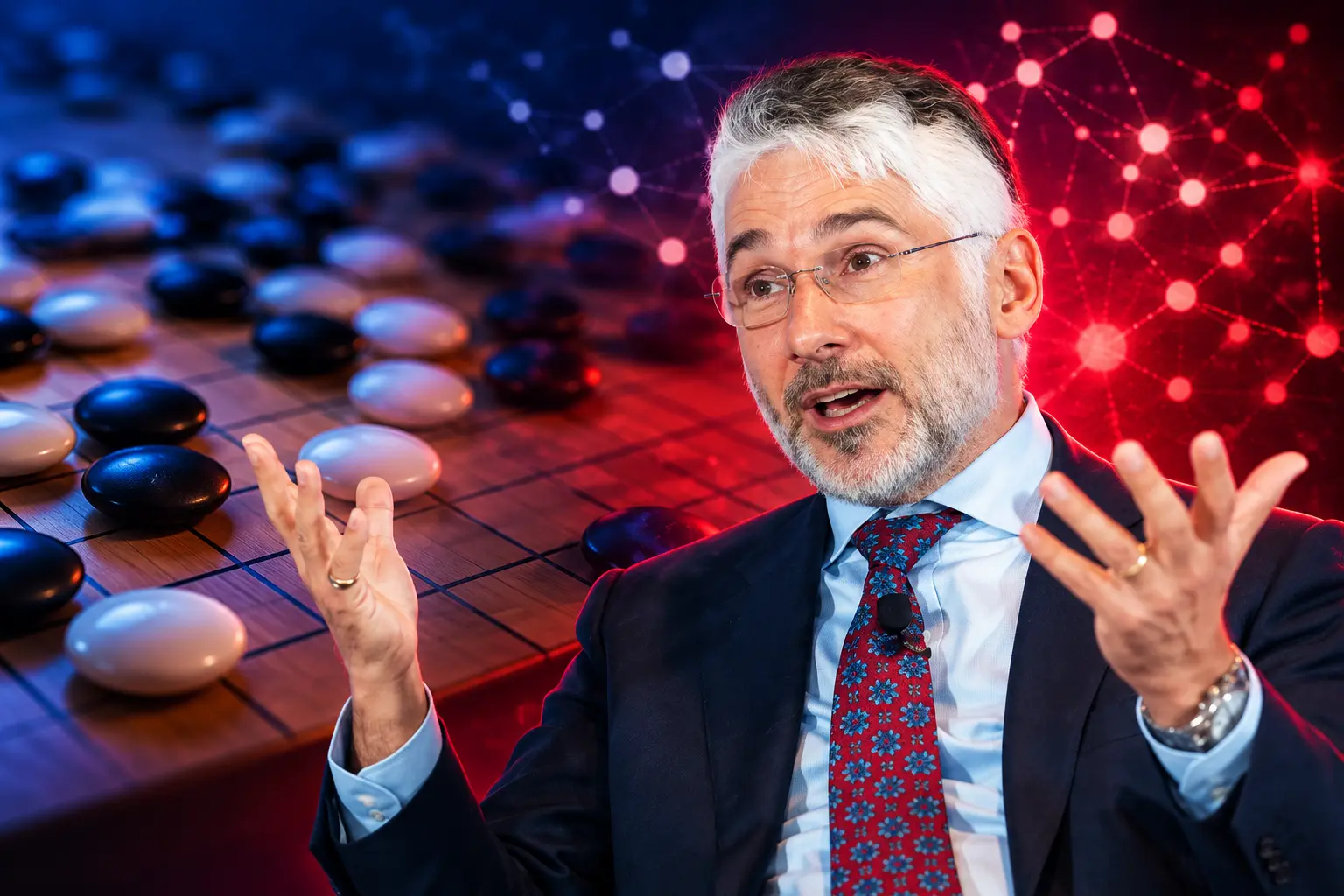
Move 37 Came From Search, Not Instinct
The wager is ten years old. In March 2016, in Seoul, AlphaGo beat Lee Sedol 4-1 in a five-game match. Game two’s Move 37, a shoulder hit at P10 on the fifth line, looked so odd that some commentators treated it as a glitch. AlphaGo’s own policy network, trained to guess what a strong human would play, put the odds of an expert choosing it at about one in 10,000.
Search chose it anyway. The program built a game tree with thousands of branches, scored the futures each move opened, and played the line its hunches would have skipped. Graepel later wrote that Deep Blue, when it beat Garry Kasparov in 1997, looked six to eight moves ahead and evaluated 200 million chess positions per second off human-written rules. Go does not yield to that kind of grind. Computing even a fraction of the possible outcomes, he wrote, would take a supercomputer billions of years.
That is the design Metis wants to lift off the board. Neural nets still supply the hunch. A separate search updates an open record of what is settled, what is doubtful, and what has been ruled out. Chain-of-thought prompting, in this telling, is the same next-token machine run for longer, and the rationales it prints are often assembled after the answer is already in hand.
FROM ALPHAGO TO A 12-PERSON LAB
- April 2015: Graepel joins DeepMind and works on AlphaGo, then AlphaGo Zero, AlphaZero and MuZero.
- March 2016: AlphaGo defeats Lee Sedol 4-1 in Seoul, with Move 37 in game two.
- November 2021: He leaves for Altos Labs, leading computational science, AI and machine learning.
- November 2025: He returns to DeepMind as a Distinguished Research Scientist on post-AGI work.
- Summer 2026: He leaves DeepMind again to build the new lab.
- October 2, 2026: He publishes the case that language models do not reason.
- October 19, 2026: Metis Reasoning comes out of stealth in King’s Cross.
The career behind that list is older than DeepMind. Graepel trained as a physicist, took a machine-learning PhD in 2001 at the Technical University of Berlin, and joined Microsoft Research in 2003. There he helped ship TrueSkill, the matchmaking system behind Xbox Live, and The Path of Go, a console opponent built from Bayesian move prediction, a decade before AlphaGo. In 2019 he made the human pursuit of artificial intelligence the subject of a TEDx talk in Exeter.
He restated the Move 37 lesson on October 2, when he said he had left DeepMind because trustworthy science and medicine need conclusions that come from evidence, inference and belief revision.
Ten years ago, AlphaGo’s Move 37 shocked the world.
It wasn’t intuition alone that produced it. AlphaGo could search possible futures, test its instincts and reason about what would happen next.
In a new piece for @techreview, I argue that today’s most advanced AI systems are… pic.twitter.com/e5qbqL2Swh
— Thore Graepel (@ThoreG) October 2, 2026
A Prototype Aimed at PhD-Level Science
Metis is named for the Greek goddess of wisdom. Its public site is short. Today’s systems, it says, stay brittle once they step past their training data, and the lab wants conclusions and actions that are grounded, understood, and trusted in embodied AI, science and engineering. A white paper, “The Age of Reasoning,” went out with the launch.
“You can think of Metis Reasoning as a generalisation of AlphaGo,” Graepel said. He is not throwing the networks away. Language and image models still read the world. They do not get to hide what they believe inside the weights. “It knows what it knows. It knows what it doesn’t know,” he said, as the system forms hypotheses, gathers evidence and tests assumptions.
He files that split under the broad neuro-symbolic family, and that family has a long research history and a thin commercial one. The claim that has to be proven is that AlphaGo already showed how to make the hybrid work, if the search is real and the knowledge store can be inspected, edited and access-controlled. Ingram, asked why Anthropic and OpenAI were not on the same path, said they are “thinking about it differently,” and that Metis is “very much not going in this direction of ever larger models and ever larger training budgets.” He called the design “much much more compute-efficient” and said the lab had “encouraging” results on frontier reasoning problems at a fraction of the cost. Those results have not been published as independent scores.
WHAT WE KNOW
- The headcount: A 12-person team of researchers, mathematicians, robotics experts and tech entrepreneurs, with operations around King’s Cross and some staff in Singapore, where Ingram is based.
- The founders: Graepel; Ingram; Michael Warren, who has worked on robotics and autonomous systems at DARPA, Boeing and GM; and David Berman, head of AI at Cambridge Consultants, who also advises NATO and the UK government.
- The prototype claim: Graepel says the lab already has a system that can reason about PhD-level scientific problems, tested by scientists tied to the founders’ biotechnology ventures.
WHAT IS UNCONFIRMED
- The round: People close to earlier talks said Metis was seeking tens of millions of dollars from a small group, with a later tranche of hundreds of millions possible; no financing has been publicly completed.
- The scores: No public benchmark yet shows the prototype beating chain-of-thought models on tasks a buyer can replay.
- The product date: The company has not said when a first model will be offered for general use.
Graepel told interviewers he expects an industry-hardened system to be ready for outside testing within three to six months. Until someone outside the founding circle can break it, the PhD-level demo is a claim, not a result.
Why Engineering Teams Still Will Not Sign Off
“Robotics is a reasoning problem,” Graepel said. A machine that moves has to know what it is looking at and what happens if it acts, and a fluent paragraph is a poor substitute for that check. Warren’s résumé is the tell. The lab is hiring the people who have already had to keep robots inside a safety case, not only the people who train chatbots.
Berman’s other job sits on the same fault line. As an adviser to NATO and the UK government, he has watched public bodies try to use models they cannot reconstruct after a mistake. Ingram’s line about medical and legal work is the procurement version of that fear: if you cannot say whether the error was bad evidence, a bad assumption, or a bad step, you cannot put the system on the hook.
WHAT BUYERS STILL CANNOT SEE
- The open ledger: There is no persistent record of hypotheses, confidence, evidence and open questions that updates as new facts arrive.
- The split: What the system knows and how it works on that knowledge are tangled in the same weights, so you cannot inspect one without the other.
- The alibi: Printed chains of thought often describe a path the model did not actually take, which makes them a weak audit in a hospital, a lab or a court.
- The agent problem: Once software starts acting, Graepel said, those traces also fail as guardrails, because “the token-based approach just doesn’t allow that.”
He went further than a niche tool for robots. “Ultimately, I think this kind of AI system has the potential to replace all existing AI systems because we want that reliability, that safety, and that auditability,” he said. That is the size of the bet. It is also the sentence that still has no public scoreboard behind it.
King’s Cross Has Two Billion-Dollar Cousins
Metis is not the only AlphaGo-era lab in that postcode, and it is not the richest. David Silver, Graepel’s closest collaborator on the original program, left DeepMind in January 2026 and built Ineffable Intelligence around agents that learn inside simulated worlds, with a $1.1 billion seed at a $5.1 billion valuation. Recursive Superintelligence, co-founded by Richard Socher with Tim Rocktäschel, a UCL professor and former DeepMind principal scientist, took a different road again: AI that improves its own research. Dealroom records at least $500 million for that company in April 2026, at a $4 billion pre-money valuation, in a round led by GV with Nvidia in.
THREE LONDON LABS, THREE WAGERS
| Lab | Lead founder | Core bet | Capital |
|---|---|---|---|
| Metis Reasoning | Thore Graepel | Search plus an inspectable knowledge record | Seeking tens of millions of dollars |
| Ineffable Intelligence | David Silver | Agents that learn in simulated worlds | $1.1 billion seed |
| Recursive Superintelligence | Richard Socher | AI that improves its own research | At least $500 million |
Ingram, asked whether the three overlap, said each side is working in the dark. “We obviously don’t know exactly what they are doing; they don’t know exactly what we are doing.” He still called Metis “really a very different, almost philosophical approach.” Silver is trying to get past human data. Socher is trying to automate invention. Graepel is trying to make the argument itself checkable. Those are not the same company with a new coat of paint.
Tens of Millions Against Labs With Billions
People close to the talks said in late September that Graepel was seeking tens of millions of dollars from a small first group of backers, and that a later tranche of hundreds of millions of dollars at a higher valuation could follow. The structure was described as preliminary. On September 24, 2026, that was still unpublished. At launch, Graepel would not discuss financing, only that fundraising talks were continuing. Ingram would not confirm the tens of millions either. “We have been able to fund the company more than adequately to date,” he said.
That is an early cheque next to Ineffable’s seed, not a rival to it. The draw for backers is the AlphaGo name and a thesis the large labs have deprioritised. “They are so focused on the scaling hypothesis that a lot of other research is falling by the wayside,” Graepel said. A 12-person company can only make that insult stick if the cheaper system actually returns a trace a safety engineer will accept.
A Three-to-Six-Month Window for Outside Tests
The first people to poke the prototype were not a national lab. They were scientists already tied to the founders’ biotechnology companies. Graepel’s own clock says outsiders should see a tougher build within three to six months. He has not said what those testers will be allowed to measure, or whether the comparison set will include the latest chain-of-thought systems from the labs he says are on the wrong path.
True reasoning must involve a search. LLMs don’t possess this capability.
Yann LeCun, founder of AMI Labs, on X
LeCun’s line is the friendly version of the wager. Search is the test. A white paper and a private demo are not. If the outside tests show an inspectable tree that holds up on problems a robot, a clinic or a structures team would recognise, a 12-person King’s Cross lab will have landed a cheap shot on the scaling race. If they do not, Metis will still have been clear about the bet it placed on October 19, 2026.

Cook Hands Democrats the House as Crypto’s Bill Stays Dead

Wicker’s Broken Bed Was the Short Story’s Punch Line

Nvidia’s $500 Billion Financing Plan Draws a $180 Sell

Maserati Bets the Grecale V6 Can Fill Porsche’s Gap

EV Cable Theft Follows the Old Railway Copper Playbook

Aramco Crash Kills 14 Two Days After Oil Restart

Salah Captained Egypt to Their First World Cup Win

Zelda’s 40th Switch 2 Ships Without a Zelda Game

Apple Labor Day Deals Hide June’s Memory Price Hike

Palworld 1.0.4 Adds Palpedia Search After the 1.0 Launch
-
 BUSINESS4 months ago
Aramco Crash Kills 14 Two Days After Oil Restart
-
 NEWS5 months ago
Salah Captained Egypt to Their First World Cup Win
-
 GAMING2 months ago
Zelda’s 40th Switch 2 Ships Without a Zelda Game
-
 NEWS2 months ago
Apple Labor Day Deals Hide June’s Memory Price Hike
-

 NEWS4 months ago
El Niño Puts Israel’s Needed Winter Rain on a Flood Clock
-
 GAMING2 months ago
Palworld 1.0.4 Adds Palpedia Search After the 1.0 Launch
-

 BUSINESS8 months ago
BAE’s 60-Year Saudi Franchise Now Runs Through Taif
-

 BUSINESS8 months ago
Egypt Bets EGP 638 Billion Can Open Sinai to Investors