
NEWS
Egypt’s Grand Egyptian Museum Bet Meets Its First Receipts
Egypt opened the Grand Egyptian Museum on November 1, 2025, with 79 delegations. Japanese loans paid most of the bill; four million visitors followed.

Egypt opened the Grand Egyptian Museum on November 1, 2025, with 79 official delegations facing the Giza pyramids.
President Abdel Fattah El-Sisi used the night to sell a delayed, Japanese-financed building as a national reset. The guest list and the first season of tickets now show who bought that wager, and how far the cash has come.
The Night Egypt Put the Last Piece in Place
The ceremony ran on Saturday evening at the museum’s open court, about 2 km from the Great Pyramid. El-Sisi and First Lady Entissar El-Sisi greeted heads of delegation, then watched a laser and drone sequence that tied the new facade to Orion’s Belt and the plateau.
Coptic hymn and Sufi chanting shared the bill with a piece titled “The World Plays One Melody.” A later drone pass spelled out “Civilizations Flourish in Time of Peace.” After the speeches, El-Sisi walked to a scale model of the complex and set the final piece in Egypt’s name. Kings, presidents, and princes each received a miniature of the building with a piece bearing their country’s name.
The rest of the program walked the guests through the museum’s own pitch: a Ramses II piece on Alexandria’s underwater finds, the Grand Staircase, the Nile, Khufu’s solar boat, and Tutankhamun, including the story of Hussein Abdel Rassoul, the boy tied to the 1922 tomb find. Fireworks and lasers closed the night. The public got full access in the days that followed, from the Tuesday after the Saturday show, after a trial run that had been underway since October 2024.
I invite you to enjoy this magnificent celebration, and to ensure that this Museum becomes a truly global forum for dialogue, a primary destination for knowledge, a sanctuary for humanity, and a beacon for all who cherish life and believe in the value of the human spirit.
Abdel Fattah El-Sisi, President of Egypt, at the Grand Egyptian Museum opening
In the same remarks he spoke of inscribing a new chapter in the present and future of “this ancient nation,” and he called the complex the world’s largest museum dedicated to a single civilization. Queen Rania of Jordan, posting from the night, called it a “magnificent tribute to Egypt’s rich ancient history.”
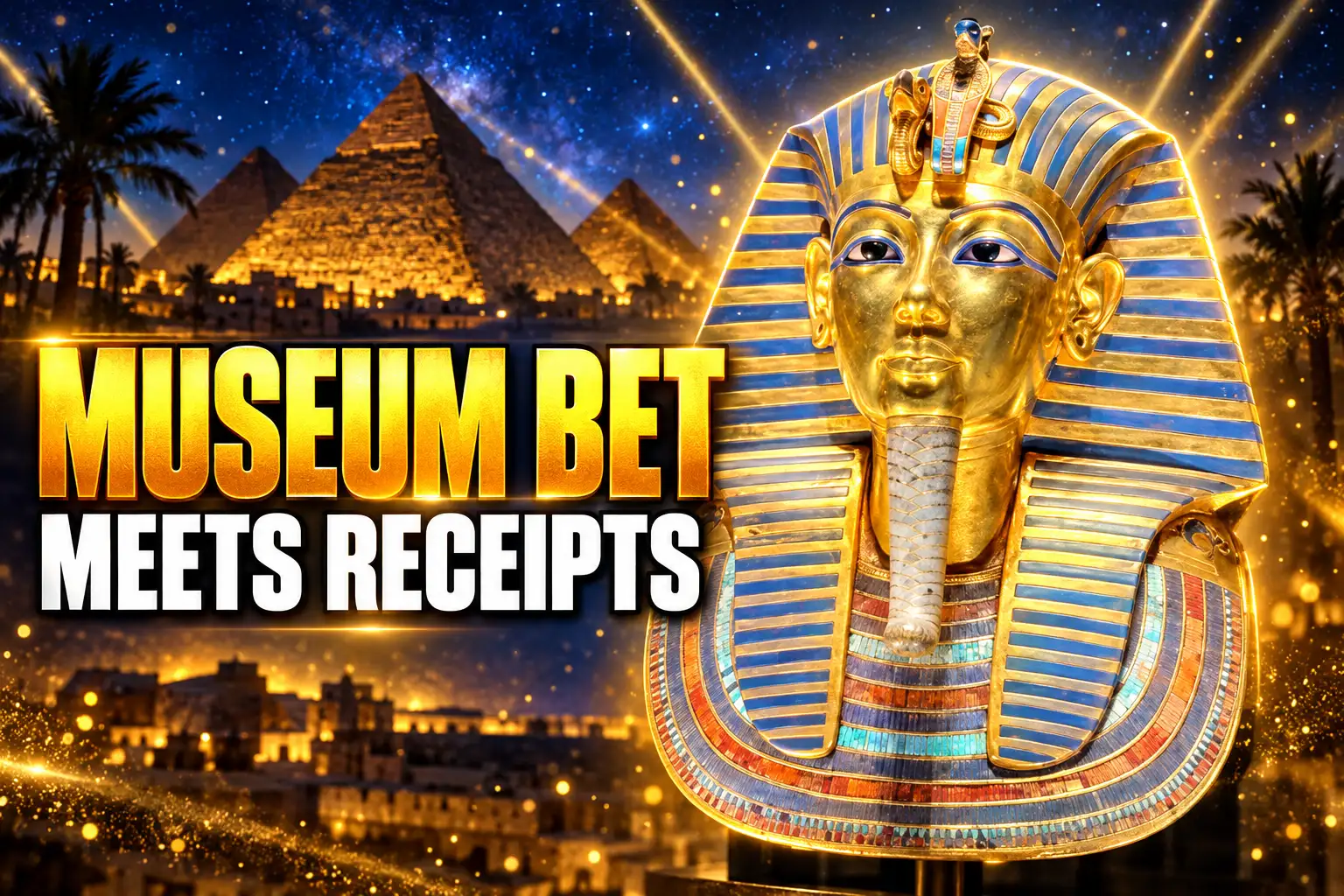
Japan Financed Most of a Billion-Dollar Build
The bill sits above more than $1 billion. Japan, not a Gulf fund and not a Western grant, carried the heavy end. The Japan International Cooperation Agency arranged two ODA loans of 84.2 billion yen (about $800 million) in 2008 and 2016 for the building, the galleries, the digital systems, and the consultants who watched the contracts. Of a construction cost put at about 140 billion yen, that Japanese slice is 60 percent. Egypt put in about $147 million for land, infrastructure, and coordination.
HOW THE MUSEUM WAS PAID FOR
| Source | Amount | What it covered |
|---|---|---|
| JICA ODA loans (2008 and 2016) | 84.2 billion yen (about $800 million) | Construction, exhibitions, ICT, consulting |
| Egyptian government | about $147 million | Land, infrastructure, national coordination |
| Full project | more than $1 billion | The completed Giza complex |
JICA’s own brief is blunt about why Tokyo wrote those cheques. Tourism is one of Egypt’s four large foreign-income streams, with oil exports, Suez Canal tolls, and remittances, and the old Egyptian Museum in Tahrir Square, open in that building since 1902, could no longer hold or show the weight of the collection. Japanese teams also trained conservators, helped move objects, and backed the excavation of Khufu’s second solar boat, found in 1987 by a Japanese-led crew under Sakuji Yoshimura.
El-Sisi thanked “the friendly state of Japan” from the stage. Three days after the party, the tourism and antiquities ministry had to swat down a rumor that JICA had been given ten years to run the place in return for the cheap loans. The ministry said the Grand Egyptian Museum Authority is fully state-owned, the loans are being repaid on schedule, and a local firm, Legacy for Management and Development, handles visitor services only.
Who Showed Up When the Lights Went On?
The presidency counted 79 official delegations, 39 of them led by kings, princes, or heads of state and government. That is a large room. It is also a revealing one. Gulf royals, European monarchs, and African presidents filled the front. Washington, London, Paris, Beijing, and Moscow sent ministers or parliamentarians, not their principals.
Ambassador Mohamed El-Shennawy, the presidential spokesman, had issued the presidency’s published guest list the day before. Named guests in the hall included Spain’s King Felipe VI, Queen Rania with Princess Salma, Prince Albert II of Monaco, German President Frank-Walter Steinmeier, Dutch Prime Minister Dick Schoof, Greek Prime Minister Kyriakos Mitsotakis, Hungarian Prime Minister Viktor Orban, and Palestinian President Mahmoud Abbas. Sheikh Khaled bin Mohamed, Crown Prince of Abu Dhabi, came for UAE President Sheikh Mohamed bin Zayed. Oman’s Sayyid Theyazin bin Haitham came for Sultan Haitham. Bahrain sent Crown Prince Salman bin Hamad Al Khalifa. Saudi Arabia sent Culture Minister Prince Badr bin Abdullah. Ghana’s President John Mahama and Eritrea’s President Isaias Afwerki were in the African line. The president of JICA came too.
WHO FILLED THE FRONT ROW
- Royal houses: Belgium, Spain, Denmark, Jordan, Bahrain, Oman, the UAE, Saudi Arabia, Luxembourg, Monaco, Japan, and Thailand sent kings, queens, crown princes, or working royals.
- Presidents in the hall: Germany, Portugal, Palestine, Ghana, Eritrea, Djibouti, Somalia, Armenia, Croatia, Cyprus, Albania, Bulgaria, Colombia, Equatorial Guinea, the Democratic Republic of the Congo, the Libyan Presidential Council, the Yemeni Presidential Leadership Council, and the Sovereign Order of Malta.
- Prime ministers: Greece, Hungary, Belgium, the Netherlands, Kuwait, Lebanon, Luxembourg, and Uganda.
- Ministerial rank: the United States, the United Kingdom, France, China, Russia, Italy, Canada, India, and dozens more, plus the Arab League, the OIC, the African Union Commission, and a UN Alliance of Civilizations envoy standing in for the secretary-general.
The opening-night conversation treated that turnout as proof the collection belongs on the plateau, in Egyptian hands, rather than in a European gallery of borrowed pieces. The seating chart still mapped a narrower fact. Egypt could fill a court with African presidents and Gulf heirs. It could not get the sitting American, British, French, Chinese, or Russian leader into Giza on November 1.
A Concrete Wedge Aimed at Khufu
The building is a giant concrete wedge on a 500,000-square-metre site, 15 km southwest of central Cairo, set so the three pyramids sit on its sightline. Dublin studio Heneghan Peng Architects, led by Róisín Heneghan and Shih-Fu Peng, won a 2003 contest over 1,500 entries. Arup and Buro Happold joined for engineering. Cairo’s Raafat Miller Consulting was the local architect. West 8 handled landscape. The 11-metre statue of Ramses II now meets visitors in the Grand Hall.
Officials say the complex is designed to house 100,000 artefacts, with more than 50,000 on display, including the complete Tutankhamun group shown together for the first time since Howard Carter opened the tomb in November 1922. That Tut wing is the reason the November date mattered. A limited trial had already let people into other galleries. The boy king’s full tomb group, more than 5,000 pieces, waited for the formal night.
THE BUILD YEARS
- 2003: Heneghan Peng wins the international design contest.
- 2008: JICA signs the first of the two ODA loans.
- 2012: Construction starts, years after the original political go-ahead, then slips through the 2011 uprising, money trouble, and a first target around 2018.
- 2016: Tokyo adds the second loan to finish the job.
- October 2024: A partial opening lets visitors into parts of the museum.
- November 1, 2025: El-Sisi declares the complex open; full public hours follow in the next days.
Japan News staff, writing on the eve of the ceremony, put the delays in two bins: political turmoil after 2011, then the pandemic. The walls were largely up by 2020. The last five years were cases, climate systems, roads, and the slow move of the tomb group from Tahrir.
Four Million Visitors Through August
The tourism and antiquities ministry told the Grand Egyptian Museum Authority board that about 4 million people had come through from the November opening to the end of August. Ahmed Ghoneim, the authority’s chief executive, had earlier put the December 2025 to June 2026 window at more than 3 million, with 60 percent of visitors from outside Egypt. Those are different clocks, not two versions of one total.
Before the lights went on, Tourism and Antiquities Minister Sherif Fathy spoke of about 15,000 people a day, or roughly 5 million a year. Other officials floated as many as 7 million a year and talked about pulling national arrivals toward 30 million by 2030. Egypt had 15.7 million visitors in 2024 and a 2025 target of 18 million. The museum was meant to pull the higher-spending culture traveler, the one who stays longer than a Red Sea week.
THE VISITOR TALLY
| Measure | Figure | Window |
|---|---|---|
| Ministry count | about 4 million | November 2025 through August 2026 |
| Ghoneim count | more than 3 million | December 2025 through June 2026 |
| Share from abroad | 60 percent | as stated by Ghoneim in July 2026 |
| Early daily peak | about 24,000 | first weeks after opening |
| First public day | 18,000 | the day the doors opened to the public |
| Summer daily pace | 7,000 to 10,000 | as of July 2026 |
| Minister’s year sketch | about 15,000 a day, roughly 5 million a year | spoken before opening |
| High official hope | as many as 7 million a year | spoken before opening |
The first-week crush was real. Cairo and Giza hotels ran near full through November and December, and Tamer El-Shaar of the Egyptian Chamber of Tourism Companies said room rates in that belt were about 40 percent higher than a year earlier. Then the line shortened. By July, Ghoneim was talking about 7,000 to 10,000 people a day, a normal slide from an opening spike, and about fake ticket sites the authority was trying to kill with mobile operators. The ministry said in late September that numbers had begun to rise again with the new tourist season.
Four million tickets in ten months sits near Fathy’s 5 million-a-year line and well short of the 7 million hope. The current daily pace, if it held, would land lower still. That is the mixed receipt: a new national draw that is busy, not the perpetual stampede of the first fortnight. Talaat Moustafa Group still announced a $788 million hotel and leisure scheme directly behind the museum, a bet that the Giza edge can hold overnight guests rather than day-trippers on a Cairo loop.
Bookings now run through the museum’s official ticket site, which warns that other platforms are on the visitor. Galleries run 9:00 a.m. to 6:00 p.m. most days, later on Saturday and Wednesday, with last entry an hour before closing.
Xi Toured the Tut Galleries in September
China sent a ministerial delegation on opening night. On September 2, 2026, President Xi Jinping came in person. He and Peng Liyuan toured the Tutankhamun Galleries with El-Sisi and Entissar El-Sisi during a state visit that marked 70 years of diplomatic ties, dated from 1956.
The two couples posed at the Ramses II colossus, rode the escalators along the inscribed stone, and stopped at the pyramid viewing deck before the gold mask, the throne, and the chariots. Xi talked of two old civilizations in conversation. El-Sisi thanked him for a congratulatory message sent at the November opening. Cai Qi and Foreign Minister Wang Yi walked the same route.
That visit does not rewrite the November seating chart. It does show what the building is for when a head of state finally has a reason to stand in Giza: a controlled hour among objects Egypt now shows on its own terms, with the pyramids in the window. Conservators have also started piecing Khufu’s second boat in public view, 1,650 cedar parts in a four-year JICA-backed rebuild beside the vessel already on display. France is sending humidity monitors. A new library with about 17,000 books is in the works with Paris.
The wager was never only a ribbon. It was a loan book, a guest list, and a turnstile. Japan still holds the paper. The front row on November 1 was royal, African, and Gulf. Four million people had come through by the end of August, and Xi, who skipped the party, stood in the Tut hall ten months later and looked out at the pyramids.
Frequently Asked Questions
When Did the Grand Egyptian Museum Officially Open?
The inauguration ceremony was on Saturday, November 1, 2025. A limited trial had already been running since October 2024, and full public access followed in the days after the Saturday night, from Tuesday, November 4, 2025.
Who Designed the Grand Egyptian Museum?
Heneghan Peng Architects of Dublin designed it after winning the 2003 contest, working with Arup and Buro Happold on engineering, Raafat Miller Consulting in Cairo as local architect, West 8 on landscape, and Bruce Mau Design on wayfinding.
Is the Tutankhamun Collection Still in Tahrir Square?
No. The complete Tutankhamun group is now in dedicated galleries at the Grand Egyptian Museum. The older Egyptian Museum in Tahrir Square remains open and still holds the royal mummies, which GEM does not display.
Did Japan Take Over Management of the Museum?
No. On November 3, 2025, the tourism and antiquities ministry said the Grand Egyptian Museum Authority is a state-owned economic body chaired by the minister, that the Japanese loans are being repaid by Egypt, and that Legacy for Management and Development works only on visitor services.
How Do Visitors Buy Official GEM Tickets?
The authority points buyers to tickets.gem.eg and says it will not honor tickets from other platforms. Entry is timed, tickets are single-use for the booked date, last entry is one hour before galleries close, and the site splits Egyptian, Arab, and other-nationality prices, with a cap of 10 tickets in one public transaction.

Ninja Theory Staff Face Redundancy After Two Xbox Sales Collapse

Amazon Sells the MacBook Air at Its Pre-Hike Price

U.S. Slows Jet Parts to Squeeze China’s Flying Fleets

PEGI Pulled the GTA 6 Age Rating After Cocaine Details

Northwestern’s Smaller Ryan Field Gave Penn State Nowhere to Hide

Aramco Crash Kills 14 Two Days After Oil Restart

Salah Captained Egypt to Their First World Cup Win

Apple Labor Day Deals Hide June’s Memory Price Hike

Palworld 1.0.4 Adds Palpedia Search After the 1.0 Launch

Zelda’s 40th Switch 2 Ships Without a Zelda Game
-
 BUSINESS3 months ago
Aramco Crash Kills 14 Two Days After Oil Restart
-
 NEWS4 months ago
Salah Captained Egypt to Their First World Cup Win
-
 NEWS1 month ago
Apple Labor Day Deals Hide June’s Memory Price Hike
-
 GAMING4 weeks ago
Palworld 1.0.4 Adds Palpedia Search After the 1.0 Launch
-
 GAMING4 weeks ago
Zelda’s 40th Switch 2 Ships Without a Zelda Game
-

 NEWS3 months ago
El Niño Puts Israel’s Needed Winter Rain on a Flood Clock
-

 BUSINESS8 months ago
Egypt Bets EGP 638 Billion Can Open Sinai to Investors
-

 BUSINESS2 months ago
Egypt Seeks Two Extra El-Dabaa Reactors Before First Power