
NEWS
The Israeli Ritual of Shooting and Crying Is Spent
Israel’s shooting and crying ritual met its limit at Sde Teiman, where leaking detainee abuse became the scandal, not the assault itself.

In March 2026 Israel dropped every charge against five reservists indicted over a detainee-abuse tape from Sde Teiman. The army’s top lawyer had already been forced out for leaking that tape. The old Hebrew formula, shooting and crying, had a new ending: the people who shot kept their freedom, and the official who showed the crying paid for it.
Muhannad Ayyash, a sociology professor at Mount Royal University in Calgary, wrote on May 26, 2026, that Israeli society had stopped pretending the violence was tragic. The record around Sde Teiman, the soldier videos, and a United Nations blacklist three days later give that claim a paper trail. They also show something Ayyash treated as finished. A thin Israeli remnant still writes the old script. The political system no longer rewards it.
The Army’s Top Lawyer Was Punished for the Tape
Maj. Gen. Yifat Tomer-Yerushalmi spent 30 years in uniform and four as military advocate general, the IDF’s chief lawyer. On October 31, 2025, she told Chief of Staff Lt. Gen. Eyal Zamir she was done. In her resignation letter she admitted she had approved the release of Sde Teiman surveillance material “in an attempt to counter the false propaganda directed against the military law enforcement authorities.”
Unfortunately, this basic understanding, that there are actions which must never be taken even against the vilest of detainees, no longer convinces everyone.
Maj. Gen. Yifat Tomer-Yerushalmi, resignation letter to the IDF chief of staff, October 31, 2025
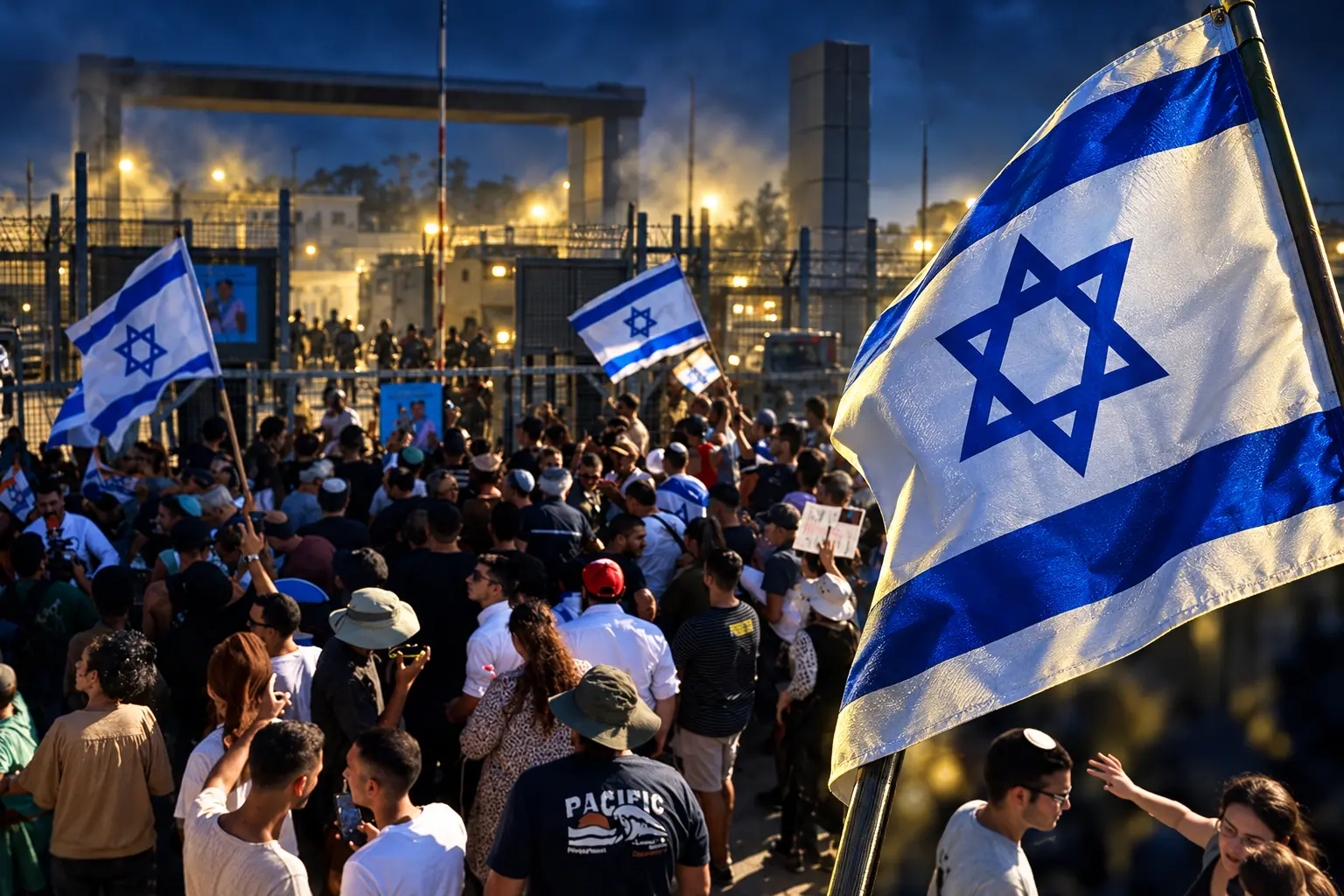
She had opened a probe into violence against a Palestinian detainee at the Negev camp. Right-wing protesters, including lawmakers, then pushed into Sde Teiman and the Beit Lid military-court base after reservists were taken in. Officers in her unit, she wrote, faced insults and threats for standing “guard over the rule of law.” Two days after the letter, Prime Minister Benjamin Netanyahu told the weekly Cabinet meeting the leak “may be the worst public relations disaster Israel has ever faced.” He asked for an independent investigation of the disclosure. He did not describe the assault as the disaster.
That inversion is the late form of a ritual Israeli literature had been rehearsing since the first year of the state.
A 1949 Novella Taught Israel How to Feel Sorry
S. Yizhar’s 1949 novella about a village expulsion, Khirbet Khizeh, follows young soldiers ordered to clear Palestinian villages after the 1948 war. The narrator wants to belong to his unit. His conscience hurts. He joins the expulsion anyway and leaves the remorse for later. Gil Hochberg, Ransford Professor of Hebrew, Comparative Literature, and Middle East Studies at Columbia University, notes that the book became required reading for Israeli high-school students around the 1967 war, then a bestseller, then a television series after 1973.
The Hebrew tag is yorim ve’bochim. After 1967 it stuck to a whole library. Kibbutz veterans, among them Amos Oz, filled Siach Lochamim (The Seventh Day) with battlefield talk that mixed killing and unease. Later films carried the same posture into Lebanon: Beaufort, Waltz with Bashir, Lebanon. Yizhar himself sat in the Knesset for Mapai in the 1950s while the dispossession his fiction described continued. The tears and the shooting were never sequential careers. They were simultaneous.
THE RITUAL’S PAPER TRAIL
- 1949: Yizhar publishes Khirbet Khizeh, a soldier’s conscience set inside an expulsion.
- 1967: The novella enters the school canon; Siach Lochamim records kibbutz fighters talking through victory and civilian harm.
- 2007: Ayyash dates the mainstream fade of the formula to the years after the Gaza siege began.
- 2019: Hochberg writes that shooting continues and crying has been replaced by laughter and campy self-display.
- May 26, 2026: Ayyash argues the pretence “has completely disappeared.”
The obituaries arrived early. Gaza made them harder to talk past.
What Shooting and Crying Meant in Hebrew
Hochberg described the pose as a soldier being “sorry for things I had to do,” a non-apologetic apology of shooting and crying that kept a youthful, innocent national self-image in view of occupation and war. Oz, asked about serving in 1967 and 1973, gave the line that sealed the genre: “I have done many things that I am sorry I had to do, but nothing that I am ashamed of.”
Ayyash ties the same ethos to a sentence long attributed to Golda Meir: Israelis could forgive Arabs for killing their sons, and never forgive them for forcing Israelis to kill theirs. The crying, in that telling, was directed at the self. Palestinian death was the burden the speaker had been made to carry.
From the second Intifada, and “especially after the barbaric siege of Gaza began in 2007,” Ayyash writes, Israeli public talk stopped stressing the psychological cost to its own soldiers and started celebrating efficient killing. He quotes Arnon Soffer, a demographer he calls a chief academic supporter of the siege, speaking in 2004: “If we want to remain alive, we will have to kill and kill and kill. All day, every day.” Soffer still worried whether “the boys and men who are going to have to do the killing” could come home as “normal human beings.” Two decades later the worry looks ornamental.
Soldiers Put the Destroyed Houses on TikTok
Researchers compiling public soldier posts gathered more than 2,500 social media accounts. Ayyash points to that archive as proof the glee is not a rumor. In one clip a French-Israeli soldier gestures at a detainee and says: “Look, he pissed himself. Look, I’ll show you his back. You’re going to laugh. Look, they tortured him to make him talk. Did you see his back? Son of a whore.” The soldier assumes the laugh. That is the specimen, not a metaphor.
Eran Shamir-Borer, director of the Center for Security and Democracy at the Israel Democracy Institute, said the change is volume plus shamelessness: soldiers “don’t shy away from uploading videos, sometimes with their face.” “They’re not even ashamed of what they’re doing.”
WHAT THE SOLDIER CAMERAS SHOWED
- Wanton destruction: Troops filmed themselves smashing homes, detonating blocks, and treating the rubble as a personal highlight reel.
- Detainee mistreatment: Bound and stripped prisoners were mocked, kicked, and posed for the people back home.
- Human shields: Palestinians, including teenagers, were pushed into buildings and in front of armor to test for traps.
B’Tselem, the Israeli human rights group, logged a parallel habit in the West Bank: bodies thrown from a roof in Qabatiyah, scooped by bulldozer buckets, moved in ways the army later said matched a Shin Bet instruction to bring corpses into Israel. Dehumanization is not only a laugh on a phone. It is a handling procedure.
The United Kingdom group Action on Armed Violence reported in August 2025 that 88 percent of IDF investigations opened between October 2023 and June 2025 into alleged crimes in Gaza and the West Bank were still under review with no public progress, or had been closed with no finding of wrongdoing. The cameras kept running either way.
Sde Teiman Turned Remorse Into a Liability
On July 5, 2024, a Palestinian security detainee at Sde Teiman, north of Beersheba, was hospitalized with broken ribs and a tear in the rectal wall. Reservists from Unit 100, a military police guard unit, were accused. Israeli television aired the surveillance tape on August 6, 2024. Soldiers isolated the man with riot shields, then beat him. The United Nations Independent Commission of Inquiry recorded medical evidence of an object inserted in the anus. The indictment filed on February 19, 2025, charged five reservists with severe physical assault. It did not charge rape or sexual violence.
On July 29, 2024, as military police moved to detain suspects, a crowd that included Knesset members stormed the camp and the court base. In a Knesset exchange that day, Likud lawmaker Hanoch Milwidsky was asked by Palestinian MK Ahmad Tibi whether it was legitimate “to insert a stick into a person’s rectum.” Milwidsky shouted: “Yes! If he is a Nukhba, everything is legitimate to do! Everything!” Nukhba is the Hamas unit that led the October 7, 2023 assault.
THE SDE TEIMAN FILE
| Date | What the record shows |
|---|---|
| July 5, 2024 | Detainee hospitalized after an assault at the camp |
| August 6, 2024 | Surveillance video airs on Israeli television |
| February 19, 2025 | Five Unit 100 reservists indicted for severe physical assault |
| October 31, 2025 | Tomer-Yerushalmi resigns and admits approving the leak |
| November 2, 2025 | Netanyahu calls the leak a historic public-relations disaster |
| March 2026 | All charges against the five are dropped |
Twenty months after the assault, the file ended without convictions on that indictment. The Secretary-General’s 2026 report on conflict-related sexual violence warned that the outcome “risk[s] reinforcing a climate of impunity.” A separate reservist, in a different Sde Teiman beating case that included forcing bound detainees to make animal noises, had been sentenced in February 2025 to seven months. That remains the stray conviction, not the tape case.
The detainee in the leaked video was later returned to Gaza in a prisoner-hostage exchange. With no testimony in court and a leak that defense lawyers treated as a fair-trial problem, the assault became a public-relations event whose main Israeli casualty was the lawyer.
Breaking the Silence Still Collects the Old Tears
The ritual is not extinct. It has been evicted from power. Breaking the Silence, the veterans’ group founded in 2004, still takes testimony in a Tel Aviv office. The organization says it has logged accounts from over 1,500 people. In 2026 it was still publishing Gaza material on rules of engagement, including how many acceptable civilian deaths known as NAZA a strike could carry. Nadav Weiman, the group’s executive director, has described a method of firing first and assembling a justification after, what the group has called retrospective incrimination.
Those testimonies are the leftover half of Yizhar’s bargain: the soldier who talks, late, to a recorder. They do not set targeting policy. They do not keep a MAG in post. They do not stop a Likud MK from calling rectal abuse legitimate when the detainee can be labelled Nukhba. Ayyash is wrong if he means no Israeli still cries on the record. He is closer to the mark if he means the crying no longer buys restraint, promotion, or a usable story for the state’s friends abroad.
He refuses a cultural or religious explanation. “This gleeful violence is not the outcome of reasons that are peculiar to the Israeli nationality or identity itself, and certainly not to Jewish identity, culture, or religion,” he writes. He calls it the predictable product of a settler-colonial system that dehumanizes the people it wants off the land and then trains the settler to experience successful force as a reward. Each round of shooting that yields territory, weapons, and diplomatic cover teaches glee. The literary tears were a way of spending the reward and keeping the self-image.
The UN Blacklist Did Not Touch the Rewards
On May 29, 2026, three days after Ayyash’s essay, Secretary-General António Guterres’s annual report added Israeli armed and security forces to the annex of parties credibly suspected of patterns of rape or other sexual violence. Hamas was already on the list from the October 7 attacks. Russia was added the same year. The annex names 77 parties in a dozen countries.
THE 2026 UN COUNT
- Verified victims: 31 Palestinians from Gaza and the West Bank, in a file the UN calls indicative, not complete.
- Who they were: 14 men, 7 women, 9 boys, and 1 girl.
- When: 13 cases in 2025, 18 in 2023 and 2024.
- What the file lists: Rape including with objects, gang rape, attempted rape, genital violence, abusive strip searches, forced nudity, and threats of rape.
The 31 verified cases of sexual violence were attributed to the IDF, the Israel Prison Service (including Keter), Shin Bet, and the Yamam police unit, in prisons, camps, checkpoints, and raids. An earlier 2025 UN file had already recorded 10 instances in which victims of forced nudity in Gaza were filmed or photographed by Israeli forces. Israel’s UN ambassador, Danny Danon, said, “We are done with this UN secretary-general,” and accused Guterres of a “moral disgrace.” The foreign ministry called the listing “shameful and absurd,” said Israel had refuted the allegations, and announced it would sever all ties with the Secretary-General until a successor takes office when Guterres’s term ends on December 31, 2026.
Ayyash’s prescription was the opposite move: “full and total economic isolation of the Israeli state,” on the grounds that a society which celebrates this violence “does not possess the capacity to reform from within.” Isolation is not what followed the blacklist. Jerusalem cut the secretary-general, not the other way around. Weapons trade, European commerce, and Western political cover, the rewards he named, were not withdrawn as a bloc. The crying had already stopped paying at home. The UN list did not make the shooting expensive enough to revive it.
The Sde Teiman tape is still easy to find. The five reservists are not in the dock. Tomer-Yerushalmi is the official who lost her job for letting the country see what the cameras had already stored.

Christa Pike Survived the Execution Tennessee Would Not Pause

Musk’s Oligarch Charge Hits a Queue of Three

Circle Puts USDC and EURC Into SAP Pay Workflows

Ring’s First Smart Lock Skips Home Wi-Fi for Sidewalk

GTA 6 Puts Cash Back on the Story Path

Salah Captained Egypt to Their First World Cup Win

Aramco Crash Kills 14 Two Days After Oil Restart

Apple Labor Day Deals Hide June’s Memory Price Hike

Zelda’s 40th Switch 2 Ships Without a Zelda Game

Palworld 1.0.4 Adds Palpedia Search After the 1.0 Launch
-
 NEWS5 months ago
Salah Captained Egypt to Their First World Cup Win
-
 BUSINESS4 months ago
Aramco Crash Kills 14 Two Days After Oil Restart
-
 NEWS2 months ago
Apple Labor Day Deals Hide June’s Memory Price Hike
-
 GAMING1 month ago
Zelda’s 40th Switch 2 Ships Without a Zelda Game
-
 GAMING1 month ago
Palworld 1.0.4 Adds Palpedia Search After the 1.0 Launch
-

 NEWS4 months ago
El Niño Puts Israel’s Needed Winter Rain on a Flood Clock
-

 BUSINESS8 months ago
Egypt Bets EGP 638 Billion Can Open Sinai to Investors
-

 BUSINESS8 months ago
BAE’s 60-Year Saudi Franchise Now Runs Through Taif