
NEWS
The Intercept That Still Halted Ben Gurion Airport
Israel intercepted a Houthi Palestine-2 aimed at Ben Gurion on August 17, 2025, yet sirens and a flight pause still handed Sanaa the disruption it claimed.

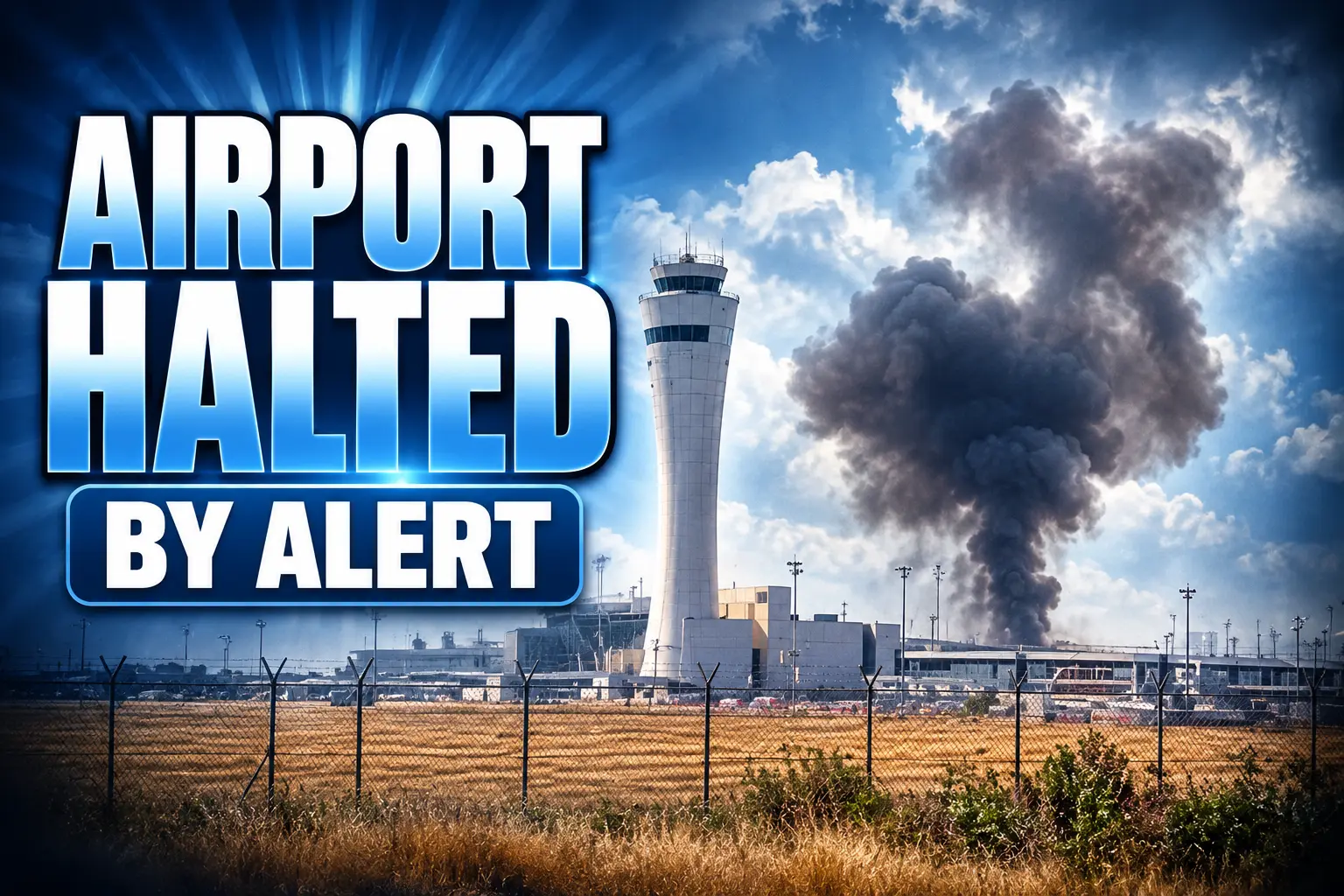
Israeli air defenses intercepted a Houthi ballistic missile aimed at Ben Gurion Airport on August 17, 2025, after sirens emptied streets in Tel Aviv and Jerusalem. Yemen’s Ansarallah, the Houthi movement, said its missile unit had fired a Palestine-2 hypersonic round at Lod Airport and that the strike “successfully achieved its objective.”
The warhead never arrived. The alert still did the work the launch was built to do. Flights paused, shelters filled, and a spokesman in Sanaa cut a victory clip while Defense Minister Israel Katz promised the group would “pay with compound interest.”
Israel Intercepts the Shot Aimed at Lod Airport
The Israel Defense Forces said the Air Force intercepted one missile launched from Yemen, and that sirens had sounded across several areas under standing alert rules. Explosions were heard over Jerusalem and Tel Aviv, the usual sound of interceptors, not of a crater on the airfield.
Houthi military spokesman Yahya Saree said the round targeted Lod Airport, the civil name the group uses for Ben Gurion, in occupied Jaffa. The statement tied the fire to Gaza and to what it called the latest Israeli attack on Yemen, and vowed to keep shooting until the war there ended and the blockade was lifted.
No casualties or damage from the missile were reported. That is the IDF’s score. Saree’s score was different: thousands pushed into shelters, and a halt in airport traffic. Both descriptions of the same afternoon can be true at once, which is why the launch keeps getting repeated.
The Fourteenth Strike Came by Sea
Hours earlier, Israeli Navy missile boats had already hit energy infrastructure the IDF said was used by the Houthi authorities near Sanaa, about 2,000 km from Israel. The military called the target “energy infrastructure used by the Houthi terror regime” and said the raid answered repeated missile and drone fire at Israeli territory.
Houthi-run Al Masirah television reported an “aggression” against the Haziz power station south of the capital, with generators knocked out and a fire that civil defense teams later contained. It did not name Israel. Residents heard at least two explosions. An Israeli defense official said the shooters were Navy missile boats, only the second Israeli naval strike on Yemen after a June raid on Hodeidah port.
Sunday morning’s raid was Israel’s 14th strike on the Houthis. Katz folded it into his afternoon warning, saying an air and naval blockade was already hurting the group and that “this morning we struck infrastructure and energy targets.” Sanaa’s airport after earlier Yemen strikes has had to live with the same logic: civil sites sit next to the war the Houthis chose with Israel, and they get hit when the missiles fly.
THE COUNT BY MID-AUGUST
- Distance named: The IDF put the Sanaa energy target about 2,000 km from Israel.
- Strike tally: The navy raid was Israel’s 14th attack on the Houthis and the second by missile boats.
- Fire since March 18: By that morning the Houthis had launched 69 ballistic missiles and at least 22 drones at Israel after the Gaza offensive resumed.
- Plant report: Al Masirah said generators at Haziz went offline and that crews contained the fire.
Those figures sat on the books before the afternoon sirens. The Palestine-2 claim was not a first shot in a quiet week. It was the next round in a ledger Katz said Israel was already collecting on.
Why Ben Gurion Still Stopped
Ben Gurion is Israel’s main international gate, sitting in Lod east of Tel Aviv. When a long-range alert sounds, takeoffs and landings stop while the sky is sorted out, even if the interceptor later gets the credit. That pause is the product. It does not need a hole in a taxiway.
On May 4, 2025, a Houthi ballistic missile did reach the grounds, the first time the group’s fire had landed on the airport itself. It came down in a grove beside an access road near Terminal 3, several hundred yards from the control tower. Six people were hurt, none seriously. The field reopened after an hour. Foreign carriers then cancelled Israel flights for weeks.
August 17 was the other half of that lesson. The missile died in the air. The timetable still flinched. Hostage protesters were already in the streets in large numbers that Sunday when the sirens cut through the rally, a reminder that the alert reaches whoever is outside, not only people near the fence at Lod.
TWO DAYS AT BEN GURION
| Date | What reached Israel | Airport | Injuries |
|---|---|---|---|
| May 4, 2025 | Missile hit airport grounds near Terminal 3 | Closed about one hour; foreign airlines then fled | Six, none serious |
| August 17, 2025 | One missile intercepted | Flights briefly suspended | None reported |
Carriers price that pattern, not the press release that follows it. After the May crater, foreign airlines already cutting regional routes treated Israeli airspace as a war zone even on days when nothing hit concrete. A successful intercept still feeds that file.
The Missile the Houthis Call Hypersonic
Saree named the round a Palestine-2, the label the Houthis have used since 2024 for a two-stage, solid-fuel missile they say can reach 2,150 km. They call it hypersonic, a word for weapons that fly at Mach 5 or faster and can turn late, and they have put claimed speeds as high as Mach 16 on the same airframe. They also talk of a 500 kg warhead and a stealth coating meant to beat Israeli defenses, including Iron Dome, a system that is not the main battery against high ballistic shots in any case.
WHAT THE HOUTHIS CLAIM FOR PALESTINE-2
- Range: Up to 2,150 km, enough on paper to cover Israel from Yemen.
- Fuel: Two-stage solid propellant, which can be fired with less prep than a liquid-fuel missile.
- Speed: Hypersonic, with Houthi figures running from Mach 5 up to Mach 16.
- Warhead: About 500 kg, per the group’s own description.
Independent specialists do not grant the headline speed. Emily Milliken, associate director of the Atlantic Council’s N7 Initiative, wrote that governments should treat those hypersonic claims with skepticism. At the time she wrote, only the United States, China, India, and Russia had shown true hypersonic weapons, and Russia’s Zircon was listed at Mach 8 with a 1,000 km range.
Given international sanctions and arms embargoes on the Houthis and Iran, it is doubtful that the rebels, or their backers in Tehran, could develop a system that is roughly twice as powerful as the one developed by the Russians.
Emily Milliken, associate director, Atlantic Council N7 Initiative
An IDF official denied hypersonic performance on an earlier Palestine-2 shot in September 2024. Milliken still treated that launch as a real shift because the missile flew more than 1,900 km, because Arrow appeared to hit it without fully destroying it, and because solid fuel, if confirmed, shortens the time from truck to launch.
WHERE ANALYSTS DISAGREE
- Houthi line: Palestine-2 is a hypersonic, maneuvering missile that can beat Israeli defenses at Mach 16.
- IDF line from 2024: An official denied that an earlier round of this type reached hypersonic speed.
- Stockpile: Wolf-Christian Paes, a senior fellow at the International Institute for Strategic Studies, said the Houthis “could have one missile or they could have one hundred,” because outsiders see the weapons mainly when they fly.
Fabian Hinz, a senior analyst at Conflict Armament Research, says Iranian support has been central, including transfers of advanced designs such as the Kheibar Shekan. Seizures at sea have already shown the Iranian origin of Houthi weapons, according to the U.S. Defense Intelligence Agency. The IISS, for its part, has described Houthi anti-ship and other missiles supplied predominantly by Iran, with enough reach to threaten vessels more than 750 km out. The argument over Mach numbers does not change the simpler fact: Sanaa can put a ballistic missile on a path toward Lod.
May’s Crater Set the Terms
The May 4 impact is the day every later Houthi claim is trying to reprint. A ballistic missile from Yemen beat several intercept tries and struck inside the airport fence. The IDF said an impact was identified in the Ben Gurion area. The airport closed, then reopened about an hour later. Six people were hurt as they ran or as debris landed, none of them seriously.
That afternoon taught both sides a durable rule. For Israel, a miss by the upper-tier batteries at the country’s main airport is a strategic event, not a local one, because airlines leave and insurance desks follow. For the Houthis, a camera on a crater beside Terminal 3 is worth more than a dozen intercepted shots that produce only sirens.
So the group kept naming Lod. Intercepted rounds in the spring and summer were still sold as airport operations. August 17 fit that script exactly. The military said the missile was destroyed. The Houthi statement still read as if the May crater had happened again. Open-source feeds spent the evening arguing past each other, one side counting a kill in the sky and the other counting a paused runway. They were not even scoring the same sport.
Katz Promised Compound Interest After the Alert
Katz’s reply came with the same day’s navy raid still smoking. He did not wait for a new cabinet paper. He tied the blockade, the morning strike, and the afternoon missile into one bill.
The Houthis will pay compound interest for every attempt to fire at Israel. We are imposing an air and naval blockade that hurts them greatly, and this morning we struck infrastructure and energy targets. This is only the beginning. The continuation will be strong and painful. Whoever raises a hand against Israel, his hand will be cut off.
Israel Katz, Israeli defense minister, August 17, 2025
SUNDAY, AUGUST 17
- Morning, August 17, 2025: Navy missile boats strike energy infrastructure near Sanaa, Israel’s 14th attack on the Houthis.
- Morning, August 17, 2025: Al Masirah reports generators down at Haziz and a fire that crews contain.
- Afternoon, August 17, 2025: A missile from Yemen sets off sirens in Tel Aviv and Jerusalem; the IAF intercepts it; Ben Gurion pauses flights.
- Afternoon, August 17, 2025: Saree claims a Palestine-2 success at Lod; Katz issues the compound-interest warning.
Five days later, on August 22, another missile from Yemen again sounded sirens in central Israel and halted takeoffs and landings at Ben Gurion. The Home Front later said that incident was over in minutes. The pattern did not need a new manifesto. Katz collected interest. Saree cut another clip. The airport kept practicing how to freeze.
The intercept on August 17 did what the batteries are for. It also left intact the cheaper Houthi win, the one that shows up in a terminal departure board and in a shelter doorway, and that can be filmed from Sanaa without a single passenger seeing a warhead.

Ninja Theory Staff Face Redundancy After Two Xbox Sales Collapse

Amazon Sells the MacBook Air at Its Pre-Hike Price

U.S. Slows Jet Parts to Squeeze China’s Flying Fleets

PEGI Pulled the GTA 6 Age Rating After Cocaine Details

Northwestern’s Smaller Ryan Field Gave Penn State Nowhere to Hide

Aramco Crash Kills 14 Two Days After Oil Restart

Salah Captained Egypt to Their First World Cup Win

Apple Labor Day Deals Hide June’s Memory Price Hike

Palworld 1.0.4 Adds Palpedia Search After the 1.0 Launch

Zelda’s 40th Switch 2 Ships Without a Zelda Game
-
 BUSINESS3 months ago
Aramco Crash Kills 14 Two Days After Oil Restart
-
 NEWS4 months ago
Salah Captained Egypt to Their First World Cup Win
-
 NEWS1 month ago
Apple Labor Day Deals Hide June’s Memory Price Hike
-
 GAMING4 weeks ago
Palworld 1.0.4 Adds Palpedia Search After the 1.0 Launch
-
 GAMING4 weeks ago
Zelda’s 40th Switch 2 Ships Without a Zelda Game
-

 NEWS3 months ago
El Niño Puts Israel’s Needed Winter Rain on a Flood Clock
-

 NEWS3 months ago
Saudi Visa Routes Split Nigerian Travelers Into Two Speeds
-

 BUSINESS2 months ago
Egypt Seeks Two Extra El-Dabaa Reactors Before First Power