
BUSINESS
Pension Funds Hold Germany’s Missing €15 Billion for Tech
German VCs want €15 billion a year from pension funds that earn negative real returns, as Berlin’s investor summit courts foreign capital instead.

German venture firms told Berlin they can free €15 billion a year for homegrown tech if pension funds, insurers and foundations raise a tiny slice of their €2.8 trillion toward venture capital. They spoke as Berlin opened a two-day investor conference aimed at foreign chief executives, not the savers who already hold the money.
Berlin Rolled Out the Carpet for Foreign Capital
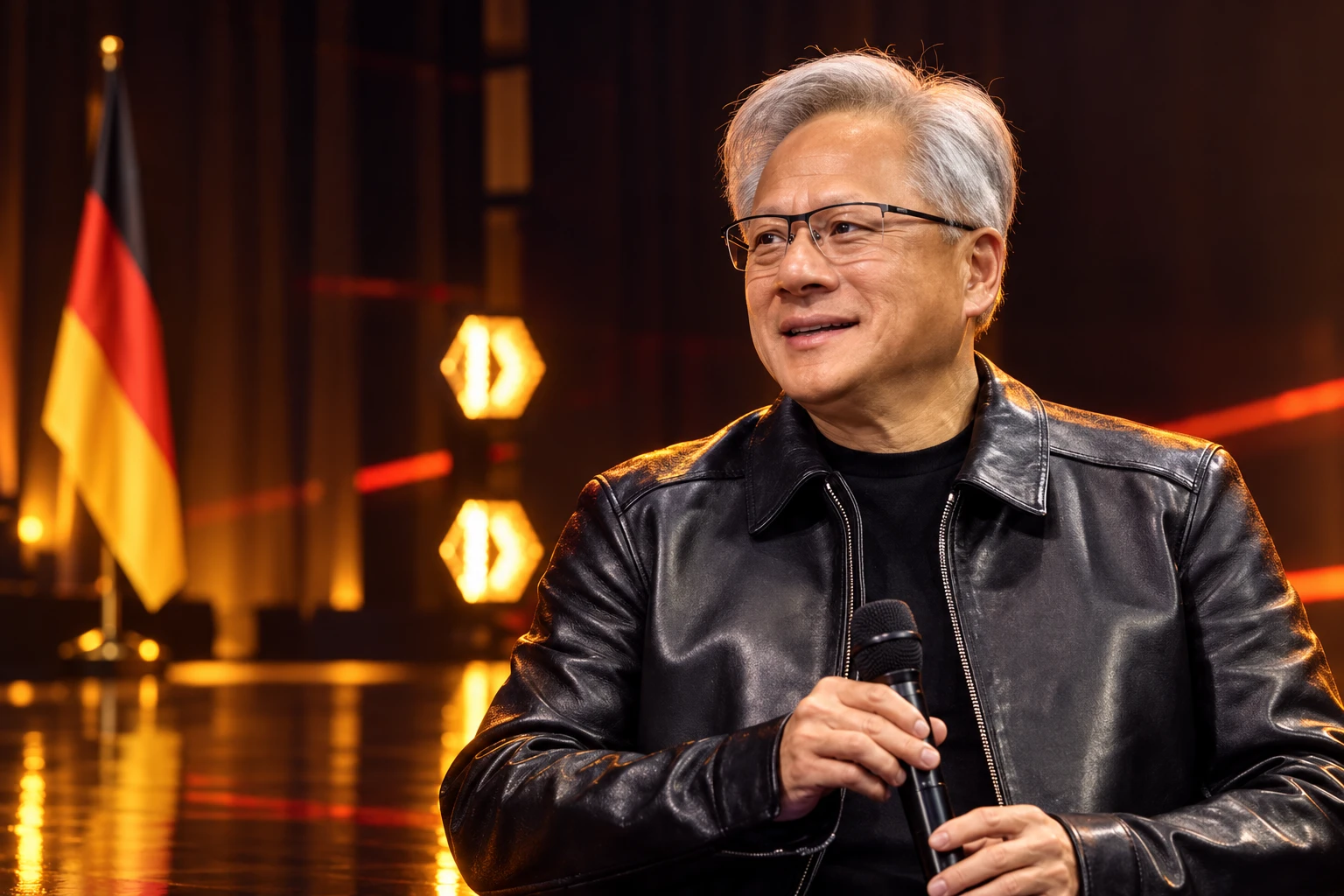
The first Invest in Germany Summit in Berlin opened on 19 October at a retired power plant under the slogan Red Carpet for Investments, then moved on 20 October to ESMT Berlin on Schlossplatz. About 200 company chiefs were invited. The programme put Nvidia chief executive Jensen Huang on stage with Chancellor Friedrich Merz, BlackRock chairman Larry Fink with Economics Minister Katherina Reiche, and Amundi chief executive Valérie Baudson with Finance Minister Lars Klingbeil.
The government’s pitch to those guests is a €500 billion infrastructure and climate fund and €600 billion in defence spending through 2029. The summit site calls Germany the only G7 country with a triple-A grade from all three major rating firms, after a March 2025 constitutional change that, it says, gives investors fiscal backing. Merz’s line to the room was written for imported money. “Germany is open for investment, Germany is open for business and Germany is ready to grow at a faster pace,” he said.
Huang told the same room that Nvidia had put almost a billion dollars into Germany over the past year, employs about 1,000 people there, and is putting money into four new companies this week. He said half the German startups founded in the last two years work in AI. Berlin signed an AI intent deal with the chipmaker on the sidelines, tying a US firm into a coalition that talks often about technological sovereignty.
There’s nothing to regulate if the industry doesn’t thrive.
Jensen Huang, chief executive of Nvidia, at the Invest in Germany Summit
Celonis co-founder Bastian Nominacher sat on the digital-economy panel, a rare German software name on a bill built for global capital. Jeannette zu Fürstenberg of General Catalyst was booked with Martin Blessing, the chancellor’s investment envoy, on geopolitics and security. The domestic pension funds that the venture firms want in the room were not the draw.
Less Than a Third of German Startup Money Is German
Twenty-four German and European funds formed the German Venture and Growth Forum in June, among them Earlybird, HV Capital, High-Tech Gründerfonds, Lakestar, Project A and Vsquared Ventures. The group speaks for about €28 billion in assets. Christian Nagel, co-founder and partner at Earlybird Venture Capital, put the half-year tally on the table as the summit opened.
In the first half of this year, €5.1 billion were invested in German startups. Less than a third of this capital came from within Germany. The US typically has a 70 per cent self-sufficiency rate when it comes to investing in its own American growth companies. There is still great potential here for Germany.
Christian Nagel, co-founder and partner, Earlybird Venture Capital
Nagel also called for more cooperation, transparency and dialogue, because German institutional money is still leaving the country. The Forum says US investors have matched European money in European companies raising more than €100 million over the past five years. About 70 per cent of the money going into American growth companies comes from home.
GERMANY VERSUS THE UNITED STATES
| Measure | Germany | United States |
|---|---|---|
| Home share of growth funding | Less than a third of H1 2026 startup money | About 70% of growth-company investment |
| Pension 5-year nominal return (OECD, via the Forum) | 2.9% | 5.3% |
| Pension 5-year real return | -0.6% | 1.2% |
| Venture and growth vs GDP (Forum) | Less than 0.2% | About 0.8% |
That split is the ownership problem dressed as a funding gap. When later rounds are paid for in dollars, voting rights, board seats and later sale proceeds travel with them. The Forum’s playbook, released at a SuperReturn side event in Berlin on 8 June with Reiche, Blessing and KfW chief executive Stefan Wintels in the room, is an attempt to pull those later cheques back onshore.
What a 2 Percent Allocation Would Move
German pension funds, insurers, professional schemes and foundations have committed about €400 million a year to European venture and growth funds over the past decade, a share the Forum puts at about 0.1 per cent. Raising that share to 2 per cent could, on the Forum’s maths, free about €15 billion a year for growth companies. Matching US growth-investment levels relative to the size of the economy, while keeping a similar home share, would take almost €30 billion more a year across Europe, about €15 billion of it from Germany.
The same playbook says the United States puts about 0.8 per cent of GDP into venture and growth and Germany less than 0.2 per cent. Invest Europe and Cambridge Associates figures cited by the group put annualised net returns on European venture and growth funds at about 14 to 18 per cent over 20 years. Those numbers are the pitch to trustees who still treat the asset class as a curiosity.
The playbook offers three doors rather than a new state fund: buy a single fund that holds 20 to 30 companies, buy a fund of funds that picks managers for you, or sit alongside a manager as a co-investor. It also scores managers on a five-part test of philosophy, past results, team, partnership terms and process. None of that requires a law. It requires a mandate from people who already run the money.
Negative Real Returns for German Pension Savers
The people who would have to sign that mandate are not venture partners. They are the boards of pension funds, insurers and foundations whose portfolios still cluster in government bonds and property. The Forum, citing OECD figures, says German pension funds posted a five-year nominal return of 2.9 per cent, equal to a real return of -0.6 per cent after inflation. US pension funds, on the same comparison, posted 5.3 per cent nominal and 1.2 per cent real.
THE SAVER’S LEDGER
- The pool: Pension funds, insurers and foundations together run about €2.8 trillion.
- The OECD equity share: German pension portfolios had an 8.3 percent weight in equities, among the lowest in the OECD, with Czechia at 10.3 per cent and Korea at 0.1 per cent.
- The Forum’s VC slice: About €400 million a year into European venture and growth funds, put at about 0.1 per cent.
- The asked shift: A 2 per cent share, on the Forum’s estimate, would free about €15 billion a year.
Dr Tanja Emmerling, partner at High-Tech Gründerfonds, has tied that gap to the planned statutory capital pension, the long-running attempt to put a funded slice inside Germany’s pay-as-you-go first pillar. A Bundestag question list dated 20 October still asks whether that public fund would buy venture and startups at all, and through which vehicles.
The planned statutory capital pension offers an enormous opportunity to increase capital for VC in Germany. Within a diversified portfolio, VC offers exactly what the capital pension is intended to provide: returns and growth.
Dr Tanja Emmerling, partner, High-Tech Gründerfonds
Emmerling also argued that venture holdings would back the companies future pension systems rest on, and that insurers could do more. The Leibniz Institute for Financial Research SAFE has modelled a first-pillar fund that could reach €560 billion by 2040 and €2.18 trillion by 2060 if the pension commission’s design is built. That is a forecast, not a cheque. Until a mandate names venture as a permitted line, the saver’s capital pension is another large pool pointed at listed markets.
Solvency Rules Still Steer Money Into Bonds
The legal room is wider than the 0.1 per cent habit suggests. A February 2025 change to the German Investment Ordinance, which covers smaller insurers, Pensionskassen and Versorgungswerke, set out new caps rather than a ban.
WHAT THE ORDINANCE NOW ALLOWS
- Private equity funds: Up to 15 per cent of guarantee assets.
- Alternative funds: Up to 7.5 per cent of guarantee assets.
- Risk-capital basket: Lifted to 40 per cent of guarantee assets, covering listed and unlisted equity, private equity, alternative and hedge funds, and some loans.
Large insurers under Solvency II do not live under those hard caps. They hold extra capital against risk, which makes long-dated, hard-to-sell holdings expensive on the solvency sheet even when the trustee likes the return. In practice many groups still run AnlV-style limits across pension vehicles, so the ordinance sets the mood for more than the small firms it names. Occupational pension funds and professional schemes together manage about €500 billion, a finance ministry spokesperson said when WIN’s next phase was launched, and their exposure to startups has been low.
Ticket size does the rest. A large insurer that only writes fund cheques from €50 million or €100 million will skip most European venture vehicles, which is why the playbook pushes funds of funds. The barrier is not that German savers have no money. It is that the way their money is supervised, ticketed and reported still treats a 12-year venture fund as an oddity next to a bund.
WIN Has Put €2.64 Billion to Work
Berlin already has a public-private pipe for this argument. The WIN initiative, Growth and Innovation Capital for Germany, was set up on 17 September 2024 by the chancellery, the finance and economics ministries, KfW, companies and associations, with a first goal of €12 billion of private investment by 2030. KfW’s first annual report recorded €2.64 billion of WIN money invested by the end of 2025, 22 per cent of that first target, 61 per cent of it in Germany and 37 per cent in the rest of Europe.
Two-thirds of the invested amounts, 67 per cent, went to scale-ups in later growth rounds. Ten per cent went to younger startups and 18 per cent as seed. Six of the ten agreed WIN measures had been carried out, two were in progress, and two were under review.
WHERE THE WIN MONEY WENT
- Classic venture funds: 51 per cent of the committed investments.
- Venture debt: 36 per cent.
- Direct stakes in companies: 8 per cent.
- Venture funds of funds: 6 per cent.
The coalition then told KfW to raise WIN investments to €25 billion, an extra €13 billion, and to go after family offices, foundations, insurers, Pensionskassen and corporate venture arms that have stayed out. That extra €13 billion is a stock of commitments, not €15 billion every year. Klingbeil called the €2.6 billion already in companies “very good news” and pointed to the Location Promotion Act. Reiche said Germany needs more private venture capital and that Berlin “want[s] and can do even more.”
FROM PLAYBOOK TO SUMMIT
- 17 September 2024: WIN launches with a €12 billion private-investment goal by 2030.
- End of 2025: €2.64 billion of WIN money is in the market, 61 per cent of it in Germany.
- 8 June 2026: Twenty-four funds publish the German Venture and Growth Playbook and put a €15 billion yearly figure on institutional allocations.
- September 2026: WIN’s next phase seeks an extra €13 billion, taking the target to €25 billion, including pension schemes.
- 19 October 2026: The Invest in Germany Summit opens with Huang and Merz, and with foreign capital as the invited guest.
Merz had already given the domestic scoreboard on 30 September at the Made for Germany anniversary. He said Germany had added ten unicorns this year, taking the count to 39, and that startups raised eight billion euros in the first nine months of 2026. Corporate pledges inside that initiative, he said, had grown from about €600 billion to more than €800 billion, with membership above 140. Those are established factories and supply chains. They are not the later-stage funds the Forum says Germany still imports.
Nvidia Wrote Cheques the Pension Funds Did Not
Benedikt von Schoeler, co-founder and general partner at Vsquared Ventures, told the Forum that prosperity and jobs cannot rest only on yesterday’s business models, and that an attractive location is defined by the companies still being founded. The summit’s own guest list made his point in reverse. The public event sold Germany to Fink, Huang and Baudson. The private argument, in a playbook aimed at trustees, is that the money to grow those new companies is already booked in German accounts, earning less than inflation.
Capital will not wait on a red carpet if the rules at home still point it into bonds. Huang can announce four new holdings in a week because his balance sheet is built for that. A Pensionskasse that has spent a decade putting about 0.1 per cent into European venture cannot match him on a stage, even after the ordinance opened more room and even after WIN began knocking on its door.
On 20 October, while ministers hosted bilateral meetings at ESMT, parliament was still asking whether the coming capital pension would buy venture at all. Until that answer is yes, and until a 2 per cent line appears in mandates rather than in a playbook, the next German tech company will keep raising from the people who showed up for the carpet.
Disclaimer: This article is news reporting and analysis of public statements by venture firms, KfW, the federal government and data from the OECD, Invest Europe and Cambridge Associates. It is informational only and is not investment, pension, tax or legal advice, and it does not recommend any allocation to venture capital, any fund, or any change to a retirement portfolio. Readers who are trustees, savers or advisers should consult a qualified investment adviser, pension lawyer or actuary before acting on any figure discussed here. Amounts, returns, allocations and policy plans reflect the cited sources as of the dates of those documents and speeches and can change with markets, regulation and later government decisions.

Cook Hands Democrats the House as Crypto’s Bill Stays Dead

Wicker’s Broken Bed Was the Short Story’s Punch Line

Nvidia’s $500 Billion Financing Plan Draws a $180 Sell

Maserati Bets the Grecale V6 Can Fill Porsche’s Gap

EV Cable Theft Follows the Old Railway Copper Playbook

Aramco Crash Kills 14 Two Days After Oil Restart

Salah Captained Egypt to Their First World Cup Win

Zelda’s 40th Switch 2 Ships Without a Zelda Game

Apple Labor Day Deals Hide June’s Memory Price Hike

Palworld 1.0.4 Adds Palpedia Search After the 1.0 Launch
-
 BUSINESS4 months ago
Aramco Crash Kills 14 Two Days After Oil Restart
-
 NEWS5 months ago
Salah Captained Egypt to Their First World Cup Win
-
 GAMING2 months ago
Zelda’s 40th Switch 2 Ships Without a Zelda Game
-
 NEWS2 months ago
Apple Labor Day Deals Hide June’s Memory Price Hike
-

 NEWS4 months ago
El Niño Puts Israel’s Needed Winter Rain on a Flood Clock
-
 GAMING2 months ago
Palworld 1.0.4 Adds Palpedia Search After the 1.0 Launch
-

 BUSINESS8 months ago
BAE’s 60-Year Saudi Franchise Now Runs Through Taif
-

 BUSINESS8 months ago
Egypt Bets EGP 638 Billion Can Open Sinai to Investors