
NEWS
A German Fuel Cell Plant Outraised Universal Quantum’s $100 Million
Reverion’s €154.2 million factory round outsized Universal Quantum’s $100 million Series A, while September’s €15.8 billion European rebound sat in a few giant.

Reverion closed a €154.2 million Series B on 29 September, a larger cheque than Universal Quantum’s later UK quantum record. The Bavarian fuel-cell maker will put most of the money into a German plant rated at 250 megawatts a year, with up to 800 jobs attached.
On 8 October the Sussex spin-out Universal Quantum said it had raised over $100 million Series A, billed as the largest Series A a UK-headquartered quantum firm has ever taken. Two days earlier SAP signed to buy Ghent’s TechWolf and Personio bought Berlin’s Circula, while a monthly tally put European startup funding at €15.8 billion in September against €3.2 billion in August.
A Fuel Cell Factory and Up to 800 Jobs
Reverion, a 2022 spin-out from the Technical University of Munich based in Eresing in Upper Bavaria, builds containerised solid-oxide fuel-cell plants that turn gas into electricity without burning it. The company says the units can run carbon-negative when they use biogas and capture that carbon, and it puts electrical efficiency in live customer use at 74.2 percent.
Kembara, a deep-tech and climate fund, led the Series B. New money came from Allianz, KfW Capital, Aurum Impact and Carbon Equity, alongside existing backers including Extantia, Energy Impact Partners, UVC Partners, the European Innovation Council Fund, alfa8 and Possible Ventures. The round is also reported as $175 million.
THE REVERION BUILD
- The cheque: €154.2 million Series B closed on 29 September, led by Kembara.
- The plant: a new German site meant to lift output tenfold to 250 megawatts a year.
- The payroll: more than 200 people already in Eresing, and up to 800 further jobs at the factory.
- The field kit: seven plants already running at customer sites, with a commercial pipeline the company puts above $2 billion.
The factory location is still open. Reverion has said it is looking in Germany, and that production for now stays in Europe. First international deliveries are due later in 2026. The money is a scale-up cheque for hardware that already has paying sites, aimed at data centres and industrial users that need firm power when wind and solar drop.
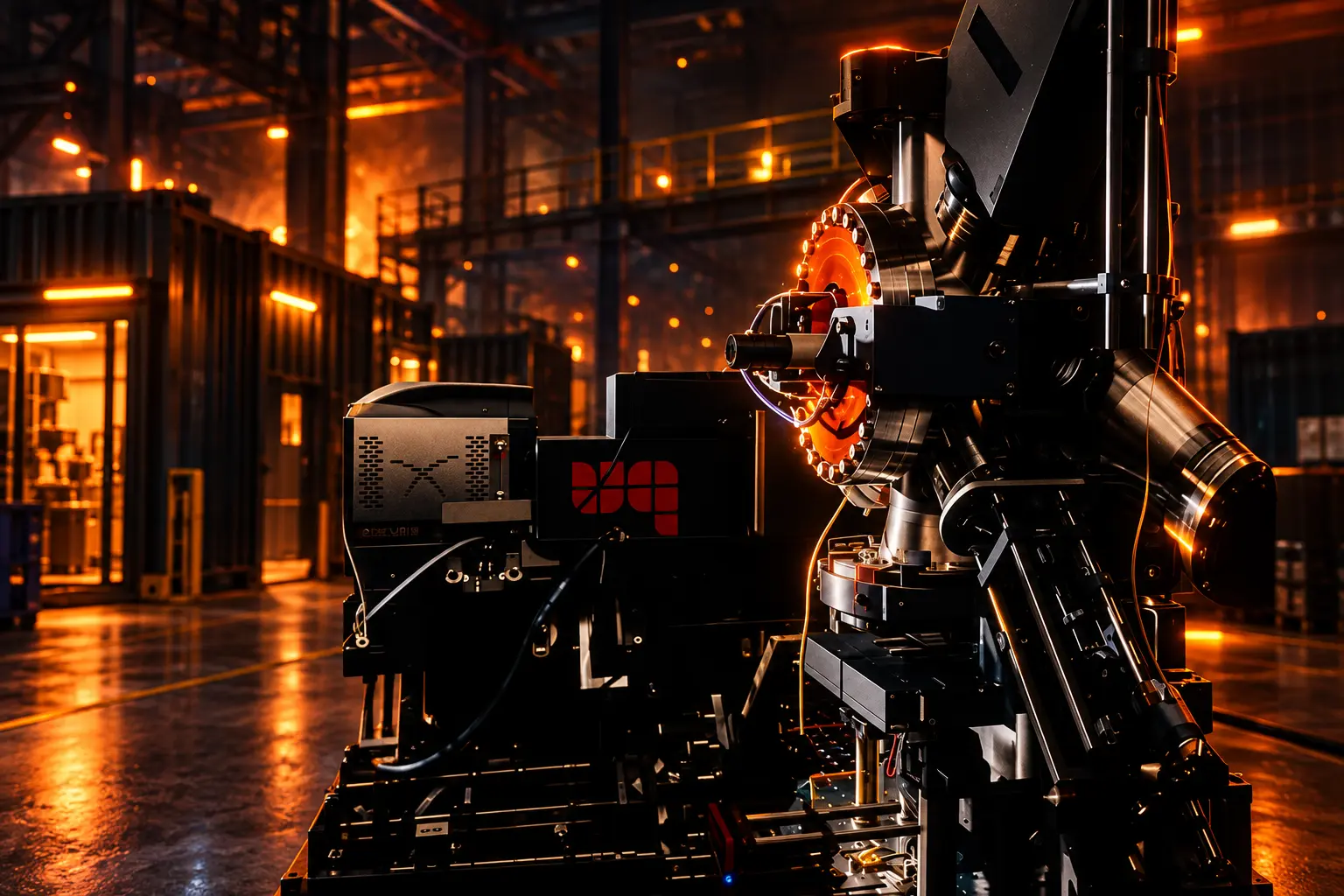
Universal Quantum Raises Cash to Tile Ion Chips
Universal Quantum was founded in 2018 by Professor Sebastian Weidt and Professor Winfried Hensinger of the University of Sussex, a year after they published a blueprint for a large-scale trapped-ion machine. The company now counts more than 100 technical staff across three continents, with a German hub in Hamburg and a first research centre outside Europe going up in Singapore.
Each chip holds charged atoms in electric fields. The plan is to tile many of those chips into a larger computer, rather than lean on photonic links or big laser arrays, and to push that design toward error-corrected machines. DCVC and Firgun Ventures co-led the round. Singapore’s EDBI, Artal (advised by Invus), Japan’s Integral GlobalTech, Australia’s Hostplus and NGS Super, Main Sequence, IAG Capital, EdenBase, Eigenstate Holdings, SiteGround Capital, Nauta Capital, The Venture Collective and Roblox founder Dave Baszucki also took part.
We've raised over $100M in Series A funding to scale utility quantum computing globally.
Thank you to our investors, partners, customers and the UQ team for making this possible.
Read the full press release here: https://t.co/RS1UoD8ntx#SolveScaleChangeWorld pic.twitter.com/XO6S5oEq0N
— Universal Quantum (@universalquant) October 8, 2026
Universal Quantum’s progress reflects our partners’ belief that we represent one of the most credible paths to quantum computing at scale. This round unites an extraordinary group of investors from the world’s most important pools of capital around a single mission: delivering utility-scale quantum computing.
Dr Sebastian Weidt, CEO and co-founder, Universal Quantum
Zeynep Korutürk, founding and managing partner of Firgun Ventures, said Europe is under pressure to prove it can compete on frontier technologies, and that the Sussex team has already grown into a global player. James Hardiman, general partner at DCVC, said the modular design attacks the hardest problems in scaling ion-trap systems. Bill Bartee, managing partner at Main Sequence, went further: in a field where claims run ahead of shipped hardware, he said Universal Quantum already has paying scientific and government customers.
Sovereign Funds Join Silicon Valley in the Syndicate
The investor list is a map of where the company wants to work. EDBI’s cheque sits next to the Singapore lab. Integral GlobalTech is a Japanese asset manager in a market Universal Quantum has named for expansion. Hostplus and NGS Super bring Australian pension money with a long clock. The United States is on the same expansion list as Japan and Hamburg.
A McKinsey quantum monitor, cited in the company’s own announcement, puts the quantum technology market at $60-100 billion a year by 2035. That forecast is a ceiling, not a shipping date. Universal Quantum did not publish a qubit count for a scaled machine, a valuation, or revenue with the round.
The $77 Million German Contract Is the Nearer Test
The cleaner evidence sits outside the equity. Universal Quantum is already delivering against a $77 million contract with the German Aerospace Center (DLR) to build multi-chip trapped-ion computers. That work is in force now. The Series A buys more attempts at the tiling problem; accepted hardware under the German project is what shows whether the pieces join at a quality that can support error correction.
People following the raise keep landing on the same gap. A quantum chip can look strong on its own and still leave the systems problem untouched. The next public test is whether connected modules hold up under a customer that already has a contract on the table, not whether another lab posts a larger private round.
September’s €15.8 Billion Sat in a Few Giant Rounds
The monthly tally that closed on 9 October is the other number being used to call a rebound. European companies raised €15.8 billion across 300 deals in September, against €3.2 billion across 165 deals in August, nearly five times the August total. Deal count rose by around 82 percent. That is not the same as a broad lift across the roster.
THE SEPTEMBER TALLY
| Slice | Amount |
|---|---|
| All European tech rounds | €15.8 billion across 300 deals |
| August comparison | €3.2 billion across 165 deals |
| United Kingdom | €7.3 billion across 65 deals |
| Cloud | €5.5 billion, 35% of the month |
| Rounds above €100 million | 25 companies |
| Rounds above €1 billion | 3, taken by Mistral and Nscale |
| Largest round | Mistral, €3 billion Series D, post-money more than €21 billion |
| Exits | 39 transactions; Germany 8, France 6, UK 3, Sweden 3 |
Thirty-four deals still have no published value. Cloud took €5.5 billion, 35 percent of the month, and the three billion-euro rounds sat with Mistral, the French AI lab, and Nscale. The UK led with €7.3 billion. A separate seven-day roundup covering more than 70 deals worth over €818 million is a different cut: it is days, not a month, and it is where Universal Quantum, Reverion and the two people-ops sales were bundled.
Read that way, September’s jump is a handful of giant cheques plus a busy UK, not proof that every seed company suddenly found a term sheet. The factory and quantum rounds of late September and early October sit well below Mistral’s Series D and still above most of the 300-deal pile.
What SAP Is Buying in Ghent?
SAP SE and TechWolf announced an SAP to acquire TechWolf agreement on 6 October. Terms were not disclosed. Closing is expected in the fourth quarter of 2026, subject to regulatory approval and other usual conditions. TechWolf has described the sale as the largest of a venture-backed software company in Belgian history; without a price, that remains the seller’s claim.
TechWolf’s product is a “context graph for work.” Customers plug in the HR and business systems they already run. The graph then maps the work itself down to tasks inside a job, the skills people have and use, and the external labour market. Open-source models from the company have been downloaded more than two million times. Named customers include HSBC, Atlas Copco Group, GSK, Ericsson, AMD, MetLife, PayPal and Booking.com.
TechWolf’s proprietary context graph for skills and work provides an excellent grounding layer for agent queries regarding work and skills planning and talent management. This grounding layer perfectly matches our strategy. It makes token usage more efficient, lowers the cost of deploying workforce agents and will make Joule more intelligent in AI-driven HR scenarios such as skills-based hiring, workforce planning and role redesign.
Manoj Swaminathan, president and chief product officer for SAP Autonomous Suite
SAP wants that graph inside SuccessFactors, as a layer for Joule, its assistant, so workforce agents spend fewer tokens guessing at skills. Andreas De Neve, TechWolf’s CEO and co-founder, said the firm had spent eight years building an evidence layer for how AI changes work, and that the problem is now larger than a standalone scale-up can cover. Subject to closing and required consultation, SAP’s present plan is for TechWolf to stay an independent company under De Neve in Ghent, with offices in London, New York and San Francisco, still selling to SAP and non-SAP customers.
De Neve’s own line is blunt: joining SAP is how the Ghent team tries to build a larger AI company, not how it stays a European independent. The graph becomes a Walldorf asset. The brand stays on the door in Ghent for now.
Circula by Personio, Starting 6 October
Personio, the Munich HR and payroll platform, announced the same day that it had bought Circula, the Berlin spend tool, and that the product would trade as Circula by Personio from 6 October. No price was given. Personio said it becomes the first European platform to HR, payroll and spend management under one roof. The Circula team joins Personio. Customers who do not use Personio keep the product as a standalone.
Hanno Renner, Personio’s CEO and co-founder, said spend is one of the capabilities customers ask for most, and that the rules change at every European border, as they do with payroll. He said the deal puts payroll, expenses and benefits under one roof, a first in Europe, and a step toward Personio as the system firms run their whole workforce on. Personio counts more than 16,000 companies and 1.6 million people on the product, with more than 1,500 staff across six European offices.
WHAT CIRCULA BRINGS IN
- The product: expenses, corporate cards, accounts payable and tax-optimised benefits on one modular tool.
- The base: more than 3,000 European mid-market firms and 250,000 users, founded in Berlin in 2017.
- The rail: deep DATEV links into German payroll and accounting stay in place, Nikolai Skatchkov said, along with Circula’s tax logic.
Skatchkov, Circula’s CEO and co-founder, said hundreds of joint customers already sync employee data between the two products, and that the unsolved piece was tax logic split across two vendors. DATEV stays, the integration stays, and the expertise stays, he said; what changes is that HR, spend and payroll are designed as one. Veronika von Heise-Rotenburg, CFO of Everphone, said her firm had run both tools side by side for more than six years and had been waiting for them to grow closer.
Two German people-ops companies were absorbed on the same date, one by a listed Walldorf giant and one by a Munich unicorn. The growth capital in the same stretch of days went to a factory and to ion chips.
Endeavor’s $320 Million Fund Treats Europe as Home
New funds are still being raised behind those deals. Endeavor Catalyst on 7 October announced an oversubscribed $320 million Fund V, taking assets under management past $850 million, ten times the size of its first fund. Allen Taylor, the managing partner, said more than 120 Endeavor entrepreneurs have invested across the vehicles, including founders of Nubank, Revolut and Checkout.com.
Europe is now the firm’s fastest-growing market. Endeavor Catalyst has made more than 90 investments across 10 European countries, with 20 of those companies valued at $1 billion or more. It invested in 12 companies selected through European offices in the first half of 2026, against 14 in all of 2025 and seven in 2024. Early Fund V names tied to the region include EnduroSat in Bulgaria and HappyRobot, from Spanish founders. The firm said it still expects to put a further $25 million to $30 million to work in the rest of 2026. It typically takes 10 percent of a round as a co-investor.
Specialist vehicles are still being raised to sit in the AI mega-rounds, including a $400 million European AI fund that has already told limited partners it will stay with the region’s firms. Graduate Ventures also closed a €125 million second Dutch seed fund, and Nevermind VC posted a €23.6 million first close for dual-use deeptech, according to the same late-September and early-October roundup that logged Reverion and Universal Quantum.
THE DAYS THE DEALS LANDED
- September 29, 2026: Reverion closes a €154.2 million Series B for a German fuel-cell megafactory.
- October 6, 2026: SAP agrees to buy TechWolf, terms undisclosed, close aimed at the fourth quarter; Personio buys Circula and starts trading it as Circula by Personio.
- October 7, 2026: Endeavor Catalyst closes Fund V at $320 million and calls Europe its fastest-growing market.
- October 8, 2026: Universal Quantum announces over $100 million, the largest Series A for a UK-headquartered quantum firm.
- October 9, 2026: the monthly tally puts September European startup funding at €15.8 billion, nearly five times August.
The SAP deal still needs clearance before TechWolf’s graph sits inside Joule. Reverion still has to pick a field and put 250 megawatts of annual capacity on it. Universal Quantum still has to show that tiled ion chips hold up under the DLR contract it is already delivering. The cheques from 29 September to 8 October are in. The plants, the modules and the close dates are the part that is not.

Cook Hands Democrats the House as Crypto’s Bill Stays Dead

Wicker’s Broken Bed Was the Short Story’s Punch Line

Nvidia’s $500 Billion Financing Plan Draws a $180 Sell

Maserati Bets the Grecale V6 Can Fill Porsche’s Gap

EV Cable Theft Follows the Old Railway Copper Playbook

Aramco Crash Kills 14 Two Days After Oil Restart

Salah Captained Egypt to Their First World Cup Win

Zelda’s 40th Switch 2 Ships Without a Zelda Game

Apple Labor Day Deals Hide June’s Memory Price Hike

Palworld 1.0.4 Adds Palpedia Search After the 1.0 Launch
-
 BUSINESS4 months ago
Aramco Crash Kills 14 Two Days After Oil Restart
-
 NEWS5 months ago
Salah Captained Egypt to Their First World Cup Win
-
 GAMING2 months ago
Zelda’s 40th Switch 2 Ships Without a Zelda Game
-
 NEWS2 months ago
Apple Labor Day Deals Hide June’s Memory Price Hike
-

 NEWS4 months ago
El Niño Puts Israel’s Needed Winter Rain on a Flood Clock
-
 GAMING2 months ago
Palworld 1.0.4 Adds Palpedia Search After the 1.0 Launch
-

 BUSINESS8 months ago
BAE’s 60-Year Saudi Franchise Now Runs Through Taif
-

 BUSINESS8 months ago
Egypt Bets EGP 638 Billion Can Open Sinai to Investors