
GAMING
Xbox Labs Turns Fan Browser Ports Into Official Work
Xbox Labs copies unofficial browser and Apple Silicon ports into Microsoft’s shop, even as Asha Sharma says they challenge the hardware business.

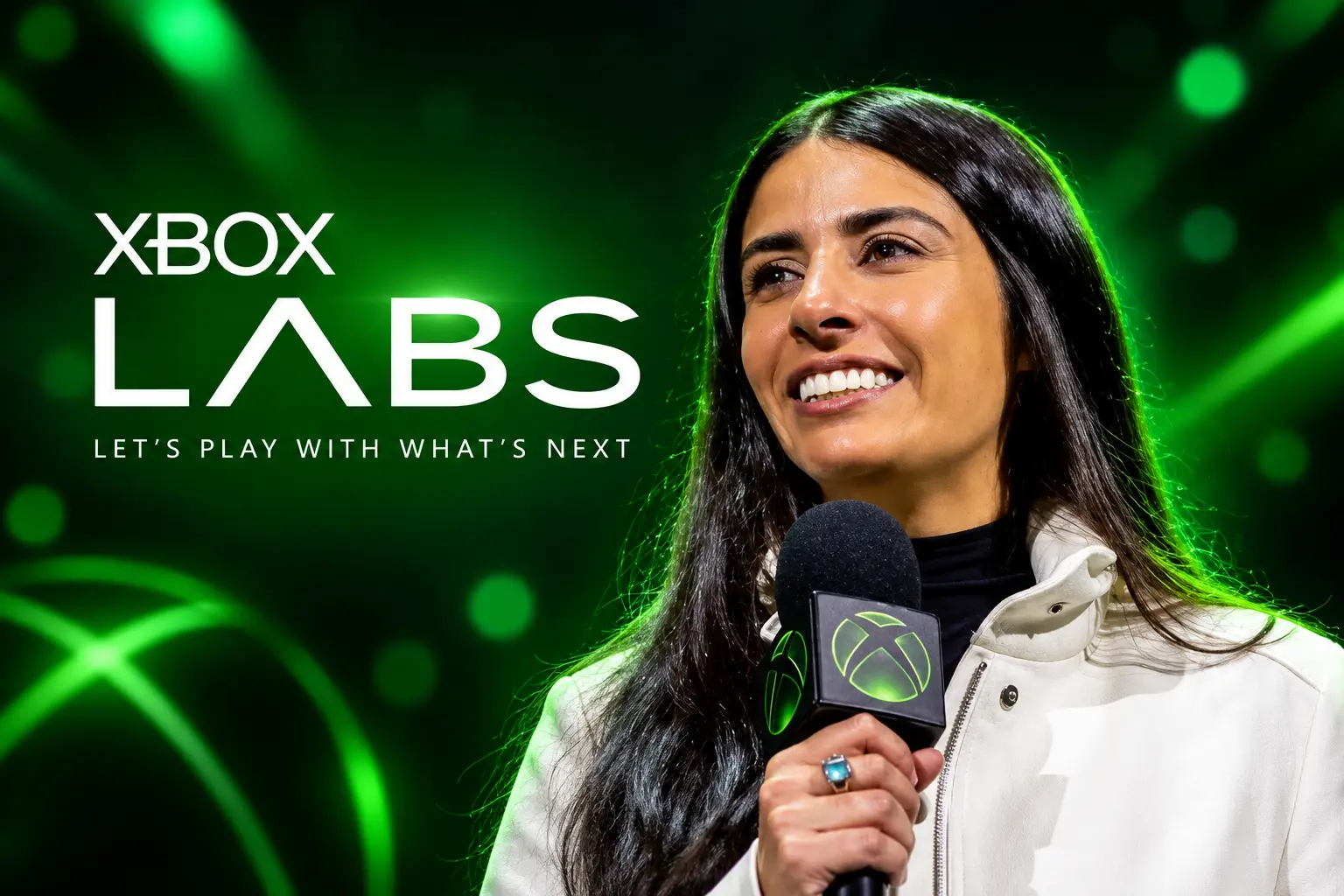
Xbox CEO Asha Sharma created Xbox Labs on October 13 and put chief technology officer Scott Van Vliet in charge of a small team of game makers, engineers, and scientists.
Her staff memo, posted the same day, points at games fans decompiled and rebuilt for browsers and Apple Silicon. Sharma called those results good for players, even when they challenge Xbox’s business models.
Sharma Put a Fan-Port Wave on Xbox’s Books
The memo sent to Team Xbox employees is short on products and long on a change of posture. Sharma wrote that, in recent weeks, games have been “rapidly decompiled and rebuilt to run on hardware they were never originally designed to support,” including Windows builds translated to Apple Silicon and titles ported into a browser through WebAssembly and WebGPU.
She went further. “Perhaps more surprisingly, we’ve seen many of the biggest games in the world have been remixed into the source code of another.” Those experiments, she wrote, challenge “the tether between software and hardware, the boundary between creation and play, and how people discover and experience games.”
These are unmistakably good outcomes for players, even when (and sometimes because) they challenge our existing business models.
Asha Sharma, Xbox CEO, memo to Team Xbox, October 13, 2026
That sentence is the brief. Xbox Labs is not a skunkworks parked away from the catalog. Sharma asked Van Vliet, Xbox’s CTO since May, to turn the same class of work into things players and developers can try, then share the tools across the industry.
She posted the note on her own account the same afternoon, with a link to a new Labs site that still has nothing to play.
Today we're standing up XBOX LABS (https://t.co/wzXPNnCmI6). Here is the note that I sent to the team:
Team,
The first video games emerged some 75 years ago. In the time since, there have been booms and busts, but every year there are more great games to play, more devices to…— ASHA (@asha_shar) October 13, 2026
The memo never uses the word AI. It talks about agents that can write, run, and test software, then says games share those properties. The work it is answering, from browser rebuilds to mashups that drop one game’s moves into another, is the decompile wave that filled feeds in September and early October.
Halo Combat Evolved Already Runs in Chrome
The example sitting closest to Xbox’s own history is Halo. In late September, software developer Mitchell Hynes shipped a browser build of the original Xbox version of Halo: Combat Evolved, not the old Gearbox PC port and not Microsoft’s later remake.
Hynes’s page asks for a disc image and does not host Halo’s game files. The build includes the campaign, split-screen co-op, mouse and keyboard mapped from the original Duke pad, and online rooms of up to 128 players, which he marked untested. He said 20,000 people played in the first five hours.
THE TWO WEEKS THAT FORCED THE MEMO
- February 2026: Sharma becomes Xbox CEO after a move from Microsoft’s CoreAI group.
- May 2026: Van Vliet takes the Xbox chief technology officer job.
- September 29, 2026: Hynes posts Halo: Combat Evolved running in a browser tab.
- October 13, 2026: Sharma publishes the Xbox Labs memo and opens labs.xbox.com.
Halo is one title. A public catalog of reverse-engineered games, refreshed the same day as Sharma’s note, lists more than 2,000 decompiled game projects covering 1,817 games, including 41 that launch in a browser. Sharma did not name that list. She described its shape: old games living on hardware they were never built for, and players acting like co-creators.
A large publisher has now treated that unofficial wave as a product brief. That is the shift. For years the same work lived in GitHub repos, takedown letters, and forum threads Xbox did not run.
Why Native Browser Ports Differ From Cloud Play
Xbox games already run in a browser, as a stream. Xbox’s own support pages list Edge, Chrome, and Safari as clients for cloud play and remote play on the web, on Windows, macOS, iOS, iPadOS, ChromeOS, and Android. That path still needs a live link to a remote session. The fan ports Sharma cited do something else. They compile the game itself into WebAssembly and draw it with WebGPU, so the code runs in the tab.
WebGPU is the reason those ports feel like ports. A November 25, 2025 note from the Chrome team said WebGPU in Chrome, Edge, Firefox and Safari is shipping, after work in the W3C GPU for the Web group that included Microsoft. Chrome and Edge have had it since version 113 on Windows, macOS, and ChromeOS. Firefox has it on Windows as of version 141 and on Apple Silicon Macs as of 145. Safari has it in macOS Tahoe 26, iOS 26, iPadOS 26, and visionOS 26.
Sharma wrote that WebGPU is “approaching 90% global browser support.” An independent hardware survey of working adapters is lower, and it is a different measurement. Web3D Survey finds 83 percent of surveyed browsers return a working WebGPU adapter, with 0.05% of those on a fallback.
WEBGPU WORKING ADAPTERS BY BROWSER
| Browser | Share of reports with a working adapter |
|---|---|
| Edge | 92.9% |
| Chrome / Chromium | 84.69% |
| Safari | 80.5% |
| Firefox | 60.07% |
| All reports | 83% |
Linux is the hole in the “almost everywhere” story. Only 17.96% of Linux reports in that survey get a working adapter. Firefox also trails the Chromium family. A native Xbox port that needs WebGPU will not be universal on day one, even if Sharma’s 90% figure is the one the lab uses internally.
Cloud play keeps the binary on Microsoft’s side of the wire. A WebGPU port can travel with a disc image and a URL. That is why the fan work stings, and why it is useful to a company that wants more people in the games each day.
The 4Cs Still Lead With the Console
Sharma closed the Labs note by saying priorities are not changing. “We remain committed to the 4Cs, to making great games, to our hardware and to being responsible stewards of IP and the communities built around it.” Labs, she wrote, is a way to try new technology without dropping the work already underway.
Those 4Cs are the fiscal 2027 list she gave staff in July, after a reset that cut jobs and spun off studios. Console still sits at the front of that list, and she has said it still brings in most Xbox revenue.
SHARMA’S FOUR C’S FOR FISCAL 2027
- Core: Strengthen the platform, led by console.
- Content: Grow great games into global franchises.
- Creation: Make Minecraft the world’s creator platform.
- Connection: Extend the worlds that fans love.
A lab that celebrates games running on Apple Silicon and in Chrome sits next to a plan that still leads with a box under the TV. Sharma has also said she wants Xbox to entertain more than a billion people each day, a reach figure that is not the same as console owners. Browser ports, remix tools, and shared decompile kits are one way to chase that number without selling another console.
They also weaken the tether she named in the memo. If Halo already runs in a tab with a disc image, the argument for buying the next Xbox to replay the last one gets thinner. Labs is how Xbox tries to own that outcome instead of watching it happen on someone else’s site.
Five Times More Hours Than Writing Code
The agent pitch is the other half of the memo, and it is why Van Vliet’s job sits next to a lab rather than a research paper. Sharma wrote that coding became the first big workload for agents because they can write, run, and test software. Games, she argued, share those loops, and Xbox already has the hours.
THE SCALE SHARMA CITED
- Play time: People spend more than 72 billion hours a year on Xbox games.
- Against code: That is roughly five times the estimated time spent writing code worldwide.
- Xbox age: Twenty-five years of making games, counted from the original 2001 console.
- Success test: More people playing and creating, not a ship date.
She wants Xbox’s own game makers in that loop, not only outside porters. “I want our game makers to help shape what these new technologies make possible,” she wrote, and she promised to share the tools. That is how a fan Halo tab becomes, in her telling, a method Xbox can hand to other studios.
It is also how a company that spent a decade selling backward compatibility on its own hardware starts treating a browser as another compatibility layer. The difference is control. Xbox Compatibility ran on Xbox’s terms. A WebAssembly rebuild can leave the store, the subscription, and the box behind if the lab does not put an official client in front of it.
The Rest of the Industry’s Answer Is a Takedown
Other rights holders have not written memos like Sharma’s. Unofficial browser builds of live catalogs, including shooters and older licensed hits, have already been pulled down in the same window Sharma called “recent weeks.” Decompile projects often ship without game data and tell you to provide your own copy, which has not stopped every lawyer.
Xbox’s own IP is in that mix. Halo: Combat Evolved is a franchise Microsoft still sells, including a separate official remake track. Hynes’s tab is a competing way to play the 2001 campaign, at 128-player scale the original hardware never offered. In the days after that launch, public DMCA records were not showing a Microsoft notice against the project, and the page stayed up after a brief traffic scare. That quiet is part of the story. So is Sharma’s line about being a steward of IP.
Labs has to live in that gap. If official browser versions arrive, they will be the licensed answer to a thing players already have. If they do not, the memo still blessed the method. Either way, Xbox is now the large publisher that moved first on the ports instead of only sending takedowns.
Readers on Sharma’s thread took the note as a sign she is trying to widen Xbox, not wind the brand down. The sharper worry is slop: remixes that are funny for a clip and thin as products, shipped at agent speed. Sharma’s test, more people playing and creating, does not sort those two piles. Van Vliet’s group will have to.
Players Get a Signup Form for Now
There is nothing to install. The Xbox Labs email signup page is version v0.1.0, styled like a debug overlay, and it counts “1024 EXPERIMENTS” next to a Gears of War: E-Day clip placeholder. It asks for an email, a birth date, and consent. It does not name a game, a price, or a day you can play.
WHAT WE KNOW
- The team: A small in-house group of game makers, engineers, and scientists, led by Van Vliet.
- The brief: Turn decompiles, Apple Silicon translations, WebGPU ports, and remixes into things people can try, then share tools.
- The metric: More people playing and creating, with work built in the open.
WHAT IS UNCONFIRMED
- First titles: No game, old or new, is named for an official Labs release.
- Business model: Free, paid, Game Pass, ads, and disc-image rules are all unsaid.
- Hardware targets: Beyond the browser and Apple Silicon examples, the memo lists none.
Follow Xbox Wire for the first drop, which is the only public next step Sharma offered. Until then the catalog that forced the lab is still the unofficial one, and it already runs in a tab.

Cook Hands Democrats the House as Crypto’s Bill Stays Dead

Wicker’s Broken Bed Was the Short Story’s Punch Line

Nvidia’s $500 Billion Financing Plan Draws a $180 Sell

Maserati Bets the Grecale V6 Can Fill Porsche’s Gap

EV Cable Theft Follows the Old Railway Copper Playbook

Aramco Crash Kills 14 Two Days After Oil Restart

Salah Captained Egypt to Their First World Cup Win

Zelda’s 40th Switch 2 Ships Without a Zelda Game

Apple Labor Day Deals Hide June’s Memory Price Hike

Palworld 1.0.4 Adds Palpedia Search After the 1.0 Launch
-
 BUSINESS4 months ago
Aramco Crash Kills 14 Two Days After Oil Restart
-
 NEWS5 months ago
Salah Captained Egypt to Their First World Cup Win
-
 GAMING2 months ago
Zelda’s 40th Switch 2 Ships Without a Zelda Game
-
 NEWS2 months ago
Apple Labor Day Deals Hide June’s Memory Price Hike
-

 NEWS4 months ago
El Niño Puts Israel’s Needed Winter Rain on a Flood Clock
-
 GAMING2 months ago
Palworld 1.0.4 Adds Palpedia Search After the 1.0 Launch
-

 BUSINESS8 months ago
BAE’s 60-Year Saudi Franchise Now Runs Through Taif
-

 BUSINESS8 months ago
Egypt Bets EGP 638 Billion Can Open Sinai to Investors