
BUSINESS
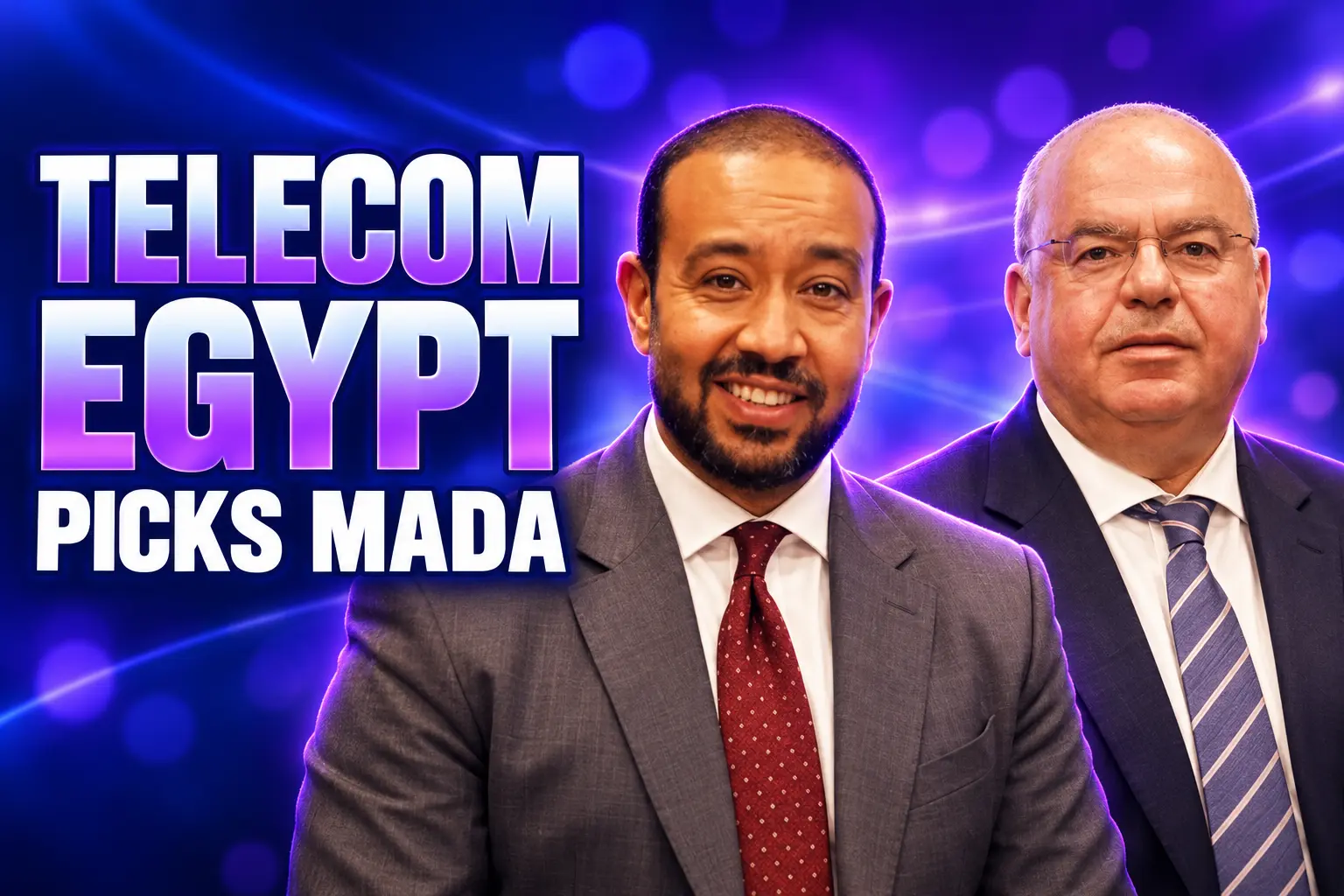
Telecom Egypt Puts All International A2P SMS With Mada
Telecom Egypt named Mada the sole preferred carrier for international A2P SMS, locking OTP traffic after Egypt’s grey-route leak rather than selling a consumer.

Telecom Egypt on 7 August 2024 put every international application-to-person text, including one-time passwords, through one preferred carrier, Mada Communications. The operator called it a customer-experience upgrade. The mandate is a lock on a pipe that had been leaking.
Mada will manage all International Application-to-Person messaging for the company, the two-factor codes and the automated alerts that banks, apps and public bodies send into Egyptian handsets. Selection, Telecom Egypt said, followed a review that weighed security and protection, not only price.
Telecom Egypt Handed Mada the Whole International A2P Pipe
The company multi-year international SMS agreement names Mada Communications as its preferred strategic international SMS service provider. Mada, the release said, will spearhead management of all international A2P services, including two-factor authentication and automated notifications.
The English statement listed expertise, partnerships with local and international institutions, security and protection measures, and compatibility with systems already running inside Telecom Egypt. The Arabic version of the same investor-relations release went further, tying those security standards to a bid to limit illegal practices.
Mohamed Nasr, then managing director and chief executive of Telecom Egypt, framed the appointment as a continuation of an older voice relationship, and as a way to grow revenue through “integrated, secure and effective communication solutions.”
This strategic partnership is a natural extension of our long-term successful business relationship with Mada®, the global leader in voice services. In addition, given Mada®’s extensive expertise as the leading A2P provider in the MENA region, this joint cooperation reinforces our commitment to promoting unorthodox business practices and expanding our business scope, which will contribute to achieving sustainable revenue growth and delivering added value to our customers through integrated, secure and effective communication solutions.
Mohamed Nasr, Managing Director and Chief Executive Officer, Telecom Egypt, 7 August 2024 release
Charles Hage, chief executive of Mada, called the appointment a win for a “preferred carrier” on Telecom Egypt’s A2P messages and thanked both teams. He also said Mada wanted to push the cooperation “across multiple fronts,” a hint that SMS is not the only interconnect the two companies share.
Preferred, in this trade, is a strong word. It means inbound international A2P is supposed to land on a named route, at a named rate, with a named counterparty. Other aggregators can still try to reach Egyptian numbers. They are no longer the house path.
Egypt’s A2P Traffic Was Already Leaking at 69%
The customer-experience language sits on top of a market that, a year before the deal, was a textbook grey-route case. VOX Solutions, a messaging-monetisation vendor, published a network audit of Egypt that opened with a Mobilesquared databook figure: a 69 percent grey-route A2P share for SMS in the country.
Grey routes are unofficial paths that deliver business texts while skipping the operator’s commercial A2P interconnect. The message still arrives. The termination fee does not. For an incumbent, that is lost wholesale income on traffic the network still has to carry.
EGYPT A2P AUDIT SNAPSHOT
| Finding | Figure | Source |
|---|---|---|
| Grey-route share of SMS A2P | 69% | Mobilesquared, cited by VOX |
| Traffic sold below 0.01 euro | almost 25% | VOX360 audit of Egypt |
| Traffic delivered from SIM boxes | 20% | VOX360 audit of Egypt |
VOX said almost 25% of the SMS A2P traffic it saw in Egypt was being sold below 0.01 euro, a price it called out of step with ordinary termination rates and a red flag for insecure routing. It also said 20% of SMS traffic was delivered from SIM boxes, mostly on-net, the hardware trick that turns racks of consumer SIMs into a cheap bulk-delivery machine.
That mix is how A2P money disappears without a customer complaint. The bank’s code still lands. The operator never bills it as A2P. A preferred-carrier contract, paired with firewalling, is how operators try to force that traffic back onto a paid route.
Why Banks Still Send Passwords by Text
International A2P is not a marketing blast. It is the one-time password for a card payment, the debit alert, the government notice, the delivery update. Those messages are billed per text, unlike the person-to-person chats that sit inside unlimited plans, which is why operators fight over who terminates them.
VOX listed the damage in four piles: privacy and security, loss of control, loss of revenue, and compliance failure. The control problem is the one banks feel first. If a code is hijacked or rerouted, the sender has no contract with whoever actually delivered it.
When there is a bypasser, there is no contract, so suddenly your message goes through someone you don’t know. You have no idea who it is. The bank has no idea who it is. The operator has no idea who it is.
Marius Rosca, Vice President of Pre-Sales, VOX Solutions, Egypt network audit
RED FLAGS VOX FLAGGED ON EGYPTIAN A2P
- International GTs: High volumes of A2P from international global titles that open a path for bypass.
- Text manipulation: Altered message content, which VOX treats as a sign of illegal activity on the network.
- Giveaway pricing: SMS sold so cheap it implies SIM boxes rather than a contracted A2P rate.
- Unbilled termination: National and international A2P that delivers but is not monetised as A2P.
- Missed yield: Other operators tightening their A2P models while leaked traffic stays cheap.
- Customer risk: Spoofing and spam that can hit both reputation and churn if codes and alerts are abused.
Telecom Egypt did not publish a grey-route percentage of its own when it named Mada. It did put security, protection, and illegal-practice language next to a mandate that covers every international A2P stream, which is the shape of a monetisation lock, not a feature launch on the WE consumer app.
Mada Sold Voice First, Then Took the SMS Pipe
Nasr’s quote is useful because it says the quiet part in order. Mada was already “the global leader in voice services” in Telecom Egypt’s wording, and a long-term counterpart, before it was named the A2P house. The SMS appointment extends an interconnect relationship that started on calls.
Mada Communications International, which styles itself Mada, presents as a Geneva-headquartered telecoms solutions firm founded in 2004. Its site says it has over 400 employees, works with over 250 million customers in 195 countries, and currently works with 300 operator networks. LinkedIn copy from the company also lists specialties that include international voice terminations and SMS hub provision.
MADA’S PUBLIC FOOTPRINT
- Founded: 2004, with headquarters listed at Quai de l’île 13 in Geneva.
- Scale it claims: Over 400 employees, 250 million customers, 195 countries, 300 operator networks.
- Offer: A Voice, Messaging and Cybersecurity lineup, plus data, billing, fintech, and managed services.
- Where it sits: Offices listed in Cyprus, Dubai, Lebanon, Saudi Arabia, Switzerland, and the United States.
Hage’s “preferred carrier” line matches how wholesale SMS is actually bought. Enterprises rarely connect to every mobile network. They hand traffic to a hub. The hub either has a direct A2P deal with the destination operator or it does not. Direct is slower to set up and dearer per message. It is also the path that shows up in the operator’s A2P billing.
Mada’s own careers board has been hiring A2P account managers to grow MNO, aggregator, and enterprise traffic, which is the same wholesale motion as the Telecom Egypt mandate. The Egypt deal is the operator-side version of that motion: one hub, one official international A2P door.
Two Years Later the Earnings Release Still Omits A2P
If the point of the appointment was to raise A2P revenue, the public accounts still do not show the line. Telecom Egypt’s later results talk at length about data, international incoming calls, cables, and domestic infrastructure. They do not break out A2P SMS.
By 26 February 2026, when the company posted full-year 2025 results, Tamer El Mahdi was managing director and chief executive. Revenue for 2025 was EGP 106.7 billion, up 31%. Data rose 46% and contributed 59% of overall growth. International incoming calls, a voice wholesale item, rose 30%. Cable projects rose 31%. Domestic infrastructure services rose 11%. EBITDA was EGP 47.5 billion, a 45% margin. Net profit was EGP 22.6 billion, up 123%.
Wholesale, El Mahdi said, was driven by international incoming calls, cable projects, and domestic infrastructure, which contributed 12%, 6%, and 4% of total revenue growth. That is a carrier story about voice minutes, subsea work, and local capacity. It is not a print of OTP texts recovered from grey routes.
THE DATES AROUND THE PIPE
- 7 August 2024: Telecom Egypt names Mada preferred partner for all international A2P SMS, including two-factor authentication and automated notifications.
- 26 February 2026: FY 2025 results show EGP 106.7 billion of revenue and strong international incoming-call growth; A2P SMS is not broken out. El Mahdi is CEO.
- 13 August 2026: H1 2026 results show EGP 59.2 billion of revenue, up 17%, with international incoming calls up 32% on 18% more traffic; A2P SMS is still not a reported line.
The H1 2026 wholesale earnings print is the latest official snapshot. Data rose 26%. International incoming calls rose 32%. Fixed broadband, fixed voice, and mobile customers rose 9%, 6%, and 4%. EBITDA was EGP 26.4 billion, up 20%, still a 45% margin. Net profit was EGP 15.4 billion, up 47%, a 26% margin against 21% a year earlier.
Incoming calls are not A2P. Treating that 32% as proof the Mada SMS lock worked would mix two products. The honest reading is narrower. Telecom Egypt’s wholesale engine that it is willing to discuss is still voice and cables. The A2P appointment remains a closed pipe with no public meter on it.
Retail still moved. The company also owns a 45% stake in Vodafone Egypt, so it sits on both the WE brand and a large share of the market leader’s earnings, which is a separate cheque from terminating other people’s OTPs.
What a Preferred Carrier Changes for Senders
For a bank or a global app, a preferred-carrier deal on the destination network is supposed to mean one official door into Egyptian numbers: registered sender IDs, a contracted rate, and a delivery receipt that matches the A2P tariff. Grey routes undercut that door by dressing the same traffic as cheaper person-to-person or by pumping it through SIM boxes.
Once an operator names a house hub and tightens firewalls, cheap paths start to fail. Delivery can look worse before it looks better, because the unofficial routes that used to sneak through get blocked. That is the trade senders make for a path the operator will actually bill and, in theory, protect.
WHAT WE KNOW
- The mandate: Mada manages all of Telecom Egypt’s international A2P, including two-factor authentication and automated notifications, under a multi-year preferred-partner deal dated 7 August 2024.
- The leak that preceded it: Mobilesquared, via VOX, put grey routes at 69% of SMS A2P in Egypt, with almost 25% of traffic sold below 0.01 euro and 20% delivered from SIM boxes.
- The later print: FY 2025 and H1 2026 results show rising data and international incoming-call revenue and do not disclose A2P SMS.
WHAT IS UNCONFIRMED
- Term length: Multi-year is the only duration in the release; an end date was not published.
- A2P yield: Telecom Egypt has not said how much international A2P revenue rose, or fell, after Mada took the pipe.
- Firewall detail: The companies did not publish detection rates, blocked volumes, or a grey-route share after the appointment.
Wholesale A2P appointments of this kind rarely live as public arguments. They show up as a press release, then as routing changes that only traffic desks see. Two years after the lock was announced, the pipe has a name. The meter is still private.
Frequently Asked Questions
What Is A2P SMS?
A2P SMS is a text sent by an application, a bank, a government system, or another business to a person’s phone, rather than a chat between two people. Typical loads are login codes, payment alerts, appointment reminders, and shipping notices, and operators bill those messages per termination instead of folding them into unlimited consumer plans.
Who Is Mada Communications?
Mada is a telecoms solutions firm founded in 2004 and headquartered in Geneva, with listed offices in Nicosia, Dubai, Hazmieh in Lebanon, Riyadh, Geneva, and White Plains, New York. It sells voice, messaging, cybersecurity, data, billing, and managed services to operators and enterprises, and it describes itself as an SMS hub as well as an international voice carrier.
What Is an SMS Grey Route?
A grey route is an unofficial path that delivers business SMS while avoiding the destination operator’s paid A2P interconnect, often by disguising A2P as person-to-person traffic or by injecting it through SIM boxes packed with consumer SIMs. The subscriber may still receive the text; the operator does not collect the A2P termination fee.
When Did Telecom Egypt Appoint Mada for International SMS?
Telecom Egypt announced the appointment on 7 August 2024, after what it called a rigorous selection process, and said Mada would be its preferred strategic international SMS service provider on a multi-year contract covering all international A2P, including two-factor authentication and automated notifications.

Christa Pike Survived the Execution Tennessee Would Not Pause

Musk’s Oligarch Charge Hits a Queue of Three

Circle Puts USDC and EURC Into SAP Pay Workflows

Ring’s First Smart Lock Skips Home Wi-Fi for Sidewalk

GTA 6 Puts Cash Back on the Story Path

Salah Captained Egypt to Their First World Cup Win

Aramco Crash Kills 14 Two Days After Oil Restart

Apple Labor Day Deals Hide June’s Memory Price Hike

Zelda’s 40th Switch 2 Ships Without a Zelda Game

Palworld 1.0.4 Adds Palpedia Search After the 1.0 Launch
-
 NEWS5 months ago
Salah Captained Egypt to Their First World Cup Win
-
 BUSINESS4 months ago
Aramco Crash Kills 14 Two Days After Oil Restart
-
 NEWS2 months ago
Apple Labor Day Deals Hide June’s Memory Price Hike
-
 GAMING1 month ago
Zelda’s 40th Switch 2 Ships Without a Zelda Game
-
 GAMING1 month ago
Palworld 1.0.4 Adds Palpedia Search After the 1.0 Launch
-

 NEWS3 months ago
El Niño Puts Israel’s Needed Winter Rain on a Flood Clock
-

 ENTERTAINMENT1 month ago
King Charles Letter Keeps Harry and Meghan as Private Citizens
-

 ENTERTAINMENT4 months ago
A Thousand and One Drops Off Riyadh’s October Calendar