
BUSINESS
The $150 Billion Iran Clip Is an Eight-Year-Old Interview
Mohammed bin Salman’s $150 billion Iran line is from April 2018, not a new blast, and Treasury put usable frozen assets at a little more than $50 billion.

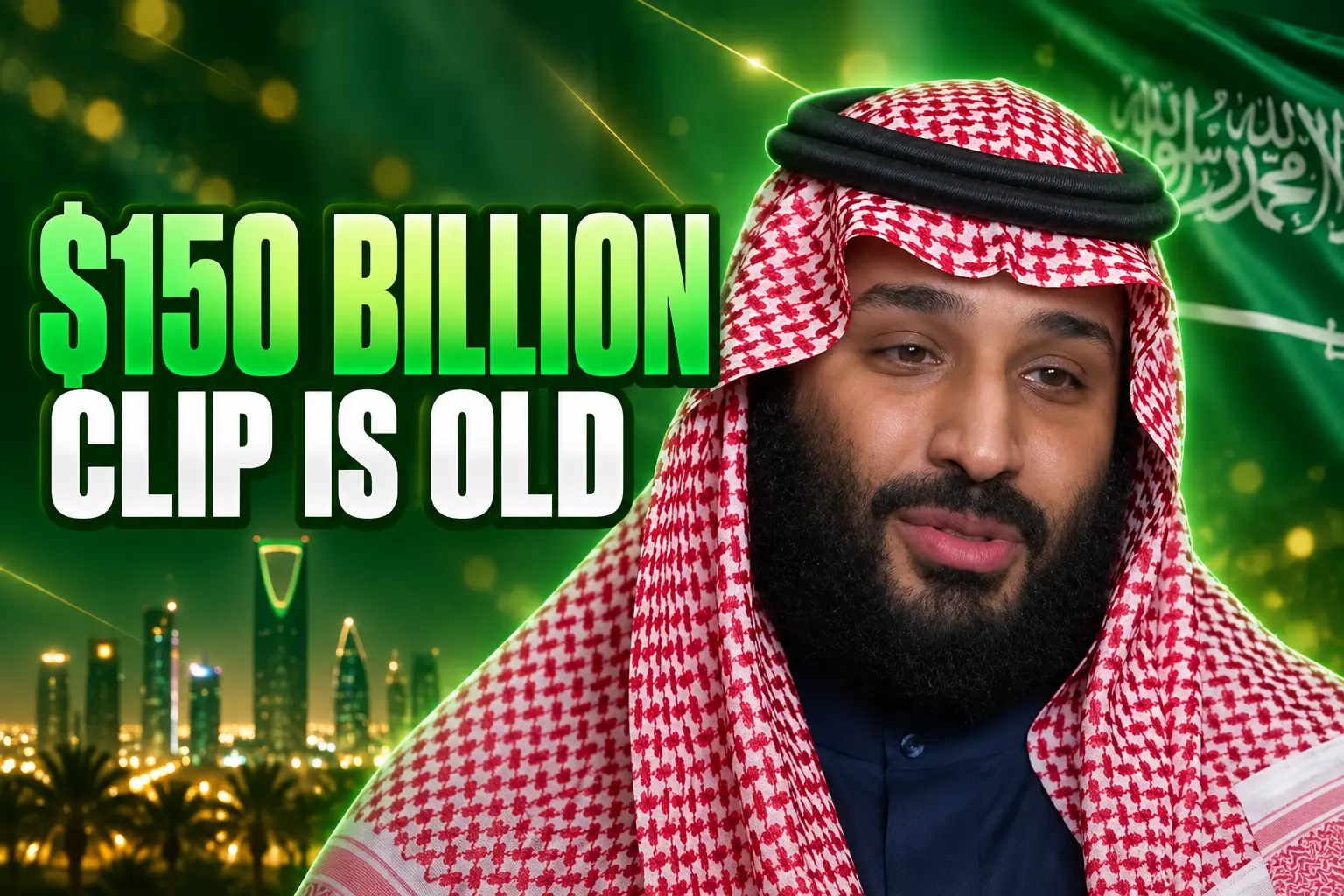
The $150 billion Iran line racing around social feeds comes from an April 2018 interview. Crown Prince Mohammed bin Salman told Jeffrey Goldberg that Tehran took that sum after the nuclear deal and dared anyone to name a housing project, a park, an industrial zone, or a highway built with it.
Treasury officials who defended the 2015 accord put Iran’s usable frozen stock at a little more than $50 billion and said it was Iranian oil money already sitting in foreign banks, not a gift from Washington. The same tape returned in April 2026, then kept spreading into the autumn, while Houthi fire and a shut Strait of Hormuz pressed the prince who had restored ties with Tehran in Beijing in 2023.
The $150 Billion Line Comes From an April 2018 Interview
Goldberg sat with bin Salman at Prince Khalid bin Salman’s compound outside Washington during the crown prince’s 2018 U.S. tour. The published exchange ran under a headline about Iran’s supreme leader. Buried in that session is the money dare now cut into short videos.
Bin Salman said President Barack Obama had believed that giving Iran room to open up would change the system. He rejected that bet. “Sixty percent of the Iranian economy is controlled by the Revolutionary Guard. The economic benefits of the Iran nuclear deal are not going to the people,” he said. Then came the figure that the clips freeze on.
Can you please name one housing project they built with this money? One park? One industrial zone? Can you name for me the highway that they built?
Mohammed bin Salman, April 2018 interview with Jeffrey Goldberg
He added that he wanted Tehran to show a highway built with $150 billion. In the same sitting he grouped Iran, the Muslim Brotherhood, and Sunni terror groups as a “triangle of evil,” and he named al-Qaeda and ISIS in that third corner. The retrieved answers do not attach Hamas, Hezbollah, or the Houthis to the $150 billion sentence. Those names ride in the captions that now wrap the tape.
What Treasury Told Congress About Iran’s Cash
The Joint Comprehensive Plan of Action was concluded on July 14, 2015. When it took effect in January 2016, sanctions that had trapped Iranian oil receipts and central-bank reserves began to lift. The political talking point at the high end was $150 billion. The people who had to count the money for Congress used a lower, narrower figure.
Adam J. Szubin, then acting under secretary of the Treasury for terrorism and financial intelligence, told the Senate Banking Committee on August 5, 2015, that worldwide foreign-exchange assets at the Central Bank of Iran sat in the range of $100 to $125 billion. He put a little more than $50 billion in the usable liquid column after relief. The rest, he said, was tied up in illiquid projects or in loans Iranian entities could not repay quickly. Iran would still be kept out of dollar clearing in New York and out of correspondent accounts with U.S. banks.
Treasury Secretary Jacob Lew, testifying in late July 2015, walked senators through the same haircut from a slightly different worksheet. Of a reserve pile near $100 billion, about $20 billion was already committed to projects with China, and tens of billions more sat in unpaid or non-performing loans. He told the Foreign Relations Committee the money was Iran’s, sitting in other countries, locked by nuclear sanctions. “It’s not money we are giving to Iran,” he said.
THE FROZEN PILE, COUNTED THREE WAYS
| Who, when | Amount | What the figure measures |
|---|---|---|
| Mohammed bin Salman, April 2018 | $150 billion | The sum he said Iran “took” after the deal |
| Adam Szubin, Treasury, August 2015 | $100 to $125 billion | Total Central Bank foreign-exchange assets worldwide |
| Adam Szubin, Treasury, August 2015 | a little more than $50 billion | Usable liquid assets after sanctions relief |
| Jacob Lew, Treasury, July 2015 | $20 billion | Share already committed to China projects |
Patrick Clawson at the Washington Institute, writing in September 2015, split the vocabulary further. Some assets were frozen in the legal sense. Others were only restricted. The largest pots often described as frozen were oil-revenue accounts in the central banks of China, Japan, India, and South Korea, totaling at least $50 billion in oil-buyer banks, a stock that is not the same as Szubin’s usable CBI figure. Iranians could already spend some of that money on goods inside those countries. Clawson’s point was blunt on both sides of the fight: the freeze had been oversold, and so had the windfall.
THE MONEY AND THE CLIP, YEAR BY YEAR
- July 14, 2015: World powers and Iran conclude the nuclear accord that later unlocks restricted oil receipts and reserves.
- July to August 2015: Lew and Szubin tell Congress the usable liquid stock is a little more than $50 billion, not $150 billion.
- January 2016: The deal takes effect and the restricted accounts begin to open.
- March 2018: Bin Salman, in a U.S. television interview, says Osama bin Laden’s son lives in Iran and is backed there.
- April 2018: The Goldberg interview publishes the $150 billion highway dare.
- September 14, 2019: The White House confirms Hamza bin Laden was killed in a U.S. counterterrorism operation in the Afghanistan/Pakistan region.
- March 10, 2023: Saudi Arabia, Iran, and China announce that Riyadh and Tehran will restore diplomatic ties.
- April 2026: Short videos of the 2018 money lines spread again as if they were a new speech.
A dollar Iran could move in 2016 was still a dollar the Revolutionary Guard and the civilian budget could fight over. Szubin’s warning in 2015 was that even a slice of the unlocked pile could fund proxies. Bin Salman’s 2018 complaint was that he could not see the slice that went to streets. Both can be true at once. Neither turns $150 billion into a U.S. treasury check.
The Proxies in the Viral Caption Are at His Borders
The 2026 captions name Hamas, Hezbollah, and the Houthis as the destination of the 2015 money. The retrieved 2018 answers do not. What the region did next is not in dispute. Yemen’s Houthis, long backed by Tehran in Saudi accounts, spent 2026 squeezing the kingdom’s remaining export routes after Iran throttled the Strait of Hormuz.
On September 8, 2026, Houthi drones and ballistic missiles hit several Saudi cities and sites, including Abha, Khamis Mushait, Jizan, and Najran. The group pushed down the Red Sea coast toward Mocha and the Bab al-Mandab, the waterway that had become more important to Saudi crude once Hormuz closed. Iraqi militias aligned with Iran were blamed by Riyadh for a strike on the East-West pipeline. Bin Salman asked Washington for strikes on the Houthis. President Donald Trump refused.
In January 2026, in a call with Iranian President Masoud Pezeshkian, Saudi officials said the kingdom would not allow its airspace or territory to be used for military action against Iran, and that disputes should be settled by talks. That line sits next to the recycled 2018 tape in a way the captions never mention. The prince who once wanted a highway named is now trying to keep Saudi soil out of a U.S. war with the same state, while the Yemeni force in the viral overlay fires on his cities.
A China-Brokered Handshake Then Reopened Embassies
On March 10, 2023, China, Saudi Arabia, and Iran issued a joint statement after talks in Beijing from March 6 to 10. The Saudi side was led by national security adviser Musaad bin Mohammed Al-Aiban. Iran sent Ali Shamkhani, secretary of the Supreme National Security Council. Wang Yi signed for Beijing. The three governments said Riyadh and Tehran had agreed to resume diplomatic relations and reopen embassies within two months, to respect sovereignty, and to stay out of each other’s internal affairs.
China hosted five days of talks in Beijing after years of quieter rounds in Iraq and Oman in 2021 and 2022. President Xi Jinping had offered to host after a December 2022 visit to Riyadh. The statement also revived older Saudi-Iranian pacts on security and on trade, culture, and sport. Embassies reopened. The freeze of 2016, when Saudi Arabia cut ties after attacks on its missions in Iran, ended on paper.
That detente is the missing reel in the 2026 videos. Viewers are handed a 2018 dare about streets and a 2015 money figure, then cut to missiles. They are not handed the March 10, 2023 handshake, or the January 2026 promise that Saudi territory would not be a launch pad. The irony is in the sequence, not in a slogan.
Hamza bin Laden Was Already Dead When the Clip Spread
A separate March 2018 television interview, conducted by Norah O’Donnell, is the source of the al-Qaeda claim now glued to the money tape. “Many of the Al-Qaeda operatives are protected in Iran and it refuses to surrender them to justice, and continues to refuse to extradite them to the United States. This includes the son of Osama bin Laden, the new leader of Al-Qaeda. He lives in Iran and works out of Iran. He is supported by Iran,” bin Salman said.
Iran’s foreign ministry spokesman, Bahram Qasemi, called that a “big lie.” Hamza bin Laden and other relatives had crossed into Iran after the September 11 attacks. Documents taken from Osama bin Laden’s compound in Pakistan showed Hamza under house arrest in Iran for a period. Al-Qaeda’s leader in 2018 was still Ayman al-Zawahiri. Hamza’s whereabouts that spring were not publicly known.
On September 14, 2019, the White House said Hamza bin Laden “was killed in a United States counterterrorism operation in the Afghanistan/Pakistan region.” President Trump’s statement said the loss stripped al-Qaeda of leadership skill and of a symbolic tie to his father. By the time the 2018 money answers were recut as breaking news in 2026, the son in the second interview had been dead for years. Captions that place him in Iran in the present tense are running a stopped clock.
Captions Load Claims He Never Made
The April 2026 wave, and the copies still moving in September, treat the Goldberg session as a live confession timed to the Iran war. Some versions stamp Barack Obama as “the world’s number one sponsor of terror” and credit that phrase to the crown prince. The retrieved 2018 transcript does not contain it. Other versions fold in the Arab Spring, Libya, and a 2020 U.S. election plot. Those are caption inventions. They are not answers bin Salman gave Goldberg or O’Donnell.
WHAT THE TAPE SAYS, WHAT THE CAPTION ADDS
- The money dare: Bin Salman said Iran took $150 billion after the deal and asked for a housing project, a park, an industrial zone, or a highway; that language is in the April 2018 interview.
- The usable pile: Treasury told Congress the liquid stock Iran could actually use was a little more than $50 billion of $100 to $125 billion in central-bank foreign exchange, and that it was Iran’s own frozen oil money.
- The terror-sponsor label: Viral text assigns Obama that title in bin Salman’s voice; the retrieved interview answers do not.
- The proxy shopping list: Hamas, Hezbollah, and the Houthis appear in 2026 captions as the spend-down of the $150 billion; they are not in the retrieved $150 billion answers.
- The bin Laden son: The Iran-haven claim is from the March 2018 television interview; the White House said in 2019 that Hamza bin Laden had been killed in the Afghanistan/Pakistan region.
The louder public argument still treats the figure as American cash handed across a table. Lew’s sentence to senators is the cleaner account: it was Iranian money, already earned, trapped by sanctions designed to force a nuclear negotiation. Unlocking it was the point of the deal’s sanctions relief. Whether Tehran poured the usable slice into missiles, into imports, or into both is a spending fight inside a smaller number than the one on the thumbnail.
The clip still moves because the 2018 dare is easy to film and the 2015 worksheets are not. Bin Salman asked for a highway. Treasury staffed a hearing. Beijing issued a statement. Hamza bin Laden was killed, then named again as if he were still in Iran. The tape from April 2018 does not get newer when the missiles do.
Frequently Asked Questions
How Much Money Could Iran Use After the 2015 Deal?
Szubin told senators the leftover stock after the usable slice, some $50 billion to $70 billion, sat in illiquid work, including more than 50 projects with China, and in outstanding loans that could not be monetized quickly, if at all. He also noted that even the liquid $50 billion-plus had to function as reserves, the sort of import buffer the IMF treats as prudent, not as a one-year budget bonus.
Was the Unfrozen Sum a Payment From the United States?
Treasury’s Terrorist Assets Report, as cited by Clawson in 2015, listed $1.973 billion in Iranian financial assets frozen inside the United States, plus a sliver of unfrozen diplomatic funds, a U.S.-jurisdiction stock far smaller than the Asian oil-escrow accounts. Richard Nephew, a former sanctions official on the nuclear talks, later said the restricted foreign-held assets sat mainly in banks in China, Japan, and Korea, not in U.S. government accounts.
When Did Saudi Arabia and Iran Restore Diplomatic Ties?
The March 10, 2023 joint statement committed both sides to carry out a security cooperation agreement dated April 17, 2001, and a general cooperation pact on economy, trade, investment, science, culture, sport, and youth dated May 27, 1998. Foreign ministers were to meet to send ambassadors back and to talk through visas, flights, and official visits, after Iraq and Oman had hosted the earlier, slower rounds.
What Happened to Hamza bin Laden After the 2018 Claim?
Qasemi said a daughter of bin Laden had been handed to the Saudi embassy in Tehran and that other family members were sent back across the border they had crossed illegally. Hamza, about 30 at his death and one of Osama bin Laden’s many children, had been held in Iran after 2001 and later appeared in al-Qaeda messages; the 2019 White House confirmation placed his killing in the Afghanistan/Pakistan region, not in Iran.
Did the 2015 Deal Open U.S. Banks to Iran?
Szubin’s August 5, 2015 testimony said Iranian banks would still be unable to clear U.S. dollars through New York, hold correspondent accounts with U.S. financial institutions, or enter financing deals with U.S. banks, leaving Iran outside the largest financial market even after nuclear sanctions came off. The unlocked accounts were overseas reserves and oil receipts, not a new dollar pipeline into Manhattan.

Christa Pike Survived the Execution Tennessee Would Not Pause

Musk’s Oligarch Charge Hits a Queue of Three

Circle Puts USDC and EURC Into SAP Pay Workflows

Ring’s First Smart Lock Skips Home Wi-Fi for Sidewalk

GTA 6 Puts Cash Back on the Story Path

Salah Captained Egypt to Their First World Cup Win

Aramco Crash Kills 14 Two Days After Oil Restart

Apple Labor Day Deals Hide June’s Memory Price Hike

Zelda’s 40th Switch 2 Ships Without a Zelda Game

Palworld 1.0.4 Adds Palpedia Search After the 1.0 Launch
-
 NEWS5 months ago
Salah Captained Egypt to Their First World Cup Win
-
 BUSINESS4 months ago
Aramco Crash Kills 14 Two Days After Oil Restart
-
 NEWS2 months ago
Apple Labor Day Deals Hide June’s Memory Price Hike
-
 GAMING1 month ago
Zelda’s 40th Switch 2 Ships Without a Zelda Game
-
 GAMING1 month ago
Palworld 1.0.4 Adds Palpedia Search After the 1.0 Launch
-

 NEWS3 months ago
El Niño Puts Israel’s Needed Winter Rain on a Flood Clock
-

 ENTERTAINMENT1 month ago
King Charles Letter Keeps Harry and Meghan as Private Citizens
-

 ENTERTAINMENT4 months ago
A Thousand and One Drops Off Riyadh’s October Calendar