
BUSINESS
The Death Bets Act Stops Short of Polymarket’s Global Site
Senate passage of the DEATH BETS Act bars CFTC prediction markets from war and death contracts but leaves global books and sports fights untouched.

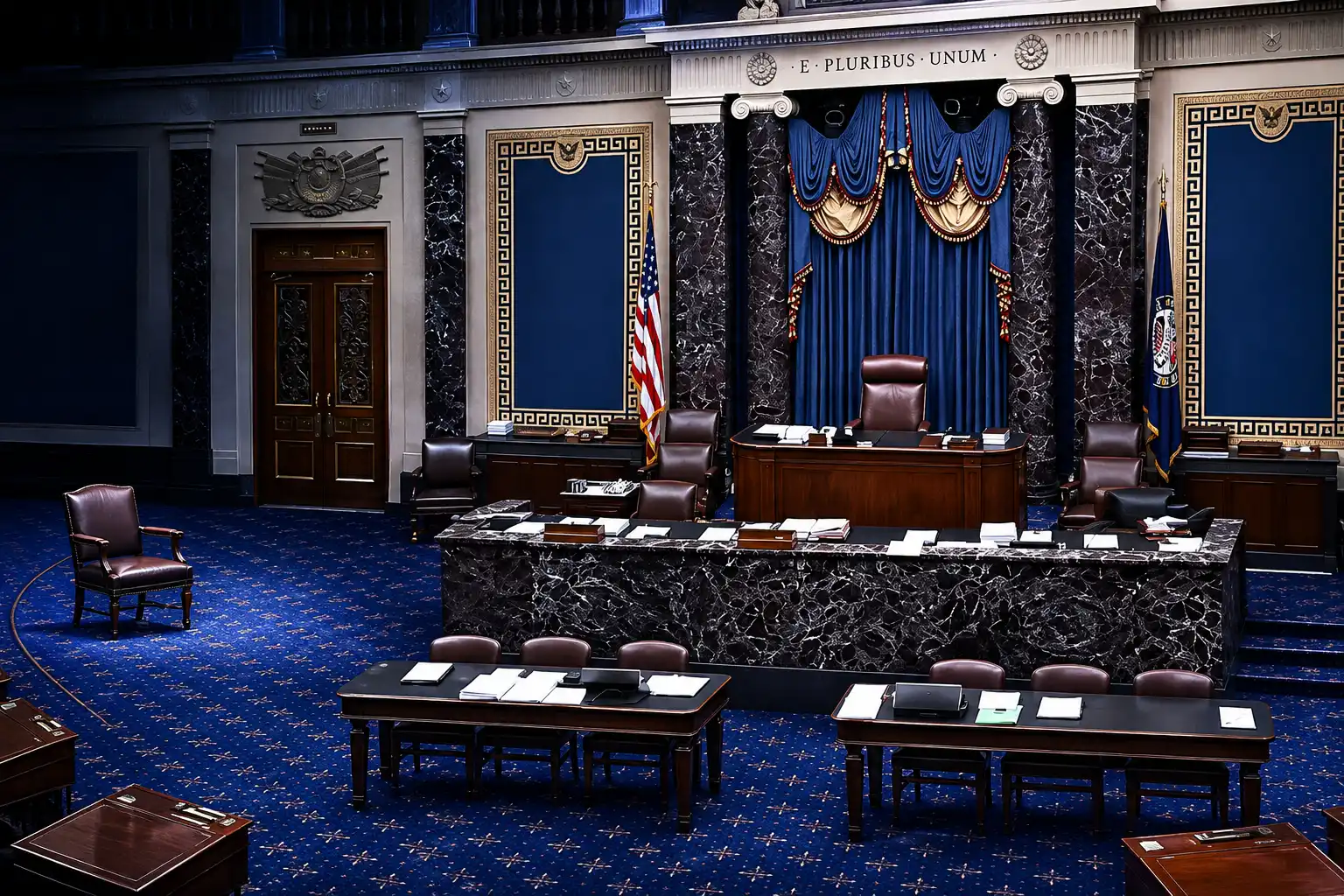
The Senate passed the DEATH BETS Act on November 19, 2026, to bar CFTC-registered prediction markets from listing war, assassination, or death contracts.
The vote was by voice, and both sponsors, Sen. Adam Schiff of California and Sen. John Curtis of Utah, called it unanimous. The ban binds exchanges registered with the Commodity Futures Trading Commission. It does not name Polymarket’s global site, where a U.S. soldier is charged with turning classified raid plans into a $409,881 payout.
The Senate Banned Contracts That Registered Exchanges Skip
S. 4035, the Discouraging Exploitative Assassination, Tragedy, and Harm Betting in Event Trading Systems Act, would bar registered entities from listing or clearing two kinds of event contracts. The first is any contract based on an excluded commodity that “expressly references” terrorism, assassination, war, United States Armed Forces military operations, or a similar activity the CFTC later names by rule. The second is a contract that, at the time of listing, “is reasonably expected to resolve principally based on a death of an individual.”
Schiff’s office billed the measure as the first prediction markets bill this Congress to clear the Senate. He introduced it on March 10, 2026. Rep. Mike Levin of California filed a House companion, H.R. 7942, on March 16. That draft still uses the wider phrasing “involves, relates to, or references,” and it has sat in the House Agriculture Subcommittee on Commodity Markets, Digital Assets, and Rural Development since April 3, 2026.
The Senate text is tighter than the March draft. It requires an express reference, adds U.S. military operations as their own listed term, and tests death contracts by how they are expected to resolve, not by whether a trader might read death into the outcome. It also adds a rule of construction that leaves other event contracts, including gaming, where existing law already puts them.
Betting on war and death jeopardizes our national security by creating a perverse environment in which violence is incentivized and insiders are allowed to profit off privileged or classified information. There is no justification for gambling on lives, or public benefit to be derived by such a market.
Sen. Adam Schiff, floor remarks, U.S. Senate
He announced the vote the same evening.
BREAKING: The Senate just passed my bill with @SenJohnCurtis to prohibit prediction markets from listing contracts involving terrorism, assassination, war, military operations, or an individual’s death.
With this bill, Congress is making it clear that these bets should be… pic.twitter.com/Mzu5PWmGsL
— Senator Adam Schiff (@SenAdamSchiff) November 20, 2026
WHAT THE SENATE TEXT CHANGES
| Subject of the contract | CFTC Rule 40.11 now | Senate-passed S. 4035 | House H.R. 7942 as introduced |
|---|---|---|---|
| Terrorism, assassination, or war | The commission may prohibit a listing if it finds the contract contrary to the public interest | A registered entity shall not list a contract that “expressly references” those terms | Ban if the contract “involves, relates to, or references” them |
| U.S. Armed Forces military operations | Not named as its own category | Hard ban if expressly referenced | Not broken out as a separate term in the introduced text |
| A person’s death | Not named in the Commodity Exchange Act | Ban if, at listing, the event is “reasonably expected to resolve principally based on a death of an individual” | Levin’s office said the companion would cover death contracts; the posted House text still tracks the older war-and-terrorism clause |
| Sports and other gaming contracts | Still sit under the Special Rule’s public-interest review | A rule of construction says the act does not change their legal status | No matching Senate-style construction in the introduced draft |
The table is the whole fight in four rows. War, terrorism, and assassination were already in the statute as things the CFTC could block. Death was not. Sports was the subject the sponsors did not want this bill to touch.
A Soldier Booked $409,881 on Polymarket
The national-security case the sponsors keep citing is not a Kalshi listing. On April 23, 2026, the U.S. Attorney’s Office for the Southern District of New York unsealed an indictment charging Gannon Ken Van Dyke, a U.S. Army soldier stationed at Fort Bragg, with having used classified information on Polymarket tied to the raid that seized Nicolás Maduro.
Prosecutors say Van Dyke, 38, of Fayetteville, North Carolina, helped plan Operation Absolute Resolve, then bought “YES” shares on whether U.S. forces would be in Venezuela, whether Maduro would be out, whether the United States would invade, and whether President Trump would invoke war powers, all by January 31, 2026. They say he wagered about $33,034 across 13 bets and took about $409,881 once the contracts resolved after the January 3 capture in Caracas.
U.S. Attorney Jay Clayton said prediction markets “are not a haven for using misappropriated confidential or classified information for personal gain,” and called the trades “clear insider trading.” FBI Assistant Director in Charge James C. Barnacle Jr. said Van Dyke “profited more than $400,000 by trading various outcomes related to Venezuela.” The $409,881 figure is the office’s accounting of the same alleged payout. Van Dyke is charged with three Commodity Exchange Act counts that each carry a maximum of 10 years, wire fraud with a 20-year maximum, and an unlawful monetary transaction with a 10-year maximum. Those are statutory ceilings, not a sentence.
THE MADURO TRADES IN THE DOCKET
- December 8, 2025: Van Dyke is involved in planning Operation Absolute Resolve and holds classified, nonpublic information about the capture mission, according to the indictment described by prosecutors.
- December 26, 2025: He creates a Polymarket account, operated by Blockratize, Inc., and funds it.
- December 27, 2025, through January 2, 2026: He places about 13 “YES” bets totaling about $33,034 on Maduro- and Venezuela-related contracts.
- January 3, 2026: U.S. special forces seize Maduro and his wife in Caracas. Polymarket resolves several related contracts to “YES.” Van Dyke’s alleged profit is about $409,881.
- January 6, 2026: He asks Polymarket to delete the account, falsely claiming he lost access to the registered email, prosecutors say, and shifts proceeds through a foreign cryptocurrency vault.
- April 23, 2026: The Southern District of New York unseals the indictment. The office thanks the FBI, the Department of War, the CFTC, and Polymarket for cooperation.
Schiff’s floor speech pointed at the same family of books: whether Maduro would be removed, whether NASA’s Artemis II crew would die in an explosion, and whether the Ukrainian town of Myrnohrad would fall to Russian forces. When he introduced the bill in March, his office also cited a Kalshi contract on whether Iran’s Ali Khamenei would be “out as Supreme Leader,” which that release said had $54 million in volume before it was paused. Those examples mix a CFTC venue with an offshore one. The indictment that actually alleges a classified-information payout names Polymarket, not Kalshi.
Why Polymarket’s Global Site Still Lists War
The bill’s subject is a “registered entity,” the CEA term for exchanges and clearinghouses that already sit with the CFTC. That net now includes more than Kalshi. QCX LLC, which does business as Polymarket US, has been a designated contract market since July 9, 2025. In early November, Polymarket said PM Derivatives, LLC had NFA approval for its U.S. broker on a fully collateralized basis, completing a U.S. stack of exchange, clearinghouse, and futures commission merchant. If S. 4035 became law, those U.S. entities could not list or clear the named contracts.
The Maduro books in the Van Dyke case were offered by Blockratize, Inc., on the Polymarket product the Justice Department described as a prediction marketplace, not on the designated U.S. contract market. The two brands share a name and split a legal fence. Traders who work both U.S. books already treat Kalshi and Polymarket US as places that do not hang outright death or assassination contracts. Geopolitics still finds a price in oil futures, shipping stocks, and the global site the bill does not amend.
WHO THE BAN WOULD REACH
- Kalshi: A CFTC designated contract market. The Senate text would bind it as a registered entity, including any death-resolution contract it might try to list later.
- Polymarket US: QCX LLC, designated on July 9, 2025, plus its affiliated U.S. clearinghouse. Same statutory fence.
- The global Polymarket site: Operated by Blockratize, Inc., and not a registered entity in the engrossed Senate text. That is the venue named in the Van Dyke charging statement.
A statutory ban on registered venues still matters if a U.S. exchange ever tried to copy those books, or if the CFTC under Chairman Michael Selig tried to treat death contracts as a discretionary call. It does not, by its own words, police the unregistered site where the soldier’s alleged trades cleared.
Death Was the Hole in the Commodity Exchange Act
Congress already wrote war, terrorism, and assassination into the CEA in 2010. Section 745 of the Dodd-Frank Act added the Special Rule at section 5c(c)(5)(C), now 7 U.S.C. 7a-2. It lets the CFTC prohibit event contracts on unlawful activity, terrorism, assassination, war, gaming, or similar activity if the commission finds them contrary to the public interest. The agency implemented that list in 2011 as Rule 40.11.
Schiff’s own release states the limit of that tool. The CFTC “currently has the authority to prohibit war, terrorism, and assassination contracts” when it finds them contrary to the public interest, and “whether or not these contracts are in the public interest is at the discretion of the CFTC.” Death is the category the statute never named. The Senate bill would take the war-and-assassination list out of that discretion, add military operations and individual death, and put the ban in section 5c itself so a future commission could not rewrite it by rule alone.
That is why the sponsors timed the vote against Selig’s rewrite of prediction-market rules. Schiff told the Senate the CFTC chair is “acting as the legal infantry for the industry, attempting to preempt state laws and challenging them whenever his agency is unsuccessful.” In June the commission proposed a public-interest framework that still treated terrorism, assassination, and war contracts as highly likely to fail the test, while leaving the final call with the agency. S. 4035 would replace that call with a shall-not-list command, but only for registered entities, and only for contracts that meet the new wording.
The CFTC is also in court with states that call the same products gambling. Utah filed a civil action against Kalshi in October, the 11th state to sue, seeking to block sports, politics, elections, and culture markets and to recover profits from Utah residents. Gov. Spencer Cox wrote on October 20, 2026, “Calling it something else doesn’t change what it is.” The CFTC has sued Arizona, Connecticut, and Illinois on exclusive-jurisdiction grounds, and on November 13 it sued Arkansas after Attorney General Tim Griffin sued Kalshi on November 4. Selig has said the agency will defend sole federal jurisdiction. Democratic senators have told it to stay out of those cases. Curtis, the Utah Republican on S. 4035, is writing the death-bets ban in that climate, not in a vacuum.
Schiff’s Floor Speech Protected the Sports Fight
Before the voice vote, Schiff and Curtis offered a substitute amendment whose main political job was to keep sports contracts out of the bill. Curtis said the pair have a separate measure, the Prediction Markets Are Gambling Act, for sports and casino-style products. On this bill, he said they were adding a rule of construction so no one could read a narrow death-and-war ban as a wink at everything else.
Today, we are offering a substitute amendment that adds a rule of construction to make clear that this legislation does not change existing law governing other event contracts, including those involving gaming broadly.
Sen. John Curtis, floor remarks as prepared, U.S. Senate
The engrossed act follows through. Section 3 says nothing in the law shall be construed to affect the permissibility of agreements “involving any activity described in” the Special Rule other than the new subsection (d) ban. In plain terms, it does not change existing law on gaming. Schiff went further on the floor. He said the bill has “no effect whatsoever on pending litigation regarding whether sports contracts offered by prediction markets qualify as swaps,” and “no effect on those lawsuits.” He added that it should not be read as giving the CFTC authority to authorize or regulate sports contracts, because “the CFTC has no expertise with respect to gaming” and “sports contracts are sports bets in disguise.”
That is how a death-bets bill clears by voice vote in a chamber that is split on Kalshi’s sports books. Members who want a moral line on assassination markets could vote yes without signing onto federal preemption of state sports-betting law. Members who want the CFTC to keep those sports fights in federal court did not get a new statute to wave. The construction is the price of the unanimous consent request Schiff used to pass the bill.
The House Companion Has Sat Since April
S. 4035 now sits with the House. H.R. 7942, the companion Levin introduced in March, has not moved since the April 3 subcommittee referral. The Senate text is narrower, carries the sports construction, and is the only version that has passed a chamber. The House can take the Senate bill, mark up its own wider draft, or do nothing. The 119th Congress ends on January 3, 2027. If neither chamber sends an agreed text to the president by then, both bills die and must be reintroduced.
WHAT WE KNOW
- The Senate vote: S. 4035 passed with an amendment by voice vote on November 19, 2026, and both sponsors called the result unanimous.
- The House file: H.R. 7942 remains in the Commodity Markets, Digital Assets, and Rural Development Subcommittee, with no markup posted since the April 3 referral.
- The calendar: The 119th Congress ends on January 3, 2027, after which unenacted bills expire.
WHAT IS UNCONFIRMED
- Which text the House would take: Leadership has not said whether it would pass the Senate’s “expressly references” version, revive Levin’s broader draft, or leave the file in subcommittee.
- Whether Selig’s event-contract rewrite proceeds anyway: The June proposal and the CFTC’s state-law suits do not depend on this bill, and neither has a date certain tied to S. 4035.
The Senate has now drawn a statutory line around CFTC venues for war, assassination, military operations, and a person’s death. The House still has the file, the sports cases still sit in other courts, and the global books that paid out on Operation Absolute Resolve still sit outside section 5c.

Jennifer Lopez and Mahershala Ali Describe a Pipeline They Cannot Buy

Lightsail Scatter Turns to Drag Far Above Starshot

Tallulah Willis Deletes a Bruce Willis Photo She Called Intimate

S&P 500 Futures Rebound Into a Holiday-Shortened Week

GTA VI’s Record Launch Still Needs the Same Fragile Grid

Aramco Crash Kills 14 Two Days After Oil Restart

Salah Captained Egypt to Their First World Cup Win

Zelda’s 40th Switch 2 Ships Without a Zelda Game

Apple Labor Day Deals Hide June’s Memory Price Hike

El Niño Puts Israel’s Needed Winter Rain on a Flood Clock
-
 BUSINESS5 months ago
Aramco Crash Kills 14 Two Days After Oil Restart
-
 NEWS6 months ago
Salah Captained Egypt to Their First World Cup Win
-
 GAMING3 months ago
Zelda’s 40th Switch 2 Ships Without a Zelda Game
-
 NEWS3 months ago
Apple Labor Day Deals Hide June’s Memory Price Hike
-
 NEWS5 months ago
El Niño Puts Israel’s Needed Winter Rain on a Flood Clock
-

 GAMING3 months ago
Palworld 1.0.4 Adds Palpedia Search After the 1.0 Launch
-

 NEWS4 months ago
Saudi Visa Routes Split Nigerian Travelers Into Two Speeds
-

 BUSINESS9 months ago
BAE’s 60-Year Saudi Franchise Now Runs Through Taif