
NEWS
The NBA Sides With the CFTC on Prediction Markets
The NBA named Kalshi and Polymarket preferred exchanges the same day it signed a CFTC pact, a federal bet while states still call the contracts illegal wagers.

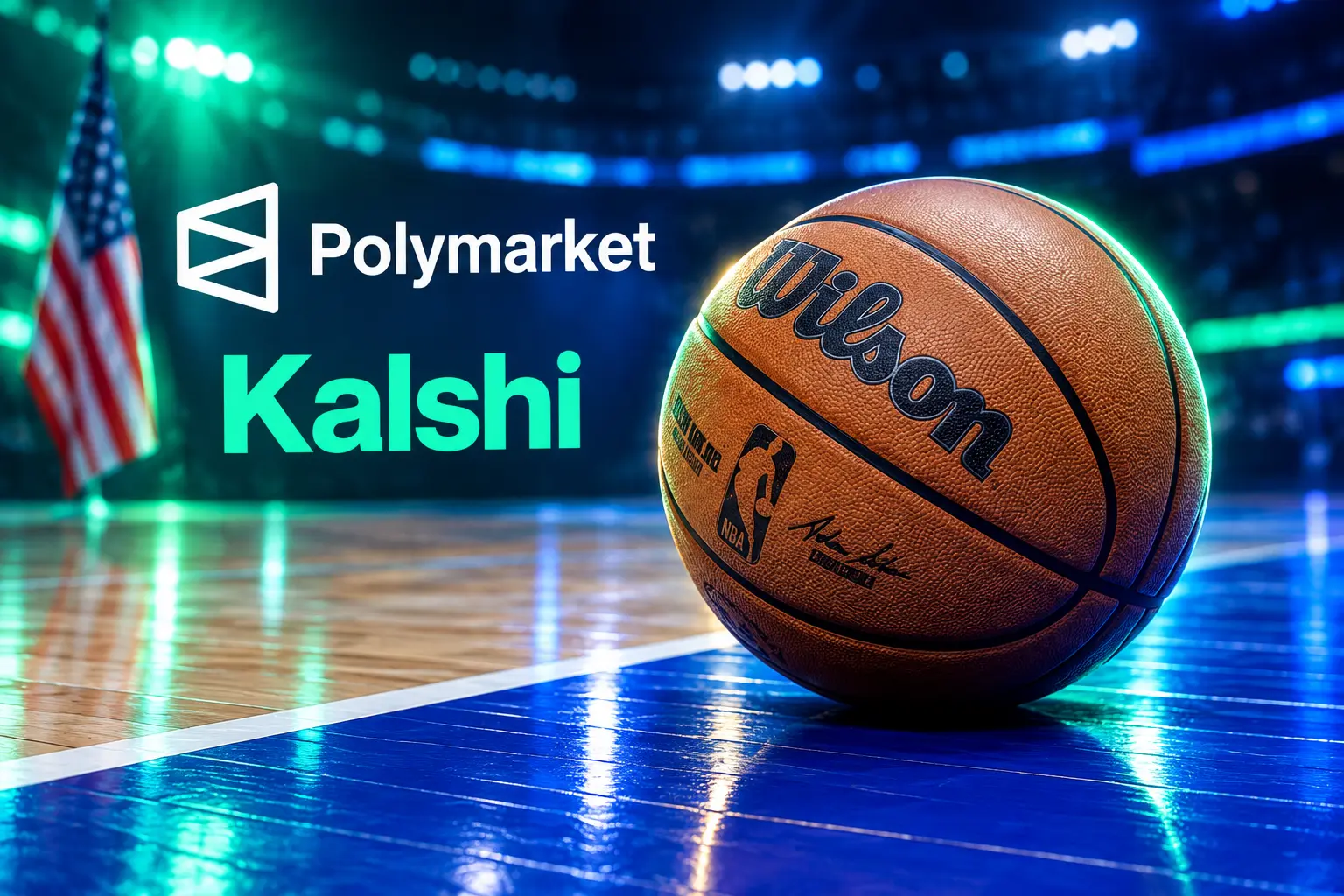
The NBA named Kalshi and Polymarket its preferred prediction market exchanges on October 26, 2026, and signed an information-sharing pact with the CFTC the same morning. The league also expanded its DraftKings deal to cover prediction markets and said more operators would follow.
That package landed six days after Utah sued Kalshi in state court and seven days after the CFTC published a proposal that would write sports event contracts into the federal definition of a swap. The integrity language is the public face of the deal. The second effect is simpler: a major league is treating these contracts as federal market products while states are still in court calling them bets.
A Federal Handshake and Two Exchange Licenses
In New York, the league said it had put in place a comprehensive framework for NBA-related prediction markets. The set of agreements includes a memorandum of understanding with the Commodity Futures Trading Commission, preferred-exchange deals with Kalshi and Polymarket, and a wider DraftKings marketing pact that now covers prediction markets and nationwide promotion.
Scott Kaufman-Ross, the NBA’s head of media distribution and partnerships, said protecting the integrity of the game is the league’s top priority. “As this category develops, we believe it is important to work constructively with regulators and operators to help ensure that appropriate safeguards are in place,” he said. “These partnerships represent an important step in establishing a framework that creates new opportunities to engage our fans.”
The CFTC, in Washington, said the MOU is meant to protect the integrity of professional basketball in prediction markets. Under it, the agency and the league will communicate regularly on integrity questions and on keeping those markets fair and transparent. An MOU is not a new rule. It does not, by itself, tell a Utah court whether a basketball contract is a swap or a wager. It does put the NBA on the federal side of that fight, in public, with the regulator that claims exclusive jurisdiction.
The NBA joins the MLB and NHL in taking a responsible step toward protecting sports integrity and market participants from abuses in prediction markets like insider trading and fraud. I thank NBA Commissioner Adam Silver for putting the integrity of professional basketball and America’s financial markets first and for working with the CFTC on this MOU.
Michael S. Selig, Chairman, Commodity Futures Trading Commission
The commission posted the same announcement from its official account.
.@CFTC and National Basketball Association Sign MOU to Protect Integrity in Professional Basketball: https://t.co/wL6Sdtwzc5
— CFTC (@CFTC) October 26, 2026
The commercial terms sit beside that handshake. Kalshi and Polymarket become the league’s Preferred Prediction Market Exchanges. DraftKings becomes an authorized prediction market operator, a lower badge, with the league saying other official sports-betting partners, and others in the industry, are due in the coming weeks. Financial terms were not disclosed.
Six Days After Utah Sued Kalshi
The calendar around the NBA’s announcement is tighter than the press language suggests. On October 19, 2026, the Federal Register carried two CFTC actions that try to split a product that looks, to a fan, like a sports bet. An interim final rule, already in force that day, excludes qualifying casino-style gambling and sportsbook wagers from the swap definition. A separate proposal would add event contracts, including those based on sports, politics, culture, and weather, to that same definition. Comments on the proposal close on November 18, 2026.
The next day, October 20, Utah Attorney General Derek Brown sued Kalshi in state court. Utah’s constitution bars gambling, and Brown said that bar did not move when the action moved onto phones. “Utah has said no to gambling since statehood in 1896, and that didn’t change when betting moved onto cellphones,” he said. The complaint asks a judge to shut Kalshi down in the state and seeks fees the state puts at $30.6 million to $61.2 million from Utah accounts.
Kalshi’s reply is the same argument the NBA’s new paperwork now quietly supports. “As a national derivatives market overseen by the CFTC, Kalshi answers to federal law, and no single state should have a veto over it,” the company said. A league that licenses logos, data, and U.S. media promotions to that company is not a neutral bystander in that sentence.
THE WEEK THE NBA PICKED A SIDE
- October 19, 2026: The CFTC’s sportsbook exclusion takes effect and its event-contract swap proposal is published, with comments due November 18, 2026.
- October 20, 2026: Utah sues Kalshi in state court, seeking a shutdown and alleged fees of $30.6 million to $61.2 million.
- October 26, 2026: The NBA signs the CFTC MOU and names Kalshi and Polymarket preferred exchanges, with DraftKings added as an authorized operator.
Adam Barrick, Kalshi’s head of sports partnerships, called the NBA deal a significant milestone and pointed to what he described as nationwide consumer protections. Ari Borod, president of sports business development at Polymarket, said the partnership would let customers engage more deeply with basketball on the platform. Neither statement mentions Utah, the Sixth Circuit, or the comment file still open at the CFTC.
How Three Courts Split on the Same Contracts
The reason the NBA’s timing matters is that the law is not settled. Federal appeals courts have already disagreed about whether sports event contracts traded on a CFTC-registered exchange are swaps at all, and about whether federal commodities law knocks out state gambling codes even if they are.
HOW THREE COURTS SPLIT ON THE SAME CONTRACTS
| Court | Date | Holding on sports event contracts |
|---|---|---|
| Third Circuit (KalshiEX v. Flaherty) | April 6, 2026 | Sports-related event contracts on a CFTC-licensed exchange are swaps under exclusive CFTC jurisdiction |
| Ninth Circuit (KalshiEX v. Assad) | August 28, 2026 | At the injunction stage, the contracts are likely not swaps |
| Sixth Circuit (KalshiEX v. Schuler) | September 25, 2026 | Kalshi had not shown the contracts are swaps; Ohio and Tennessee gambling laws would not be displaced even if they were |
The CFTC’s October 19 proposal is an attempt to write the Third Circuit’s answer into the rulebook. If adopted, sports, politics, culture, and weather event contracts would sit inside the swap definition by name. Casino-style sportsbook wagers would sit outside it, under the interim final rule that already took effect. That is the legal wall the NBA just built a marketing deal on top of: two CFTC-facing exchanges get the league’s preferred badge, while a state-licensed book, DraftKings, gets a lesser authorized role and a nationwide promotion right the league could not sell in a place like Utah through a sportsbook license alone.
What Kalshi and Polymarket Get From the NBA
Kalshi and Polymarket already listed NBA markets. The October 26 deals change what those markets can look like, how they settle, and who is allowed to trade them. The league keeps approval rights over which types of NBA questions may be listed. In exchange, each preferred exchange receives a bundle the unofficial listings never had.
WHAT THE PREFERRED EXCHANGES RECEIVE
- League marks: Rights to use NBA intellectual property, including league and team marks, on authorized products in the United States.
- Airtime: Marketing rights and promotional activations across U.S. media channels, including the ability to advertise on game broadcasts.
- The official feed: Official NBA data, distributed by Sportradar, the league’s official data partner, to operate and settle authorized NBA markets.
- A title: Designation as a Preferred Prediction Market Exchange of the NBA, a label DraftKings did not receive.
The data clause is the one traders will feel. When two feeds disagree on a dunk, a foul, or a final score, the preferred venues now have a designated answer: the league’s own record, piped through Sportradar. That removes a settlement fight. It also makes the markets more useful, which is another way of saying it makes them larger. Kalshi, in its own partnership note, went further than the league did on the legal point, saying a national framework lets leagues, exchanges, and regulators take one view of integrity and consumer protection instead of working through dozens of separate systems.
The price of that badge is catalog control. “Limitations on permissible markets” is not a slogan. It means the NBA helps decide which questions may list, and it says those limits will track the sports-betting restrictions it already imposes on books. A league that can kill a contract type is a league that is no longer watching prediction markets from the hallway.
DraftKings Takes a Lower Rung
DraftKings is already one of the NBA’s official sports-betting partners. On October 26 the league expanded that agreement to include prediction markets and nationwide promotion, and it slotted the company as an authorized prediction market operator rather than a preferred exchange. Authorized partners, the league said, will face extra integrity duties written for prediction markets and the same market restrictions the NBA now applies to sports betting.
The distinction is easy to miss in a stacked press release and hard to miss on a product page. Kalshi and Polymarket get the preferred title, the IP package, and the official feed as the named exchanges. DraftKings gets to sell NBA event contracts under the league’s authorized-operator mark and to promote them nationwide, a geographic reach a state-by-state sportsbook license cannot match. FanDuel was not named in the Monday release. The league said it plans to extend the authorized model to other current official sports-betting partners, and to others in the industry, in the coming weeks.
That structure lets the NBA keep its sportsbook relationships while routing the federal-looking product through two CFTC-facing venues. It also gives DraftKings a seat inside the new category so the company is not watching Kalshi and Polymarket take the logos alone.
Three Leagues Now Feed the CFTC
The NBA is the third major U.S. men’s league to sign a prediction-market MOU with the CFTC, after Major League Baseball on March 19, 2026, and the National Hockey League on May 21, 2026. Hockey moved first on the commercial side. On October 22, 2025, the NHL named Kalshi and Polymarket official prediction market partners of the NHL, with rights to league marks and official data and with branding on national broadcasts. Baseball later made Polymarket its exclusive official prediction-market partner and signed the first league MOU with the commission on the same day. Terms of that baseball deal were not released by the league.
The NFL has not signed a comparable league-wide prediction-market deal and has not signed a CFTC MOU. For the 2026 season it kept DraftKings, FanDuel, and Fanatics as official sportsbook sponsors and kept prediction-market operators off its IP. In a September 3 letter, NFL chief compliance officer Sabrina Perel again told designated contract markets to stay off contracts the league calls easy to manipulate, inherently objectionable, tied to officiating, or knowable in advance. Football still takes the money from licensed books. It has not sold the federal product a logo.
WHICH LEAGUES SIGNED, AND WHICH DID NOT
| League | CFTC MOU | Named prediction partners |
|---|---|---|
| NHL | May 21, 2026 | Kalshi and Polymarket, named official partners on October 22, 2025 |
| MLB | March 19, 2026 | Polymarket exclusive official partner |
| NBA | October 26, 2026 | Kalshi and Polymarket preferred; DraftKings authorized |
| NFL | None | None; 2026 sportsbook sponsors only |
Four leagues, three MOUs, one holdout. The NBA did not invent this pattern. It joined it after baseball and hockey had already given the CFTC a league-to-regulator channel, and after football had spent a season telling exchanges which football contracts it does not want listed. The open comparison on the CFTC’s own announcement was the obvious one: whether the NFL is next. The NBA’s answer, for basketball, is that it would not sign the commercial deals until the regulator channel came with them.
League Staff Cannot Trade NBA Contracts
The integrity terms the NBA extracted are specific even if the MOU is not a statute. Preferred-exchange agreements, the league said, include limitations on permissible markets, affirmative prohibitions on trading NBA event contracts by league and team personnel, and information-sharing duties on investigations and suspicious trading. Authorized operators are supposed to live under the same market limits the NBA uses for sportsbooks, plus extra prediction-market duties the league did not spell out in public.
A personnel ban is the cleanest line in the package. If the product is a federal event contract, league employees and team employees are insiders in the ordinary market sense: they can know a lineup, a trade, or a resting decision before the public tape does. Barring them from trading NBA contracts is the minimum a securities lawyer would recognize. Sharing investigation files with the CFTC is how that ban becomes more than a clause in a sponsorship deck.
What the public documents do not list, contract by contract, is which NBA questions are now off limits. The league says the limits will follow its latest sports-betting restrictions. It does not republish that list in the prediction-market release. Until the exchanges post their NBA rulebooks, traders will learn the new catalog the usual way, by seeing which markets survive tip-off.
Player unions from the NFL, MLB, NBA, NHL, and MLS had already asked the CFTC, in an April 30 comment, to prohibit contracts on negative outcomes a single person can influence, including injury and penalty questions, and to prohibit “mention” contracts tied to words spoken on a broadcast. The NBA’s October 26 paper does not say whether those categories are dead on its preferred venues. Catalog control makes that a league decision now, not only a commission one.
The Swap Rule Is Still Only a Proposal
None of this closes the legal file. The CFTC’s inclusion of sports event contracts in the swap definition is a proposal, not a finished rule. Comments run through November 18, 2026. The sportsbook exclusion is already law, which is how the agency wants a DraftKings sportsbook wager and a Kalshi event contract to live in different statutes even when both pay on the same final score. Courts in three circuits have already split on the swap question, and Utah’s new case will test whether a state that bans gambling can collect from a venue that says it answers only to Washington.
The NBA did not wait for that docket to clear. It sold Kalshi and Polymarket the marks and the official feed, gave DraftKings a lesser authorized seat, and signed a federal information channel that baseball and hockey had already modeled. The integrity terms are real: a trading ban on league and team staff, a narrower catalog, and a duty to flag suspicious flow. So is the jurisdictional exhibit. A league that calls two prediction venues its preferred exchanges is telling traders, and telling courts, which regulator it wants on the other end of the phone.
November 18 is still the CFTC’s comment deadline. Until a final rule lands, and until a higher court picks a side, the NBA’s new partners will settle basketball contracts on Sportradar data under a federal badge that several states still refuse to recognize.
Disclaimer: This article is news reporting and analysis of a league announcement and related regulatory filings. It is informational only and is not investment advice, legal advice, or a recommendation to trade event contracts, place wagers, or take any position on Kalshi, Polymarket, DraftKings, or NBA games. Readers who are considering trading or betting should consult a licensed attorney and, where relevant, a qualified financial adviser, and should confirm the rules that apply in their own state. Figures, case statuses, and partnership terms reflect the public statements and documents cited as of the dates given in this article and may change as courts rule and as the CFTC finishes its comment process.

One UI 9.5 Beta Puts the Galaxy S26 on Last Year’s Clock

DBS Puts a 24/7 USDC Window Inside the Bank

European Startups Head for $81 Billion as First Checks Shrink

US Stocks Lost $1.3 Trillion Before Nvidia’s Beat

Home Depot Bets on Finance Chief Richard McPhail as CEO

Aramco Crash Kills 14 Two Days After Oil Restart

Salah Captained Egypt to Their First World Cup Win

Zelda’s 40th Switch 2 Ships Without a Zelda Game

Apple Labor Day Deals Hide June’s Memory Price Hike

El Niño Puts Israel’s Needed Winter Rain on a Flood Clock
-
 BUSINESS5 months ago
Aramco Crash Kills 14 Two Days After Oil Restart
-
 NEWS6 months ago
Salah Captained Egypt to Their First World Cup Win
-
 GAMING2 months ago
Zelda’s 40th Switch 2 Ships Without a Zelda Game
-
 NEWS3 months ago
Apple Labor Day Deals Hide June’s Memory Price Hike
-
 NEWS4 months ago
El Niño Puts Israel’s Needed Winter Rain on a Flood Clock
-

 GAMING2 months ago
Palworld 1.0.4 Adds Palpedia Search After the 1.0 Launch
-

 NEWS4 months ago
Saudi Visa Routes Split Nigerian Travelers Into Two Speeds
-

 BUSINESS9 months ago
BAE’s 60-Year Saudi Franchise Now Runs Through Taif