
BUSINESS
S&P 500 Futures Rebound Into a Holiday-Shortened Week
S&P 500 futures bounced 1.9% into Thanksgiving’s thin tape, while HPE and Dell report after 25% and 34% November losses.

S&P 500 futures rose 1.9% as Asian hours opened Monday, after Friday’s close left the index more than 10% below its record. Nasdaq-100 futures gained 2.6%.
The bounce starts a Thanksgiving week with three and a half sessions. Hewlett Packard Enterprise reports Monday after the close. Dell Technologies follows Tuesday. Both stocks have already been cut by a quarter or more in November, and they print into a tape that shuts on Thursday.
Friday Locked the S&P 500 and Dow in Correction
The S&P 500 fell 3.7% on Friday, November 20, to 6,910.39, its seventh straight loss and the longest such streak since February 2020. The week took 8.6% off the index, the most since April 2025, when President Donald Trump’s tariff package first hit the tape.
The Dow Jones Industrial Average dropped 1.93% to 48,147.33, an 8% weekly loss, its worst since March 2020. The Nasdaq Composite slid 5.28% to 22,617.73 and lost 10% for the week, also the steepest decline since the first weeks of Covid. All three major averages finished in correction territory, a drop of at least 10% from their record closes. The Nasdaq is down 2.7% for 2026. The S&P 500 is up 1% on the year. The Dow is up 0.2%.
The Nasdaq-100 slipped into bear-market territory on an intraday basis Friday, 20% below its peak, but it finished just shy of that mark from the closing high on October 6.
FRIDAY’S CLOSE
| Index | Friday close | Friday | Week | 2026 |
|---|---|---|---|---|
| S&P 500 | 6,910.39 | -3.7% | -8.6% | +1% |
| Dow Jones | 48,147.33 | -1.93% | -8% | +0.2% |
| Nasdaq Composite | 22,617.73 | -5.28% | -10% | -2.7% |
Nvidia fell about 14% on Friday on a report that SEC enforcement staff are examining potential accounting issues at the chipmaker, and it lost 22.92% for the week. Micron dropped nearly 14%. AMD lost more than 13%. The selling was not confined to chips. Amazon fell 3.9%. Meta Platforms fell 5.9%. CoreWeave dropped 12.1%. Nebius slid 16.1%.
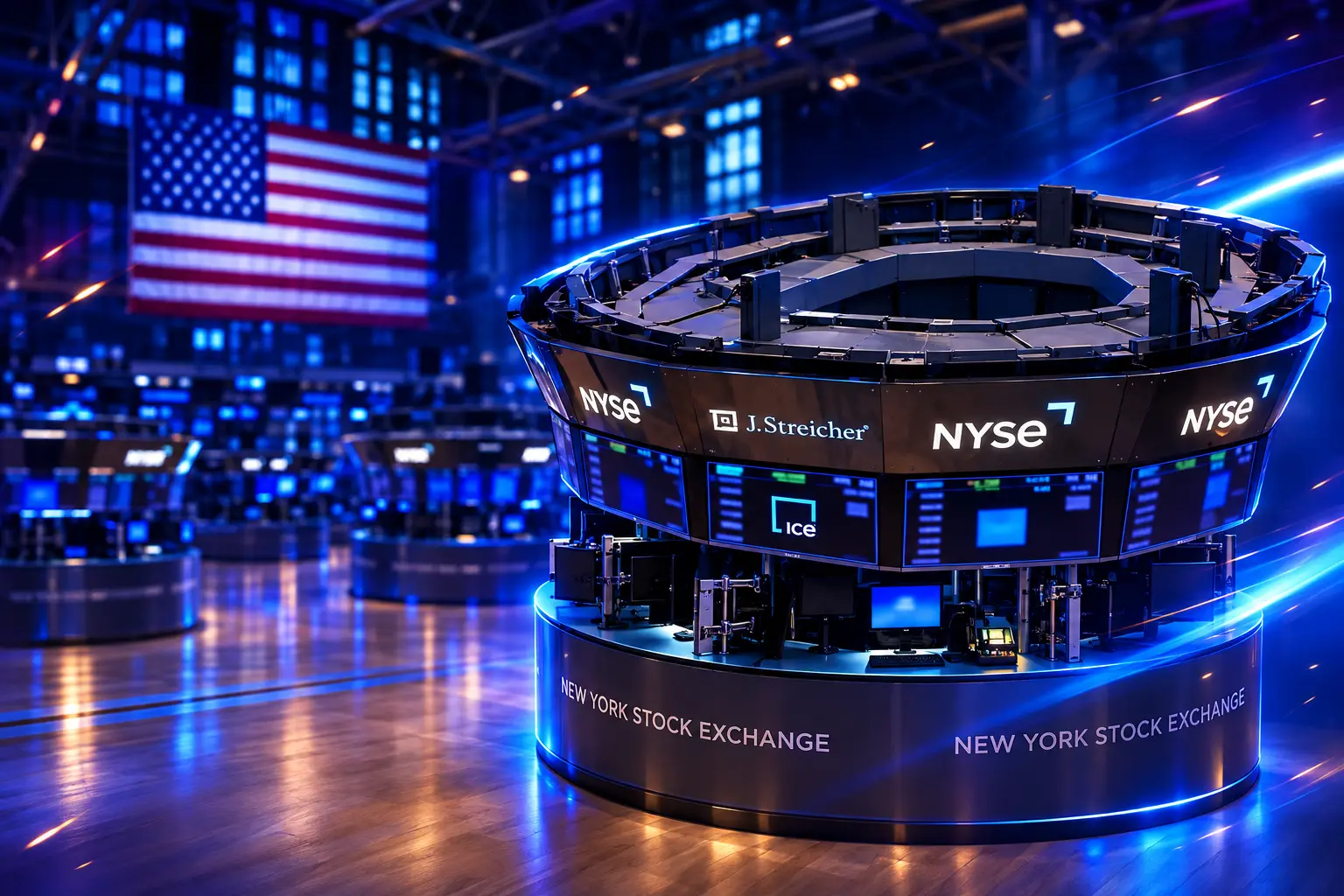
Futures Bounce Into a Holiday-Shortened Week
U.S. equity-index futures opened higher Sunday evening and held that bid into Monday’s Asian session. Treasury futures fell and the yen weakened as some of Friday’s rush into havens eased. JPMorgan’s desk called the pullback mostly an AI de-leveraging event set against a more hawkish Fed path, not a sudden hole in orders.
That reading has to live with the calendar. U.S. markets are closed Thursday, November 26, for Thanksgiving. On Friday, November 27, NYSE markets close early at 1:00 p.m. Eastern. The cash market that has to decide whether Friday was a low gets Monday, Tuesday, Wednesday, and a half-day after the turkey.
Chris Weston, head of research at Pepperstone, notes the Nasdaq-100 has closed higher in Thanksgiving week in 11 of the past 15 years. A green open in a short week is the common seasonal pattern, which is why it cannot, by itself, repair a 10% Nasdaq week. Options desks went into the weekend with the VIX at 35.89 and with one-month put implied volatility on the S&P 500 holding a wide premium to calls, the kind of skew that can fuel a short-cover rally when futures first print.
Seventy-three companies are still due to report in those three full sessions. Wednesday brings the personal consumption expenditures reading the Fed prefers, plus the Beige Book at 2 p.m. Eastern. Japan’s markets were closed Monday for a public holiday, so the first full G-7 cash open of the week is the U.S. one.
HPE Reports Monday Night and Dell on Tuesday
The names that have to show the AI buildout is still shipping are not the model vendors. They are the server companies. HPE holds its Q4 Fiscal Year 2026 HPE Earnings Conference Call Monday at 5:00 p.m. Eastern, with president and CEO Antonio Neri and CFO Marie Myers on the line. Dell will hold a conference call Tuesday, Nov. 24 at 3:30 p.m. Central to discuss fiscal 2027 third-quarter results.
HPE is down 25% in November. Dell is down 34% this month, on pace for its worst month since it returned to the public market in 2018, and it last traded around $281 on Friday after a 10% drop with no company news attached. Super Micro Computer fell 7% with them.
THE TWO PRINTS
| HPE | Dell | |
|---|---|---|
| When | Monday after the close | Tuesday after the close |
| Call | 5:00 p.m. ET | 3:30 p.m. CST |
| November | Down 25% | Down 34% |
| Last official guide | Q4 revenue $13.9B to $14.8B, EPS $1.20 to $1.30 | Q3 revenue about $49B, AI servers $19B, EPS $6.50 |
Dell’s own second-quarter filing is the reason the bar is high. Net revenue was $46.97 billion, up 58% from a year earlier. Net income was $4.1 billion. Infrastructure Solutions Group revenue rose 89%, led by AI-optimized servers. In September the company told investors AI-server backlog had reached $95 billion on $60.9 billion of new AI orders in that quarter, and it lifted its full-year revenue view to $192 billion, including about $74 billion from AI servers.
Those are shipment and backlog numbers, not a multiple. Barclays cut Dell, HPE, and NetApp in October on what it called enterprise AI timing, writing that strong enterprise revenues looked more like a function of memory costs than a broad move to enterprise AI. Steve Eisman has warned Dell will slow along with Nvidia. The Monday and Tuesday calls are the first look at orders, cancellations, and cash conversion since that argument took over the tape.
Best Buy reports before the bell Tuesday. Workday reports after the close the same day. Neither is an AI-server proxy, but both will trade in the same thin session as Dell’s print.
What the Rout Did Under the Index Surface
Index levels understate how far the average stock had already fallen before Friday’s close. Dow Jones Market Data found that 64% of S&P 500 constituents finished at least 20% below their record highs, and that share reached 87% inside information technology.
UNDER THE HOOD
- The VIX: The Cboe Volatility Index closed Friday at 35.89, up 26.20% on the day and 85.96% for the week.
- The internals: 64% of S&P 500 stocks, and 87% of the tech sector, sat at least 20% below their records.
- The streak: Friday was the S&P 500’s seventh straight decline, the longest since February 2020.
- The year: The Nasdaq is negative for 2026. The S&P 500 and Dow are barely positive.
Walmart rose more than 1% on Friday. Costco, Johnson & Johnson, and Procter & Gamble each gained about 1%. Defensive buying showed up in the same session that took chips down in a block. All three major averages also slipped below their 200-day moving averages, a line technicians treat as a shift in risk, not a forecast.
The path from the October 6 high already included a $1.3 trillion wipeout before Nvidia reported. Friday’s session added an accounting scare on top of that earlier air pocket. A futures bounce of 1.9% does not rewind either move.
Huang’s Exit Spread From Nvidia to the Whole Tape
Nvidia’s board said on November 12 that Jensen Huang has resigned as president, chief executive, and a director, effective immediately. Colette Kress, the longtime CFO, is interim CEO and keeps the finance job. Harvey C. Jones became the board’s first chair. Jones said the board expects operations, customer commitments, and the product roadmap to continue without interruption. The directors later said they do not intend to reinstate Huang.
Dan Ives, partner and senior managing director at Yorkville Ives & Co., put that exit inside a seven-part storm: a Democratic midterm sweep and fears of an anti-data-center Congress, the loss of Huang, China-linked regulatory pressure on semis and memory, successive clearing sales, Anthropic’s IPO pulling cash from other tech names, fund losses that cut buying power, and sticky inflation with hawkish Fed talk. He still puts the AI buildout at $4 trillion and has not dropped his 2027 tech thesis.
Anthropic priced at $83 and closed its November 19 debut up 17%, raising $81 billion, then fell 8.5% on Friday. The listing was supposed to be a clearing event for the AI trade. It coincided with the S&P 500’s sixth and seventh down days instead. Ives wrote Sunday that bears will feel validated, that this is a “yelling fire in a crowded theater moment,” and that 160 gigawatts of power backlog and demand through 2029 still sit against only about 80 to 100 gigawatts of capacity planned in the next few years.
The bears will feel validated after being doubters of the AI Revolution since early 2023 and will be louder and louder over the coming weeks and months. Yelling fire in a crowded theater moment is here and the bears will take center stage with this narrative and ultimately with… https://t.co/HYh6VhbqaK
— Dan Ives (@DivesTech) November 22, 2026
FROM OCTOBER 6 TO MONDAY
- October 6, 2026: The S&P 500 marks its record closing high. The drawdown that became last week’s correction starts here.
- November 12, 2026: Nvidia says Huang has resigned. Kress becomes interim CEO. The S&P 500’s seven-day losing streak includes this session.
- November 19, 2026: Anthropic starts trading, up 17% from $83, in a record listing that still fails to lift the rest of tech.
- November 20, 2026: The S&P 500, Dow, and Nasdaq all close in correction. The Nasdaq-100 tags a 20% intraday drawdown from its peak.
- November 23, 2026: S&P 500 futures rise 1.9% and Nasdaq-100 futures rise 2.6% as the shortened week begins. HPE reports after the close.
The financing broke faster than the orders. Signed cloud and server backlogs are still on the books. What changed is the price investors will pay for the equity that funds them, and a holiday week is a poor venue for resetting that price.
Korean Memory Stocks Missed the U.S. Futures Bounce
The rebound in Chicago did not show up in Seoul. South Korea’s Kospi fell 2.34% in early Monday trade. Samsung Electronics dropped about 3%. SK Hynix dropped about 2%. Hong Kong’s Hang Seng Index slipped 1.27% at the open. Australia’s S&P/ASX 200 was slightly lower, extending a run of losing sessions. Mainland China’s CSI 300 was off 0.58%.
Those Korean names are the memory suppliers the U.S. server vendors have been citing as the constraint, not a side bet. If DRAM and HBM stay under pressure while S&P 500 futures bounce, the U.S. bid is a New York liquidity event until HPE and Dell say otherwise. Hedge funds have already cut a lot of the AI risk. Long-only books and retail accounts have not, which leaves a second wave of selling available if Monday’s cash open fades.
Former support on the Nasdaq and the S&P 500 is also close enough to the Sunday futures print that a failed bounce would turn those levels into resistance on the first full session. That is the mechanical risk in a week when many desks are already short-staffed.
Ives Still Counts 160 Gigawatts of Backlog
Drew Pettit, chief investment strategist at Roundhill, told viewers Friday that indiscriminate selling, which had spread beyond tech, can mark the late stage of a decline. He also put the burden back on buyers.
Fundamentally, I think the floor is a lot higher. Technically, you need a string of catalysts for the bulls to prove the long-term earnings story isn’t broken.
Drew Pettit, Chief Investment Strategist, Roundhill, on Closing Bell: Overtime
Ives still treats the selloff as panic with the force of March 2020 and April 2025, and he has a shopping list he calls safer inside the damage: Apple, CrowdStrike, Palo Alto Networks, Zscaler, the large cloud vendors, Palantir, Snowflake, and SpaceX as a future hyperscaler. He is due on CNBC’s Morning Call at 5:30 a.m. Monday with that map.
The cash market does not have to settle that argument in one session. It has to get through HPE’s backlog conversion Monday night, Dell’s $95 billion AI-server book on Tuesday, and a Wednesday inflation print, then it goes dark for Thanksgiving.
WHAT WOULD ACTUALLY HELP THE BULLS
- HPE shipments: Orders that turn into revenue, not another raise of a networking target the supply chain cannot fill.
- Dell cash: Free cash flow that starts to catch the $46.97 billion revenue run-rate, after a quarter when backlog grew faster than collections.
- A second up day: A Monday bounce that still holds after HPE prints, rather than a Sunday futures pop that dies at the cash open.
- Memory follow-through: Samsung and SK Hynix that stop falling while U.S. futures rise, so the bounce is not only a New York liquidity print.
HPE speaks first, after Monday’s close, into a market that already has one eye on Thursday. Dell follows 24 hours later. The 1.9% futures bounce is the easy print of the week. The hard one is whatever those two companies say when the room is half empty.
Disclaimer: This article is news reporting and market analysis for information only. It is not investment advice, a recommendation to buy or sell any index, future, or stock, or a prediction of where the S&P 500, Nasdaq, Dow, HPE, or Dell will trade. Readers should consult a licensed financial adviser or broker who knows their objectives, time horizon, and risk limits before acting on any price move or earnings date mentioned here. Index levels, futures prices, earnings dates, and company figures reflect the sources cited as of Monday, November 23, 2026, and can change as cash markets open and as HPE and Dell report.

Jennifer Lopez and Mahershala Ali Describe a Pipeline They Cannot Buy

Lightsail Scatter Turns to Drag Far Above Starshot

Tallulah Willis Deletes a Bruce Willis Photo She Called Intimate

S&P 500 Futures Rebound Into a Holiday-Shortened Week

GTA VI’s Record Launch Still Needs the Same Fragile Grid

Aramco Crash Kills 14 Two Days After Oil Restart

Salah Captained Egypt to Their First World Cup Win

Zelda’s 40th Switch 2 Ships Without a Zelda Game

Apple Labor Day Deals Hide June’s Memory Price Hike

El Niño Puts Israel’s Needed Winter Rain on a Flood Clock
-
 BUSINESS5 months ago
Aramco Crash Kills 14 Two Days After Oil Restart
-
 NEWS6 months ago
Salah Captained Egypt to Their First World Cup Win
-
 GAMING3 months ago
Zelda’s 40th Switch 2 Ships Without a Zelda Game
-
 NEWS3 months ago
Apple Labor Day Deals Hide June’s Memory Price Hike
-
 NEWS5 months ago
El Niño Puts Israel’s Needed Winter Rain on a Flood Clock
-

 GAMING3 months ago
Palworld 1.0.4 Adds Palpedia Search After the 1.0 Launch
-

 NEWS4 months ago
Saudi Visa Routes Split Nigerian Travelers Into Two Speeds
-

 BUSINESS9 months ago
BAE’s 60-Year Saudi Franchise Now Runs Through Taif