
LIFESTYLE
Malqata Palace Paintings Return as Tahrir’s Answer to Giza
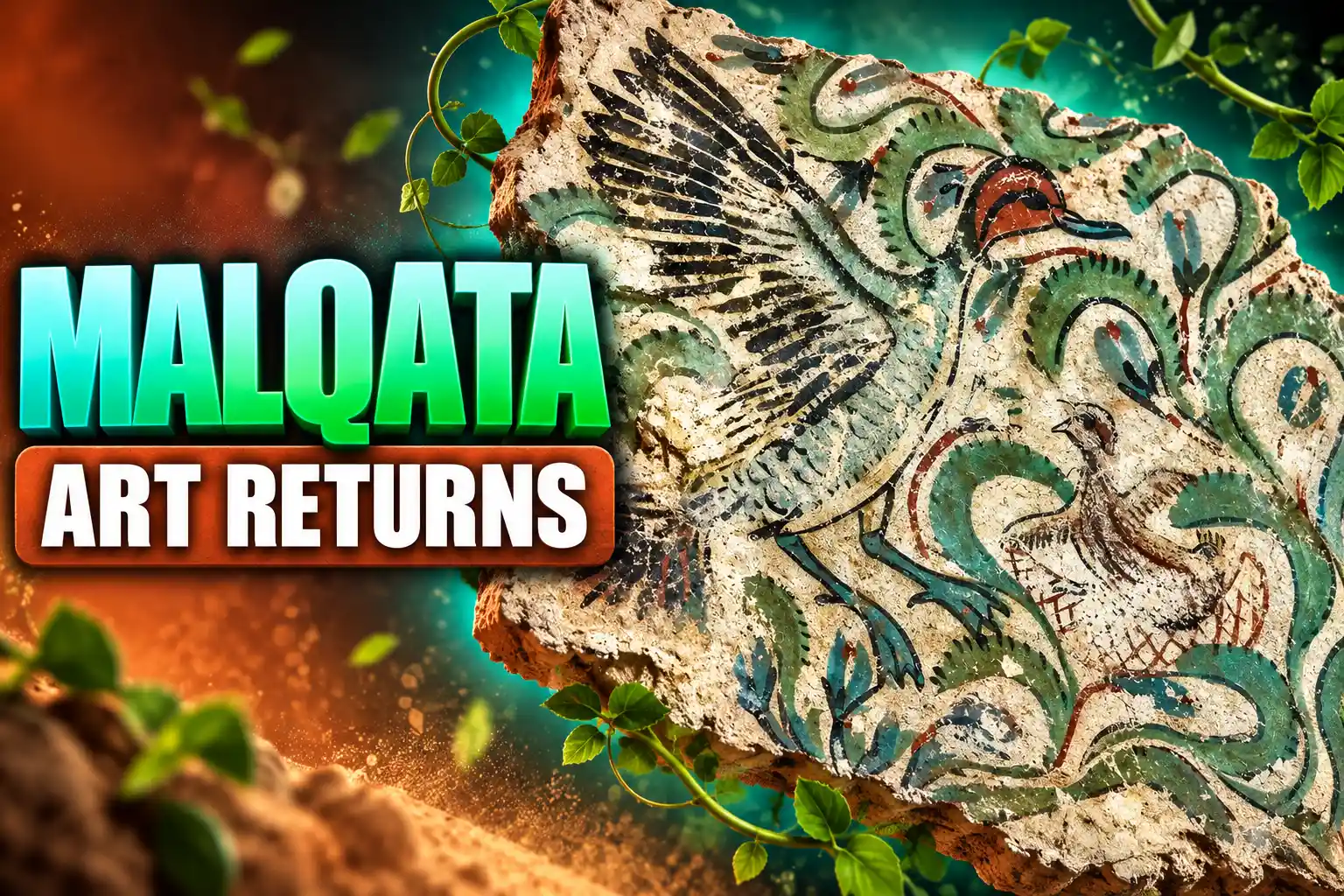
Tahrir reunited a dozen Malqata palace paintings in Room 13, a palace-life gallery conserved as the Grand Egyptian Museum took Tutankhamun’s gold to Giza.

Tahrir’s Egyptian Museum has reunited a dozen Malqata palace paintings in Room 13, the first single gallery for works peeled from Amenhotep III’s walls around 1900. They had already lived in the same building, split across halls and often stuck behind clouded glass. The new hang is the change, and it arrived as Cairo’s museum map was about to split in two.
The Grand Egyptian Museum in Giza opened on 1 November 2025 and took Tutankhamun’s tomb gold with it. What Tahrir kept, and then cleaned, is how a living 18th Dynasty court actually looked.
Room 13 Reunites a Palace That Museums Split
Mohamed Ismail Khaled, secretary-general of the Supreme Council of Antiquities, opened the gallery on 10 September 2025 with Andreas Fiedler of the German Embassy in Cairo. Ali Abdel Halim, director general of the Egyptian Museum in Tahrir, put the works in Room 13 on the ground floor, behind the statues of Amenhotep III and Queen Tiye.
Martina Ullmann, professor of Egyptology at LMU Munich, directed the project. Bianca Madden, a conservator based at Oxford, led treatment with staff from the museum. The American Research Center in Egypt paid for the work through its Antiquities Endowment Fund. Yasmin El Shazly, ARCE’s deputy director in Cairo, said the paintings show artistic sides of Amenhotep III’s reign that had stayed hard to read.
Malqata, also spelled Malkata, was the king’s festival city on Luxor’s west bank. Ullmann’s team restored a dozen palace paintings from Malkata that once covered floors, walls and ceilings. For decades they hung as stray panels. The new room treats them as one palace again.
THE ROOM 13 GALLERY
| Item | Detail |
|---|---|
| Where | Room 13, ground floor, behind Amenhotep III and Tiye |
| Opened | 10 September 2025 |
| Works | A dozen wall, floor and ceiling paintings |
| Project director | Martina Ullmann, LMU Munich |
| Conservation lead | Bianca Madden, with Egyptian Museum Cairo staff |
| Funder | ARCE Antiquities Endowment Fund |
Abdel Halim placed related objects in the same bay: a statue of the scribe Amenhotep son of Hapu, a head of Queen Tiye, and a vessel with her name. The point is a court, not a single pretty fragment.
The Old Museum’s Claim on Royal Life
Ismail used the opening to talk about Tahrir, not only about paint. He said the museum, open since 1902, was being modernised hall by hall and would keep its place after the Grand Egyptian Museum opened on 1 November. Ahmed Hamida, head of the museums sector, called the Malqata room the second phase of that plan. The first, two years earlier in 2023, was the wall paintings from the temple of Wadi es-Sebua in Nubia. Later phases, he said, will bring pottery from several periods.
The sequence is the argument. Giza now stages the complete Tutankhamun find. Tahrir is hanging palace plaster, temple plaster and, next, pots. Fiedler called the Malqata opening “a culmination of deep cultural cooperation between Egypt and Germany, and a reflection of Egyptian heritage as a shared global legacy.”
The Ministry of Tourism and Antiquities posted the same line the morning of the ceremony: a permanent display of Amenhotep III’s palace paintings, framed as part of Tahrir’s rebuild.
The Egyptian Museum in Tahrir inaugurated a new permanent exhibition of wall paintings from King Amenhotep III’s palace at Malqata, Luxor.
Part of the museum’s development project to showcase treasures with modern standards & affirm its role as a cultural beacon.#MOTA pic.twitter.com/8bDeUnix4N
— Ministry of Tourism and Antiquities (@TourismandAntiq) September 10, 2025
Campbell Price, curator of Egypt at Manchester Museum, walked the building on 18 November 2025, after Giza had opened, and still listed the new Malkata plaster with the Narmer Palette and the Tanis burial goods. “With all the hype around the GEM, if you make it to Cairo don’t be put off a visit to the Egyptian Museum at Tahrir Square,” he wrote.
With all the hype around the GEM, if you make it to Cairo don’t be put off a visit to the Egyptian Museum at Tahrir Square. Today’s highlights for me included: Tanis funerary items, the Narmer Palette and a NEW display of painted plaster from the palace of Malkata
Campbell Price, curator of Egypt, Manchester Museum
That is how the gallery is already being used. It is a reason to stay downtown after the gold moved west.
A Century of Glass, Mesh and Darkened Color
The paintings left the palace in the late 19th and early 20th centuries, when excavators cut the paint layer and its top coat of plaster and shipped the slabs to Cairo. Madden wrote that they then sat in different parts of the museum, some of them in extremely weak condition. Ullmann’s group found large pieces still mounted behind glass, the colors darkened until the scenes were hard to see.
Early mounts are part of the damage. Some panels sit on plaster and sackcloth. Others were set into plaster with wire mesh and metal rods, which is why the biggest slabs are so heavy. A third group had original plaster stuck to canvas on wood; the canvas had wrinkled, and the paint was close to breaking. Overpaints and old fills from those first treatments showed up under ultraviolet light.
Work began in September 2023 with a full check of surfaces, backings and frames. That first season set the method. The second season was the treatment: cleaning, holding crumbling clay, consolidating weak paint, and locking each piece into a new support. ARCE described the span as two years. Madden described it as two field seasons. Both are right, and they name different things.
THE PAINTINGS’ PATH FROM PALACE TO TAHRIR
- Late 19th and early 20th centuries: Excavators detach painted plaster from Amenhotep III’s palace and send the slabs to Cairo.
- 1910 to 1911: The Metropolitan Museum of Art lifts a separate ceiling from the antechamber to the king’s bedroom and takes it to New York.
- September 2023: Ullmann and Madden begin assessment of the Cairo group, including old glass, canvas and metal-grating mounts.
- Second season: Cleaning, stabilisation, pigment study, and new frames, the two-season conservation of the group that ARCE funded.
- 10 September 2025: Room 13 opens as a permanent gallery, with the Malqata works facing the Wadi es-Sebua temple paintings.
UV, X-ray and pigment tests pulled detail back out of the dark. Bird feathers on the ceilings read more clearly. Whole flocks appear in a tangle of wings, which Ullmann said was unusual for Egyptian painting of that date, when birds were usually shown one at a time and with less life.
The King Walked on Fish and Bound Enemies
Amenhotep III ruled for 38 years in the 14th century BCE. In the second half of that reign, from about 1360 BCE, he built Malqata as a residence city for the Sed festival, the ritual that renewed a king’s right to rule. Ullmann says the paint was part of that job, not extra trim on mud brick.
The rich painting of his palace was not just decoration. It showed how he ensured the order of the cosmos, and how the country thrived under his rule.
Martina Ullmann, Professor of Egyptology, LMU Munich
When the king crossed his own floors, he walked on a painted lake. Fish moved underfoot. Ducks nested in reeds. Cows stood among papyrus on the walls. Bound Syrians and Nubians, shown in their own clothes and hair, covered the throne-room floor and the steps up to the dais, so each approach to the seat of rule was a walk across Egypt’s enemies.
WHAT THE PALACE WALLS SHOWED THE KING
- Marsh floors: Fish, ducks, nests and papyrus turned the walkway into a painted Nile and stood for fertility under the king.
- Cattle on the walls: Cows marked food, offerings and a land that could feed itself.
- Bucrania and rosettes: Ox skulls with flower disks tied the rooms to the sky and to constant renewal.
- Enemies on the stairs: Bound Syrians and Nubians lay on the throne-room floor and steps so the king stepped on them to sit.
- Birds in flocks: Ceiling flocks, with plumage cleared by UV and X-ray, break from the older habit of single, stiffer birds.
Abdel Halim told guests the designs belong to the early Amarna manner that shaped Akhenaten’s art. Ullmann puts it in sequence: Malqata’s drawing is already more natural and more detailed than earlier palace work, and that manner continues into Amarna. Visitors can test the claim in the next room, where the Wadi es-Sebua temple paintings, from the same reign, hang for comparison. Madden said the two groups show how temple walls and palace walls were painted differently in the same years.
New York Still Holds the Famous Ceiling
Room 13 is not the whole palace. Ullmann has told audiences that Malqata paintings also sit in the Metropolitan Museum, the Brooklyn Museum, the State Museum of Egyptian Art in Munich, and the Grand Egyptian Museum. The most widely reproduced ceiling is not in Tahrir at all.
The Met displays a ceiling painting from the king’s antechamber in Gallery 119, a 140 cm square of dried mud, plaster, gesso and paint found face up in 1910 to 1911. Running spirals filled with rosettes alternate with bucrania, a mix of Egyptian and Aegean pattern. Other Malqata objects from those seasons are next door in Gallery 120. That is the image most people already know, and it never had to wait for Room 13.
The palace itself is still on the west bank, a mud-brick plan in poor shape. Traces of paint cling to a few lower walls. Joint work at the site has tried to hold those remains, a different job from the Cairo gallery and paid under older ARCE grants. A visitor who wants the color of the court still gets it in museums, and the richest single ceiling is in New York.
So the Tahrir hang is a Cairo group made readable, not a homecoming of every fragment. The palace was cut up more than a century ago. This project put one museum’s share back into an order a visitor can walk.
How the Gallery Maps Each Painting to a Room
The hang copies function, not a flat line of pretty slabs. Floor scenes with plants and animals sit in a large, shallow floor case. Captive figures stand on steps that lead up to a photograph of the throne dais. Wall and ceiling pieces hang as they would have in the rooms they came from. Photos from a virtual reconstruction of the painted palace, built by Franck Monnier with Peter Lacovara for ARCE, fill the gaps the plaster cannot.
Ullmann later told a Mainz audience that lotus, ducks, rising birds, fish and papyrus mark the world’s birth from the first waters and the sun’s daily return, with the king locked into that cycle inside his own house. The enemy figures on the floor are the other half of the same program: keep the borders, keep the land. Room 13 makes that reading physical. You look down to see the marsh. You look at the steps to see who gets trodden on.
LMU also points the public to Monnier’s 3D model, so the vanished house can be walked on a screen as well as inferred from the cases. The west-bank ruin will not give that tour. The old museum now does.
A visitor in Room 13 starts at the floor case, climbs the painted steps with the bound figures, and faces a picture of the throne. That is as close as the public gets to Amenhotep III’s house of rejoicing, unless they already know to look for the rest of the ceiling in New York.
Frequently Asked Questions
Where Was Malqata Palace Built?
Malqata stands on the west bank of Luxor, in ancient Thebes, and its Egyptian name was the House of Rejoicing. The complex was a small city of royal apartments, audience halls, a throne room, houses for officials, stores, gardens and an artificial lake, linked to the Nile by canals that ended at the harbour now called Birket Habu.
Why Were the Malqata Paintings Taken Off the Walls?
Excavators in the late 19th and early 20th centuries cut away the painted plaster because mud-brick palaces decay in place and the color was already at risk. Finds from those seasons were divided. Cairo kept the dozen panels now in Room 13. The Metropolitan Museum of Art took its share to New York after the 1910 to 1911 work, including the antechamber ceiling in Gallery 119.
Which Museums Outside Cairo Hold Malqata Palace Paintings?
Besides the Tahrir dozen, painted plaster from the palace is held by the Metropolitan Museum of Art, the Brooklyn Museum, the State Museum of Egyptian Art in Munich, and the Grand Egyptian Museum. In situ scraps of paint remain on some lower walls at the ruined site itself, which is a separate conservation problem from the gallery.
What Pigments Did Conservators Identify on the Malqata Paintings?
Pigment tests on the Cairo group found a light ground of calcium carbonate, with Egyptian blue, Egyptian green, red ochre and yellow ochre in the paint. Ultraviolet photography also revealed overpaints and fills added when the panels were first mounted, which the 2023 to 2025 treatment had to map before cleaning.
What Did Amenhotep III Use the Palace For?
He built Malqata in the later years of his 38-year reign as the main stage for the Sed festival, the rite that renewed a king’s vitality and right to rule. Ullmann notes that the same dual role, man and cult object, runs through the palace paint and through his temples, which is why marsh, cattle and trodden enemies share the rooms with the royal apartments.

Cook Hands Democrats the House as Crypto’s Bill Stays Dead

Wicker’s Broken Bed Was the Short Story’s Punch Line

Nvidia’s $500 Billion Financing Plan Draws a $180 Sell

Maserati Bets the Grecale V6 Can Fill Porsche’s Gap

EV Cable Theft Follows the Old Railway Copper Playbook

Aramco Crash Kills 14 Two Days After Oil Restart

Salah Captained Egypt to Their First World Cup Win

Zelda’s 40th Switch 2 Ships Without a Zelda Game

Apple Labor Day Deals Hide June’s Memory Price Hike

Palworld 1.0.4 Adds Palpedia Search After the 1.0 Launch
-
 BUSINESS4 months ago
Aramco Crash Kills 14 Two Days After Oil Restart
-
 NEWS5 months ago
Salah Captained Egypt to Their First World Cup Win
-
 GAMING2 months ago
Zelda’s 40th Switch 2 Ships Without a Zelda Game
-
 NEWS2 months ago
Apple Labor Day Deals Hide June’s Memory Price Hike
-

 NEWS4 months ago
El Niño Puts Israel’s Needed Winter Rain on a Flood Clock
-
 GAMING2 months ago
Palworld 1.0.4 Adds Palpedia Search After the 1.0 Launch
-

 BUSINESS9 months ago
BAE’s 60-Year Saudi Franchise Now Runs Through Taif
-

 BUSINESS8 months ago
Egypt Bets EGP 638 Billion Can Open Sinai to Investors