
BUSINESS
US Records Tied Site 81 to Tel Aviv’s Da Vinci Towers
A 2013 Army Corps study and a $29.6 million contract placed Site 81 in Tel Aviv before Iran hit the Da Vinci Towers.

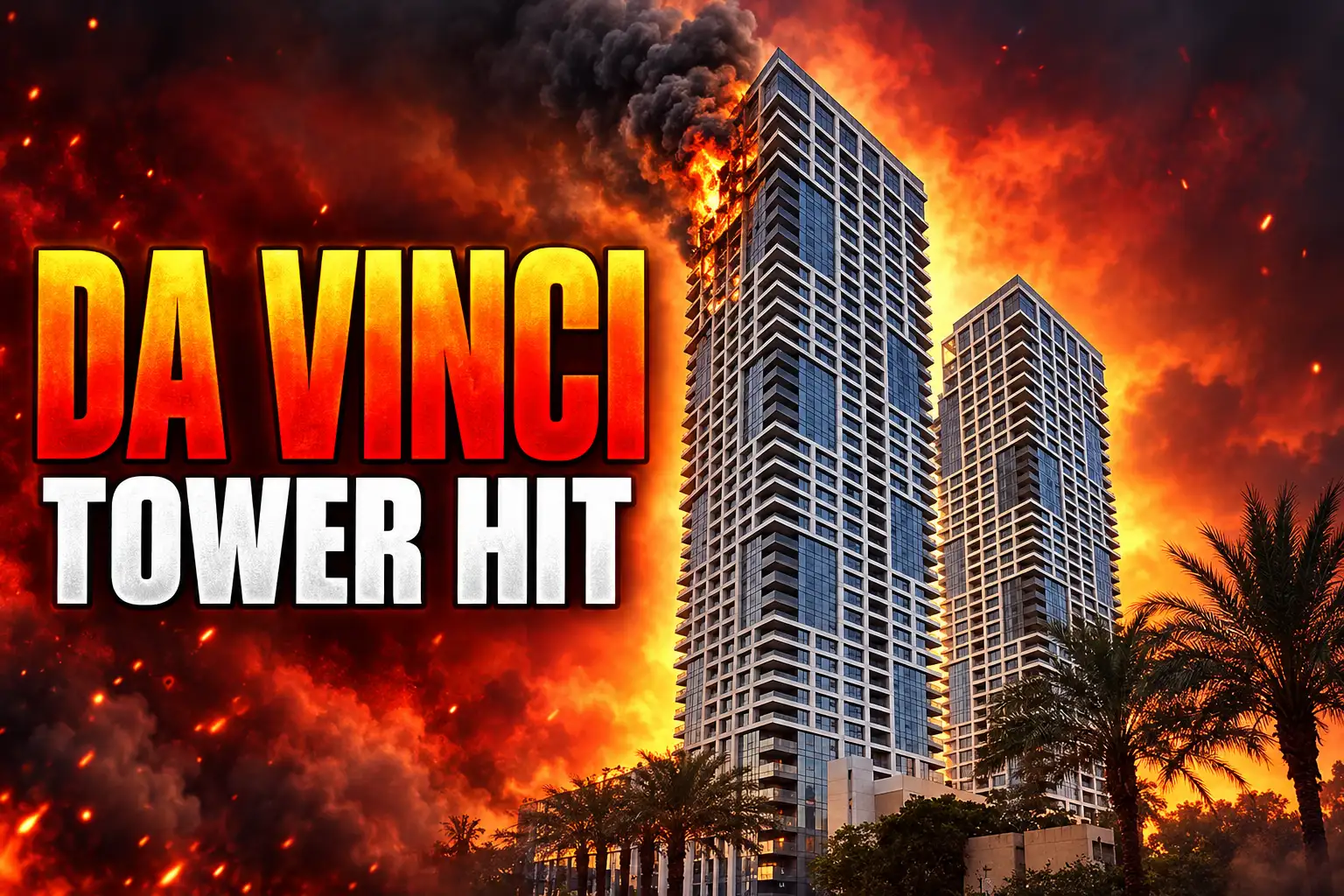
A US Army contract still on the federal books names the job in plain English: Site 81 Phase 2, Tel Aviv, Israel. On June 13, 2025, an Iranian missile hit the north tower of the Da Vinci Towers beside the Kirya, Israel’s main military compound in Tel Aviv.
Researchers Jack Poulson and Wyatt Reed later matched a 2013 Army Corps photo of Site 81 to that same lot, an underground steel-clad intelligence bunker with electromagnetic shielding. The Pentagon’s spending record had already put the work in the city. The blast bill landed on the people who lived upstairs.
The Army Corps Named Site 81 in 2013
The Engineer Research and Development Center issued special report SR-13-1 in February 2013. Authors from the Construction Engineering Research Laboratory wrote that the Corps had been asked to inspect corrosion on electromagnetic shielding at a steel-clad underground structure, Site 81, in Israel.
Core samples showed no serious corrosion. The estimated remaining life of the shielding was 199 years. The report is public. It never prints a street address, but it does print the site’s function: an underground, steel-lined intelligence box whose metal skin is the shield.
SITE 81 IN THE ARMY REPORT
- The place: An underground steel-clad structure in Israel, inspected by Corps laboratories.
- The job: Electromagnetic shielding wrapped around that underground room.
- The finding: No significant corrosion in the cores the team pulled.
- The life: A remaining service estimate of 199 years for the existing shield.
Poulson and Reed geolocated a photograph from that corrosion study of Site 81 to the southwest corner of the Kirya, about 60 meters north of Eliezer Kaplan Street on the east side of Leonardo da Vinci Street. In the frame, five curved pipes cling to the south face of an Israeli Air Force tower, matching a 2019 street image from the same corner. That plot is now the Da Vinci complex.
The match is their analysis, not an Israeli confirmation. The Corps, for its part, already wrote the name and the country.
What the $29.6 Million Tel Aviv Contract Bought
Federal award records are blunter than the report. On August 30, 2013, the Defense Department issued contract W912GB13C0017 to Oxford Federal LLC. The first action was $25,950,105. The award later stood at $29.6 million obligated. The description field reads, in capital letters, Site 81 Phase 2 Tel Aviv, Israel.
Poulson and Reed also cited a $7.4 million 2011 award to the Plano, Texas branch of Germany’s M+W Group, now Exyte, for Site 81 work around the Corps study. That earlier figure sits in their contracting review, not on the Oxford award page. The Oxford line is the one any reader can open.
THE MONEY ON THE PLOT
| Actor | Instrument | Year | Stake |
|---|---|---|---|
| Army Corps ERDC | Special Report SR-13-1 | 2013 | Names Site 81 in Israel; 199-year shield life |
| Oxford Federal LLC | W912GB13C0017 | 2013 | $29,638,136.13 obligated for Site 81 Phase 2, Tel Aviv |
| Israel Canada and Acro | Israel Land Authority tender | 2015 | NIS 830 million (about $267 million) for 10 dunams |
Phase 2 is construction language. It means the underground site was not a one-off inspection. It was a job with a second stage, let in Tel Aviv, paid in dollars, and left on a public website.
A Retired Admiral Shopped the Command Network
On September 1, 2015, retired Adm. James Stavridis wrote to Gabi Ashkenazi, the former Israeli chief of staff. Stavridis had just left the post of NATO’s supreme allied commander. He was then dean of the Fletcher School. The note, recovered from a leaked archive later tied by the US Justice Department to the Iranian-linked Handala set, is a sales email.
Hi Gabi, I am working with an exciting company called Think Logical here in the USA. They build command and control networks, and just won a big contract out at Site 81 with the IDF.
James Stavridis, retired admiral, email to Gabi Ashkenazi, September 1, 2015
He asked Ashkenazi to help recruit a consultant, ideally a retired one-star. Thinklogical, based in Milford, Connecticut, later put Stavridis on its defense and intelligence advisory board. The company sells the switching gear that sits behind classified screens. A “big contract out at Site 81 with the IDF” is not a parking garage.
Israeli officials and the firms named in the October 13, 2025 investigation did not answer questions about the bunker. The email still names the site, the buyer, and the product.
Da Vinci Towers Rose on a Cleared Defense Plot
The Ministry of Defense cleared a 10-dunam strip at the southwest edge of Camp Rabin, next to the Kanarit (also spelled Kannarit and Canarit) Air Force towers, and used it as a parking lot. In 2015 the Israel Land Authority sold that strip. Israel Canada and Acro Real Estate paid NIS 830 million, about $267 million.
Yashar Architects designed two towers. Ashtrom built them between 2017 and 2023. The 155.2-meter Da Vinci North Tower stands 42 stories over Leonardo da Vinci Street at Kaplan. The pair holds 412 apartments. A nine-story office and shop block sits with them, plus 2,500 square meters set aside for a city cultural center that opened in July 2023.
Danya Cebus, listing the older Kanarit job, said the Air Force towers were built for Air Force Headquarters in a joint venture with Solel Boneh, about 24,000 square meters. Alumeshet, which clad those towers, described a blast-mitigation skin “ensuring maximum security.” Poulson and Reed put the Kannarit pair at 18 stories, meters from the Corps camera.
WHAT SHARES THE BLOCK
- Kanarit towers: Air Force headquarters buildings with blast cladding, on the old Kirya edge.
- Gerry Pencer Park: A playground across Leonardo da Vinci Street, on the investigation’s map less than 100 meters from the bunker photo.
- The cultural center: 2,500 square meters opened at the tower base in July 2023.
- AI21 Labs: A Unit 8200-founded firm that leased the fourth and fifth floors of the office block in late 2023.
The Kirya itself, Camp Rabin, holds the General Staff and the defense ministry in Matcal and Marganit Towers. A larger underground war room, the Fortress of Zion, extends an older pit. Reporters have been walked through that bunker and have not been allowed to map the door. Poulson and Reed wrote that Site 81 likely tied into that system. The army has not said so.
Smoke Over Kaplan Street on June 13
Trey Yingst, a television correspondent, reached the Kirya that evening and said the building on the compound had just been hit. Police pushed him off the west side of Menachem Begin Road, just north of the HaKirya Bridge. Poulson and Reed put the Da Vinci north tower about 550 meters southwest of that spot.
The IDF, the same day, released a photograph of Maj. Gen. Shlomi Binder, head of military intelligence, inside an Air Force underground command center in Tel Aviv. It did not say the room was Site 81. It did show that the air force was running the war from under the city while missiles were still in the air.
Israeli pages were slow to describe the Da Vinci hit. The first detailed local account of that tower strike appeared on June 29, 16 days later, even though video of the blast had already moved online. One resident, speaking then, said a friend had asked him, “Brother, don’t you get that they approved the construction of all those towers to protect the Kirya?” He answered, “Today, I realize I’ve been paying 12,000 shekels a month to protect the Kirya.”
FROM THE CORPS PHOTO TO THE CLOSED LOBBY
- February 2013: The Army Corps publishes SR-13-1 on Site 81’s underground shielding in Israel.
- August 30, 2013: Oxford Federal is awarded W912GB13C0017 for Site 81 Phase 2 in Tel Aviv.
- September 1, 2015: Stavridis tells Ashkenazi that Thinklogical has won command-network work at Site 81.
- 2015: Israel Canada and Acro buy the 10-dunam strip beside Kanarit for NIS 830 million.
- 2017 to 2023: The Da Vinci Towers go up on that strip, 42 stories and 412 apartments.
- July 2023: The cultural center opens at the base of the towers.
- June 13, 2025: An Iranian missile hits the north tower; police keep cameras off Menachem Begin Road.
- October 13, 2025: Poulson and Reed publish the geolocation of the 2013 Corps photo.
- December 2025: A tender sells the 40 reduced-rate rentals for about NIS 61 million.
- February 23, 2026: The south tower lobby is still closed; residents enter through the garage.
The north tower took structural damage. The south tower took less, and most of that was patched. The lobby was not. Google still withholds street view along the Da Vinci frontage, and Yandex blanks the block east of Leonardo da Vinci Street. Map blur is not proof of a bunker. It is how this corner of Tel Aviv has been drawn for years.
Who Still Pays After the Strike
The Property Tax Authority set monthly payouts by size and floor for residents forced out. Units of 63 to 88 square meters were put at about NIS 12,000 a month, the same round number as the resident’s rent complaint. Units of 115 to 121 square meters were put at about NIS 18,000. Larger flats and penthouses sat higher, some of them priced case by case.
By February 23, 2026, south-tower owners who could legally return were listing below those rates, and below nearby Sarona stock. An 80-square-meter flat on the 20th floor was offered at NIS 8,900. A 129-square-meter five-room on the 24th floor was listed at NIS 15,000. A similar unit on the 23rd floor was at NIS 14,500.
SOUTH TOWER LISTINGS AGAINST PAYOUTS
| Apartment | Compensation band | Listed rent, February 2026 |
|---|---|---|
| 80 sq m, 20th floor | about NIS 12,000 | NIS 8,900 |
| 129 sq m, 24th floor | about NIS 18,000 | NIS 15,000 |
| Similar five-room, 23rd floor | about NIS 18,000 | NIS 14,500 |
Tzahi Abou’s firm won the December 2025 tender for those 40 long-term rentals, about NIS 61 million (about $19.6 million). Roughly 20 of the units sit in the north tower, which took the heavier hit. The other 20 are in the south tower. Owners still pay upkeep that Erez Cohen, former chairman of the Real Estate Appraisers’ Bureau, put at about NIS 18 per square meter each month.
Due to the geopolitical situation, the neighborhood, which was damaged during the 12-Day War, is perceived as a marked target. The luxury Da Vinci Towers project, despite its prime location near Azrieli, the Ayalon Highway and the Sarona complex, is now carrying a badge of disgrace.
Erez Cohen, former chairman of the Real Estate Appraisers’ Bureau
Cohen also said a year-and-a-half repair clock for the north tower may be hopeful. The people writing checks are not Oxford Federal and not the Corps. They are the households who bought into a lot the ministry had cleared beside Air Force headquarters.
The ICRC Rule on Cities and Command Posts
The Kirya is a marked military headquarters in a dense city, the same basic pattern as a defense ministry on a capital street. Collapsing that compound into the Site 81 claim treats two different layouts as one sin. A known headquarters in a city is common. An intelligence bunker on a parcel later sold for 412 private apartments is a separate choice.
Customary law already speaks to the second choice. Rule 23 of the ICRC study says each party must, to the extent feasible, avoid locating military objectives near civilians. The study ties that duty to the ban on human shields. Feasible is the hinge. Tel Aviv is small, and the General Staff has sat in the Kirya since 1948. Selling the surface of an electromagnetically shielded site for luxury towers is a later decision, made in 2015, with US construction dollars already in the ground.
Poulson and Reed argue that the June 13 warhead found that node. Israeli property files confirm the north tower was hit and still broken into 2026. They do not confirm the aimpoint was Site 81. The IDF has not used the name. The Corps report is still downloadable. The Oxford description still says Tel Aviv.
South-tower residents, as of February 2026, still came in through the parking garage. The federal award page still reads Site 81 Phase 2. No uniformed spokesman has closed the gap between those two facts.

Ninja Theory Staff Face Redundancy After Two Xbox Sales Collapse

Amazon Sells the MacBook Air at Its Pre-Hike Price

U.S. Slows Jet Parts to Squeeze China’s Flying Fleets

PEGI Pulled the GTA 6 Age Rating After Cocaine Details

Northwestern’s Smaller Ryan Field Gave Penn State Nowhere to Hide

Aramco Crash Kills 14 Two Days After Oil Restart

Salah Captained Egypt to Their First World Cup Win

Apple Labor Day Deals Hide June’s Memory Price Hike

Palworld 1.0.4 Adds Palpedia Search After the 1.0 Launch

Zelda’s 40th Switch 2 Ships Without a Zelda Game
-
 BUSINESS3 months ago
Aramco Crash Kills 14 Two Days After Oil Restart
-
 NEWS4 months ago
Salah Captained Egypt to Their First World Cup Win
-
 NEWS1 month ago
Apple Labor Day Deals Hide June’s Memory Price Hike
-
 GAMING4 weeks ago
Palworld 1.0.4 Adds Palpedia Search After the 1.0 Launch
-
 GAMING4 weeks ago
Zelda’s 40th Switch 2 Ships Without a Zelda Game
-

 NEWS3 months ago
El Niño Puts Israel’s Needed Winter Rain on a Flood Clock
-

 BUSINESS8 months ago
Egypt Bets EGP 638 Billion Can Open Sinai to Investors
-

 ENTERTAINMENT4 weeks ago
King Charles Letter Keeps Harry and Meghan as Private Citizens