
BUSINESS
Evernorth Takes Ripple’s XRP Yield Bet to Nasdaq
Evernorth listed XRPN after an 80.3% SPAC cash-out, with 473 million XRP and a yield plan that still needs ledger votes.

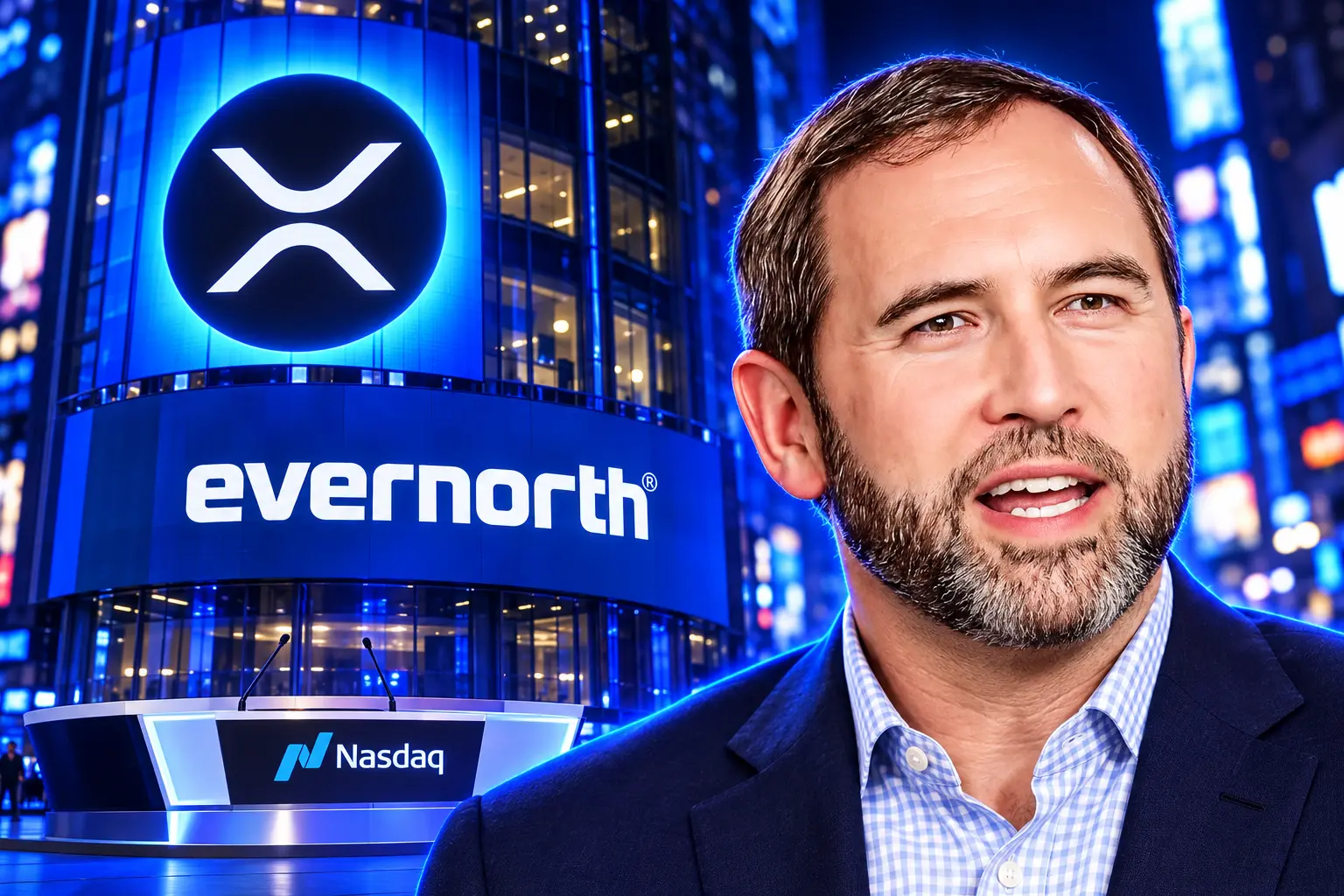
473 million XRP now sit inside a Nasdaq stock, and Ripple chief executive Brad Garlinghouse used the closing bell to argue those coins should earn yield, not just sit in a vault. Evernorth Holdings (Nasdaq: XRPN) rang the bell on Oct. 14 in Times Square two days after the shares began trading.
The listing gives brokerage accounts a way to hold an XRP treasury company. It does not, by itself, buy a single extra coin in the spot market, and the yield products Garlinghouse described still depend on code the ledger has not turned on.
Evernorth Takes 473 Million XRP to Nasdaq
Evernorth about 473 million XRP and $300 million in gross cash, before expenses, when it closed its combination with Armada Acquisition Corp. II on Oct. 9. Common stock was slated to open on Nasdaq on Oct. 12 under XRPN. Arrington XRP Capital Fund, LP sponsored the blank-check company.
Asheesh Birla, Evernorth’s founder and chief executive, who previously worked at Ripple, called the vehicle an actively managed XRP treasury built for public-market reporting. Backers named in the close release include Arrington Capital, SBI Group, Ripple, Pantera Capital, Kraken and GSR. Citigroup Global Markets was the sole private placement agent.
On Oct. 1 the companies had pitched the deal and related private placements as raising more than $1 billion, a figure that mixed cash with XRP contributed in kind. By close, the token bag was worth about $677 million at a $1.43 reference price used in the merger papers.
THE PATH TO XRPN
- October 2025: Evernorth and Armada announce the combination, framing a public XRP treasury with lending and liquidity plans.
- August 27, 2026: The S-4 registration statement is declared effective.
- September 28, 2026: Hugo Jeandesboz, formerly co-chief investment officer at Coinbase Asset Management, is named chief investment officer.
- September 30, 2026: Armada shareholders approve the combination.
- October 9, 2026: The merger closes with about 473 million XRP and about $300 million in gross cash.
- October 12, 2026: XRPN begins trading on Nasdaq.
- October 14, 2026: Evernorth rings the closing bell and names its first execution partners.
Birla said the company would deploy capital across the XRP economy and chase strategies meant to grow XRP per share over time. Michael Arrington, founder of Arrington Capital, said the listing brings public-company standards to a bet his firm had already made in the token.
What XRPN Shareholders Are Buying
A share of XRPN is a claim on a Nevada company, its cash, its operating costs and its XRP, not a token in a wallet. Spot XRP exchange-traded funds already give regulated exposure to the asset itself. Evernorth is selling a different product: a treasury that says it will manage coins, raise more capital and try to lift the number of XRP behind each share.
That distinction is easy to miss in a closing-bell clip. Secondary trading in XRPN moves dollars between stockholders. It does not send a buy order to the XRP ledger unless Evernorth itself purchases more tokens. A large share of the 473 million coins arrived because investors swapped XRP they already held for stock, so the debut did not require a matching bid in the spot market.
Garlinghouse told the Times Square audience he wanted crypto exposure available to people who will not open a digital-asset account. A listed vehicle can do that. It also inserts fees, dilution, lock-ups and corporate actions between those buyers and the coins.
Garlinghouse Puts Yield at the Center of the Bet
The comments that ran with the bell were not about the ticker. Garlinghouse pointed to yield, leverage and products that go past holding XRP for price gains. “The ability to leverage even some of the on-chain capabilities to leverage yield” could help build institutional products, he said, and he added that some of those paths can sit on-chain and some off-chain.
“You’re going to see some interesting leverage and yield opportunities,” he said, tying them to Birla’s team. He framed Ripple’s large XRP contribution as part of a long habit of putting coins into the wider XRP community, and he said Ripple still thinks in multi-chain terms while treating the XRP Ledger as distinct.
XRP does not pay a native staking reward. Any yield has to be manufactured: lending desks, liquidity provision, or credit markets that the ledger itself has not yet switched on. That is the wager inside the listing. If Evernorth can earn on idle coins, XRPN becomes a cash-flow story. If it cannot, the stock is a leveraged wrapper on a token that already trades cheaper than when the deal was struck.
The question for any treasury is not whether it can hold an asset, but whether it can manage one. That means a treasury strategy, a risk framework and counterparties you would be comfortable explaining to a public-company board. Ripple, Kraken, Coinbase and BitGo meet that bar today. As the XRP Ledger matures, the same discipline will govern how and when we move on-chain.
Hugo Jeandesboz, Chief Investment Officer, Evernorth, Oct. 14, 2026 release
Jeandesboz joined from Coinbase Asset Management and earlier worked at HSBC and Société Générale. His brief is allocation, liquidity and counterparties, with the stated scoreboard being XRP per share, not the closing bell.
Four in Five SPAC Investors Took the Cash
Public holders of Armada did not wait to see whether yield arrives. Merger filings show 80.3% of shares that could be redeemed were turned in, some 18,463,753 shares, for about $195.39 million at about $10.58 a share. Roughly 4.5 million of those original public shares remained. Thin float is how a blank-check name runs to $53 and then snaps back.
The SPAC tape did that before Evernorth’s name even hit the screen. Shares that later became XRPN traded as high as $53.00 on Oct. 2 and closed that day at $39.42. On Oct. 9, the merger close, they finished at $17.09.
XRPN FROM THE SPAC SPIKE TO THE BELL
| Date | Session | Close | Intraday marker |
|---|---|---|---|
| Oct. 2, 2026 | SPAC run-up | $39.42 | High $53.00 |
| Oct. 9, 2026 | Merger close | $17.09 | Low $16.00 |
| Oct. 12, 2026 | First XRPN session | $16.91 | Open $16.68, high $19.39, low $16.39, volume 1,301,046 |
| Oct. 14, 2026 | Closing-bell day | $15.26 | Down 7.40% |
| Oct. 15, 2026 | Following session | $16.07 | Up 5.31%, volume 1,583,700 |
The first session as XRPN opened at $16.68, printed $19.39, and closed at $16.91. The bell itself did not bid the stock up. XRPN finished Oct. 14 at $15.26, then recovered to $16.07 on Oct. 15. Filings put SBI Holdings at 39.9% of the vote, Arrington’s fund at 19.9%, and Ripple and its affiliates under a 9.9% cap, with a Larsen-linked stake also cited at 9.9% and six-month lock-ups running into April 2027.
Most of the Treasury Arrived as In-Kind Swaps
The 473 million figure is a stack of contributions, not one market order. Merger materials circulating with the deal put Arrington’s fund at about 211.3 million XRP, or 44.6% of the bag, and Ripple at about 126.8 million, or 26.8%. A trust tied to Ripple co-founder Chris Larsen is listed at 50 million. About 84.4 million XRP were bought with early cash, about $214 million at an average of about $2.54.
WHERE THE 473 MILLION XRP CAME FROM
| Source | XRP | Share of treasury |
|---|---|---|
| Arrington Capital | about 211.3 million | 44.6% |
| Ripple | about 126.8 million | 26.8% |
| Larsen-linked trust | 50 million | 10.6% |
| Cash purchases | about 84.4 million | 17.8% |
Those four lines add to about 472.5 million XRP, with a thin remainder from other subscribers. XRP was about $2.37 when the deal was signed and $1.43 in the closing reference, a slide of about 40%. At about $1.37 on the first trading day, the same 473 million coins were worth about $648 million, a different print from the $677 million close-date reference. Coins bought at about $2.54 sit well below that cost. Garlinghouse said Ripple’s transfer was about seeding activity, not a one-off gift, and that line only holds if Evernorth actually puts the coins to work.
Native Lending Still Needs an 80 Percent Vote
Birla’s Oct. 14 release said Evernorth wants to be in the XRP Ledger’s credit markets “with capital on day one.” That day is not on the calendar. Single-asset vaults (XLS-65) and the lending protocol (XLS-66) are still in validator voting. An amendment needs more than 80% support for 14 straight days before it activates.
The live board showed 19 of 32 validators backing XLS-65, or 59.38%, and 17 of 32, or 53.13%, on both LendingProtocol and LendingProtocolV1_1. Those are majority prints. They are not 80%. Until that bar is held, the on-chain half of Garlinghouse’s pitch cannot run on mainnet.
The design itself is a bank-like split. Pools would hold one asset and issue vault shares. Brokers would then make fixed-term loans funded from vaults, with borrower checks and underwriting kept off the ledger. Optional first-loss layers are part of the write-up. That is credit, not staking, and it is uncollateralized in the spec, which is why validators have not rushed it through.
Off-chain desks can still lend XRP today through the counterparties Evernorth named. That is a different risk pile: borrower default, rehypothecation, and the usual prime-broker stack, all of which a public board has to explain. The cleaner on-chain version is the one still waiting on votes.
The First Partners Line Up for a Fourth-Quarter Start
On the morning of the bell, Evernorth named Ripple, Kraken, Coinbase and BitGo as its inaugural institutional execution partners. The company said it will both accumulate and deploy from the 473 million XRP starting in the fourth quarter of 2026, and that the contracts still need customary closing conditions and approvals.
The best work isn’t done alone.
Today, we’re announcing our inaugural institutional execution partners: @Ripple, @krakenfx, @coinbase and @BitGo.
Together, they provide a foundation to begin putting our 473 million XRP treasury to work in institutional strategies.
More on our… pic.twitter.com/i8vIHeLcrM
— evernorthxrp (@evernorthxrp) October 14, 2026
Coinbase sitting in that group will look odd to anyone who remembers the exchange’s earlier XRP listing fight, but the firm now has the licenses and the public-company muscle Evernorth says a Nasdaq treasury needs. Kraken is both a named investor and a partner. BitGo is in the set for the same institutional bar Jeandesboz described. Ripple is on both sides of the table: contributor of about 126.8 million XRP, capped voter, and now an execution venue.
THE PHASED TREASURY PLAN
- Fourth-quarter start: Institutional strategies through the four named firms, subject to approvals, with no size disclosed.
- Two-way book: The company says it will keep buying XRP and deploy coins it already holds.
- Later on-chain sleeve: Lending and credit on the XRP Ledger only after validators activate the code and it holds up in production.
- Scoreboard: Earnings on the bag and a higher XRP-per-share figure, not the closing-bell photo.
Birla said the point of the partners is to grow XRP per share and to stand in the credit markets when they open. He has not said how many of the 473 million coins will move in the fourth quarter, or what return would count as success. Evernorth has not disclosed a fresh open-market purchase since the listing.
XRPN closed at $16.07 on Oct. 15. The coins are on a public balance sheet. The yield Garlinghouse described is still a plan, and the ledger vote that would make the on-chain half real is still short of 80%.
Disclaimer: This article is news reporting and analysis of Evernorth’s Nasdaq listing, XRP treasury figures and stated yield plans, and it is for information only. It is not investment advice, a solicitation to buy or sell XRPN, XRP or any other security or digital asset, and it is not a recommendation of any treasury, lending or staking strategy. Readers should consult a licensed financial adviser or securities attorney who can review their own facts before acting on any of the prices, holdings or product plans described here. Figures, validator votes, partner contracts and listing statuses reflect the company releases, merger materials and market data cited in this piece and can change without notice as XRP moves, as amendments are voted, and as Evernorth files further disclosures.

Cook Hands Democrats the House as Crypto’s Bill Stays Dead

Wicker’s Broken Bed Was the Short Story’s Punch Line

Nvidia’s $500 Billion Financing Plan Draws a $180 Sell

Maserati Bets the Grecale V6 Can Fill Porsche’s Gap

EV Cable Theft Follows the Old Railway Copper Playbook

Aramco Crash Kills 14 Two Days After Oil Restart

Salah Captained Egypt to Their First World Cup Win

Zelda’s 40th Switch 2 Ships Without a Zelda Game

Apple Labor Day Deals Hide June’s Memory Price Hike

Palworld 1.0.4 Adds Palpedia Search After the 1.0 Launch
-
 BUSINESS4 months ago
Aramco Crash Kills 14 Two Days After Oil Restart
-
 NEWS5 months ago
Salah Captained Egypt to Their First World Cup Win
-
 GAMING2 months ago
Zelda’s 40th Switch 2 Ships Without a Zelda Game
-
 NEWS2 months ago
Apple Labor Day Deals Hide June’s Memory Price Hike
-

 NEWS4 months ago
El Niño Puts Israel’s Needed Winter Rain on a Flood Clock
-
 GAMING2 months ago
Palworld 1.0.4 Adds Palpedia Search After the 1.0 Launch
-

 BUSINESS8 months ago
BAE’s 60-Year Saudi Franchise Now Runs Through Taif
-

 BUSINESS8 months ago
Egypt Bets EGP 638 Billion Can Open Sinai to Investors