
NEWS
Duvo Raises $32 Million as Čupr Warns of an AI Shakeout
Balderton led Duvo’s $32 million Series A as Tomáš Čupr, the Rohlik founder, bets a cheap-to-run operations system will outlast bloated agentic AI vendors.

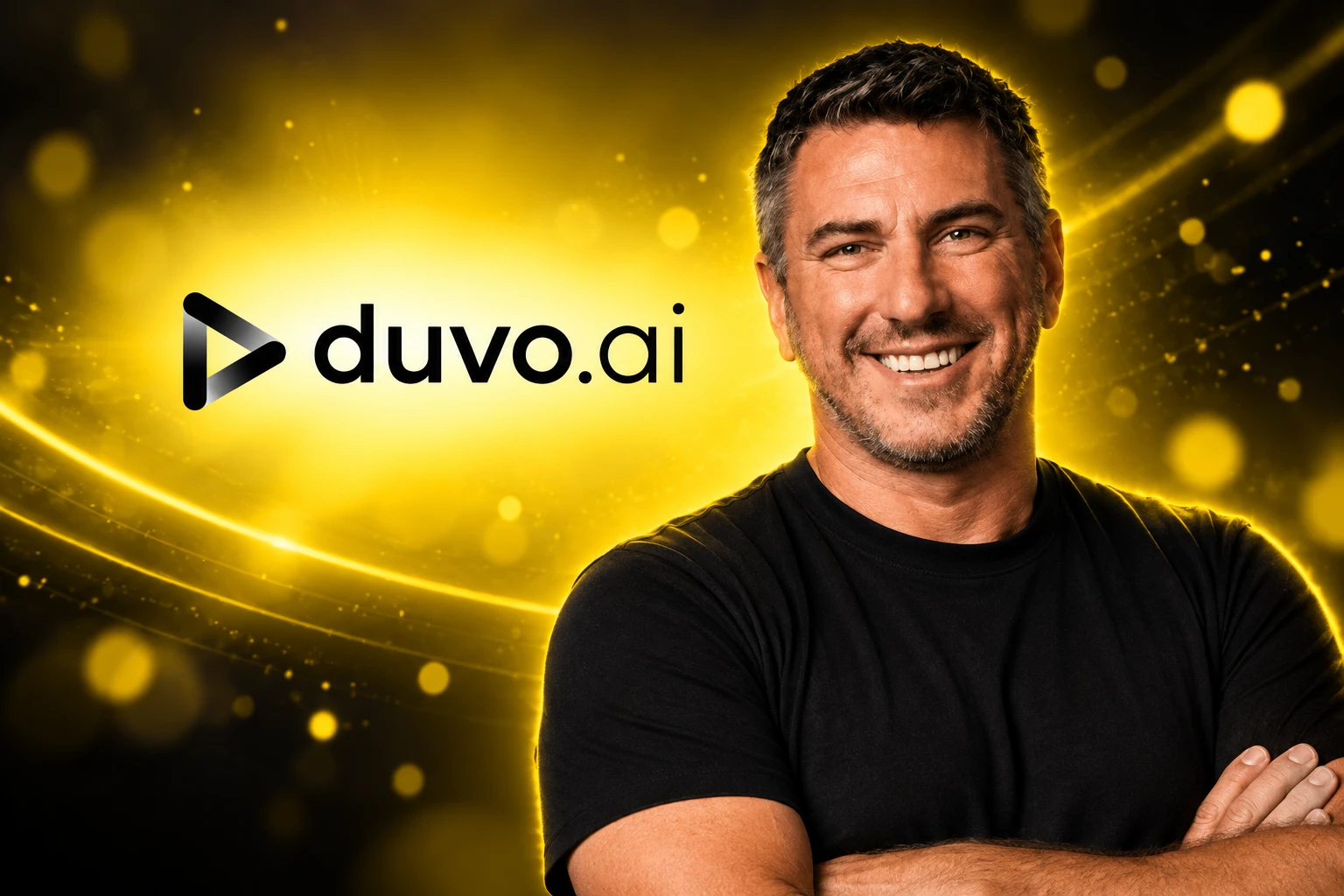
Duvo raised $32 million on October 14, 2026, and founder Tomáš Čupr used the check to warn that many agentic AI vendors will fail on cost. Čupr, co-founder and CEO of Duvo and Group CEO of Rohlik Group, the European online grocer valued at about $2 billion, compared today’s boom with 2021, when rapid-delivery apps drew prices he envied and then could not hold.
Balderton Capital led the Series A, with Index Ventures, Northzone, and Credo Ventures joining. The Prague-founded company, which also lists New York, said the round takes total funding to $48 million and will pay for a push into US retail and consumer goods.
Balderton Leads Duvo’s $32 Million Series A
The company calls the product an Enterprise Execution OS: one place where staff and software agents run a process on the systems a firm already has, with the same connections, approval rules, and record of results each time a new workflow is added. Michael Green joins from Databricks as chief commercial officer after a senior vice-president post at Salesforce. Spencer Insolia, a former Kmart president and Accenture managing director, is managing director for the United States.
Duvo’s own account posted the news the same morning, tying the raise to a claim of more than $100 million already unlocked for clients and to a slogan Čupr repeats: raise the GDP of every employee.
We've raised $32M in Series A funding to become the one platform enterprises run their operations on. 🚀
Led by @balderton, with participation from @IndexVentures, @northzoneVC and @CredoVentures, this brings our total funding to $48M and fuels our global expansion.
McKinsey… pic.twitter.com/XB6s941AD8
— DUVO (@duvoai) October 14, 2026
Rob Moffat, the Balderton partner on the deal, said getting AI agents to work reliably across a large company remains incredibly difficult, and that Duvo’s edge is capturing how work actually happens, including where value leaks, then automating those steps in one system. He pointed to Čupr having founded three companies, including Rohlik. The $32 million Series A announcement also cites a Gartner view that spending on business orchestration and automation tools will exceed $21 billion by 2029, as firms try to put scattered automation onto one platform.
THE FUNDING STACK
| Round | Date | Amount | Lead |
|---|---|---|---|
| Pre-seed | 2025 | $1.5 million | Credo Ventures among others |
| Seed | December 2025 | $15 million | Index Ventures |
| Series A | October 14, 2026 | $32 million | Balderton Capital |
The company states total funding of $48 million and does not disclose a valuation. Official materials put headcount at almost 60, up from 15 people when Index led the seed. Most of the new money, Čupr said, is meant for sales, marketing, and partnerships rather than a giant research lab.
The Grocery Bubble Čupr Still Measures Against
In 2021, Čupr watched Gorillas and Getir collect valuations that sat above Rohlik’s. He has said he looked at those prices with envy. By December 2022, Getir had bought Gorillas in a deal that valued the German app at about $1.2 billion, down from about $3 billion a year earlier. Getir itself had been valued around $11.8 billion after a large raise that spring.
Those firms sold speed. The cost of dark stores, couriers, and city-centre space ate the model once cheap capital left. Čupr’s argument now is that agentic AI is in the same phase: plenty of logos, thin proof, and a bill that shows up at renewal. “Some companies have significant traction today, but they may struggle when their contracts come up for renewal a year from now,” he said.
The parallel is not that grocery delivery was fake. Rohlik, which Čupr founded in 2014, is still running and still his day job. The parallel is that a peak price is a poor guide to who can operate at a cost a customer will keep paying. He expects the same sort of washout among AI firms that have raised billions and then prove too expensive to run.
Rohlik Could Never Have Paid for This
Duvo started as Rohlik’s own mess. Čupr wanted agents, then found that staff could not describe their jobs in full, including the exceptions, because much of the knowledge sat in people’s heads. The software in use often had no usable APIs. Work hopped across spreadsheets, internal tools, and email by hand.
He decided Rohlik could never have financed the research as a grocery company. “But I thought that if we could solve Rohlik’s problems through a separate company, perhaps we could solve the same problems for everyone else,” he said. Rohlik became a customer. Čupr still credits the software with part of the grocer’s operating change, including planners who once checked about eight at-risk products a day per market for shortages and now have every signal checked around the clock.
Index had already backed him at Rohlik. Jan Hammer, the partner who led Duvo’s seed with Bastian Hasslinger, wrote that the team is operators who lived the pain, not technologists hunting for a use case. Co-founders Marek Paris, chief product and technology officer, and Martin Pecha, chief operating officer, both came out of senior roles at Rohlik. Their bet, as Index framed it, is that if you can automate retail, you can automate almost anything.
How Duvo Turns Head Knowledge Into Agents
Duvo Clarity is the intake step. It uses AI interviews with the people who do the work, screen recordings, and existing documents to map how a process actually runs, including the branches no one wrote down. Other agents then flag what can be automated, what still needs a person, and they build the workflow plus a screen tailored to each user. Jane and John can share a merchandising title and still work different supplier lists; the system is meant to keep those differences while giving a manager one view of tasks and approvals.
HOW DUVO CLARITY WORKS
- Discovery: AI interviews, screen recordings, and documents reconstruct the live process, including exceptions.
- Build: Agents draft the automation and a per-person interface instead of a custom IT project for each flow.
- Run: Approved steps fire across ERPs, supplier portals, spreadsheets, and inboxes, through APIs where they exist and through the same screens people already use where they do not.
- Govern: Decisions route to an owner, cockpits show what is waiting, and every write-back is logged.
Čupr is not pitching a rip-and-replace of SAP or a warehouse system. “We’re abstracting away their messy interfaces and creating something more useful on top,” he said. The first process is supposed to go live in weeks, without a small army of engineers. Index said early retail deployments showed roughly a 40% cut in manual work, with six-figure annual contracts that were expanding. Ready-made assistants at seed covered margin reviews, promotions and price changes, supplier invoices, assortment, and vendor onboarding. Agents can even place phone calls.
The stack is model-agnostic, so a customer can swap the model without rebuilding the process. Firms with tighter security rules can run open-weight models on dedicated GPUs, point at a model in their own cloud or on-premises, or use an endpoint they already approve. Duvo holds SOC 2 Type II, ISO 27001, and ISO 42001 certifications.
Notino’s Bonus Cycle Dropped From 70 Days to 15
Named customers in the company materials include Morrisons, Holland & Barrett, Boden, Notino, and Allegro. Duvo also says the same pattern of broken processes shows up in banking, insurance, and energy. The proof it puts on the table is still concentrated in retail finance and supply chain, which is the work Čupr knows.
WHAT CHANGED IN TWO LIVE PROCESSES
| Process | Before | After |
|---|---|---|
| Notino supplier-bonus reconciliation (about $45 million a year) | 70 days; around 120 specialist hours per cycle | 15 days; under 10 specialist hours |
| Rohlik shortage checks | About eight at-risk products a day per market | Every signal checked, around the clock |
Duvo says those results sit inside a wider claim of more than $100 million unlocked across finance, supply chain, commercial, customer care, marketing, and HR. Gordon MacPherson, group productivity director at Morrisons, described the draw as evidence instead of guesswork.
Our business processes have evolved over decades, and Duvo gives us a way to understand them in detail, and quickly. It means decisions about which repetitive everyday tasks to simplify, redesign and automate can be based on evidence rather than assumptions. That gives us a much clearer path from identifying AI opportunities to putting them into operation, freeing up our people to concentrate on high-value work for the benefit of colleagues and customers.
Gordon MacPherson, Group Productivity Director, Morrisons
Čupr’s unit of value is not a job deleted. He tried counting heads, then dropped it.
For a while I measured AI in heads, counting how many people an agent could replace. It’s the wrong unit. At Rohlik, the gains I’d point to came from work nobody had the hours for. Our planners used to check about eight at-risk products a day per market for shortages. Now every signal gets checked, around the clock. We think of it as raising the GDP of every employee: more value from the people a company has, not the same value from fewer of them.
Tomáš Čupr, co-founder and CEO, Duvo
A separate Gartner survey of 350 executives at companies with $1 billion or more in revenue, cited in the round materials, found that teams reporting higher returns from AI agents and automation had cut staff about as often as teams with modest or negative results. That sits next to Čupr’s line rather than proving it. It does undercut the idea that a successful agent rollout is the same thing as a smaller payroll.
The Engineer-on-Site Model Hits a Cost Wall
Čupr agrees with Gartner’s June 25, 2025 forecast that more than 40% of agentic AI projects will be canceled by the end of 2027, because of rising costs, unclear business value, or weak risk controls. Anushree Verma, a senior director analyst at Gartner, said most of those projects are still early experiments or proofs of concept, driven by hype and often misapplied, which hides the real cost of putting agents into production.
GARTNER’S JANUARY 2025 POLL
- Sample: 3,412 webinar attendees, not a random slice of all enterprises.
- Significant spend: 19% said their organisation had made a large bet on agentic AI.
- Conservative spend: 42% had invested carefully; 8% had spent nothing.
- On the sidelines: 31% were waiting or unsure.
Gartner also estimated that only about 130 of the thousands of vendors using the agent label are the real thing, with many others “agent washing” chatbots, assistants, and older process-automation tools. Verma said many use cases sold as agentic do not need an agent at all. The same house still forecasts that by 2028, at least 15% of day-to-day work decisions will be made autonomously through agentic AI, up from none in 2024, and that 33% of enterprise software applications will include it, up from less than 1% in 2024. Adoption and cancellation can rise together. That is what an immature market looks like from the inside.
The cost trap Čupr names is the forward-deployed engineer: people billed into the customer to learn the process and wire the tool. “Eventually, enterprises will question the sustainability of paying for dozens or hundreds of engineers to work inside their organisations, absorbing their knowledge,” he said. Duvo’s pitch is that discovery, build, and rollout should be the product. “We want the product itself to do the work.” Security, a measurable result, and a bill that still makes sense at renewal are, in his view, what will sort the vendors. Process knowledge stuck in someone’s head is the stall, not a missing model.
Green and Insolia Open a US Front
Čupr is starting in the United States with retailers and consumer-goods firms because that is the work the team knows, while saying the first processes, such as freight and invoice audit, are not unique to shops. US buyers, he said, try new software faster and then leave faster. European buyers take longer and stay. Asia is on the list, with no conclusion yet. Christoph Schwaiger, former CEO of ALDI SÜD Holding, has joined as a senior advisor.
Jan Hejtmánek, partner and AI Institute leader at Deloitte Central Europe, said clients need operations that actually change, and that an alliance with Duvo pairs Deloitte’s transformation work with a system that maps a process and then runs it, with people still on the decisions that need judgment. Čupr also wants firms such as Deloitte, BCG, and Bain to use Clarity inside client work. Insolia, who has been both a retailer and a consultant, said the same gap showed up from both sides: the insight was there, the execution rarely followed.
The company has been, in Čupr’s words, relatively invisible. Duvo’s own expansion note is the attempt to change that, with Green on the commercial side and Insolia in the US. Čupr said he is building a legacy company, not one designed to raise money quickly and sell, and that at some point AI will be as ordinary as electricity or the internet. US firms can begin with a single process or a free process map. The grocery founder who once wished Rohlik had Getir’s price is now writing a smaller check and waiting for the larger ones to come due.
Frequently Asked Questions
Who Founded Duvo With Tomáš Čupr?
Marek Paris is chief product and technology officer and Martin Pecha is chief operating officer; both held senior operating jobs at Rohlik before the 2025 launch. Index’s seed note presents the three as operators who spent years on fragmented retail systems, which is the domain claim Balderton is now backing at Series A rather than a lab with no shop-floor scars.
What Does Gartner Mean by Agent Washing?
Gartner uses the phrase for vendors that relabel chatbots, assistants, and robotic process automation as agentic without much new agency, and it estimates only about 130 of the thousands of names in the category are genuine. That distinction matters at renewal, when a customer has to show a result rather than a demo, and it is why Duvo sells governed execution on existing systems instead of a new chatbot wrapper.
How Can a US Company Start With Duvo?
Official materials say a US firm can begin with one process such as freight audit or payables audit, or with a free process map, and can buy through Microsoft’s Azure Marketplace. The company is model-agnostic, so a buyer that already has an approved model endpoint, an on-premises model, or a dedicated GPU running open-weight software can keep that choice without rebuilding the workflow.
What Did Duvo’s Seed Round Include Besides Index Ventures?
Credo Ventures, Northzone, and Puzzle Ventures joined the $15 million seed in December 2025, along with angels including Wiz co-founder Roy Reznik, former Stripe chief technology officer David Singleton, and former Zapier chief marketing officer Kieran Flanagan. At that point the team numbered 15 people and was already selling six-figure annual contracts into large retail and fast-moving consumer-goods groups.

Cook Hands Democrats the House as Crypto’s Bill Stays Dead

Wicker’s Broken Bed Was the Short Story’s Punch Line

Nvidia’s $500 Billion Financing Plan Draws a $180 Sell

Maserati Bets the Grecale V6 Can Fill Porsche’s Gap

EV Cable Theft Follows the Old Railway Copper Playbook

Aramco Crash Kills 14 Two Days After Oil Restart

Salah Captained Egypt to Their First World Cup Win

Zelda’s 40th Switch 2 Ships Without a Zelda Game

Apple Labor Day Deals Hide June’s Memory Price Hike

Palworld 1.0.4 Adds Palpedia Search After the 1.0 Launch
-
 BUSINESS4 months ago
Aramco Crash Kills 14 Two Days After Oil Restart
-
 NEWS5 months ago
Salah Captained Egypt to Their First World Cup Win
-
 GAMING2 months ago
Zelda’s 40th Switch 2 Ships Without a Zelda Game
-
 NEWS2 months ago
Apple Labor Day Deals Hide June’s Memory Price Hike
-

 NEWS4 months ago
El Niño Puts Israel’s Needed Winter Rain on a Flood Clock
-
 GAMING2 months ago
Palworld 1.0.4 Adds Palpedia Search After the 1.0 Launch
-

 BUSINESS8 months ago
BAE’s 60-Year Saudi Franchise Now Runs Through Taif
-

 BUSINESS8 months ago
Egypt Bets EGP 638 Billion Can Open Sinai to Investors