
NEWS
ACT Bets €1 Million on Arke Telekom’s Drone Mesh
ACT Venture Partners is putting €1 million on Arke Telekom’s ArkeLink mesh, a NATO DIANA-backed radio for small drones flying through jamming.

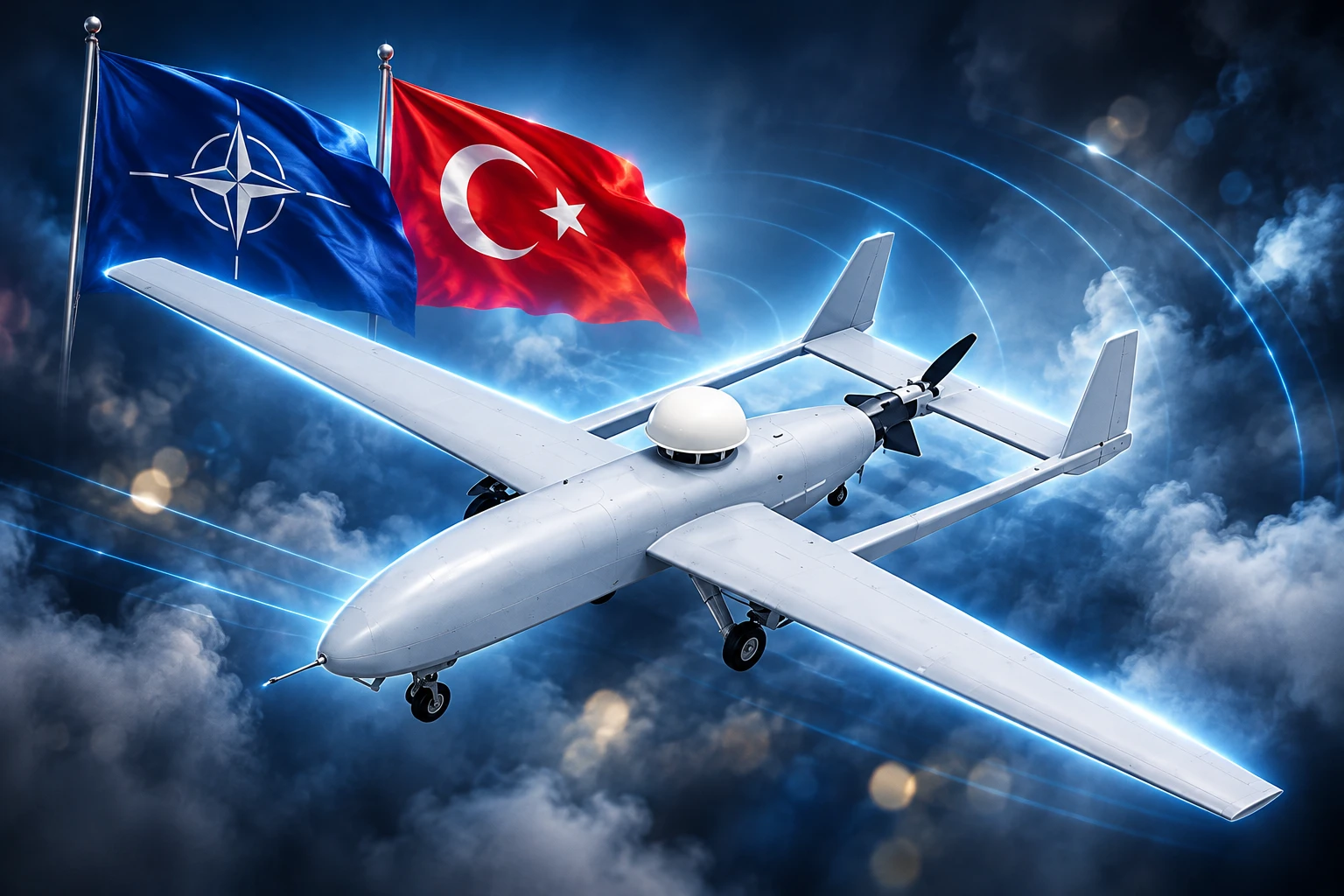
Arke Telekom raised €1 million from ACT Venture Partners on October 22, 2026, to take jam-resistant drone radios into markets outside Turkey. The Ankara firm sells ArkeLink, a compact radio mesh for small unmanned aircraft that keep talking when jamming kills a normal command link.
ACT is not buying an airframe. It is putting a seed-scale cheque on the claim that the scarce piece in cheap-drone war is a small self-healing radio, and that a 12-year waveform shop already inside NATO’s DIANA programme can sell that radio abroad.
A €1 Million Cheque Inside a €50 Million Fund
ACT Venture Partners, founded in 2015 and based in Amsterdam with a Türkiye brief, lists a fund size of €50 million and a usual deal window of €500,000 to €1.5 million. The Arke cheque sits in the middle of that window and is about 2 percent of the fund.
The firm’s own site says it writes initial checks from €500K to €1.5M at pre-seed and seed, often as the first institutional money, and names dual-use work among its themes beside AI, quantum, health, climate and space. PitchBook, the deals database, counts 53 ACT investments, a live book of 17 companies and 9 exits.
Managing partner Erhan Z. Kılıçözlü said the Arke team’s skill in radio work, and its habit of taking hard engineering into real use, weighed on the decision. Dr. Saygun Önay, co-founder and chief executive, called the money a step toward putting ArkeLink in front of buyers outside Turkey and pointed to ACT’s technical bench and foreign network.
THE MONEY AROUND ARKELINK
| Source | Amount | What it pays for |
|---|---|---|
| ACT Venture Partners round | €1 million | Foreign sales and a wider unmanned product line |
| ACT typical first cheque | €500,000 to €1.5 million | Pre-seed and seed |
| DIANA Accelerator Phase 1 | €100,000 | Keep iterating the selected solution |
| DIANA Mission Track | up to €300,000 | Demonstrate the kit and find adopters |
The private round is 10 times a DIANA Phase 1 contract and more than three times the Mission Track cap. It is still a seed cheque, not a production line.
Twelve Years of Waveforms Before ArkeLink
Arke Telekom started operations in 2014 with TÜBİTAK work on civilian research and with consulting jobs in defence. The company is Arke Telekom Mühendislik Elektronik Sanayi ve Ticaret, based at Hacettepe Technokent in Ankara. It is a design shop that spent most of a decade writing waveforms for other people’s radios before it put its own name on a product.
THE ANKARA WAVEFORM SHOP
- 2014: Opens with TÜBİTAK-funded civilian research and defence consulting.
- 2020: Moves into Hacettepe Technokent, receives a Ministry of National Defence facility security clearance, and begins a SATCOM waveform job with ASELSAN.
- 2021: Joins ASELSAN’s approved subcontractor list.
- Early 2022: Finishes the SATCOM port onto an ASELSAN software radio.
- December 10, 2025: Lands in NATO DIANA’s 2026 cohort.
- January 2026: DIANA’s 2026 programme starts, with ODTÜ Teknokent as the local site.
- February 10-12, 2026: Appears with ODTÜ Teknokent at DIANA Defence and Security Days in Munich.
- May 5-9, 2026: Shows ArkeLink at SAHA 2026 in Istanbul.
- October 22, 2026: Takes €1 million from ACT Venture Partners.
That calendar is the due diligence. ACT is backing a firm that already holds a Turkish defence facility clearance and a NATO facility clearance, sits in the SAHA cluster, and has been an ASELSAN-approved subcontractor since 2021. The product is new. The radio résumé is not.
An ASELSAN Radio Got NATO SATCOM Software
In 2020 Arke began a job with ASELSAN to put the NATO STANAG 4681 UHF SATCOM waveform onto the ASELSAN 9661-AG2 software radio. The point was that a field radio could talk over a NATO satellite after a software load and an antenna change, which matters for units spread too far for line-of-sight links. The company says the work finished in early 2022 and can move onto other ASELSAN software radios.
That is a different problem from a small drone under a jammer. It is also proof the shop has already written a NATO-standard waveform that a Turkish prime put on metal. ACT is betting the same hands can shrink that craft onto a mesh node light enough for a tactical unmanned aircraft.
Three METU Engineers Ran the Waveform Brief
Önay took an electrical engineering degree at Middle East Technical University and a master’s at the University of California, Santa Barbara, in digital and VLSI design. Barış Karadeniz, co-founder and chief technology officer, also trained at METU and has spent 25 years on military waveform projects. The third co-founder, Dr. Tolga Numanoğlu, came out of ASELSAN, where his last brief covered technology roadmaps across the company’s businesses; he also sat with the Turkish delegation on NATO 5G work.
Karadeniz still consults on waveform design for defence firms and trains younger engineers. The raise is a product bet on people who have been inside Turkish military radio programmes for a generation, not a campus prototype looking for a first customer.
ArkeLink Reroutes When a Link Dies
ArkeLink pairs a software-defined radio with a mesh that forms itself and repairs itself. When one path dies, traffic takes another. The company also describes the stack as GNSS-independent and as a high-speed frequency-hopping mesh, which is how it wants the radio to live through satellite-navigation spoofing as well as jamming.
Smaller, cheaper unmanned aircraft now fly in numbers that older command radios were never sized for. A link built for a large military platform is heavy, thirsty and often a single pipe. A cheap airframe that loses that pipe is a glider, or a crash.
Networks must be able to adapt to changing conditions and maintain communications even when individual links are lost. With ArkeLink, we combine jam-resistant communications with a self-organising network architecture. Our goal is to deliver these capabilities in a compact, scalable solution that can be used across different unmanned systems.
Barış Karadeniz, co-founder and CTO, Arke Telekom
Defence is the first market. The same stack is being offered for disaster work, search and rescue, public safety and the protection of vital sites, where a broken mast or a jammed band can look a lot like a battlefield. The new money is meant to widen the product line so the same mesh can sit on more than one class of unmanned machine.
NATO Opened More Than 200 Test Centres to the Cohort
On December 10, 2025, NATO’s Defence Innovation Accelerator for the North Atlantic named 150 pioneering companies from 24 NATO countries for its 2026 Challenge Programme, the largest intake it has announced. Arke went in under Advanced Communication Technologies, with a GNSS-denied, self-directed radio for tactical unmanned flights. Türkiye’s other two names in that cut were Simularge and Exentech.
SAHA Istanbul, the defence cluster that counts Arke as a member, said those three firms were chosen from more than 3,000 applications. DIANA’s published terms send selected companies contractual funding of €100,000 in the Accelerator, then up to €300,000 on a later Mission Track, and they ask for technology at TRL 4 or higher. The 2026 year opened in January, with access to 16 accelerator sites and more than 200 test centres across 32 NATO nations.
DIANA’S 2026 INTAKE
- The cohort: 150 companies from 24 NATO countries, named on December 10, 2025.
- The work: Ten defence and security challenges set by Allies, including advanced radios and contested electromagnetic conditions.
- The network: 16 accelerator sites and more than 200 test centres across 32 NATO nations.
- The cash: €100,000 in Phase 1, then up to €300,000 on the Mission Track.
Arke’s local site is ODTÜ Teknokent. At selection the company said it would spend six months there, using DIANA mentors and ranges to raise readiness and to hear from end users. By February it was already on the road with that site.
NATO DIANA – Defence & Security Days 2026 | Munich
On 10–12 February 2026, ODTÜ TEKNOKENT participated in the NATO DIANA Defence & Security Days held in Munich. Over the course of three days, the programme brought together 16 accelerator sites, public authorities, prime… pic.twitter.com/Sunjrh6XVT
— ODTÜ TEKNOKENT (@ODTUTeknokent) February 17, 2026
ODTÜ Teknokent, an official DIANA accelerator site, said it was in Munich on February 10-12, 2026, for DIANA Defence and Security Days, a three-day gathering of the 16 sites, primes, public buyers and the 150 innovators. Arke Telekom was on the list of firms it named in the room. Ten months after NATO published the cohort, ACT wrote the equity cheque.
Ukrainian Workshops Are the First Export Path
Arke also joined UNITE, the Brave NATO programme, and is offering ArkeLink to drone makers in Ukraine as a GNSS-independent, frequency-hopping mesh. That is a sales path, not a battlefield claim. It puts the radio in front of workshops that already build small unmanned aircraft under live jamming, which is the customer the pitch was written for.
A single command link is easy to kill. A mesh is uglier, because traffic can hop to another airframe when one path dies, and the hop can change frequency while the radios stay in step. Shorter hops also give a jammer less room to flood the receiver. That is why mesh kits have spread onto one-way and reconnaissance drones, and why a compact node is the product ACT is paying to take abroad.
The alliance split the same pain across more than one DIANA challenge. Advanced radios sit in one bucket. Contested electromagnetic conditions sit in another. Unmanned systems sit in a third. Arke is selling the overlap: a radio that is supposed to keep a small aircraft on the net when the spectrum is hostile and the satellite fix is gone.
What €1 Million Buys Against Prime Radios
The bet has to live next to companies that already sell anti-jam kits for unmanned aircraft. On June 9, 2026, Bittium launched Tough SDR Unmanned, a module that is meant to drop drones, unmanned ground vehicles and unmanned boats onto the same jam-resistant IP net that soldiers already use. Tommi Kangas, senior vice president of Bittium’s defence and security unit, said unmanned systems should work as nodes on that net even under electronic attack.
On October 15, 2026, L3Harris said it had put Falcon IV embeddable radios and its Wraith waveform onto Skydio’s X10D, a small reconnaissance aircraft, to keep command, video and position data alive in a jammed band. L3Harris also said more than 150,000 tactical radios in United States and allied stocks can already run Wraith.
THE RADIO FIELD ARKE IS WALKING INTO
- Bittium: Tough SDR Unmanned, launched June 9, 2026, as a module that folds unmanned platforms into an existing tactical IP net.
- L3Harris and Skydio: Falcon IV radios and the Wraith waveform on the X10D, announced October 15, 2026, with more than 150,000 Wraith-capable sets already in allied inventories.
- Combat mesh: Self-healing hops on small drones, which keep a path open after a jammer kills one link.
Arke is not trying to replace those inventories. It is trying to be the small, cheap node that fits airframes those radios were not built for, then ride DIANA’s ranges and the Ukraine workshop door into allied buying. The €1 million pays for that push and for a wider unmanned line. It does not pay for a factory that can match a prime’s radio count.
Önay’s brief is foreign sales. Kılıçözlü’s brief is that the engineering already works in the field. The next proof is whether a compact Ankara mesh can win a slot on someone else’s airframe after a year of NATO test access, against radios that already sit in the inventory.
Disclaimer: This article is news reporting on a completed private funding round and on public programme facts. It is informational only and is not a recommendation to invest in Arke Telekom, ACT Venture Partners, or any other private company or fund named here. It does not constitute investment, legal or defence-procurement advice, and it does not assess whether the round will produce returns or lead to a NATO or allied contract. Readers who are considering an investment in unlisted defence or dual-use technology should consult a licensed investment adviser and, where export or security rules apply, qualified legal counsel before acting. Figures, programme statuses and product claims reflect company, investor, NATO and DIANA materials as dated in the piece and can change with later filings, contracts or tests.

Cook Hands Democrats the House as Crypto’s Bill Stays Dead

Wicker’s Broken Bed Was the Short Story’s Punch Line

Nvidia’s $500 Billion Financing Plan Draws a $180 Sell

Maserati Bets the Grecale V6 Can Fill Porsche’s Gap

EV Cable Theft Follows the Old Railway Copper Playbook

Aramco Crash Kills 14 Two Days After Oil Restart

Salah Captained Egypt to Their First World Cup Win

Zelda’s 40th Switch 2 Ships Without a Zelda Game

Apple Labor Day Deals Hide June’s Memory Price Hike

Palworld 1.0.4 Adds Palpedia Search After the 1.0 Launch
-
 BUSINESS4 months ago
Aramco Crash Kills 14 Two Days After Oil Restart
-
 NEWS5 months ago
Salah Captained Egypt to Their First World Cup Win
-
 GAMING2 months ago
Zelda’s 40th Switch 2 Ships Without a Zelda Game
-
 NEWS2 months ago
Apple Labor Day Deals Hide June’s Memory Price Hike
-
 GAMING2 months ago
Palworld 1.0.4 Adds Palpedia Search After the 1.0 Launch
-

 NEWS4 months ago
El Niño Puts Israel’s Needed Winter Rain on a Flood Clock
-

 BUSINESS8 months ago
BAE’s 60-Year Saudi Franchise Now Runs Through Taif
-

 BUSINESS8 months ago
Egypt Bets EGP 638 Billion Can Open Sinai to Investors