
NEWS
Apple Loads Factories for the iPhone 18 It Delayed
Apple will start building the delayed iPhone 18 at the end of November, restocking the volume phone after Pro part cuts and a $1,199 fall floor.

Apple will start building the standard iPhone 18 at the end of November, with a large pile of parts already sitting in the supply chain, according to Weibo leaker Fixed Focus Digital. The phone is still aimed at the first quarter of 2027. That gap is the point of the ramp.
The phones Apple actually put on sale this fall start at $1,199. People familiar with the supply chain said October part orders for iPhone 18 Pro and iPhone 18 Pro Max were cut 15% to 20% from the original ask. The delayed cheap phone is the volume SKU that calendar was always going to need.
The Standard iPhone 18 Enters Production in November
Tipster Abhishek Yadav relayed the Fixed Focus Digital note on October 14. He wrote that Apple is making a lot of units, with a launch still expected beside iPhone 18e in the first quarter of 2027, and no fresh date for iPhone Air 2.
iPhone 18 production starts end of November! 👀
Apple is reportedly making a LOT of units this time 📦
Expected to launch alongside iPhone 18e in Spring 2027
Still no word on iPhone Air 2 🤔
定焦数码 / Digital Focus on Weibo#iPhone18 #iPhone18e #iPhoneAir2 pic.twitter.com/5nH8hjhafj
— Abhishek Yadav (@yabhishekhd) October 14, 2026
Fixed Focus Digital’s own line is about parts on hand, not a finished sales forecast. The leaker said production is due at the end of November and that, judging by inventory levels show a substantial stockpile.
The standard version of iPhone 18 is scheduled for production at the end of November, and judging by the inventory levels, the stockpile is quite substantial.
Fixed Focus Digital, Weibo
That timing matches the split Apple already ran. Pegatron told investors on its second-quarter call that the Pro phones would ship in the fall and the standard iPhone 18 would slip into the first quarter of 2027. Largan Precision chairman Lin En-ping had earlier told shareholders a major U.S. customer pushed a new model into that same quarter, moving parts buys later in the year.
Apple starts iPhone assembly months before a launch so stores have stock on day one. A first-quarter 2027 on-sale date makes an end-of-November start ordinary, not a surprise surge. The interesting part is the size of the parts pile after a fall in which Apple shipped no base model at all.
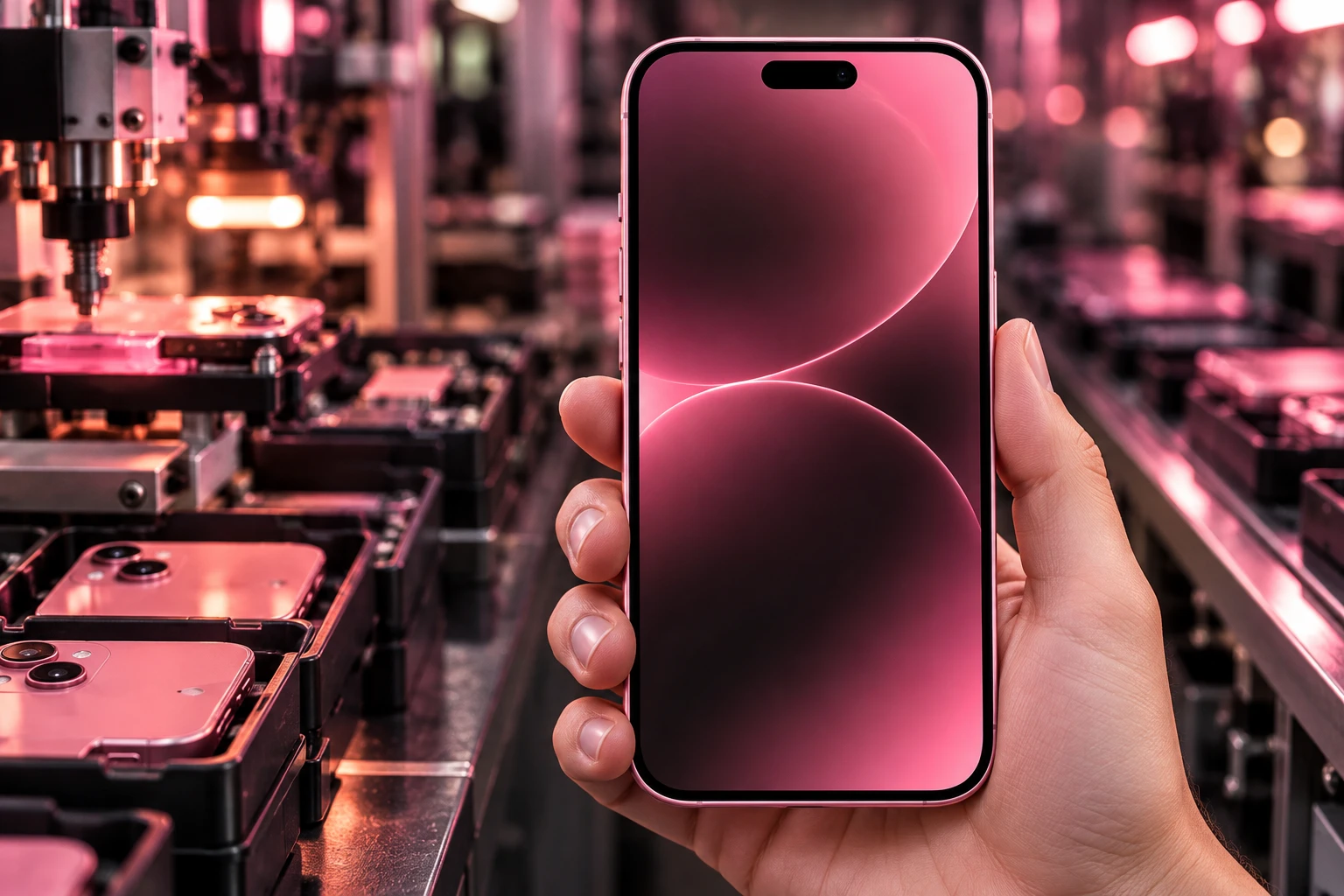
Why $1,199 iPhones Are Already Getting Fewer Parts
People familiar with Apple’s suppliers said the company turned more cautious on iPhone 18 Pro and iPhone 18 Pro Max shipments in early September. Two of them put the October parts cut at 15% to 20% versus the first request. An executive-level source said it was unclear whether November would see another trim, and that the change would hit some suppliers this month depending on lead times.
THE PRO CUT IN ONE LOOK
- The cut: October part orders for both Pro models down 15% to 20% from the original plan.
- The wait: UBS said delivery waits were getting shorter in more than 30 markets even with supply steady.
- The China open: Counterpoint Research found the Pro lineup sold 12% more units in its China launch week than the prior generation, covering the first three days in one market.
- The India open: Tarun Pathak, research director at Counterpoint Research, said early demand in India was 15% to 28% higher than last year after checks at 12 stores.
Those figures do not describe the same moment. The China and India prints are launch-week reads. The 15% to 20% trim is a later, global parts order. A supply-chain manager said volume from August through the second half was weaker than in years when Apple launched every new iPhone at once, and that the standard iPhone 18 would not need parts until toward the end of the year for a 2027 launch.
WHERE THE DESKS DISAGREE
- Soft demand: Supply-chain people blamed the $100 price step and memory costs, with one calling the new Pro phones too expensive for a smartphone.
- A split, not a stall: Morgan Stanley’s supply-chain desk said Foxconn and Taiwan Semiconductor had not cut final assembly or wafer output, and it kept iPhone shipment forecasts of 57 million units for the September quarter and 76 million for the December quarter.
- A mix shift: Later checks described iPhone Duo orders raised about 30%, with the total still under 10 million units, a separate book from the Pro parts cut.
Assembly not moving in lockstep with parts is a real gap. Apple often trims components first. If finished-phone output later follows the 15% to 20% cut, the fall mix is thinner than the original plan. If it does not, the parts trim is Apple matching a split calendar, not a demand crash.
China Opened Stronger, Then Wait Times Fell
Pathak said burgundy was in demand in India, along with higher storage, and that launch-day store stock had largely sold out, with new allocations coming. He also said the missing standard iPhone 18 had concentrated that early traffic on the two Pro models. That is a launch effect, not a full-quarter read.
Shorter waits in more than 30 markets are the colder signal. When supply is stable and phones arrive faster, fewer people are queued. The $100 step is the obvious suspect. The iPhone 18 Pro starts at $1,199. iPhone 18 Pro Max starts at $1,299. Each is $100 above the iPhone 17 Pro and 17 Pro Max, a 9.1% step on the smaller Pro from last year’s $1,099 floor.
The Holiday Floor Is a Pro Model
For the first time since Apple split standard and Pro, there is no new standard iPhone in the fall. The cheapest new iPhone a U.S. shopper can buy from this cycle is the $1,199 Pro. iPhone Duo, the first folding iPhone, starts at $1,999 for 256GB and climbs to $3,199 for 2TB. Pre-orders open October 16. It goes on sale October 23 in more than 70 countries and regions, then 28 more on October 30.
WHAT APPLE PUT ON THE FALL SHELF
| Model | U.S. starting price | Pre-order | On sale |
|---|---|---|---|
| iPhone 18 Pro | $1,199 | September 12 | September 18 |
| iPhone 18 Pro Max | $1,299 | September 12 | September 18 |
| iPhone Duo (256GB) | $1,999 | October 16 | October 23 |
| Standard iPhone 18 | Not announced | Not announced | First quarter of 2027 |
John Ternus, in his first event as chief executive after taking over from Tim Cook on September 1, sold the foldable as a new kind of iPhone, not a third Pro. The hardware is heavy: a 5.4-inch outer screen, a 7.6-inch inner panel, A20 Pro, and a hinge that analysts still treat as the bottleneck.
iPhone Duo is the most transformational change to iPhone since the original. With an entirely new design and intuitive experiences, it shows what’s possible when hardware and software are engineered together and redefines what it means to use a foldable phone.
John Ternus, CEO, Apple press release
Jeff Pu at GF Securities first put 2026 Duo shipments around 7 million units, then about 6 million after hinge limits. Those notes are unit forecasts. The later order-book check, a 30% raise that still sits under 10 million, is a supplier total, not the same number. Either way the foldable is a small slice of an iPhone year. Counterpoint Research has foldables at 1.6 percent of smartphone sales in 2025.
The $100 Pro step was smaller than some desks wanted. Pu had heard $200 to $250. Wamsi Mohan at Bank of America had $150 to $200. Apple still passed on a round number after June memory price hikes on Mac and iPad, when it said it could no longer shield customers from storage and memory costs tied to AI data-center builds. When the Pro phones arrived, Apple also lifted the iPhone 17 to $899 from $799 and the iPhone 17e to $699 from $599. Anyone who wanted a new non-Pro iPhone this fall paid more for last year’s phone or waited.
That wait is showing up as skipped Pro upgrades. People who would have bought a new standard iPhone in September are keeping older phones, parking cash for Duo, or sitting out until the first quarter of 2027. A 9.1% higher Pro price does not replace the missing volume SKU if those buyers never walk in.
Apple Last Split a Fall Lineup in 2017
From iPhone 11 through iPhone 17, Apple put standard and Pro models on the same September stage. The last time it broke a flagship fall in two was 2017, when iPhone 8 and iPhone X shared an autumn window instead of one night. This year’s split is wider. Pro and Duo took the fall. The volume phones were parked until 2027.
HOW THE 18 CYCLE WAS SPLIT
- September 1, 2026: John Ternus becomes CEO, with Tim Cook moving to executive chairman.
- September 9, 2026: Apple’s Surprise and Shine event unveils iPhone 18 Pro, iPhone 18 Pro Max, and iPhone Duo. No standard iPhone 18.
- September 12, 2026: Pro pre-orders open. The phones go on sale September 18.
- Early October 2026: Suppliers say October Pro part orders are cut 15% to 20% from the first request.
- October 14, 2026: Fixed Focus Digital says standard iPhone 18 production starts at the end of November, with a large parts stockpile.
- October 16, 2026: iPhone Duo pre-orders open, with sales on October 23.
- End of November 2026: Planned start of standard iPhone 18 production.
- First quarter of 2027: Pegatron’s window for the standard iPhone 18, with iPhone 18e widely expected in the same period.
Mark Gurman had sketched this calendar well before the event: premium phones and a foldable in fall 2026, then iPhone 18, iPhone 18e, and a new Air about six months later. He listed steadier revenue, less crowding on one night, and less strain on factories. Memory supply gave Apple a second reason. Scarce DRAM and NAND went to the higher-priced phones first. Duo is also harder to build than a slab iPhone, even at a few million units.
The cost of that choice is the hole in the holiday mix. Carriers in the United States usually pin the fourth-quarter upgrade season to a new iPhone that is not a $1,199 Pro. This year they do not have one. The November production start is Apple filling that hole on a delay, not discovering a new customer overnight.
What the Base iPhone 18 Is Expected to Carry
Apple has announced no price, date, or chip for the standard iPhone 18. The Pro phones and Duo already use A20 Pro, Apple’s 2-nanometer chip, with a 6-core CPU (two super cores and four efficiency cores), a 7-core GPU, and a Dual 16-core Neural Engine. The spring phones are expected to use a standard A20 on the same process, cut down to hit a lower bill.
Ming-Chi Kuo said Apple’s lower-end first-half 2027 iPhones, on A20, would move to 9GB of DRAM in a 1.5GB × 6 die layout, up from 8GB in current A19 phones, and that iOS 27 would tie the system more tightly to Apple Intelligence. Other notes had pointed to 12GB. Kuo’s 9GB check is the later one and the one that matches a memory market Apple is already passing through in prices.
WHAT LEAKS ASSIGN THE SPRING PHONE
- The chip: A standard A20, expected on TSMC’s 2-nanometer node, with less cache and a lighter GPU than A20 Pro.
- The memory: 9GB of DRAM on Kuo’s check, not the 12GB some earlier notes had used.
- The screen: A 6.3-inch panel in some leaks, with a smaller Dynamic Island than today’s standard phones.
- The cameras: Dual 48-megapixel rear cameras in several lists, without the Pro’s variable aperture.
- The siblings: iPhone 18e in the same quarter; iPhone Air 2 still without a production date in Yadav’s note.
Gurman’s blunt read is that iPhone 18 and iPhone 18e “will likely receive an A20 chip and little else.” If that holds, the spring pitch is a new chip and a lower price, not a new shape. The Pro’s variable aperture, vapor chamber, and 45 hours of video playback on iPhone 18 Pro Max stay in the expensive tier. That is how Apple can stockpile a cheaper 2-nanometer phone without feeding it every scarce part the fall models already took.
Price is the open lever. Apple has not said whether the standard iPhone 18 holds, rises, or undercuts the $899 iPhone 17 now on the shelf. Holding the line would make the $1,199 Pro look even taller. Raising it would shrink the gap the November ramp is supposed to fill. Either way the factory start comes first.
Volume Markets Wait for the Cheap Phone
The delay lands hardest where the standard iPhone is the business. Industry executives in India have said base models account for 80% to 85% of iPhones sold there, with Pro and Pro Max around 15%. Foxconn and Tata Electronics still ran Pro lines around the clock for export, and people in that chain said 80% to 90% of local output would leave the country, a factory mix, not a sales mix. The phone most Indian buyers actually take home is the one that is not for sale yet.
U.S. carriers face a milder version of the same gap. Annual upgrade plans that used to point at a new standard iPhone now point at a $1,199 Pro, a $1,999 foldable, or last year’s phone at a new $899 sticker. Some shoppers will pay. Many will wait for the first quarter of 2027, which is exactly why Apple needs a large first run.
Duo can soak up a slice of the high end. A 30% order raise still under 10 million units does not replace a standard iPhone cycle. The Pro parts cut of 15% to 20% is the other side of that math. Apple can take a smaller Pro run at a 9.1% higher price and still protect revenue, as long as the delayed volume phone lands on time with enough stock. That is the bet the end-of-November start is placing.
Fixed Focus Digital is reading a parts pile, not a pre-order board. Apple has not confirmed the date, the volume, or the price. What the company has already done is ship a fall lineup that starts at $1,199, trim Pro parts after a cautious September, and point the cheap phone at the first quarter of 2027. Building a lot of those phones at the end of November is how that calendar closes, not a separate burst of faith in a model nobody can buy yet.

Cook Hands Democrats the House as Crypto’s Bill Stays Dead

Wicker’s Broken Bed Was the Short Story’s Punch Line

Nvidia’s $500 Billion Financing Plan Draws a $180 Sell

Maserati Bets the Grecale V6 Can Fill Porsche’s Gap

EV Cable Theft Follows the Old Railway Copper Playbook

Aramco Crash Kills 14 Two Days After Oil Restart

Salah Captained Egypt to Their First World Cup Win

Zelda’s 40th Switch 2 Ships Without a Zelda Game

Apple Labor Day Deals Hide June’s Memory Price Hike

Palworld 1.0.4 Adds Palpedia Search After the 1.0 Launch
-
 BUSINESS4 months ago
Aramco Crash Kills 14 Two Days After Oil Restart
-
 NEWS5 months ago
Salah Captained Egypt to Their First World Cup Win
-
 GAMING2 months ago
Zelda’s 40th Switch 2 Ships Without a Zelda Game
-
 NEWS2 months ago
Apple Labor Day Deals Hide June’s Memory Price Hike
-

 NEWS4 months ago
El Niño Puts Israel’s Needed Winter Rain on a Flood Clock
-
 GAMING2 months ago
Palworld 1.0.4 Adds Palpedia Search After the 1.0 Launch
-

 BUSINESS8 months ago
BAE’s 60-Year Saudi Franchise Now Runs Through Taif
-

 BUSINESS8 months ago
Egypt Bets EGP 638 Billion Can Open Sinai to Investors