
NEWS
Google Play Services Now Pairs Phones to Android XR Glasses
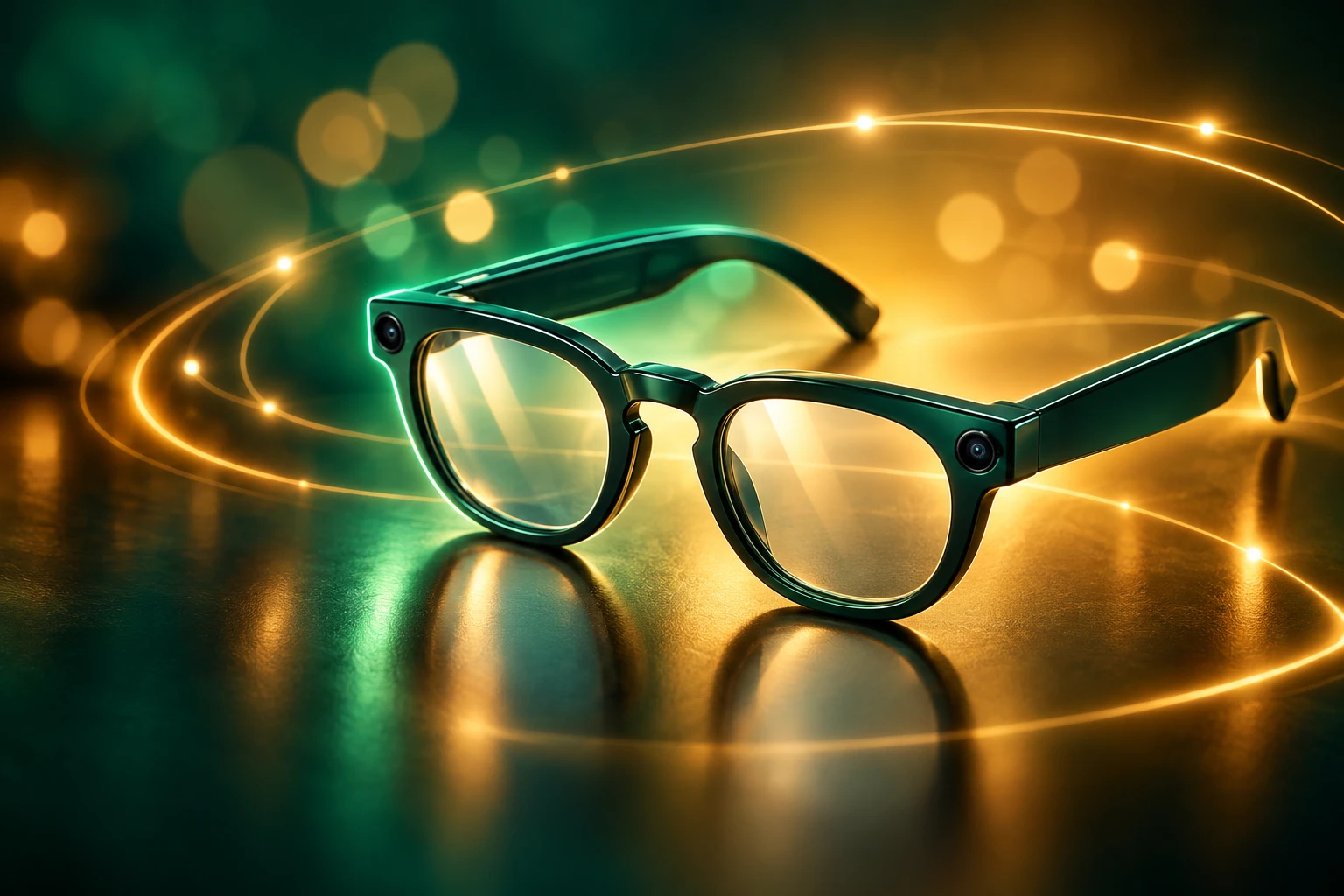
Play services 26.42 lets Android phones pair with Android XR glasses, turning the handset into the computer for audio frames and wired displays.

Google Play services v26.42, dated October 26, 2026, tells Android phones they can connect to Android XR glasses. The same Device Connectivity drop also lets true wireless earbuds pair in the background, with no extra notification, sound, or buzz. Google did not ship a new Android version to do it.
Two days later, on October 28, 2026, Android Dev Summit made the glasses emulators in Android Studio stable, and XREAL AURA, the first wired glasses on Android XR, went up for order. The phone update and the hardware calendar are now on the same clock.
Play Services 26.42 Puts Glasses Beside Earbuds
Google’s October 26 system release notes put the glasses line under Device Connectivity, next to silent earbud pairing. Recaps of those notes quote a single sentence: “You can now connect Android XR glasses to your phone.” The notes name no frame, no minimum phone, and no country. They also say listed items can take time to show up, and that some features can be experimental or limited to certain users.
OCTOBER 26 CONNECTIVITY DROP
| Change | Bucket | What the notes describe |
|---|---|---|
| Android XR glasses | Device Connectivity | Connect Android XR glasses to the phone |
| True wireless earbuds | Device Connectivity | Silent background pairing, with no change to notifications, audio, or vibration |
| Earthquake and crisis alerts | Alerts | A refreshed presentation; Google does not say what changed |
Play Store v53.8 went out the same day with Ask Play videos, a 30-second Playbacks clip tool, and shareable Play Shorts links. That store drop is a separate package. The glasses work lives in Play services, which Google can push to certified phones without waiting for a carrier OS build.
Why the Pairing Lands in a Play Update
Wear OS taught Google what happens when a wearable waits on OEM software. Glasses that need a new Android release would sit in the same queue. Play services already carries Maps, Wallet, and device pairing, so a glasses radio can ride the same truck as an earbud fix.
That choice sets the product split. Audio frames can stay light because Gemini, maps, translation, and the cellular radio stay on the phone you already carry. Display glasses that paint a 70-degree picture still need their own silicon, which is why AURA puts the chip in a puck on a cable. In both cases the new object on your face is an accessory, not a second phone.
Gemini is the interface that makes that split workable, because a lot of the first tasks are spoken, not drawn. The same assistant is already being pulled onto Gemini on other Android surfaces, including the car, as a system agent rather than another app icon. Glasses are the next place that voice is supposed to live without a screen in the way.
Samsung’s Frames Are Audio Glasses First
Google said in May 2026, with Developer Preview 4 of the Android XR SDK, that it was renaming the categories: AI glasses became audio glasses, and display AI glasses became display glasses. Samsung’s consumer pair, shown with Gentle Monster and Warby Parker, sits in the audio group. They have a camera, microphones, and speakers. They do not ship a display in the lens.
THE RUN-UP TO PAIRING
- May 2026: Samsung and Google unveil intelligent eyewear at Google I/O, with Gentle Monster and Warby Parker frames, and commit to a fall launch.
- July 22, 2026: Galaxy Unpacked in London shows a slim black Gentle Monster frame and a brown Warby Parker style with an upswept brow, plus battery and chip claims.
- October 26, 2026: Play services v26.42 lists phone-side connection for Android XR glasses.
- October 28, 2026: Android Dev Summit marks XR emulators and core Jetpack XR libraries stable, and XREAL AURA goes on sale as wired display glasses.
At Unpacked, Samsung said the frames use the Snapdragon AR1 Gen1 platform, include a built-in camera, and last up to nine hours on a charge, with a case that holds up to seven additional full charges. Won-Joon Choi, chief operating officer of Samsung’s Mobile eXperience business, called the glasses a new point of interaction so people do not have to start every task on a phone screen. Google has not priced the pair, and the Play notes do not name these SKUs, but they are the first Android XR glasses Samsung has put on a stage.
Google and Samsung have a shared vision to bring helpful and context-aware intelligence into everyday life. Built on the Android XR platform, the intelligent eyewear blends world-class designs with Gemini’s advanced assistance that naturally responds to what you see, delivering all-day, hands-free help. We’re excited to continue this momentum and bring this experience to people soon.
Sameer Samat, President of Android Ecosystem at Google, Galaxy Unpacked, July 22, 2026
Samsung’s own list is audio-first even with a camera on the brow. The frames can summarize long messages and read key lines aloud, run live translation, capture a whiteboard into Notes, and share a live point of view on a call. Gesture control is tied to Watch9. Several of those flows need a compatible Galaxy phone or a supported app, which is the other half of the Play services bet: the heavy lifting stays off the temples.
Audio glasses still have to look like glasses people will wear on a commute, or they fail the social test that killed the last visor from this company. Open-ear speakers and a camera LED do not get you out of that. They only change what the frame is for.
Studio Emulators Go Stable Before Retail Frames
Matthew McCullough, vice president of product management for Android developer, wrote on October 28 that Google was graduating the XR stack out of preview on the same day AURA launched. Developers can target glasses from a laptop, which is the practical answer to a hardware chicken-and-egg problem: nobody builds a maps overlay for a product they cannot boot.
WHAT WENT STABLE ON OCTOBER 28
- Core libraries: Jetpack SceneCore, ARCore for Jetpack XR, and XR Runtime are stable, with a promise of long-term API stability and backward compatibility.
- Emulators: Android XR emulators in Android Studio can validate XR Glasses, audio glasses, and display glasses without physical hardware.
- Engine Hub: Performance traces for Unity, Godot, and Unreal are on a stable path.
- Geospatial APIs: ARCore for Jetpack XR and Unity can pin digital content to real places, with local tracking, on wired XR glasses and intelligent eyewear.
- Agent skills: Android CLI gained 30+ skills covering 20+ areas, plus device streaming so coding agents can hit real hardware in the cloud.
Mishaal Rahman, who works on Android community engagement at Google, used the same summit to push audio-only apps. He said creators can build with ML Kit Gen AI Text to Speech so an app speaks, plays earcons (audio cues he described as the sound version of icons), and takes voice input. The library is in alpha on select Pixel and Samsung phones, runs offline on Gemini Nano 4, and ships 8 voices across 21 locales. His language-learning clip saved each spoken question into the app for later review.
🕶️ Get ready for audio-only ✨ intelligent eyewear running Android XR!
Using ML Kit's Gen AI Text to Speech library, you can create rich audio-first experiences:
* Voice as output: Allow your app to speak to your users.
* Earcons: Use audio cues to signal and alert your users.… pic.twitter.com/ZgZtTY8cpf
— Mishaal Rahman (@MishaalRahman) October 28, 2026
That save-everything habit will age badly on a sidewalk. A later study session that replays every stray question from a walk is noise, not a notebook, and a one-tap keep would be the obvious fix. The deeper point still holds: Google is telling developers to ship screenless apps now, because the first Samsung frames will not have a canvas in the lens.
XREAL AURA Ships the Display Fork on a Cable
Audio glasses are the volume bet. Wired see-through glasses are the other Android XR product that actually went on sale the week of the Play update. Shahram Izadi, vice president and general manager of XR at Google, said AURA’s lenses are transparent, so you see the room with your own eyes while apps sit in a 70-degree field of view. The glasses stay under 95 grams because the battery and the Snapdragon Reality Elite platform live in a portable compute puck on a cable.
Google said Android XR brings Gemini and millions of Play apps, including over 150 made for XR. You can tile browser, documents, and music in space, use the puck as a trackpad, or plug a laptop in with Wired Mirroring so the computer’s screen becomes another window, with no extra software. Gemini can talk about what is on that laptop window as well as what is in the room. Orders opened on October 28 for buyers 18 and older in the United States, Canada, and Korea, with Japan starting November 2, launch pricing starting at $1,099 through the end of the year, and shipments in mid-November. XREAL’s shop lists $1,279 as the regular price on the 12GB, 256GB configuration that is selling at that launch figure.
TWO ANDROID XR GLASSES TRACKS
| Field | Samsung intelligent eyewear | XREAL AURA |
|---|---|---|
| Form | Audio glasses with camera and speakers | Wired optical see-through glasses |
| On-face weight | Described as a lightweight, slim frame; no published gram figure | Under 95 grams |
| Compute | Snapdragon AR1 Gen1 in the frame; phone as host | Snapdragon Reality Elite in a cabled puck |
| Battery | Up to nine hours; case with up to seven extra full charges | Battery in the puck; Google has not published a runtime |
| Price | Not announced | $1,099 launch; $1,279 regular on 12GB |
| Status | Fall 2026 | Orders October 28; ships mid-November |
The cable is how those glasses stay light enough to wear through a movie. All-in-one frames look cleaner in a product shot, and they still have to park a hot chip and a cell on your nose. Google is not picking one religion. It is shipping the phone-hosted audio pair through Play services and the puck-hosted display pair through a shop page in the same week.
What the Phone Update Still Does Not Say
The pairing line is real, and it is thin. It does not say which phones get it, how the handshake looks, or what data a camera on a brow will send back to the handset. Samsung has talked about a privacy light and cutting the camera when the glasses are not worn, in other briefings, but v26.42 does not repeat any of that.
WHAT WE KNOW
- Phone-side hook: Play services v26.42, dated October 26, 2026, lists a way to connect Android XR glasses to a phone.
- Tooling: On October 28, core Jetpack XR libraries and Android Studio XR emulators were marked stable, including audio glasses and display glasses.
- AURA: Wired display glasses are on sale from $1,099, under 95 grams, with a 70-degree view, shipping in mid-November to the first four markets.
- Samsung frames: Audio glasses with Gentle Monster and Warby Parker, Snapdragon AR1 Gen1, a camera, up to nine hours, fall 2026, no public price.
WHAT IS UNCONFIRMED
- Samsung day and price: Google and Samsung have committed to fall 2026; a November window has been attributed to a Samsung official, with no SKU or event attached in company materials.
- Compatible phones: The Play notes do not list models, and they do not claim every Android XR device will pair with every phone.
- Display fashion frames: Google still separates display glasses from audio glasses in the SDK; it has not dated a Samsung display pair.
- On-device data: v26.42 does not describe what the glasses send, store, or process when a camera and Gemini share a brow.
Play services v26.42 is the phone half of a product that is not fully in stores. Samsung still has to print a price and a day. AURA already has both, and a cable. The next test is whether pairing a fashion frame feels as dull as pairing an earbud, which is the entire reason that line sat in a Play services note instead of a keynote OS reveal.

One UI 9.5 Beta Puts the Galaxy S26 on Last Year’s Clock

DBS Puts a 24/7 USDC Window Inside the Bank

European Startups Head for $81 Billion as First Checks Shrink

US Stocks Lost $1.3 Trillion Before Nvidia’s Beat

Home Depot Bets on Finance Chief Richard McPhail as CEO

Aramco Crash Kills 14 Two Days After Oil Restart

Salah Captained Egypt to Their First World Cup Win

Zelda’s 40th Switch 2 Ships Without a Zelda Game

Apple Labor Day Deals Hide June’s Memory Price Hike

El Niño Puts Israel’s Needed Winter Rain on a Flood Clock
-
 BUSINESS5 months ago
Aramco Crash Kills 14 Two Days After Oil Restart
-
 NEWS6 months ago
Salah Captained Egypt to Their First World Cup Win
-
 GAMING2 months ago
Zelda’s 40th Switch 2 Ships Without a Zelda Game
-
 NEWS3 months ago
Apple Labor Day Deals Hide June’s Memory Price Hike
-
 NEWS4 months ago
El Niño Puts Israel’s Needed Winter Rain on a Flood Clock
-

 GAMING2 months ago
Palworld 1.0.4 Adds Palpedia Search After the 1.0 Launch
-

 NEWS4 months ago
Saudi Visa Routes Split Nigerian Travelers Into Two Speeds
-

 BUSINESS9 months ago
BAE’s 60-Year Saudi Franchise Now Runs Through Taif