
BUSINESS
Goldman Sachs Bets $280 Million on Payhawk at $2 Billion
Goldman Sachs leads Payhawk’s $280 million round at $2 billion, betting licensed payments and live AI agents can still hold Europe.

Payhawk has raised a $280 million Series C led by Goldman Sachs Alternatives, doubling its value to $2 billion. The all-equity round, announced on 18 November 2026, takes total funding past $515 million and still needs standard regulatory approvals.
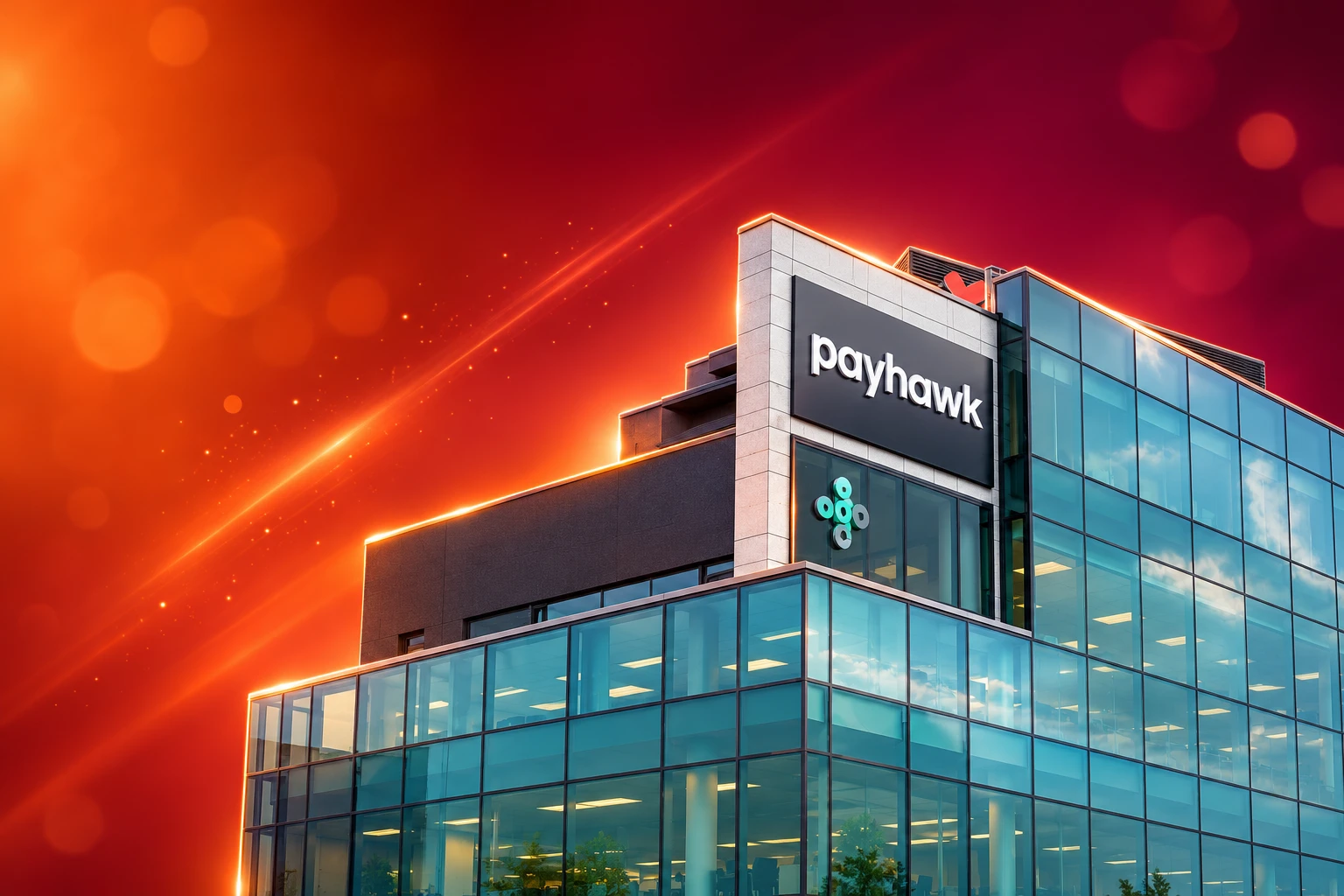
Growth Equity is backing a Sofia-founded, London-based company that already holds payment licences, sells on subscription rather than card fees, and says 77% of customers use its AI agents every day.
Goldman Sachs Is Underwriting the Payments Layer
The lead is all-equity Series C round money from Growth Equity at Goldman Sachs Alternatives, not a venture spray cheque. James Hayward, a managing director in that group, is joining Payhawk’s board.
Hayward’s own case is the overlap of three stacks that banks already understand: payments, software, and now agents that can move cash inside a company’s rules.
Payhawk’s exceptional growth reflects the strength of its engineering DNA, global footprint and clear vision for the future of modern spend management systems. As payments, AI and enterprise software increasingly converge, we believe Payhawk is well positioned to emerge as a leader in this rapidly evolving market.
James Hayward, Managing Director, Growth Equity at Goldman Sachs Alternatives, Payhawk announcement
That is why a Goldman Sachs growth equity platform is a logical lead here. Payhawk already holds an Electronic Money Institution licence from the UK Financial Conduct Authority, granted in January 2024, plus an EMI covering the European Economic Area. It is a principal member of Visa Europe and carries PCI DSS Level 1, SOC 1, SOC 2, and ISO 27001 certifications.
Hristo Borisov, co-founder and CEO, has been blunt that chatbots are not enough. Agents have to sit on rails that can issue money, and on controls that say when a person still has to decide. Goldman is paying for that combination, not for another receipt-scanning feature.
Payhawk posted the round itself on the morning of 18 November.
We’ve raised a $280M Series C, led by Goldman Sachs Growth, at a $2B valuation 🚀
Next up: building the global Finance OS for the AI era, so every business can reach its full potential.
Thank you to our investors, customers and team!
Learn more: https://t.co/fyfZd3T4yb pic.twitter.com/D0kWklhHyG
— Payhawk (@payhawk) November 18, 2026
70% of the 2022 Cash Is Still in the Bank
The unusual line in the release is not the operating-system slogan. Payhawk says it turned cash-flow positive in the third quarter of 2026 and still holds 70% of the capital from its 2022 funding round.
It also says it prices on a subscription, not on card interchange, so it does not earn more when a customer spends more. In the United States, that choice lets its Financial Controller Agent run on a company’s existing business cards rather than forcing a card switch.
In July 2026 the company said it had passed $100 million ARR after a 24-month rebuild of product and operations around agents. Borisov put lifetime net cash burned since the 2018 founding at roughly $120 million, a burn multiple of about 1.2 times that ARR, and said the firm had deployed only about half the capital it had raised by then.
THE JULY OPERATING MARKERS
- ARR per employee: About $238,000, up 75% from a year earlier.
- New business: Net-new sales up 159% year on year with a 10% smaller sales team.
- Payments volume: Throughput through the platform up 95% year on year.
- Support load: 76% of support requests fully resolved by AI, as of that July note.
Those July figures sit four months behind the new round, so they are the last public operating snapshot, not a November close. The November release did not print a fresh ARR number. It did repeat that 77% of customers now use the agents daily across financial control, procurement, travel, and reporting, a customer-usage measure, not the July support-ticket share.
The $2 billion price is about 20 times that July ARR. For a company that still has most of its last round in cash, Goldman is underwriting a build-out, not a rescue.
Ramp’s $60 Billion Shadow Over Europe
The same category in the United States is already on a different scale. On 15 October 2026, Ramp said it had 85,000 businesses on Ramp, more than $2 billion in annualized revenue, and positive cash flow, at a $60 billion value. That is 30 times Payhawk’s new price, against 20 times the revenue Payhawk last disclosed.
PAYHAWK AND RAMP AT A GLANCE
| Company | Last stated value | Last stated scale | Europe posture |
|---|---|---|---|
| Payhawk | $2 billion (18 Nov 2026) | $100 million ARR (8 Jul 2026) | Founded in Sofia, 33 countries, 12 offices |
| Ramp | $60 billion (15 Oct 2026) | $2 billion annualized revenue, 85,000 businesses | Acquired Billhop in 2026; live in the UK |
| Brex | Sold to Capital One in 2026 | Not restated after the sale | US-led, now inside a bank |
Ramp’s own site now carries a post that it is live in the UK, after it bought Billhop, a Stockholm and London payments firm, to gain UK and EU payment authorisation. Capital One bought Brex in 2026, which leaves Ramp as the US independent still raising, and Payhawk as the European independent still raising.
Mehmet Atici, managing partner at Bek Ventures, an existing Payhawk investor, put the gap in one line after the round landed: “Easy to claim global leadership, much harder to prove it.”
Expense software also tends to stick once a finance team has built approvals, cards, and close processes around it. That lock-in is part of why a $2 billion price is even in range. It does not close a 30-times value gap with a US rival that is already selling on Payhawk’s home continent.
What the Agents Already Do for Finance Teams
Payhawk’s agents already book travel, pull invoices from vendor sites, and run inside the firm’s own policies, and the company says 77% of customers use them every day. The November pitch is that those agents only become an operating system when they can move money and when a person still signs off at set points.
Borisov draws a hard line between connecting tools and changing how finance actually runs, including the Model Context Protocol hooks that let assistants such as Claude or ChatGPT talk to the product.
Integrations connect systems. MCP makes information easier to access. But an operating system changes how the entire finance function works. As software moves from recommending actions to actually taking them, that distinction becomes much more important.
Hristo Borisov, co-founder and CEO, Payhawk announcement
HOW THE THREE LAYERS FIT
- AI agents: Software that does finance work such as control checks, procurement steps, travel booking, and reporting.
- Payments infrastructure: Licensed rails that let those agents interact with money without a separate bank hop for every task.
- Enterprise controls: Rules that set what an agent may do and the point at which a person has to decide.
The company calls the end state “zero-touch finance,” meaning neither the finance staffer nor the employee handles the admin. That is a product claim, not a measured headcount cut. In July, Borisov said the longer aim was a 500-person company running with two people in finance.
The US card-agnostic controller agent is the tell for Goldman. If the software can sit on another issuer’s cards, Payhawk is selling control and automation, not a closed interchange mill. That is a different bet from the classic corporate-card growth model.
Sofia Built a Unicorn, Then Slowed the Spend
Payhawk started in Sofia in 2018 and keeps its headquarters in London. On 1 March 2022 it became Bulgaria’s first unicorn when Lightspeed Venture Partners led a $100 million extension that took Series B to $215 million at a $1 billion value.
THE PATH FROM SOFIA
- April 2021: Closes a $20 million Series A.
- November 2021: Raises $115 million in the first Series B tranche at a $570 million value.
- 1 March 2022: Adds $100 million, takes Series B to $215 million, and hits a $1 billion value.
- 2023: Receives an Electronic Money Institution licence covering the EEA.
- 17 January 2024: Receives a UK EMI licence from the FCA.
- 8 July 2026: Says ARR has passed $100 million after a two-year agent rebuild.
- 18 November 2026: Announces the $280 million Series C at $2 billion, 4 years and 8 months after the unicorn extension.
The 2022 plan was to triple headcount from 100 and hire 60 senior engineers in Sofia. The 2026 story is the opposite tempo: a smaller sales team, higher ARR per person, leftover cash, and a round that still needs regulators to sign off. The value doubled in that span. It did not follow Ramp’s markup curve.
Existing backers QED, Greenoaks, Lightspeed, Hedosophia, and Bek Ventures all came back. New names are Galdana Ventures, Cogito Capital, Inveready, and Invus, plus European entrepreneurs Tomas Okmanas, the Nord Security co-founder, and Didac Lee.
The Round Still Needs Regulatory Approval
Payhawk stated in the first paragraph of its release that the transaction remains subject to standard regulatory approvals. Until those clear, the $280 million is agreed, not closed.
WHAT WE KNOW
- The terms: $280 million, all equity, $2 billion value, more than $515 million raised to date.
- The lead: Growth Equity at Goldman Sachs Alternatives, with Hayward joining the board.
- The cash story: Positive cash flow in Q3 2026 and 70% of the 2022 round still held, per the company.
WHAT IS UNCONFIRMED
- Close timing: No date was given for when the approvals land.
- November ARR: The company did not refresh the July $100 million ARR figure with the round.
- Use of proceeds detail: The stated aim is a global finance operating system; there is no split by hiring, markets, or product lines.
For a licensed payments business, a regulatory overlay on a large equity round is normal. It still means the headline value is contingent. Goldman’s board seat only starts once the deal is actually through.
Borisov Wants the Rest of the World to Follow
Borisov is not pitching a European copy of a US spend app. He is pitching Europe as the place that already lives with many currencies, banking systems, and rulebooks, and therefore as the place that should write the category.
“Europe does not need to build local versions of categories invented somewhere else. We should build categories the rest of the world follows as craftsmanship and innovation are strongly embedded cultural traits for Europeans,” he said. “The window to define that category is open now, and we are moving fast.”
Goldman’s $280 million is the cash behind that window. Ramp already sells in the UK at a $60 billion value. Payhawk still has to clear its approvals, then prove that licensed rails plus daily agents can hold Europe without matching that price.
Disclaimer: This article is news reporting on a private company’s announced funding round and is for information only. It is not investment advice, a solicitation, or a recommendation to buy, sell, or hold any security, fund interest, or other instrument linked to Payhawk, Goldman Sachs, Ramp, or their investors. Readers who are considering an allocation to private growth equity, venture funds, or related products should consult a qualified financial adviser or licensed investment professional who can review their circumstances. Figures, round terms, and approval status are those given by the companies named and may change after regulatory review or later disclosures.

One UI 9.5 Beta Puts the Galaxy S26 on Last Year’s Clock

DBS Puts a 24/7 USDC Window Inside the Bank

European Startups Head for $81 Billion as First Checks Shrink

US Stocks Lost $1.3 Trillion Before Nvidia’s Beat

Home Depot Bets on Finance Chief Richard McPhail as CEO

Aramco Crash Kills 14 Two Days After Oil Restart

Salah Captained Egypt to Their First World Cup Win

Zelda’s 40th Switch 2 Ships Without a Zelda Game

Apple Labor Day Deals Hide June’s Memory Price Hike

El Niño Puts Israel’s Needed Winter Rain on a Flood Clock
-
 BUSINESS5 months ago
Aramco Crash Kills 14 Two Days After Oil Restart
-
 NEWS6 months ago
Salah Captained Egypt to Their First World Cup Win
-
 GAMING2 months ago
Zelda’s 40th Switch 2 Ships Without a Zelda Game
-
 NEWS3 months ago
Apple Labor Day Deals Hide June’s Memory Price Hike
-
 NEWS4 months ago
El Niño Puts Israel’s Needed Winter Rain on a Flood Clock
-

 GAMING2 months ago
Palworld 1.0.4 Adds Palpedia Search After the 1.0 Launch
-

 NEWS4 months ago
Saudi Visa Routes Split Nigerian Travelers Into Two Speeds
-

 BUSINESS9 months ago
BAE’s 60-Year Saudi Franchise Now Runs Through Taif