
BUSINESS
Binance Asks Asia for Five Licences After a Record Theft
From a Singapore stage that bars Binance, SB Seker is seeking five unnamed 2027 licences after covering a theft of more than $6.34 billion.

Binance plans to enter five Asian markets in 2027, its Asia-Pacific head said on November 18, 20 days after covering a theft of more than $6.34 billion. SB Seker, speaking at the Singapore FinTech Festival, said talks with at least five or six markets are under way, three of them mature, and he would not name the countries.
Seker Will Not Name the Five Markets
South and Southeast Asia are the priority, Seker said on the sidelines of the festival. Details are due in the first quarter of 2027. He declined to give the size of any investment, and he would not say whether Binance would take local partners.
The company already holds operating licences in more than 10 markets, he said. The new five, if they land, would sit on top of that base rather than replace it. He also said Binance does not need to raise funds and that its finances are sound.
That is a large claim for a private firm that does not publish a full balance sheet. It is also the claim on which the 2027 pitch now rests.
I’m not downplaying the incident. I’m just saying as a metric. In terms of the impact to us, we can take the impact, and we can weather it without any change to the way we operate.
SB Seker, Head of Asia-Pacific, Binance, Singapore FinTech Festival
The incident is the October 29, 2026, drain of Binance hot wallets. The FBI named TraderTraitor for the theft of more than $6 billion in virtual assets, attributed it to North Korea, and said the actors were converting the haul mainly into ether. North Korea has denied it.
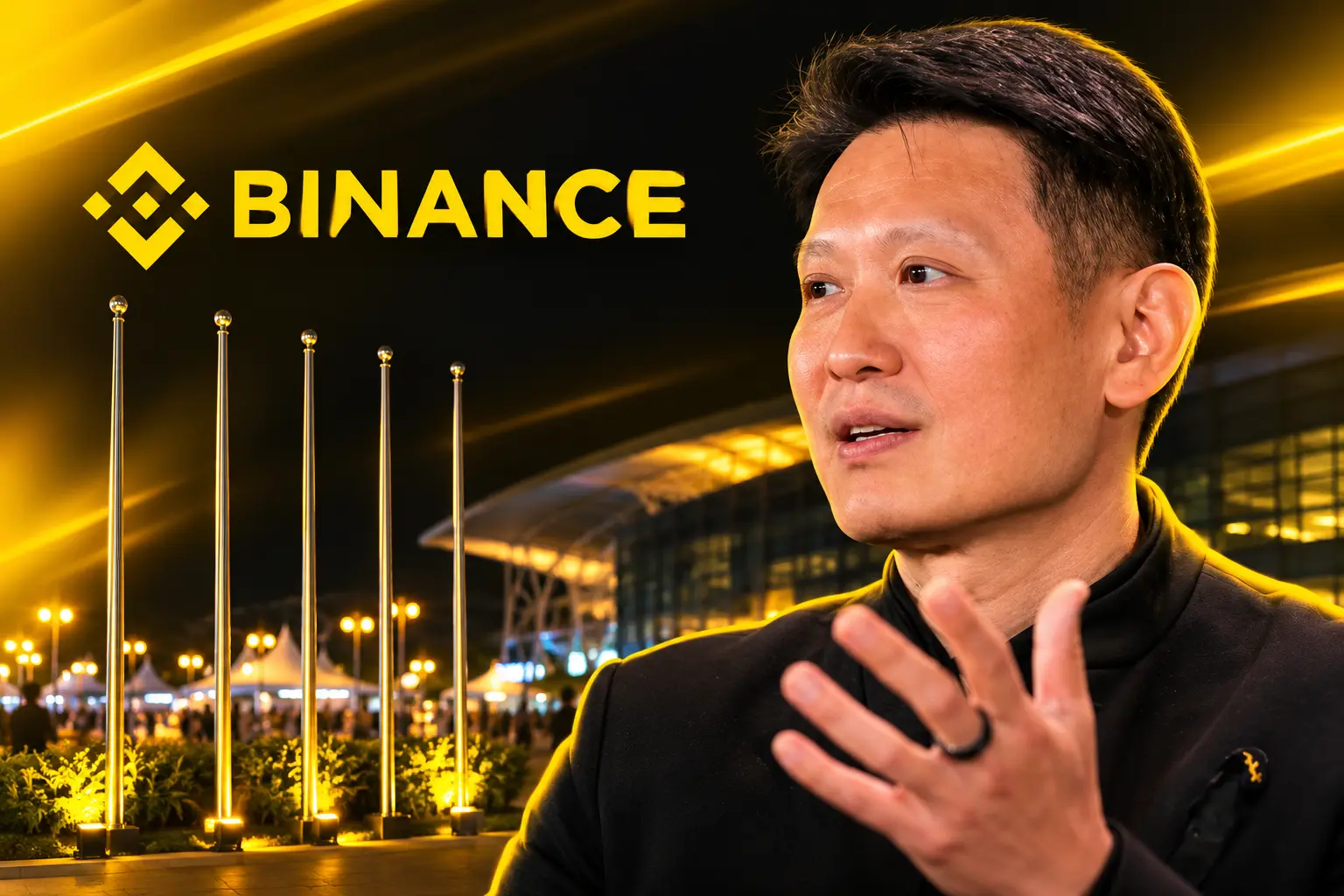
He Used to Work for the Host City’s Regulator
Seker is not a random regional salesman. Binance named him head of Asia-Pacific on August 31, 2025. Before that he was a senior vice president at Crypto.com, with earlier legal posts at Ant Group, Rothschild & Co and Amicorp. He started as a litigator in Australia and then worked as a central-banking lawyer at the Monetary Authority of Singapore. He is qualified in Australia, New Zealand, Singapore and the United Kingdom.
Richard Teng, Binance’s chief executive, said at the time that Asia-Pacific had always been a key region and that Seker’s record across its markets fitted the next phase of growth. The job, as Binance described it, was regulatory engagement as much as sales.
He delivered the 2027 plan in Singapore. Binance cannot trade there. A November country-access file lists the exchange as restricted in Singapore and Malaysia, alongside the United States, the United Kingdom, Canada and several other markets. Binance.sg closed in February 2022. The main platform stopped Singapore users from buying and trading in 2021. Malaysia’s securities regulator ordered the site and apps disabled in 2021.
The festival is a useful room. It is not a licensed home. A former MAS lawyer asking other Asian governments for licences, from a city whose own watchdog will not grant one, is the shape of this pitch.
Which Asian Markets Could Say Yes?
Seker will not confirm the list. The region’s rulebook still shows which doors are open, which already have a Binance badge, and which are shut.
WHERE BINANCE STANDS IN SOUTH AND SOUTHEAST ASIA
| Market | Binance status now | What a new licence would face |
|---|---|---|
| Singapore | Restricted; no Binance.com trading | No MAS licence; Binance.sg closed in 2022 |
| Malaysia | Restricted since a 2021 order | Securities Commission enforcement still on the file |
| Thailand | Gulf Binance joint venture, licensed | Already in; not a new market |
| Indonesia | Tokocrypto licensed as a physical crypto trader | Already in through a local entity |
| India | FIU reporting registration only | Not a full exchange licence |
| Japan | Binance Japan registered with the JFSA | Local entity, reduced product set |
| Vietnam | No licence; zero pilots as of September 30, 2026 | 49% foreign cap; VND 10 trillion capital (~$380 million) |
| Philippines | Not licensed; VASP moratorium in force | 8 active VASPs; new licences paused |
| Pakistan | New 2026 VASP law and regulator | Full licensing route now open |
Binance’s own legal pages already list licences in Japan, Thailand and Indonesia, plus an India reporting registration and the Abu Dhabi trio that the firm calls its primary regulator. Gulf Binance is a joint venture with Gulf Edge. Tokocrypto is the Indonesian vehicle. That is the pattern Seker would not discuss when asked about local partners.
Vietnam’s five-year pilot is built for that pattern. Foreign ownership is capped at 49 percent, so a Vietnamese-majority joint venture is required, and the capital floor is VND 10 trillion. No pilot licence had been issued as of September 30, 2026. The Philippines is the opposite case. The Bangko Sentral ng Pilipinas has kept a moratorium on new virtual-asset licences, with eight firms already on the register. Pakistan opened a full VASP regime this year under a new law, which is the kind of window a 2027 plan can actually use.
Any ASEAN watchdog taking this meeting is being asked to license the exchange that just absorbed the largest crypto theft on record. That is the live objection, and it is sharper because Seker will not say which governments are taking it.
The Cover Cost More Than $6.34 Billion
Binance did not recover the stolen coins. It replaced customer balances from its own books. Coverage was complete on November 12, 14 days after the breach, and the firm published a proof-of-reserves snapshot covering 198 tokens. Replacement is not the same as catching the money.
THE BILL SO FAR
- The cover: Binance set aside more than $6.34 billion of company funds and bought the affected tokens in the market and over the counter.
- The freeze: The US Justice Department said issuers and investigators froze more than $2.7 billion; courts then authorised seizure or restraint of more than $1.2 billion of that sum.
- The rebuild: After a partial SAFU draw, including a visible transfer of 7,499 bitcoin, Binance said it would restore the SAFU fund to about $1 billion.
- The pipes: Withdrawals reopened on 87 networks in the week of November 14, with the rest targeted by November 22.
The $2.7 billion freeze is not extra cover. It is stolen value stopped in place, and it should not be added to the $6.34 billion the company spent. Seker’s “metric” line treats the net hit as something the treasury can stand. Without public accounts, that is a statement, not a figure a reader can check.
FROM THE HACK TO THE FESTIVAL
- October 29, 2026: Hot wallets are drained. Binance later puts the cover bill at more than $6.34 billion.
- October 31, 2026: The FBI attributes the theft to North Korea’s TraderTraitor and warns THORNode operators, among others, to block listed addresses. Binance says cover has reached 90 percent and moves 7,499 bitcoin from SAFU.
- November 1, 2026: Phased withdrawals restart, beginning with major assets on new wallet addresses.
- November 12, 2026: Binance says coverage of affected assets is complete and publishes a 198-token reserve snapshot.
- November 14, 2026: Withdrawals are back on 87 networks, with remaining routes targeted by November 22.
- November 17, 2026: $136.8 million of ether is swapped for bitcoin through Thorchain, the route the FBI flagged on day two.
- November 18, 2026: Seker, in Singapore, pitches five new Asian markets for 2027.
The laundering print on November 17 is small against $6.34 billion. It is not small as a signal. The FBI asked Thorchain node operators to block the flow on October 31, and 17 days later a nine-figure ether book was still being flipped to bitcoin on that rail.
Japan, Thailand and the First Phone Calls
The governments Seker rang after the hack are not the unnamed five. They are markets where Binance already has a presence, and he grouped them as such.
THE CALLS IN THE FIRST 36 TO 48 HOURS
- Japan: Binance Japan is registered with the Financial Services Agency as a crypto-asset exchange.
- South Korea: Seker listed it among markets “where we are present,” without a matching full licence on the public list.
- Australia: Spot access remains; the local derivatives licence was cancelled in 2023.
- Thailand: Gulf Binance already holds exchange and broker licences.
- New Zealand: A Binance-linked entity is registered to provide digital-currency exchange services.
“Think of all the financial services regulators and markets where we are present,” Seker said. No one country led the investigations, he added. Binance names the Abu Dhabi Global Market’s Financial Services Regulatory Authority as its primary regulator. The three ADGM entities were set to go live on January 5, 2026.
Europe is not in this conversation. Binance reached the MiCA deadline on July 1, 2026, without a licence, withdrew a Greek application in June, and stopped new European Economic Area sign-ups, deposits and trading while leaving withdrawals open. The 2027 Asian list is the growth path that is still on the table after that halt.
Talks with regulators about the heist are still going, Seker said. The subject has moved. “The conversations now are ‘well, this is an omnipresent and spectrum-wide threat, and how does an entire ecosystem prepare for this?’ It’s moved away from the original incident to a much broader conversation.” He added that Binance is part of that talk but is “not driving the conversation in isolation anymore.”
Q1 2027 Is When the Names Appear
Three talks are mature. None of the names are public. The first quarter of 2027 is the date Seker put on disclosure, not on go-live. A licence talk can sit in a “mature” file for months and still fail a security review, a capital test, or a local-ownership rule.
WHAT WE KNOW
- The target: Five markets in 2027, with South and Southeast Asia first.
- The talks: Five or six conversations, three of them mature, names withheld.
- The money: More than $6.34 billion of company funds used to replace customer assets; no fundraising planned, Seker said.
- The stage: The plan was announced in Singapore, where Binance is restricted.
WHAT IS UNCONFIRMED
- The five names: Seker declined to identify the markets.
- Local partners: He would not say whether joint ventures are part of the deals.
- The cheque: Investment size for the new markets was not disclosed.
- Full withdrawals: Remaining networks were targeted by November 22, not confirmed as complete on November 18.
Calling $6.34 billion a metric only works if the books are public, and they are not. The unnamed governments still have to decide whether a covered theft, a rebuilt SAFU target of about $1 billion, and a former MAS lawyer on a Singapore stage are enough to put Binance on a local register in 2027.
Seker said operations would not change. The stolen coins are still being moved. The names, he said, will come in the first quarter.
Disclaimer: This article is news reporting and analysis of Binance’s stated 2027 expansion plans and of the October 29, 2026, theft and its aftermath. It is informational only and is not investment advice, legal advice, or a recommendation to buy, sell, hold, or use any cryptocurrency, token, or exchange account. Readers who are considering an account, a transfer, or a licensing or compliance decision should consult a qualified financial adviser, lawyer, or licensed virtual-asset professional in their own country before acting. Figures, licence statuses, withdrawal routes, and regulatory talks reflect the company, government, and research sources cited as of the dates given in the piece and can change without notice.

One UI 9.5 Beta Puts the Galaxy S26 on Last Year’s Clock

DBS Puts a 24/7 USDC Window Inside the Bank

European Startups Head for $81 Billion as First Checks Shrink

US Stocks Lost $1.3 Trillion Before Nvidia’s Beat

Home Depot Bets on Finance Chief Richard McPhail as CEO

Aramco Crash Kills 14 Two Days After Oil Restart

Salah Captained Egypt to Their First World Cup Win

Zelda’s 40th Switch 2 Ships Without a Zelda Game

Apple Labor Day Deals Hide June’s Memory Price Hike

El Niño Puts Israel’s Needed Winter Rain on a Flood Clock
-
 BUSINESS5 months ago
Aramco Crash Kills 14 Two Days After Oil Restart
-
 NEWS6 months ago
Salah Captained Egypt to Their First World Cup Win
-
 GAMING2 months ago
Zelda’s 40th Switch 2 Ships Without a Zelda Game
-
 NEWS3 months ago
Apple Labor Day Deals Hide June’s Memory Price Hike
-
 NEWS4 months ago
El Niño Puts Israel’s Needed Winter Rain on a Flood Clock
-

 GAMING2 months ago
Palworld 1.0.4 Adds Palpedia Search After the 1.0 Launch
-

 NEWS4 months ago
Saudi Visa Routes Split Nigerian Travelers Into Two Speeds
-

 BUSINESS9 months ago
BAE’s 60-Year Saudi Franchise Now Runs Through Taif