
AUTO
Porsche’s Gas Macan Mule Arrives After a July Shutdown
Porsche is testing a gas Macan mule at the Nurburgring after ending combustion production in July, with a 2028 petrol SUV still in Audi Q5 skin.

Porsche is already testing a gas Macan mule at the Nurburgring, after it stopped building the old combustion SUV at the end of July 2026.
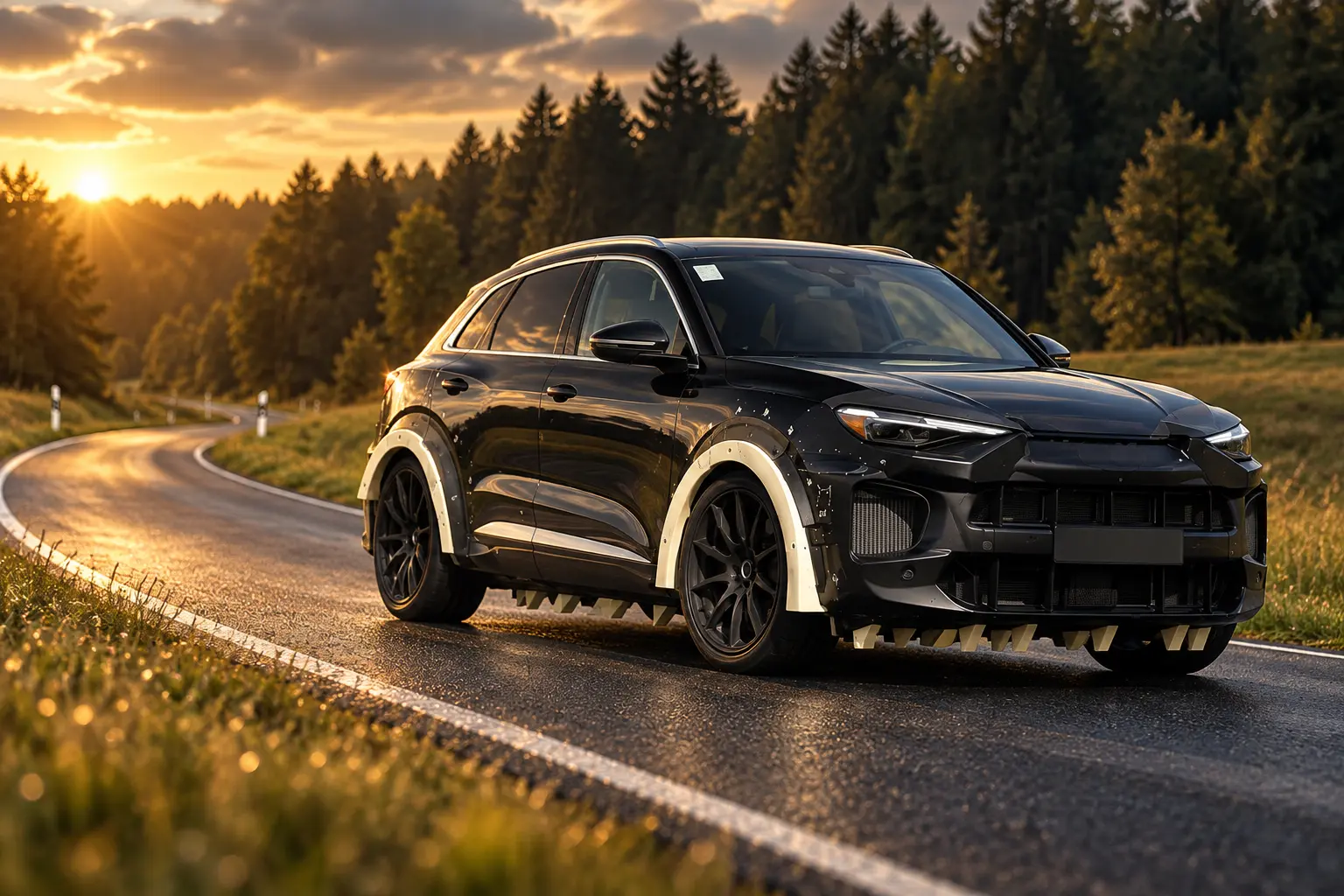
The car still wears Audi Q5 bodywork, taped badges, a fabricated grille, wide fender flares, and foam triangles along the underside. Chief executive Michael Leiters has said a petrol Macan will return in 2028 and sit next to the electric one.
Porsche Stopped Building the Gas Macan in July
Porsche’s half-year delivery report put a hard date on a decision the brand had already made in Europe: combustion Macan production until July, then nothing. The electric Macan was supposed to inherit that volume. It did not.
In the first half of 2026, customers took 35,315 Macans. Of those, 19,695 still had combustion engines, sold in most markets outside the EU, and 15,620 were electric. The whole line was down 22% from a year earlier. Sales and marketing board member Matthias Becker pointed to a slower ramp of electric demand, a strong prior-year launch, and the end of U.S. tax credits for electric and hybrid cars.
Finance chief Jochen Breckner had already told investors the Leipzig plant would build as many gas Macans as supplier parts allowed, and that some markets would still see deliveries in 2027. That is leftover stock talking, not a running line.
FROM THE FIRST Q5 MULE TO THE JULY HALT
- February 2025: Spy photographers catch the first Q5-bodied mules for a new combustion Porsche SUV in Sweden.
- January 2026: Michael Leiters, formerly of McLaren, takes over as chief executive.
- End of July 2026: Porsche ends production of the combustion Macan.
- Early October 2026: Leiters says a petrol Macan will come back in 2028, sold alongside the electric model.
- October 14, 2026: A heavily modified Q5 mule with foam triangles is photographed at the Nurburgring.
The sequence is the point of the photos. Porsche did not wait for a finished body before it turned the old car off.
What Those Spy Shots Show at the Nurburgring
On the surface the mule is an Audi Q5 that someone has picked a fight with. Porsche and Audi already share compact-SUV bones, so a borrowed body is normal this early. The add-ons are not.
The finished Macan will sit lower and wider than the Q5 donor, which is why the test car carries huge makeshift flares and a wing on the hatch. Spy photographers also noted headlights pushed out from the Audi sheetmetal, a sign the hood line and lamp graphic will not be a Q5 clone. Quad exhaust tips off an old Macan are on the bumper, which is why a V6 is the working guess for this particular mule.
WHAT THE NÜRBURGRING MULE IS WEARING
- The face: Audi rings are under tape, and a fabricated grille gives the Q5 a deeper, more open snarl with big inlets for a radiator and intercoolers.
- The stance: Bolt-on fender flares, some with extra foam, stand in for a wider track than the donor SUV.
- The floor: Rows of small foam triangles hang under the nose, along the sills, and under the rear.
- The tail: A hatch wing and prominent exhaust outlets sit on bodywork that is still Audi.
Spies have used Octan as an unofficial internal tag for the program. Leiters, in public, has gone back to calling it a Macan. Either way, the hardware on October 14 was still a mule, not a Porsche body in camouflage.
The Foam Triangles Track Ground Clearance
The triangles are the detail everyone stared at, and they are the least mysterious part of the car. They are not a design theme and they are not vortex generators waiting for a showroom.
Because the production underbody and ride height are not on this Q5, engineers need a cheap witness for what would scrape. Foam crushes and scuffs. After a session of industry testing on the Nordschleife, the blocks that are mashed tell the crew where the finished sills, splitter, or floor would hit crests, kerbs, and compression. Porsche has stuck similar foam on other prototypes when suspension travel was the question.
A lower Macan on a Q5 mule would kiss the ground sooner than the Audi did in stock form. The triangles are how you learn that before the real panels exist. They also explain why the car still looks early: if the body were close to sign-off, the foam would already have been replaced by that body.
The Next Gas Macan Still Wears Audi Sheetmetal
The first Macan shared Volkswagen Group architecture with the first Audi Q5. The next gas one is set to do it again, this time on Premium Platform Combustion, the same layout that underpins the Q5 that went on sale in 2025. That is why the mule is not a Porsche in a vinyl wrap. It is an Audi that has been cut up so Porsche can run engines, cooling, track, and ride height before its own skin is ready.
Sharing a platform is not the same as swapping a badge. The fabricated nose, with lamps sitting proud of the Q5 metal, already implies different front mounts. The flares imply a wider track Porsche will claim as its own. What the photos cannot settle is how far Weissach will rework the four-wheel-drive system this time; the last Macan was heavily retuned to feel rear-driven, and this program is being built under cost pressure.
The engine mix is expected to follow the Q5 family: turbo four-cylinders and a 3.0-liter V6, with a plug-in hybrid for the first time on a Macan. Audi’s SQ5 makes 362 hp from that V6 and a 7-speed dual-clutch. The old Macan ranged from 261 to 434 hp, and the next one is expected to sit at least as high. That is not a signed spec sheet. It is what the donor family and the exhaust outlets allow people to infer.
Macan Line Deliveries Fell 21% Through September
Porsche’s own nine-month tally is the reason the mule exists. The company delivered 178,532 cars worldwide through September, down 16% from 212,509 a year earlier. Becker said the third quarter simply followed the half-year trend, and that Porsche is sticking to a value-over-volume plan.
The compact SUV that used to carry the brand did not. Porsche recorded 51,025 Macan deliveries through September, down 21%. Combustion still led that total, at 27,996 units, against 23,029 fully electric cars, even after the gas line had already been switched off.
PORSCHE DELIVERIES, JANUARY TO SEPTEMBER 2026
| Line | Deliveries | Change vs 2025 |
|---|---|---|
| Macan, all | 51,025 | -21% |
| Macan, electric | 23,029 | Included in the line total |
| Macan, combustion | 27,996 | Production ended in July |
| Cayenne | 59,586 | -2% (7,002 electric) |
| 911 | 42,217 | +12% |
| Taycan | 8,699 | -31% |
Cayenne is now the volume leader, helped by the first electric versions after a summer launch. China is the open wound: 21,493 cars, down 33%, in a market Porsche says it will not chase with short-term discounts. North America remained the largest region at 56,088 cars, down 13%.
In the first quarter, before the halt, the split was already awkward. Porsche delivered 18,209 Macans, 10,130 of them combustion and 8,079 electric, with the line down 23%. The gas car Porsche was about to kill was still the one customers were taking.
Leiters Wants the Petrol Macan Back
Leiters has spent October trying to describe this as recovery rather than a retreat from batteries. He took the job in January. Critics have called him an EV skeptic. He rejects the label, and then describes a company that leaned too hard on electric Macans before enough buyers were ready.
We have to recover our petrol strategy, but I’m very positive that once we have the Macan with the petrol engine, we have a very balanced offer for our customers on electric and petrol cars.
Michael Leiters, Chief Executive, Porsche AG
He also said Porsche has to avoid a double spend on petrol and electric hardware in the same segment. That is the bind inside the mule. The electric Macan already sits on Premium Platform Electric. The gas one needs PPC, Audi’s combustion architecture, and a second body. The cheap way to get there by 2028 is exactly what is circulating at the Ring: a Q5 with Porsche cooling, Porsche width, and placeholder aero.
Becker, on the nine-month call, pointed to the Sportwagenschmiede ’35 plan shown at Porsche’s capital markets day. The public version of that plan puts a combustion compact SUV back on the calendar for 2028, sold next to the electric Macan, with series production that year and a real sales contribution expected in 2029. Leiters has also said the 911 will not go fully electric.
Dealers Wait on a 2028 Replacement
The photos are early, and the calendar is not. Leftover gas Macans can trickle into 2027 in some markets. After that, the compact petrol slot in the showroom is empty until the new car appears. Dealers still have unsold stock of the outgoing model. That stock does not last until a 2028 reveal.
WHAT WE KNOW
- The halt: Combustion Macan production ended at the end of July 2026.
- The date: Porsche has put a petrol compact SUV, described by Leiters as a Macan, on the 2028 calendar, to be sold beside the electric Macan.
- The bones: The mule is an Audi Q5 on the group’s Premium Platform Combustion architecture.
WHAT IS UNCONFIRMED
- The name: Octan is a spy tag, not a launch badge.
- The engines: Four-cylinder, V6, and a first Macan plug-in hybrid are expected, not published.
- The body: A Sportback has been rumored because Q5 Sportback mules have been seen; Porsche has not confirmed one.
The foam will come off when there is a floor to bolt on. Until then the loudest thing in the pictures is not the triangles. It is a gas Macan program still wearing someone else’s body, after Porsche had already turned its own line off.

Cook Hands Democrats the House as Crypto’s Bill Stays Dead

Wicker’s Broken Bed Was the Short Story’s Punch Line

Nvidia’s $500 Billion Financing Plan Draws a $180 Sell

Maserati Bets the Grecale V6 Can Fill Porsche’s Gap

EV Cable Theft Follows the Old Railway Copper Playbook

Aramco Crash Kills 14 Two Days After Oil Restart

Salah Captained Egypt to Their First World Cup Win

Zelda’s 40th Switch 2 Ships Without a Zelda Game

Apple Labor Day Deals Hide June’s Memory Price Hike

Palworld 1.0.4 Adds Palpedia Search After the 1.0 Launch
-
 BUSINESS4 months ago
Aramco Crash Kills 14 Two Days After Oil Restart
-
 NEWS5 months ago
Salah Captained Egypt to Their First World Cup Win
-
 GAMING2 months ago
Zelda’s 40th Switch 2 Ships Without a Zelda Game
-
 NEWS2 months ago
Apple Labor Day Deals Hide June’s Memory Price Hike
-

 NEWS4 months ago
El Niño Puts Israel’s Needed Winter Rain on a Flood Clock
-
 GAMING2 months ago
Palworld 1.0.4 Adds Palpedia Search After the 1.0 Launch
-

 BUSINESS8 months ago
BAE’s 60-Year Saudi Franchise Now Runs Through Taif
-

 BUSINESS8 months ago
Egypt Bets EGP 638 Billion Can Open Sinai to Investors