
NEWS
Ring’s First Smart Lock Skips Home Wi-Fi for Sidewalk
Ring’s $249 smart lock uses a hand crank for dead batteries, while remote access rides Amazon Sidewalk instead of home Wi-Fi.

Ring priced its first smart lock at $249, dropped the keyhole, and said a hand crank will wake the bolt if the battery dies. The lock is due in the United States in the first quarter of 2027, and Ring’s own announcement says the Federal Communications Commission has not authorized it for sale.
The crank is the line that will travel. The quieter design choice is the network. Remote locking, status checks, and PIN updates run on Amazon Sidewalk, a shared radio layer powered by nearby Echo speakers and Ring cameras, not on the household Wi-Fi most smart locks use.
A $249 Deadbolt With No Keyhole
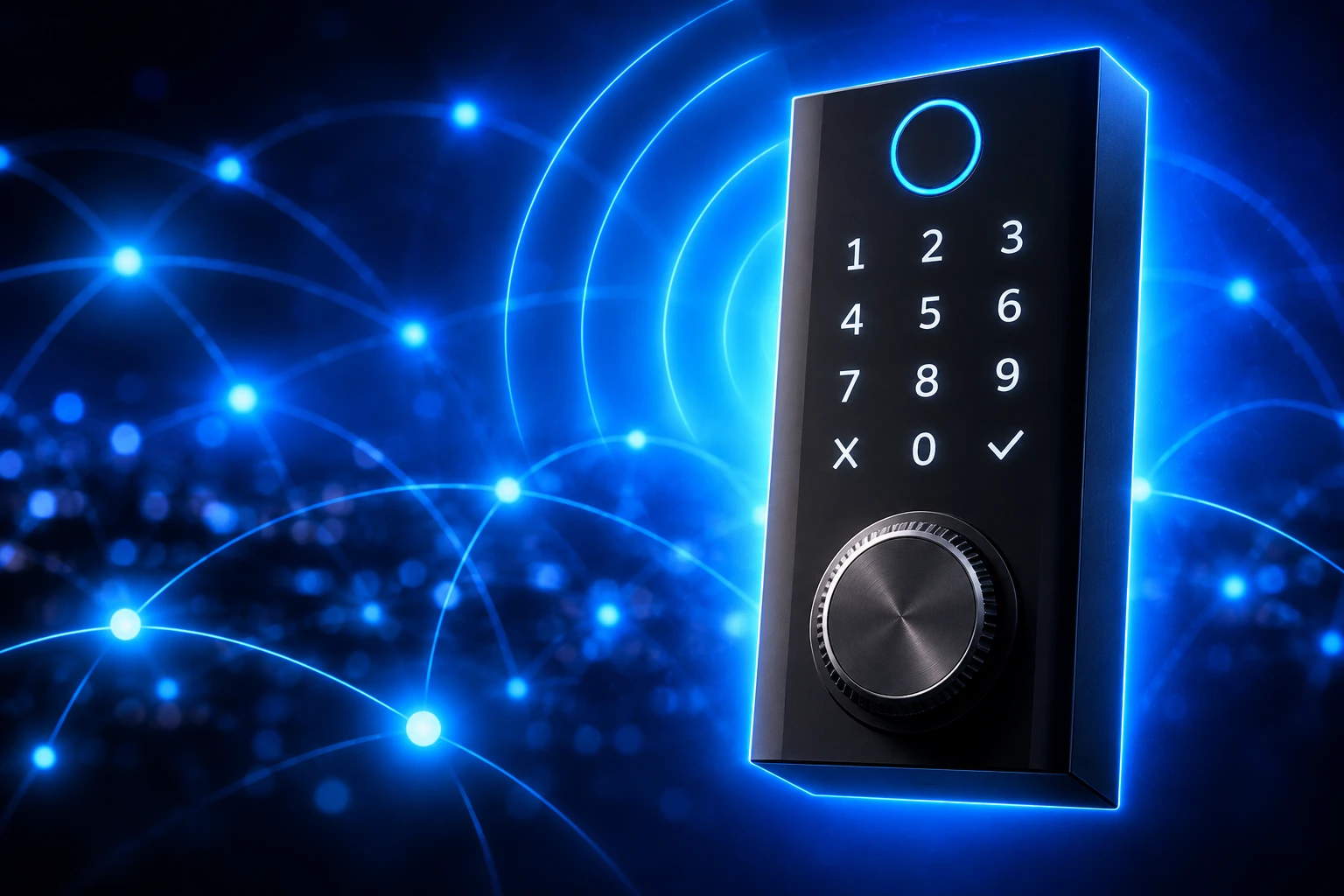
Ring is selling a lock you can recharge by hand as its first deadbolt, and it is going in without a spare key. Four ways in sit on the device and in software: a fingerprint reader, a backlit touchscreen keypad, the Ring app, and Alexa. Owners can grant access that expires, down to a dog walker allowed in every Tuesday from 2:00 to 3:00 p.m. and not a minute outside that window.
Jamie Siminoff, Ring’s founder and chief inventor, said none of the lock’s features needs a paid plan, and that a standard Ring battery pack should last about a year, with an app alert when it is time to charge. The hardware fits a standard single-cylinder deadbolt and needs no extra wiring. Finishes are black, silver, and brass.
That is a lot of door for a company that made its name on video doorbells. It is also a U.S. product on a long fuse. Ring said it will sell the lock in the United States in the first quarter of 2027, and the same post warns that the device may not be offered for sale or lease until FCC authorization comes through.
THE RING SMART LOCK IN FIGURES
- Price: $249 in black, silver, or brass.
- Ship window: first quarter of 2027 in the United States, pending FCC authorization.
- Battery claim: about a year on a Ring pack, with an in-app low-power alert.
- Ways in: fingerprint, keypad, Ring app, and Alexa, with no physical keyhole.
Siminoff told interviewers the lock will expand to other lock types and other countries if this deadbolt sells. He has not named those markets. For a European household, the useful fact is simpler: there is no buy button yet, and Sidewalk is the pipe the remote features use.
Five to 10 Turns Wake a Dead Battery
Ring’s pitch is blunt. Other smart locks, it says, become bricks when they lose power. Arrive to a dead pack, turn the built-in power dial a few times, and the Ring Smart Lock comes back long enough to let you in. Siminoff put a number on “a few”: somewhere around five to 10 turns, depending on how far and how fast the dial moves. A light goes green when the electronics are up. Then you still authenticate with a fingerprint, the keypad, or the app.
The crank is a generator, closer to a wind-up flashlight than to a new kind of bolt. Siminoff said the parts inside are mostly off the shelf, including the bits that make power, and that the work was packing them into a lock. He also said he is annoyed he did not do it years ago.
If you have to have a key, it’s like, well, why have a smart lock?
Jamie Siminoff, founder and chief inventor, Ring
That sentence is the product strategy. Ring is not adding a hidden keyway for the night the software fails. The outside of the door has a dial, a reader, and a pad. If the generator wakes the board, you get in the digital way. If it does not, there is no metal backup in the cylinder.
Yale’s Backup Still Needs a 9V Battery
Dead-battery lockouts are an old complaint, and lock makers already shipped answers that do not involve a dynamo. Yale’s support pages describe 9V emergency power on Yale locks that have no keyway: hold a standard 9V against two exterior terminals, wait for the pad to light, then enter a code, card, or fingerprint. The 9V does not charge the lock. It is a jump, and Yale tells owners to swap the internal cells the moment they are inside. Other designs hide a USB-C port or keep a physical key.
Siminoff’s reply is practical. A 9V block or a cable does not help someone on the step at 1 a.m. who is not carrying either. Ring’s dial is always on the door. That is a fair point about pockets. It is a weaker point about novelty. The category already assumed the lock would die; it just assumed you would bring a battery, a cable, or a key.
WHAT GETS YOU IN WHEN THE PACK IS DEAD
| Approach | Emergency path | What you must have at the door |
|---|---|---|
| Ring Smart Lock | Turn the power dial five to 10 times, wait for the green light, then unlock as usual | Hands, plus a fingerprint, PIN, or phone |
| Yale key-free models | Hold a 9V on the exterior terminals for temporary power | A 9V battery |
| Many keyed smart locks | Use the mechanical key | The spare key |
Ring is asking buyers to trust a small generator and a boot cycle instead of a key they already own. That is a cleaner front plate. It is also a single point of failure you cannot pick with a house key from a neighbor.
Remote Commands Skip the Home Router
Local entry is on the lock. Remote life is not. Ring said the deadbolt stays connected through Amazon Sidewalk so remote locking, status updates, and PIN syncing happen without the home Wi-Fi most rivals lean on. Unlocks still process on the device, so a network drop should not freeze you out of your own stoop. Checking the bolt from work, pushing a new code, or locking it from a phone still needs Sidewalk to be up in that neighborhood.
Sidewalk is not a second home router. Compatible Echo speakers and Ring cameras act as bridges, and each bridge shares a thin slice of that household’s internet with nearby gadgets. Amazon’s documentation lists Echo and Ring Sidewalk Gateways that can pass that traffic, and it places the network in the United States, Canada, and Mexico. The lock itself is a U.S. SKU. Coverage, Ring disclosed, may vary by location and can change or drop out.
Bridges Share a Slice of Home Internet
Amazon’s consumer help pages put hard caps on what a bridge donates. The 80Kbps Sidewalk bridge limit is the maximum rate from a gateway to Amazon’s Sidewalk server. Monthly data for Sidewalk-enabled devices is capped at 500MB for one customer, a volume Amazon likens to a short stretch of high-definition video. Owners can switch the feature off in the Ring app’s Control Center or in Alexa account settings, and that choice applies across the Echo and Ring devices on the account.
Turn it off and the speakers still play music. The lock’s remote tricks are another matter. Amazon says switching Sidewalk off means missing the network’s extra coverage, including the community bridges that keep gadgets reachable when a home link fails. A lock that “does not need your Wi-Fi” still needs someone’s internet, and in a thin neighborhood that someone may be a next-door Echo.
Unlocks Still Happen on the Device
HOW THE LOCK STAYS IN TOUCH
- At the door: Fingerprint, keypad, and app unlocks run on the lock, so a Sidewalk gap should not trap you outside.
- From elsewhere: Remote lock, status, and PIN sync ride Sidewalk, not the household Wi-Fi SSID.
- Voice: Echo and Alexa can issue commands once the lock is in the Ring app.
- Neighbors: Nearby opted-in Echo and Ring units can serve as the radio hop when your own Wi-Fi is down or out of range.
That split is the part of the announcement that will matter six months after the crank demo fades. A Ring house already full of bridges will see a lock that just appears online. A house that killed Sidewalk, or a block with few Amazon gadgets, will own a $249 keypad that is smartest when you are standing in front of it.
Why Ring Sat Out Locks Until Now
Siminoff has been adjacent to this product since the doorbell years. His first video doorbell, the Doorbot, went on sale in 2013 in a bundle with a smart lock from another company, a 13-year gap from that kit to this deadbolt. Ring later tied its cameras to other brands’ locks rather than stamp its name on a me-too bolt. He said Ring could have sold plenty of locks that way, and that he did not think the company belonged in the business until it had something different.
He also said he never thought they would do a lock. The idea, in his telling, was worked out at night on his own computer with Amazon’s AI tools, estimating crank count, cost, and whether the parts would fit, then handed to Ring’s engineers. A few years ago, he said, those questions would have taken five to 10 engineers and six months. He returned to lead Ring in 2025.
THE PATH TO THE DEADBOLT
- 2013: Doorbot goes on sale bundled with another company’s smart lock.
- 2025: Siminoff returns to lead Ring after years of pairing Ring cameras with outside lock brands.
- September 2026: Ring starts rolling out TAKE (Throw Away the Key Encryption) and says it will become the default.
- October 7, 2026: Ring announces the Smart Lock and five new cameras; the lock is still waiting on FCC authorization.
- First quarter of 2027: Planned U.S. availability for the $249 deadbolt, if that authorization lands.
The wait is the tell. Ring did not slip a Wi-Fi lock into the store next to the doorbells. It held the slot until it could kill the key and route the rest of the product through a network it already seeded with Echo and Ring hardware.
The Bolt Will Not Watch Your Face
The lock has no camera. Siminoff said the lock should be a lock and should stay a lock. At launch, activity shows up in the Ring app beside doorbells, cameras, and alarms, and a person who sees a visitor on a doorbell feed can unlock from the phone. The bolt will not open on its own when a Ring camera thinks it knows a face. Siminoff said those deeper links have not been built, and that Ring wants time to get them right.
I think the lock should be a lock and should stay a lock.
Jamie Siminoff, founder and chief inventor, Ring
He was also wary of Amazon drivers using the lock to leave packages inside. Garage delivery, he said, is a growing business because the garage is an airlock between the street and the private house. He said he still does not see a world at scale where people enter homes without the owner there, calling that a human problem rather than a technical one.
Those limits sit next to a rough year for Ring’s public image. A Super Bowl ad in February 2026 for Search Party, which uses AI to scan neighbors’ outdoor cameras for lost dogs, drew a backlash from people who asked what would stop the same scan from hunting people. Days later Ring canceled a planned tie-up with Flock Safety, the license-plate firm, that would have let police on Flock’s platform request Ring video. Ring said that integration never launched and that no customer videos were shared. Asked what he would tell buyers who do not want Ring on the door itself, Siminoff pointed to TAKE, which deletes Ring’s copies of the keys used to view customer video after they are used, leaving the keys on the customer’s devices. “You do not need to compromise on privacy in order to have security,” he said.
A lock with no lens is still a sensor on the front door, tied to an app, a voice assistant, and a neighborhood radio. The crank does not change that. It only means the night the pack dies, the backup is your wrist instead of a key in a drawer.
Five New Cameras Landed With the Lock
The deadbolt is the headline with no cart button. The cameras are the products people can order. On October 7, 2026, Ring put four new Retinal 4K cameras and a pan-tilt indoor model into the U.S. store, with Amazon saying the lineup is up for purchase or preorder in the United States and select countries. Siminoff’s briefing split the five: the two indoor cameras went on sale that day, and the three outdoor models opened for preorder.
Retinal Vision is Ring’s name for the 4K imaging it has been pushing into outdoor cams. The new Outdoor Cam 4K Plus, at $149.99, is the flexible one: battery, plug-in, hardwired, solar, or Power over Ethernet. Spotlight Cam 4K Plus is $199.99 with a 550-lumen light, in battery, plug-in, or solar form. Floodlight Cam 4K Plus is $219.99. Indoor Cam 4K, Ring’s first indoor 4K model, is $99.99. The Pan-Tilt Indoor Cam 2K is $69.99, with 360-degree pan and 175 degrees of tilt so it can follow motion around a room.
THE FIVE CAMERAS RING PUT UP ON OCTOBER 7
| Camera | U.S. price | Status on October 7, 2026 |
|---|---|---|
| Outdoor Cam 4K Plus | $149.99 | Preorder |
| Spotlight Cam 4K Plus | $199.99 | Preorder |
| Floodlight Cam 4K Plus | $219.99 | Preorder |
| Indoor Cam 4K | $99.99 | On sale |
| Pan-Tilt Indoor Cam 2K | $69.99 | On sale |
Those cameras will be on porches and shelves months before the lock clears the FCC footnote. The doorbell-to-deadbolt story Ring wants to tell still has a missing piece until a black, silver, or brass bolt is actually on a door, Sidewalk and all. Until then the $249 listing is a sign-up page, a crank demo, and a promise that you will not need a key.

Christa Pike Survived the Execution Tennessee Would Not Pause

Musk’s Oligarch Charge Hits a Queue of Three

Circle Puts USDC and EURC Into SAP Pay Workflows

Ring’s First Smart Lock Skips Home Wi-Fi for Sidewalk

GTA 6 Puts Cash Back on the Story Path

Aramco Crash Kills 14 Two Days After Oil Restart

Salah Captained Egypt to Their First World Cup Win

Apple Labor Day Deals Hide June’s Memory Price Hike

Zelda’s 40th Switch 2 Ships Without a Zelda Game

Palworld 1.0.4 Adds Palpedia Search After the 1.0 Launch
-
 BUSINESS3 months ago
Aramco Crash Kills 14 Two Days After Oil Restart
-
 NEWS4 months ago
Salah Captained Egypt to Their First World Cup Win
-
 NEWS1 month ago
Apple Labor Day Deals Hide June’s Memory Price Hike
-
 GAMING4 weeks ago
Zelda’s 40th Switch 2 Ships Without a Zelda Game
-
 GAMING4 weeks ago
Palworld 1.0.4 Adds Palpedia Search After the 1.0 Launch
-

 NEWS3 months ago
El Niño Puts Israel’s Needed Winter Rain on a Flood Clock
-

 ENTERTAINMENT4 months ago
A 1909 Arizona Gazette Hoax Built the Grand Canyon Egyptian Cave Myth
-

 ENTERTAINMENT1 month ago
King Charles Letter Keeps Harry and Meghan as Private Citizens