
NEWS
Gulf Defence Pledges After Doha Produced Sensors, Not Soldiers
After Israel’s Doha strike, GCC ministers ordered five defence tasks and Riyadh signed with Pakistan, while the Peninsula Shield Force stayed in barracks.

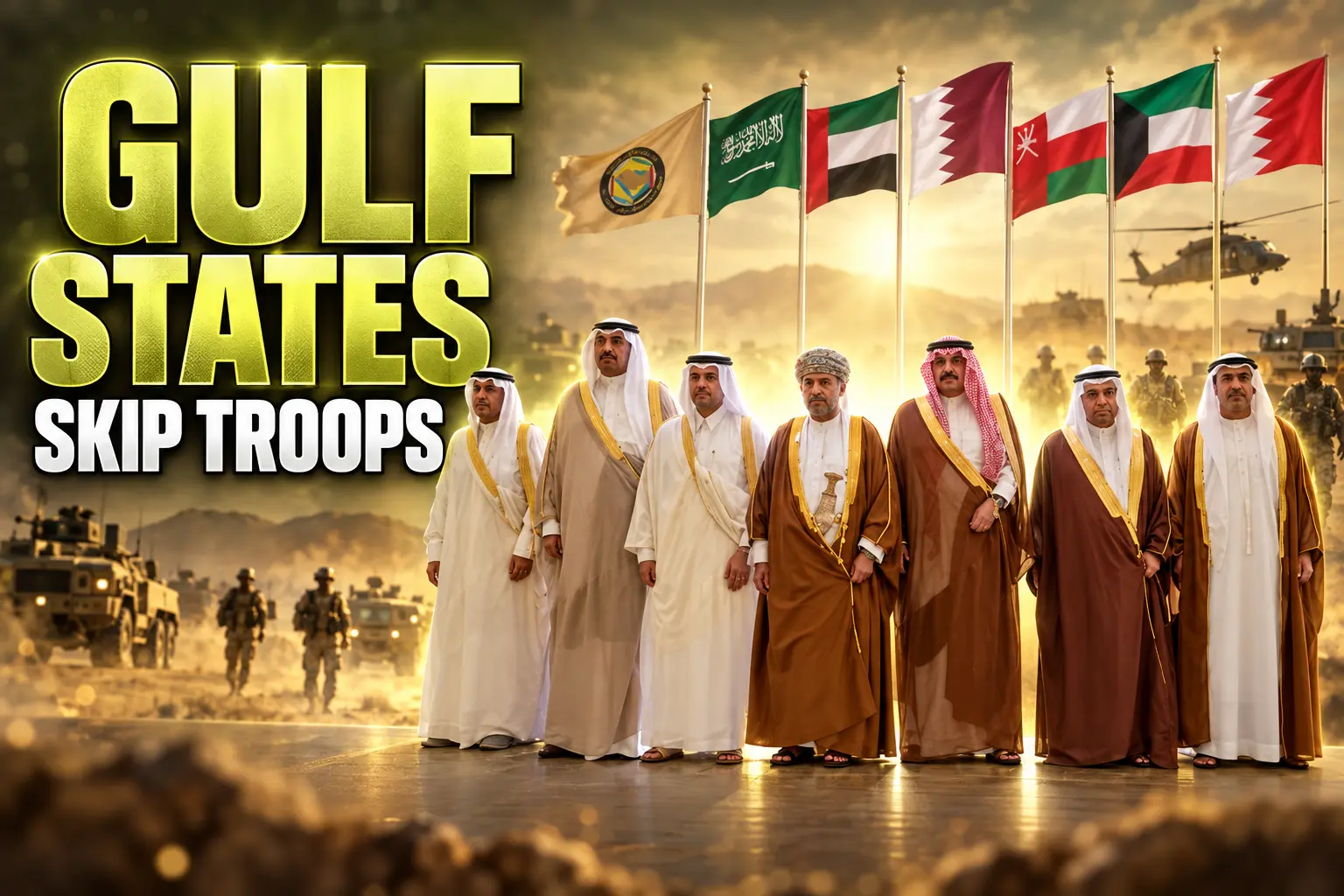
Six Gulf defence ministers met in Doha on September 18, 2025, and called Israel’s strike on Qatar an attack on every GCC state. They ordered intelligence sharing, a shared air picture, faster missile warning, updated plans, and drills. They did not move the Peninsula Shield Force.
The emergency Arab and Islamic summit three days earlier had already shown the limit of collective punishment. Leaders issued a 25-point communique, denounced the raid, and asked members to review ties with Israel. They set no sanctions list and no date for one. The second move, quieter and more durable, was a Gulf decision to treat Israeli air attack as a missile-defence problem, while Riyadh signed a separate pact with nuclear-armed Pakistan.
Defence Ministers Listed Five Tasks, Not Troops
Israel struck a Doha residence on September 9, 2025, while Hamas negotiators were reviewing a US ceasefire plan for Gaza. The raid killed six people, five Hamas members and a Qatari security officer. Qatari Emir Sheikh Tamim bin Hamad Al Thani opened the later summit by calling the bombing “blatant, treacherous, and cowardly.”
My country’s capital was subjected to a treacherous attack targeting a residence housing the families of Hamas leaders and their negotiating delegation.
Sheikh Tamim bin Hamad Al Thani, Emir of Qatar, Doha summit
On September 15, GCC leaders in Doha ordered the Joint Defence Council to meet at once, with the Supreme Military Committee first, and to tell the Unified Military Command to activate joint defence mechanisms. Qatar’s Deputy Prime Minister and Minister of State for Defence Affairs, Shaikh Saoud bin Abdulrahman bin Hassan Al Thani, chaired the September 18 session. Defence ministers or senior deputies from the United Arab Emirates, Bahrain, Saudi Arabia, Oman, and Kuwait sat with him. GCC Secretary-General Jasem Mohamed Albudaiwi attended.
The council’s statement, issued in Doha, said the attack on Qatar was an attack on all six members and that “the security of the GCC states is indivisible, in accordance with the provisions of the Joint Defence Agreement.” Then it listed work, not a deployment. The five measures the ministers approved were technical, time-bound, and aimed at air defence.
THE FIVE TASKS FROM DOHA
| Task | Who runs it | What it does |
|---|---|---|
| 1. Intelligence exchange | Unified Military Command | More sharing of threat data among the six |
| 2. Air-situation picture | National operations centres | The same air picture sent to every GCC centre |
| 3. Missile early warning | Gulf Joint Task Force | Faster work on a ballistic-missile warning net |
| 4. Defence plans | Unified Military Command and the Operation and Training Committee | Updated joint plans |
| 5. Drills | Air operation centres and air-defence forces | Joint exercises within three months, then a live air exercise |
That package is what “activate a joint defence mechanism” meant in writing. No clause sent Peninsula Shield units to Qatar. No clause named Israel as a target for a Gulf force. The six could agree to link radars. They could not agree to point the old joint army at Jerusalem.
A Mutual-Defence Clause Signed in Manama
The legal hook was not new. Gulf leaders signed the Joint Defence Agreement on December 31, 2000, at the summit in Manama. Francesco Salesio Schiavi, writing for the Stimson Center, notes that the Doha communique echoed Article II of that 2000 Joint Defense Agreement, the clause on mutual support if a member is attacked. Officials repeated that GCC security is indivisible. Citing the treaty against an Israeli strike was the shift. For two decades the same text had sat behind a force built for other wars.
WHEN THE GCC HAS SENT FORCES
- 1982: GCC defence ministers create the Peninsula Shield Force, later based near King Khalid Military City at Hafar al Batin in Saudi Arabia.
- 1991: About 3,000 Peninsula Shield troops join the campaign to free Kuwait after Iraq’s occupation. The force had been too small to stop the 1990 invasion.
- 2003: Some 10,000 troops and two ships deploy to Kuwait before the Iraq war, as a precaution. They do not fight inside Iraq.
- March 14, 2011: Saudi and UAE units enter Bahrain at Manama’s request during the uprising. Kuwait and Oman do not send troops.
- September 18, 2025: The Joint Defence Council, meeting after the Doha strike, orders intel links, missile warning, and drills. It does not order Peninsula Shield to move.
The 2011 Bahrain mission is the last time the shield was used in numbers, and it was an internal GCC crisis, not an attack by a state outside the club. Retired Kuwaiti officers and Gulf researchers have said for years that political splits block anything like an Arab NATO. Doha did not repair that. It put the 2000 clause on an Israeli raid and then spent the political capital on sensors.
The raid itself showed why ministers talked about warning nets rather than tanks. Schiavi, drawing on US and regional accounts, describes about 15 Israeli fighters firing 10 precision munitions from over the Red Sea. The jets did not enter Gulf airspace. Air-launched ballistic missiles flew very high, crossed Saudi territory, and approached Qatar from the northwest, a path that sits outside the envelope of defences built for lower shots. US Central Command officials said the Pentagon had no advance warning, so batteries at Al Udeid never came up in time.
Those same Qatari Patriot PAC-3 MSE batteries, with US warning, had already been tested. On June 23, 2025, Iran fired a large missile salvo at Al Udeid at the end of a 12-day war with Israel that the United States had joined. Almost all of those ballistic missiles were intercepted. September 9 was a different geometry. The gap the ministers voted to close was the picture of the sky, not a shortage of Gulf soldiers.
Why Pakistan Became the Faster Answer
Eight days after the Doha strike, Saudi Crown Prince Mohammed bin Salman and Pakistani Prime Minister Shehbaz Sharif signed a Strategic Mutual Defense Agreement at Al-Yamamah Palace in Riyadh. Pakistan’s army chief, Field Marshal Asim Munir, was there. The public text was shorter and harder than the GCC’s five tasks.
Any aggression against either country shall be considered an aggression against both.
Joint statement, Saudi Arabia and Pakistan, Riyadh, September 17, 2025
A senior Saudi official, asked whether that language put the kingdom under Pakistan’s nuclear umbrella, said only that it was a comprehensive defensive agreement that “encompasses all military means.” Pakistani Defence Minister Khawaja Muhammad Asif later told interviewers that nuclear weapons were “not on the radar” of the pact. The released text does not mention the bomb. The signal was still clear enough for every capital that heard it. Riyadh wanted a partner whose army is large, nuclear-armed, and not Washington.
Joshua T. White, in a Brookings analysis of the mutual defence pact signed in Riyadh, wrote that the ceremony went far beyond the usual security communique and that some officials on both sides hinted at extended nuclear deterrence even though the paper stayed vague. Gulf states had just watched a US partner hit another US partner. The American air base in Qatar did not stop the missiles. A pact with Islamabad was the hedge that did not need six monarchies to agree on rules of engagement.
On August 7, 2026, Saudi Arabia, Pakistan, and Turkey signed the Mecca Joint Defence Agreement, built on the September pact and described by its framers as open to more members. Qatar welcomed that line. Doha already runs a deep defence relationship with Ankara, and Giorgio Cafiero, CEO of Gulf State Analytics, argued on the strike’s anniversary that overlapping pacts let Qatar keep the United States close while leaning less on Washington as the sole guarantor. The GCC still held drills. The faster deterrent Riyadh reached for was a nuclear-armed army, not the barracks at Hafar al Batin.
Abu Dhabi Condemned Israel and Kept the Accords
The room in Doha included the two GCC states that have formal ties with Israel. UAE Minister of State for Defence Affairs Mohammed bin Mubarak bin Fadhel Al Mazrouei sat on the Joint Defence Council that called the strike an attack on all six. So did Bahrain’s minister, Lieutenant General Abdullah bin Hassan Al Nuaimi. Their presence is the part of the story the communique could not paper over.
UAE President Mohammed bin Zayed travelled to Doha the day after the raid, a rare personal visit, and Abu Dhabi said Gulf security was indivisible. That solidarity was real. It did not unwind the Abraham Accords. The UAE and Bahrain stayed in the 2020 deals. Israeli companies lost a Dubai air-show slot, and Abu Dhabi summoned Israel’s deputy head of mission. Embassies stayed open. A year on, the Accords were strained and still standing.
Qatar’s own US file is heavier. Doha has been a major non-NATO ally since 2022, and Al Udeid has hosted the forward headquarters of US Central Command for nearly two decades. The strike landed in a capital that had spent years making itself useful to Washington as a mediator and a host. Majed al-Ansari, spokesman for Qatar’s Foreign Ministry, put the political cost in one line: “Our region post-September 9 is not the same region as it was before.”
Simon Henderson, at the Washington Institute, noted at the time that Al Udeid’s joint command centre had even hosted at least one Israeli liaison officer while helping defend Israel against Iranian missiles. Gulf officials were left asking what US understandings were worth if they could not stop an Israeli shot into Doha. President Donald Trump later rebuked Prime Minister Benjamin Netanyahu in public and, on September 29, 2025, signed an executive order that gave Qatar a security guarantee stronger than those extended to the other GCC members. The order was reassurance. It was also an admission that the old umbrella had leaked.
Six Days of Air-Defence Drills in Saudi Arabia
The three-month drill clock in the September 18 statement ran to mid-December. The live air exercise the ministers promised arrived in January as Gulf Shield 2026. Kuwait’s armed forces said the six-day drill began on January 4, 2026, in Saudi Arabia, with air-defence units from all six GCC states and the Unified Military Command. Joint air maneuvers and field drills tested command links and how the six share an air picture. Saudi Arabia’s Ministry of Defense called it a working example of joint defence against current and future threats.
That is the follow-through the Doha tasks can show on a calendar. It is also the ceiling. Gulf Shield practiced the network. It did not practice a war with Israel. Albudaiwi has talked since with the United States about a Joint Gulf Missile Defence Shield, and Gulf officials have floated US participation in a large exercise in early 2027. Technical splits remain. Saudi Arabia, Qatar, and the UAE fly American Patriot PAC-3 and THAAD batteries. Doha also uses Norwegian NASAMS 3. Riyadh and Abu Dhabi have been buying South Korea’s Cheongung II. Russian Pantsir-S1 guns sit at the short range. Linking those systems is a software and trust problem, which is why the September list started with the air picture rather than a single Gulf command.
WHAT THE PLEDGE ACTUALLY BUILT
- Shared air picture: Ministers ordered the live air situation sent to every GCC operations centre, the first practical answer to a shot that crossed a neighbour’s sky.
- Missile warning task force: Work on a Gulf ballistic-missile early-warning net was told to speed up, not to start from zero.
- Gulf Shield 2026: A six-day air-defence drill in Saudi Arabia put all six states and the Unified Military Command on the same range.
- No shield deployment: Peninsula Shield stayed in Saudi Arabia. The 2000 clause was cited. The joint army was not used.
Schiavi flagged the holes the communique left: who commands a surge, who pays for high-value batteries, how rules of engagement get aligned, how airspace is deconflicted if another capital is hit. Those questions were still open when the January drill ended. They are the reason a six-state warning net can be signed in an afternoon and a six-state war cannot.
The File Closed on the Strike’s Anniversary
Qatar cut intelligence contact with Israel after the raid and said mediation was not valid in the moment. It also kept the door from slamming. Doha wanted an apology before talks restarted. Trump put Netanyahu on an Oval Office phone with Qatari Prime Minister and Foreign Minister Sheikh Mohammed bin Abdulrahman Al Thani. Netanyahu’s office later denied that a Qatari official had written the script, and said the words were the prime minister’s. The call happened. Mediators went back to work, including at Sharm el-Sheikh, on a Gaza ceasefire and hostage release that the September 9 meeting in Doha had been called to discuss.
On September 9, 2026, a Qatari Foreign Ministry spokesperson told Al-Araby Al-Jadeed that Doha had closed the legal case opened after the strike, in part because it was satisfied with Israel’s apology. The same anniversary week, Netanyahu talked up the bombing. Sheikh Mohammed, speaking later in September 2026, still called the raid an attack on a mediator and said Netanyahu had “crossed the line.” Closing a file is not the same as calling the shot acceptable. It is a state choosing the channel it still needs.
Cafiero’s anniversary judgment was that the raid changed how Qatar prices US protection and pushed Doha deeper into Gulf and Muslim defence talks, including the Mecca line with Turkey and Pakistan. Iranian fire at Qatar in 2026, after Washington joined Israel in a war of choice against Iran, only fed that doubt. The GCC’s September list did not make the six into a single military. It did make Israeli (and Iranian) missiles a standing item on the same air picture, and it sat beside a Saudi-Pakistani promise that an attack on one is an attack on both, written without waiting for Oman and Kuwait to agree.
The communique that looked empty on sanctions did what Gulf paper often does. It named a threat, promised unity, and left the hard tools optional. The tools that moved were the ones that do not require a shared enemy list: radars talking to each other, a winter drill in Saudi Arabia, and a palace signing in Riyadh that put Pakistan’s army, not Peninsula Shield, on the other end of the phone.
Frequently Asked Questions
What is the GCC Joint Defence Agreement?
Gulf leaders signed it on December 31, 2000, at the 21st GCC summit in Manama. The treaty created a Joint Defence Council and a high military committee and described member security as an “indivisible whole,” so that aggression against one is treated as aggression against all. The Doha meetings in September 2025 were the first time that clause was publicly tied to an Israeli strike on a member state.
Did Peninsula Shield deploy after the Doha strike?
No. The Joint Defence Council’s September 18, 2025, statement never named the force and never ordered troops to Qatar. Peninsula Shield’s last numbered missions were Kuwait in 1991 and 2003 and Bahrain in 2011, when Saudi and UAE units entered and Kuwait and Oman stayed out. Commanders have long said any intervention is supposed to include all six members, a bar the Bahrain mission already missed.
Did the Abraham Accords end after Israel struck Doha?
No. The United Arab Emirates and Bahrain, the two GCC members with formal ties to Israel, condemned the raid and still kept the 2020 Accords. The UAE blocked Israeli firms from a Dubai air show and summoned Israel’s deputy head of mission. Those were bilateral slaps, not a collective rupture, and they sat beside Mohammed bin Zayed’s solidarity visit to Doha the day after the strike.
What is the Mecca Joint Defence Agreement?
Saudi Arabia, Pakistan, and Turkey signed it on August 7, 2026, eleven months after the Saudi-Pakistan Strategic Mutual Defense Agreement of September 17, 2025. The Mecca text was built on that earlier “attack on one is an attack on both” clause and was described as open to more members. Qatar welcomed the arrangement as extra cover that does not replace its US relationship.

Christa Pike Survived the Execution Tennessee Would Not Pause

Musk’s Oligarch Charge Hits a Queue of Three

Circle Puts USDC and EURC Into SAP Pay Workflows

Ring’s First Smart Lock Skips Home Wi-Fi for Sidewalk

GTA 6 Puts Cash Back on the Story Path

Salah Captained Egypt to Their First World Cup Win

Aramco Crash Kills 14 Two Days After Oil Restart

Apple Labor Day Deals Hide June’s Memory Price Hike

Zelda’s 40th Switch 2 Ships Without a Zelda Game

Palworld 1.0.4 Adds Palpedia Search After the 1.0 Launch
-
 NEWS5 months ago
Salah Captained Egypt to Their First World Cup Win
-
 BUSINESS4 months ago
Aramco Crash Kills 14 Two Days After Oil Restart
-
 NEWS2 months ago
Apple Labor Day Deals Hide June’s Memory Price Hike
-
 GAMING1 month ago
Zelda’s 40th Switch 2 Ships Without a Zelda Game
-
 GAMING1 month ago
Palworld 1.0.4 Adds Palpedia Search After the 1.0 Launch
-

 NEWS3 months ago
El Niño Puts Israel’s Needed Winter Rain on a Flood Clock
-

 ENTERTAINMENT1 month ago
King Charles Letter Keeps Harry and Meghan as Private Citizens
-

 ENTERTAINMENT4 months ago
A Thousand and One Drops Off Riyadh’s October Calendar