
GAMING
Ninja Theory Staff Face Redundancy After Two Xbox Sales Collapse
Two Xbox deals to sell Ninja Theory collapsed, and staff are now posting that they may not finish Senua.

Ninja Theory staff have begun posting that their jobs are at risk after two Xbox sale deals collapsed in September. The Cambridge studio still has no new owner, and the people hired to finish Senua are updating their CVs while a consultation on closure runs.
Xbox spent the summer trying to transfer the Hellblade team with funding attached. That transfer is what is now coming apart, and it is taking the studio’s working roster with it.
Developers Are Already Writing LinkedIn Farewells
Journalist Chris Kerr flagged a run of LinkedIn notes from Ninja Theory staff in early October. The posts do not read like a finished shutdown notice. They read like people who have been told their roles are in scope, and who do not expect to ship the game on their desks.
Principal sound designer Daniele Galante wrote that after almost nine years, “my position is now at risk.” Gameplay programmer Katrin Mair said she moved to the UK for the studio, and that it was where she started in games. Principal programmer Stefano Prosperi, there 13 years, wrote that Ninja Theory was facing closure “and all of us facing redundancy.”
STAFF WHO HAVE POSTED
- Daniele Galante: Principal sound designer, almost nine years, says the role is at risk.
- Katrin Mair: Gameplay programmer, says the team will not finish the work in front of them.
- Stefano Prosperi: Principal programmer, 13 years, says the whole studio faces redundancy.
- Loong-Wei Ding: Technical director, writes that teams “are being made redundant.”
- Alessio Mellina: Technical sound designer, among those who say the job is ending or at risk.
Those five sit inside a wider set. At least 13 full-time staff posted between September 28 and October 5 that they were at risk or leaving, across programming, audio, performance capture, art, and marketing. Some of the notes talk as if “all” of the studio is in scope. Xbox has not said how many roles that is, and it did not answer questions on the number.
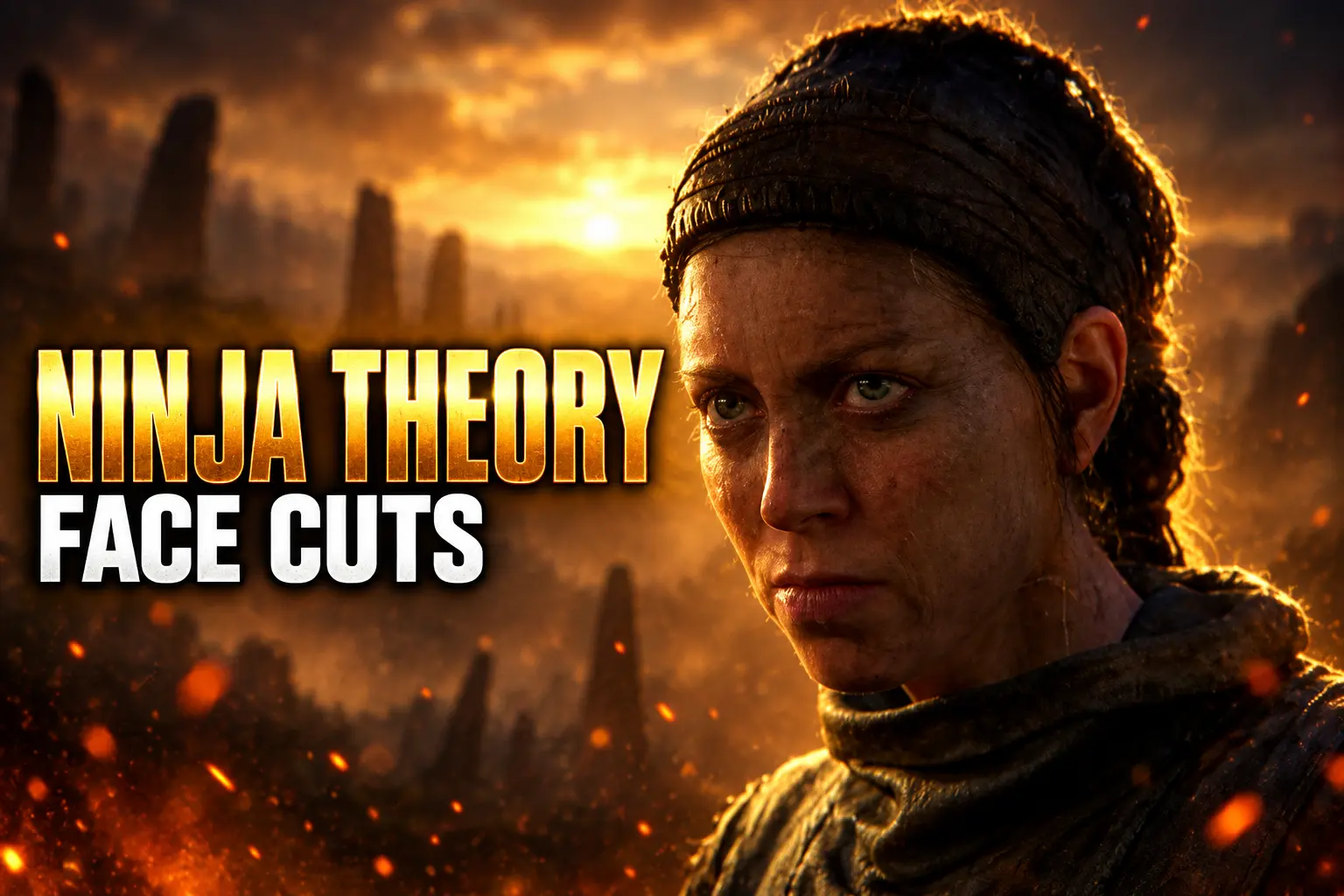
Two Sale Agreements Fell Through in September
Xbox chief content officer Matt Booty told staff on September 22 that the company was cutting 268 roles at Halo Studios, other first-party teams, and the XGS management layer. That round sits apart from Ninja Theory. In the same note, under studio sales, he wrote that Compulsion Games and Double Fine had already gone back to their managers in August with their IP, catalogs, and runway money, and that Undead Labs had completed a similar move, with State of Decay 3 still due day one on Game Pass under a new publisher.
Then the line that dropped Ninja Theory into consultation: “Unfortunately, two separate agreements fell through.” Booty said Xbox would “begin consultation with employees on a proposed closure while continuing to explore other paths forward.” He also told the company it would meet at an October 6 town hall.
That wording matters. A proposed closure is not a padlock on the door. It is the legal step UK employers take when they want to dismiss a large group and still have to talk, on the clock, about whether anything else is possible. Booty left a buyer-shaped gap in the sentence. Staff posts from the last week of September onward treat that gap as already empty.
FROM SHOWCASE TO CONSULTATION
- June 7, 2026: Ninja Theory reveals Senua at the Xbox Games Showcase, aimed at 2027 on Xbox, PC, and PlayStation 5.
- July 6, 2026: Xbox CEO Asha Sharma announces about 3,200 role cuts through FY27, about 1,600 of them that day, and says Ninja Theory has terms to join a new owner with money to finish Senua.
- August 2026: Compulsion Games and Double Fine return to independent management with their IP and runway funding.
- September 22, 2026: Booty says both Ninja Theory deals are dead and opens consultation on a proposed closure. Undead Labs has by then completed its move.
- September 28, 2026: Full-time staff begin posting that they are at risk or leaving.
In July, a lot of players read Sharma’s memo as a rescue. The studio would leave Xbox, Senua would still be paid for, and the Hellblade team would keep working. That is the version that did not survive contact with two unnamed buyers.
Why Xbox Put Senua on Stage in June
Microsoft had already planned to split with Ninja Theory when Senua premiered on June 7, 2026. Stephen Totilo wrote that the trailer was meant to draw investor interest. On July 6, Xbox CEO Asha Sharma told staff the studio had entered terms to join new ownership, with funding to complete and grow Senua.
The game Xbox wheeled out for that pitch was not a small follow-up. Studio head Dom Matthews told Xbox Wire it was “an out-and-out action-adventure game,” not Hellblade III, built as a new style of project with a map about twice the size of Hellblade II. He had pulled the whole company onto it, including by stopping work on the horror title Project Mara, so that “all 85 creatives” were on one game for the first time in more than 12 years, since DmC: Devil May Cry.
This is an out-and-out action-adventure game. It’s a bold new step for Senua, as a character, into the action-adventure space.
Dom Matthews, Ninja Theory studio head, Xbox Wire interview, June 7, 2026
Matthews also described the thing on screen in blunt designer language: Senua picking up a flaming torch and “smashing them around the face with it,” fighting groups instead of one foe at a time, and moving through a single interconnected map set in her vision of purgatory. Hellblade II had shipped in May 2024 after a move to Unreal 5 and a new building. Senua was the project that was supposed to use all of that kit at once.
Sharma’s July memo said none of Xbox’s publicly announced first-party games were being cancelled in that round of cuts. Senua had been announced four weeks earlier. The funding she pointed to was not an Xbox production budget. It was the sale. When both agreements died, the promise that the game would be finished lost the vehicle that was meant to carry it, even though no one has posted a cancellation notice.
Double Fine, Compulsion, and Undead Labs Got Out
Ninja Theory was not the only Xbox studio put on the pavement in 2026. It is the one that did not land. Sharma grouped four teams as leaving Xbox: Compulsion Games and Double Fine would go back to their own managers, while Ninja Theory and Undead Labs had terms with new owners. Arkane, in France, went into a separate Works Council process that Booty later said would run through the end of 2026.
By late September the score was three transfers and one collapse. Double Fine and Compulsion left in August with their catalogs and money for the next games. Undead Labs then completed a similar hand-off, and State of Decay 3 kept a day-one Game Pass slot with a new publisher. Ninja Theory had been sold as the same kind of deal, twice, and neither version closed.
WHERE THE FOUR STUDIOS LANDED
| Studio | July 6 plan | By late September |
|---|---|---|
| Double Fine | Return to management with IP, catalog, runway | Independent, deal complete in August |
| Compulsion Games | Return to management with IP, catalog, runway | Independent, deal complete in August |
| Undead Labs | New owner, funding to grow State of Decay 3 | Transition complete; State of Decay 3 still day one on Game Pass |
| Ninja Theory | New owner, funding to complete and grow Senua | Both agreements dead; consultation on a proposed closure |
The path that actually worked for three of those teams was a clean break with the games still attached. Ninja Theory was put on a buyer hunt instead, with a showcase trailer as the brochure. People arguing about the news keep coming back to that fork: Xbox could have done for Cambridge what it did for Double Fine. It tried to sell the studio instead, and the people inside are now the ones paying for the gap between those two methods.
Sharma had already told staff why Xbox wanted fewer of these teams on the books. In a typical year, she wrote, the division “lost 64 cents for every dollar we invested,” and it was “neither possible nor desirable to own every great independent studio.” Hellblade’s maker was sorted into the second pile. The buyer never arrived.
The Consultation Clock Under UK Law
Booty’s September 22 note is the start of a statutory process, not the last day of it. UK rules on collective redundancies set a floor: if 20 to 99 people are in scope, consultation has to begin at least 30 days before dismissals take effect. If the number is 100 or more, that floor rises to 45 days. Notices go out after the talking, not instead of it.
Count back from those floors and the earliest legal dates sit in late October or early November, depending on how many people Xbox puts in the pool. Consultation that began on September 22 cannot produce dismissals before October 22 if 20 to 99 staff are involved, or November 6 if the number is 100 or more. Company accounts for the year to 30 June 2025 list a headcount of 106 people, made up of two directors and 104 other employees. Matthews, speaking in June 2026, put the working creative roster at 85. Those are different counts from different dates, and Xbox has not said which number is in scope now.
If the pool is most of the company, the 45-day clock is the one that applies. If it is a smaller slice, dismissals could come sooner. Either way, LinkedIn farewells in the first two weeks of a consultation are not the same thing as papers served. They are what a sale process looks like after the buyers have gone and the remaining asset, the team, has started to walk.
WHAT WE KNOW
- The deals: Booty said two separate Ninja Theory agreements fell through, and consultation on a proposed closure began on September 22.
- The posts: At least 13 full-time staff wrote from September 28 that they were at risk or leaving.
- The July promise: Sharma said the studio had terms with a new owner and funding to complete Senua, and that announced first-party games were not being cancelled in that round.
WHAT IS UNCONFIRMED
- Dismissals in effect: Staff language varies between “at risk” and “being made redundant”; Xbox has not confirmed that notices have taken effect.
- The buyers: Neither agreement has been named in the public memos.
- Senua’s status: No official cancellation has been posted, and no new owner has been named to finish it.
A third buyer would now be purchasing a studio that is already telling the market its people are available. That is the second hit from the failed sales. The first was the missing cheque. The second is a roster that is advertising itself in public while Xbox still says other paths are open.
Katrin Mair Will Not Finish the Game
The sharpest line in the LinkedIn run is also the one that tells you what consultation is doing to Senua in practice. Mair did not write about packages or notice periods. She wrote about the work.
It’s incredibly sad knowing that we won’t get to finish what we were working on. So much care, talent and effort went into it, and I really wish we’d had the chance to see what it could have become.
Katrin Mair, gameplay programmer, LinkedIn, October 2026
Ding’s note is blunter still: after years of making games together, “our studio is now facing closure and our teams are being made redundant.” Prosperi called it sadness, uncertainty, and disappointment, then said he still felt fortunate to have spent 13 years there. Galante talked about the first Hellblade scene they worked on, then about being ready to go.
Taken together, the posts describe a studio that is already behaving as if the proposed closure is the live plan. Booty’s “other paths” clause is still on the Xbox Wire page. It is not what the people inside are telling the rest of the industry.
Senua Was the First Whole-Studio Game in 12 Years
Matthews had framed Senua as the project that finally used the whole company. Hellblade: Senua’s Sacrifice was built by a group of about 25. The sequel ate a tech change and a building move. Senua was meant to be the payoff: one map, more combat depth, puzzles and traversal split with the fights, and every creative on staff pointed at the same heroine in purgatory.
That is the product Xbox put on stage in June to help a sale. It is also the product that no longer has a named owner, a named budget, or, if the LinkedIn notes hold, a named team that expects to ship it in 2027. Sharma’s July letter said the money to finish Senua would come with new ownership. Booty’s September letter said that ownership did not exist. The people who would have spent the money are now describing their next jobs.
Xbox can still find another path. The consultation exists so that, on paper, it must look. The staff who built Hellblade are not waiting on that sentence. They are posting that the chapter is over, and that the game they pulled the whole studio onto will not be the one they finish.

Ninja Theory Staff Face Redundancy After Two Xbox Sales Collapse

Amazon Sells the MacBook Air at Its Pre-Hike Price

U.S. Slows Jet Parts to Squeeze China’s Flying Fleets

PEGI Pulled the GTA 6 Age Rating After Cocaine Details

Northwestern’s Smaller Ryan Field Gave Penn State Nowhere to Hide

Aramco Crash Kills 14 Two Days After Oil Restart

Salah Captained Egypt to Their First World Cup Win

Apple Labor Day Deals Hide June’s Memory Price Hike

Palworld 1.0.4 Adds Palpedia Search After the 1.0 Launch

Zelda’s 40th Switch 2 Ships Without a Zelda Game
-
 BUSINESS3 months ago
Aramco Crash Kills 14 Two Days After Oil Restart
-
 NEWS4 months ago
Salah Captained Egypt to Their First World Cup Win
-
 NEWS1 month ago
Apple Labor Day Deals Hide June’s Memory Price Hike
-
 GAMING4 weeks ago
Palworld 1.0.4 Adds Palpedia Search After the 1.0 Launch
-
 GAMING4 weeks ago
Zelda’s 40th Switch 2 Ships Without a Zelda Game
-

 NEWS3 months ago
El Niño Puts Israel’s Needed Winter Rain on a Flood Clock
-

 ENTERTAINMENT3 months ago
A Thousand and One Drops Off Riyadh’s October Calendar
-

 BUSINESS8 months ago
Egypt Bets EGP 638 Billion Can Open Sinai to Investors