
NEWS
The $699 iPad Mini Parks Its Best Chip at $999
Apple’s OLED iPad mini starts at $699, but nano-texture glass and the six-core A20 Pro sit at $899 and $999.

Apple’s iPad mini (A20 Pro) starts at $699, but the six-core chip is locked to the $999 512GB model. Nano-texture glass, the extra that tames OLED glare, begins at $899 on 256GB.
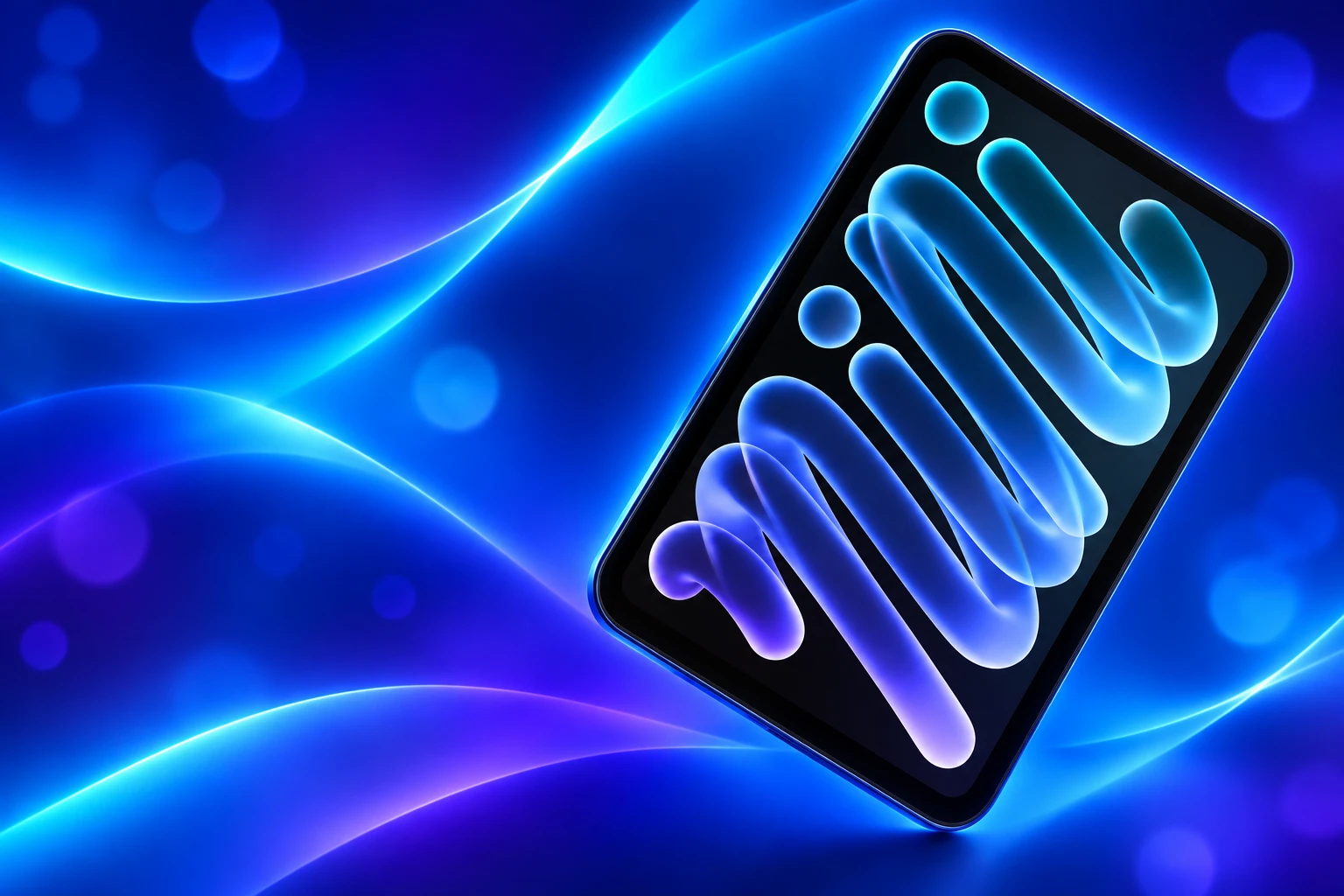
Apple called this the biggest update ever for iPad mini on October 26, 2026, and put it on sale November 6. The eighth-generation slab is 8.5 inches, 5.4 mm thick, and IP67 rated, with speakers that fire through the screen. The $699 door is real. It is also a different computer from the one in the $999 photos.
The $699 Model Is a Different Computer
Every iPad mini (A20 Pro) wears the same chip name. Apple’s spec sheet does not. Models with a 5-core CPU on 128GB and 256GB get two super cores, three efficiency cores, a 7-core GPU, and one 16-core Neural Engine. The 512GB model adds a fourth efficiency core and a Dual 16-core Neural Engine.
That split is easy to miss in a store listing. The 2024 mini did not do this. The six-core A17 Pro in the 2024 mini shipped on every storage size, with a 5-core GPU. The new 7-core GPU is the upgrade that lands on all three capacities. The extra CPU core and the second Neural Engine do not.
Apple’s speed claims use the word “up to” for a reason. It quotes up to 60 percent faster CPU work, up to 2.7x faster graphics, and up to 4.5x faster AI than the A17 Pro, plus more than double the memory bandwidth. The Dual 16-core Neural Engine, which Apple says doubles peak on-device AI compute, is listed only on 512GB.
THE A20 PRO BY STORAGE
| Storage | CPU | Neural Engine | Wi-Fi price | Nano-texture |
|---|---|---|---|---|
| 128GB | 5-core (2 super, 3 efficiency) | 16-core | $699 | Not offered |
| 256GB | 5-core (2 super, 3 efficiency) | 16-core | $799 | +$100 ($899) |
| 512GB | 6-core (2 super, 4 efficiency) | Dual 16-core | $999 | +$100 ($1,099) |
Cellular adds $150 on each row, so 128GB with 5G is $849 and 512GB with 5G is $1,149. The GPU stays 7-core across the board. If you want the extra efficiency core and the second Neural Engine, you are buying 512GB, not a software toggle.
Nano-Texture Glass Costs $100 and a Storage Step
OLED is on every iPad mini (A20 Pro). The matte glass that makes that panel easy to use under lights is not. Apple limits nano-texture display glass to 256GB and 512GB, then charges $100 for it. The cheapest glare-cut mini is therefore the 256GB Wi-Fi model at $899.
Apple says the finish scatters ambient light instead of bouncing it back, and that contrast and color hold. Peak HDR brightness is 1200 nits, more than double the 500-nit 2024 LCD, with 600 nits across the full screen, a 1-nit floor, and a 2,000,000:1 contrast ratio. Resolution is 2316 by 1512 at 326 ppi, the same density as before on a slightly larger 8.5-inch canvas, with bezels Apple lists as 24 percent thinner.
Add an Apple Pencil Pro at $129 and that 256GB nano Wi-Fi setup is $1,028. Take cellular as well and the same stack is $1,178. The 128GB model cannot take the glass at all. You do not add it later. You pick it while you pick storage, which means you also pick the 5-core chip unless you jump to 512GB.
The Pencil still glides rather than dragging like paper. Hover and barrel squeeze are on the Pro pencil; the $79 USB-C Pencil will cling to the side but will not charge there. On a 5.4 mm body, either stick looks fat next to the tablet.
Apple Closed Every Hole but USB-C
The thinness is not a rounding error. Depth is 0.21 inch (5.4 mm), which Apple calls 14 percent thinner than the 6.3 mm 2024 body. Wi-Fi units weigh 255 grams, 38 grams under the old 293-gram slab; cellular is 263 grams. Height stays 7.69 inches. Width shrinks a hair, to 5.22 inches. Finishes are Midnight and Starlight, two colors where the last mini had four.
Closing the case is how Apple got an IP67 rating, a first for any iPad, tested to 1 meter for 30 minutes. The USB-C port is the only opening. Speaker grilles are gone. Apple’s Acoustic Display uses the screen as a bass radiator and hides tweeters in the glass-to-aluminum seam.
Custom tweeters are now hidden between the glass and aluminum enclosure, and specially designed woofers are paired through the display. This delivers rich audio with clearer highs, punchier bass, and more loudness.
Apple, iPad mini overview
The same sealed box is the IP67 story. Hands-on listening finds more bass than the old landscape grilles, and speakerphone calls that no longer sound thin. The 12-megapixel Center Stage camera now sits on the landscape edge, so a FaceTime grid looks on-axis when the mini is sideways and offset when it is upright. The rear camera is a single 12-megapixel wide lens at ƒ/1.8 with 5x digital zoom, fine for documents, not a stand-in for a recent iPhone.
Battery capacity is 18.9 watt-hours. Apple rates up to 10 hours of Wi-Fi web or video, and up to 9 hours of web on cellular. Fast charge to 50 percent in around 30 minutes needs a 35W or higher USB-C adapter. In the box is a 20W brick and a 1-meter cable. Apple sells a 35W adapter from $39. The port is USB 3 up to 10Gb/s and can drive one external display at 4K and 60Hz.
What You Trade for 5.4 Millimeters
The 5.4 mm body is the product. Face ID, a 120Hz panel, a bigger battery, and an official keyboard case did not win that fight. Touch ID stays in the top button. The screen stays at 60Hz, a figure Apple’s public spec sheet does not even list, while iPad Pro keeps ProMotion to itself.
WHAT THE 5.4 MM BODY LEFT OUT
- Refresh rate: The OLED panel is 60Hz on every capacity, so motion and Pencil strokes lack the 120Hz path reserved for iPad Pro.
- Face ID: Unlock is Touch ID in the top button, with no room carved for a TrueDepth camera.
- The brick: Fast charge is advertised, then gated behind a 35W adapter Apple does not put in the box.
- Keyboard: Apple sells a $79 Smart Folio and no Magic Keyboard for this size, so a desk setup means Bluetooth keys and a mouse.
- Colors: Midnight and Starlight replace the four-color 2024 spread.
Sixty hertz at this price is the line a lot of buyers will not cross, and it is a fair reading of a $699 to $999 OLED that still cannot match a phone’s motion. The regular 11-inch-class iPad starting at $449 makes the inversion sharper: the smaller tablet costs more, then asks for storage upgrades to unlock glass and silicon. Apple could have left the mini a millimeter thicker and spent that volume on ProMotion or a 35W brick. It spent the volume on a sealed, 255-gram object instead.
Fifty Dollars Separates Mini and Air
When Apple put the OLED iPad mini on sale from $699, the 11-inch iPad Air still started at $749. That $50 gap is the lineup problem. The Air is heavier, at about a pound, with a larger LCD workspace, an M4 chip, and a Magic Keyboard path. It is not IP67, not OLED, and not 255 grams. The mini wins in a bag, on a tray table, and in one hand. The Air wins on a desk you will not fold away.
IPAD LINEUP STARTING PRICES
| Model | Wi-Fi start | Display |
|---|---|---|
| iPad (A16) | $449 | 11-inch-class LCD |
| iPad mini (A20 Pro) | $699 | 8.5-inch OLED, 60Hz |
| iPad Air 11-inch (M4) | $749 | 11-inch LCD |
| iPad Pro | $1,199 | OLED with 120Hz and Face ID |
The 13-inch Air starts at $949. iPhone Duo, Apple’s 7.6-inch foldable, starts at $1,999 and still runs iOS, with apps catching up to the inner screen. Side by side, the mini’s 8.5-inch iPadOS canvas is the larger board, and it takes Apple Pencil Pro today. It will not drop into a jeans pocket. For people who already carry a phone, the mini is the cheaper large screen. For people who wanted one device that is both, Duo is the $1,999 bet.
Budget shoppers still land on the $449 iPad. The mini has not been Apple’s cheap tablet for a while. It now sits next to the Pro as the portable extra, except the Pro’s 120Hz, Face ID, and tandem OLED start at $1,199. The mini’s pitch is the hand, not the spec sheet.
Hooked to a Monitor, the Mini Stops Feeling Small
iPadOS 27 is the other half of the A20 Pro story. Apple’s windowing system lets two or more apps sit in resizable frames, and the mini’s USB-C port can extend that layout onto a 4K 60Hz display. Pair a Bluetooth keyboard and mouse and the 255-gram OLED behaves like a small desktop, which is a new trick for this size. On the 8.5-inch panel alone, grabbing a window corner without tapping the app takes practice. On a monitor, the same hardware stops feeling cramped.
The chip is idle on mail and Safari. Load photo editors or Logic Pro and the little board keeps up, especially on the 512GB model that actually has the extra efficiency core and second Neural Engine. On-device tools that used to hitch, including heavier denoise in photo apps, now finish locally. Apple also points to Neural Accelerators in each GPU core for that AI jump. Longevity is the quieter pitch: a current A20 Pro is the part that will see years of iPadOS updates.
N1 adds Wi-Fi 7, Bluetooth 6, and Thread. Cellular models use the C2 modem, which Apple says can move data up to 50 percent faster than the last mini, and they are eSIM only. Siri AI rides on Apple Intelligence in English, with on-device work and Private Cloud Compute. That does not change the SKU math. The $699 Wi-Fi 128GB mini is OLED, IP67, and five CPU cores. The $999 512GB mini is the one with the full A20 Pro. The thin object is the same. The computer inside is not, and the glass that cuts glare still starts at $899.
Frequently Asked Questions
Does the 256GB iPad Mini Get the Six-Core A20 Pro?
No. Only the 512GB iPad mini (A20 Pro) gets the 6-core CPU and Dual 16-core Neural Engine, which is 32 Neural Engine cores in total. The extra CPU core is an efficiency core, not a second super core, and the 7-core GPU is identical on 128GB, 256GB, and 512GB. Apple’s “up to 60 percent” CPU claim is written against that 512GB setup.
Can You Add Nano-Texture Glass to the 128GB Model?
No. Nano-texture is a factory option on 256GB and 512GB only, at $100, so the iPad mini nano-texture glass 256GB price is $899 for Wi-Fi. Apple includes a polishing cloth only with that glass. You cannot order the finish on 128GB or add it after purchase.
Does the iPad Mini (A20 Pro) Support ProMotion?
No. The built-in OLED runs at 60Hz, and Apple’s spec pages never list a refresh rate for this model. iPad Pro remains the tablet with 120Hz. The 11-inch iPad Air is 60Hz as well, so ProMotion is still a Pro-line fence, not an OLED fence.
What Charger Ships With the iPad Mini (A20 Pro)?
A 20W USB-C power adapter and a 1-meter USB-C cable. Reaching 50 percent in around 30 minutes needs a 35W or higher adapter, sold separately from $39. Cellular models are rated for up to 9 hours of web use, against 10 hours on Wi-Fi, from the same 18.9 watt-hour battery.
Is Water Damage Covered on the IP67 iPad Mini?
No. The IP67 rating is a lab test under IEC 60529 at a maximum of 1 meter for up to 30 minutes. Apple says resistance can decline with wear, warns against charging a wet iPad, and does not cover liquid damage under warranty.
Does Apple Sell a Keyboard Case for the iPad Mini?
Apple does not make a Magic Keyboard for this size. It sells a $79 Smart Folio, and the tablet works with third-party cases plus any Bluetooth keyboard and mouse. USB-C carries DisplayPort, so that same port can drive one 4K 60Hz monitor without a separate video dongle if the cable and display speak USB-C.

Jennifer Lopez and Mahershala Ali Describe a Pipeline They Cannot Buy

Lightsail Scatter Turns to Drag Far Above Starshot

Tallulah Willis Deletes a Bruce Willis Photo She Called Intimate

S&P 500 Futures Rebound Into a Holiday-Shortened Week

GTA VI’s Record Launch Still Needs the Same Fragile Grid

Aramco Crash Kills 14 Two Days After Oil Restart

Salah Captained Egypt to Their First World Cup Win

Zelda’s 40th Switch 2 Ships Without a Zelda Game

Apple Labor Day Deals Hide June’s Memory Price Hike

El Niño Puts Israel’s Needed Winter Rain on a Flood Clock
-
 BUSINESS5 months ago
Aramco Crash Kills 14 Two Days After Oil Restart
-
 NEWS6 months ago
Salah Captained Egypt to Their First World Cup Win
-
 GAMING3 months ago
Zelda’s 40th Switch 2 Ships Without a Zelda Game
-
 NEWS3 months ago
Apple Labor Day Deals Hide June’s Memory Price Hike
-
 NEWS5 months ago
El Niño Puts Israel’s Needed Winter Rain on a Flood Clock
-

 GAMING3 months ago
Palworld 1.0.4 Adds Palpedia Search After the 1.0 Launch
-

 NEWS4 months ago
Saudi Visa Routes Split Nigerian Travelers Into Two Speeds
-

 BUSINESS9 months ago
BAE’s 60-Year Saudi Franchise Now Runs Through Taif