
BUSINESS
Egypt Closes the Half-Price American Diploma Homeschool Path
Egypt never licensed homeschooling at international schools. Inspectors found ghost seats sold as cheaper American Diplomas, then locked transfers and stamps.

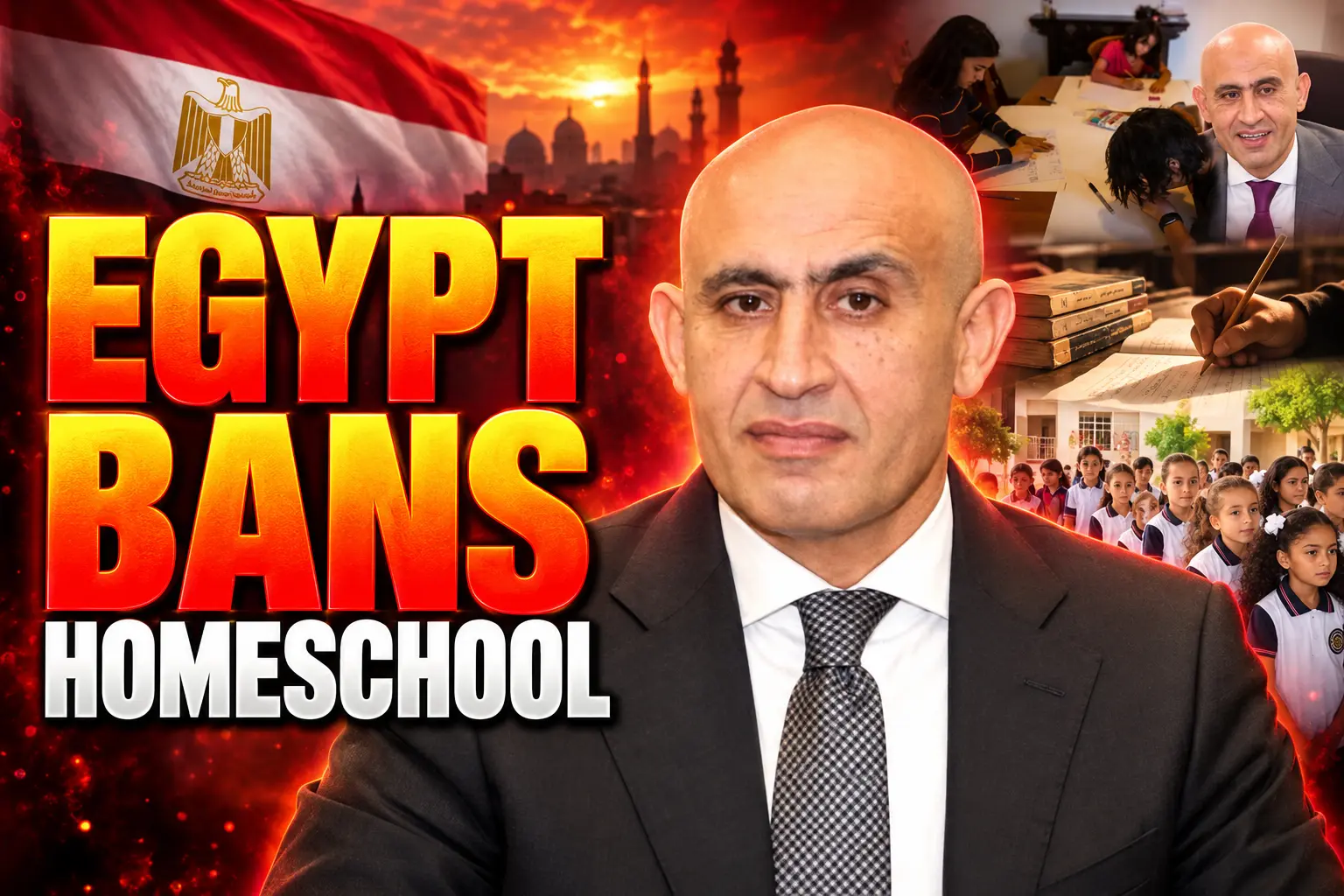
Egypt’s Education Ministry says no international school in the country is licensed for homeschooling, after inspectors found students listed on rolls who never attended class. The 12 July 2026 statement told parents to ignore unlicensed outfits and warned that any campus caught running the programmes faces legal action.
The notice used the English word families already knew from ads. The product underneath was a cheaper American Diploma, sold through brokers, with a licensed school’s name on the paper and no classroom attached.
Students Were on the Roll and Never in the Room
Ministry files from the June inspections describe a simple split. A child was entered on the books of a licensed international school. The child did not come to lessons, activities, or tests there. Teaching happened somewhere else, often an unlicensed center that coaches the American Diploma, and the school still issued results as if the year had been spent on campus, while collecting fees outside the rules.
HOW THE SEAT WAS SOLD
- The roll: Brokers placed the student on a licensed international school’s register so the name looked official.
- The chair: That student did not attend class, sports, or assessments at the school that held the file.
- The center: Lessons ran at private, unlicensed American Diploma shops or other rooms with no ministry permit.
- The stamp: The school printed grades as if the child had studied there, and took tuition the rules did not allow.
Ain Shams University professor Tamer Shawky called the setup a parallel model run by middlemen, built so families could hold an accredited foreign diploma without daily attendance. He said rising fees at licensed campuses, set against much cheaper academy rates, fed the growth. There is still no official count of how many students sat in that gap, because the ministry logged them as ordinary enrollees.
Egyptian children already carry a duty to be in school. Under article 15 of Education Law No. 139 of 1981, parents must see basic education through for the years the state requires, and governors enforce that locally. A name on a roll with an empty chair does not meet that duty, even if a foreign diploma comes back at the end.
Inspectors Hit 32 Schools in Seven Governorates
On 19 June 2026 the ministry’s private and international education arm moved against 32 international schools in seven governorates. The file mixed several breaches: campuses running without licenses, classes over the legal headcount, American Diploma paperwork, and students taken in under the homeschooling label. Homeschooling, ministry sources said, was the breach most of those schools had in common.
WHERE THE 32 SCHOOLS SAT
| Governorate | Schools flagged | Education offices named |
|---|---|---|
| Giza | 19 | North Giza, Kerdasa, Abu al-Numrus, Hawamdeya, Haram, Omraneya, Ausim, October |
| Cairo | 4 | Salam, New Cairo, Basateen, Badr |
| Menoufia | 2 | Sadat, Shebin al-Kom |
| Sohag | 2 | Akhmim, Sohag |
| Alexandria | 2 | East Alexandria |
| Red Sea | 2 | Hurghada |
| Assiut | 1 | Fath |
Minister Mohamed Abdel Latif formed a higher committee from private education, legal affairs, follow-up, and governance to keep inspecting. Mohamed Ezzat, who runs the General Administration for Private and International Education, was already tightening the American Diploma file, including a rule that only the ministry now accredits that certificate inside Egypt, with fees in pounds rather than dollars.
The 12 July communique then put the legal line in public. Homeschooling, it said, violates the law, and no international school has a license to offer it. Schools that apply it, promote it, or dodge the rules face prosecution. The stated aim was to protect students’ rights and keep the school year intact.
What Families Bought for 60,000 Pounds
Cost, not pedagogy, made the market. An international school official put academy fees at about EGP 60,000 a year, against more than EGP 100,000 at the schools whose names went on the certificates. Families got a foreign diploma path at a discount. They also got a weaker claim that the child had done the same work as classmates who sat in the building every day.
That matters because both groups apply to the same Egyptian universities. Regular teachers and parents had already argued that a home track would spare some students the attendance and exam load while others still carried it. The ministry’s June file did not describe a parent teaching at the kitchen table. It described a paid skip of the campus, wrapped in a school brand.
Saber Omran, chairman of Al Omran Language Schools, said students who skipped regular attendance still received grades tied to coursework and attendance, which undercut the credibility of Egypt’s international diploma. Licensed operators had watched unlicensed academies undercut them on price while using their registers as the respectable front.
Holders of foreign certificates still reach public universities through the Supreme Council of Universities, and the British Council publishes equivalency rules for foreign certificates that sit beside each faculty’s own subject cuts. A paper that looks like a full American Diploma is the ticket into that queue. If the year behind it was a center desk and a borrowed roll number, the queue is the injury the ministry says it is trying to stop.
For the American Diploma itself, ministry rules now split the final mark as 40 percent GPA, 40 percent American final exams, and 20 percent for Arabic and history. A student who never sat in the licensed school still needed that school’s GPA line. That is the piece the ghost seat was buying.
Egyptian Law Left No Homeschooling License
The July text did not invent a new crime so much as close an English-language loophole. Egyptian law has no homeschooling statute for a foreign curriculum. The 2014 Constitution’s article 19 says education is obligatory through secondary school or its equivalent, and that the state oversees public and private schools so they follow its education policy.
Law No. 169 of 2025, published in the Official Gazette on 13 August 2025, then made compulsory education now lasts 12 years: six of primary, three of preparatory, and three of general secondary, technical secondary, or the new Egyptian Baccalaureate. Article 6 of that law names Arabic, religious education, and national history as core subjects, with their weight set by the minister. There is no homeschooling exemption in that text.
MANAZEL, THE LEGAL HOME TRACK
- What it is: Manazel (منازل) lets some students study the national Arabic curriculum at home and sit official exams, up to Thanaweya Amma.
- Who sets it: The Ministry of Education writes the eligibility rules, including age, and local education offices apply them.
- What it is not: It is not an American Diploma, a British programme, or a seat on an international school’s roll.
A foreign online school, even a Cognia-accredited one, does not meet the enrolment duty for an Egyptian child living in Egypt, because that provider is not registered with the ministry. Families who want a British or American curriculum inside the country are pointed at licensed international schools, where Egyptian students also take the core national subjects. The ghost-seat product tried to borrow the license without borrowing the timetable.
Grade 12 Transfers Stop in 2026/27
Two days after the public statement, Abdel Latif sat down with owners and representatives at the Foundation of International Schools in Egypt. He repeated that homeschooling is illegal, that the ministry has issued no decision or license for it, and that students must show actual attendance as a basic rule. He also asked the campuses to help warn parents off outfits that claim a homeschooling track exists.
Karim Mostafa, chief executive of Eduhive, said after that meeting that the minister told the group the practice is barred under any circumstances and that international schools agreed to comply. Field visits were part of the package. A committee, people in the sector said, already had a list of schools that broke enrolment rules, with license loss on the table for repeat cases.
The same 14 July session locked the late-entry door that made a last-minute foreign diploma so useful.
THE SHUTDOWN CALENDAR
- 19 June 2026: Disciplinary steps hit 32 international schools in seven governorates, including ghost-roll homeschooling.
- 12 July 2026: The ministry states that homeschooling is illegal and that no international school is licensed for it.
- 14 July 2026: Abdel Latif tells international-school owners that attendance is required and that Grade 12 transfers into those schools stop in 2026/27.
- 6 September 2026: International schools open the new academic year, the first term in which the transfer bar is live.
- 11-12 September 2026: The minister says no homeschooling school is licensed, that the offices taking last-year American Diploma students have been stopped, and that violators go to the public prosecutor.
From 2026/27, third-year secondary students cannot transfer from public or private schools into international programmes. The same year is the last in which second-year secondary transfers are accepted. From 2027/28, only students entering first secondary can move onto that track. The ministry’s case is that an international pathway is a three-year sequence, and a jump in the final year breaks it for everyone competing on the same university list.
Abdel Latif also said parents of American Diploma students had previously paid around USD 10 million in dollar-denominated accreditation fees. Under the new system the ministry accredits the certificate, parents stop paying a separate foreign-currency stamp, and that ministry stamp is enough for Egyptian university entry. Dollar collection channels that moved fees abroad were ordered closed. The homeschooling fight and the dollar fight are one project: keep both the body and the paper inside a licensed Egyptian school.
Licensed Campuses Want Those Fees Back
Badawy Allam, chairman of the Private School Owners Association, told the sector the academies hurt investment in licensed schools, which carry higher building and running costs and face strict rules from the General Authority for Educational Buildings. Ending the practice, he said, should send demand back to campuses that actually built the classrooms.
Some schools accepted these academy-registered students for the extra revenue, even though those students weren’t getting a comparable education.
Badawy Allam, chairman, Private School Owners Association
That sentence cuts both ways. Licensed schools are the injured party in Allam’s telling, and some of them took the ghost names for the extra cash. The June map is a picture of that bargain: Giza alone accounted for 19 of the 32 files. If those names now have to match a chair, the academies lose a product, the cooperating schools lose a side income, and the remaining licensed seats become the only legal way to buy an American Diploma in Egypt.
Families who already paid the EGP 60,000 rate sit in the worst spot. Their children were logged as regular students. If a school drops them to stay inside its licensed headcount, they need a legal place in a hurry, in a year when Grade 12 transfers into international programmes are closed. If the school keeps them, it has to produce attendance. Either way the discount is gone.
The Minister Took Homeschool Offices to Prosecutors
International schools opened on 6 September 2026, ahead of government and private campuses. Abdel Latif did not treat the July statement as finished business. In mid-September he told editors and local education chiefs that homeschooling operations had been ended, that inspection committees would check enrolment against each school’s licensed capacity, and that any entity found running such a school would be referred to the public prosecutor.
He was more specific about the shops. Offices in Cairo and Giza, he said, had been taking parents who wanted the last year of the American system through homeschooling. The ministry stopped those offices. Building a school or firm under a homeschooling name without a license, he said, is a violation. On 12 September the Cabinet’s information centre posted him saying Egypt does not have a single license for homeschooling schools.
وزير التعليم: لا يوجد ترخيص واحد في مصر لمدارس "هوم سكولينج"#تعليم #هوم_سكولينج #مدارس pic.twitter.com/71tieUW0X6
— مركز المعلومات ودعم اتخاذ القرار (@EgyptCabinet) September 12, 2026
The public argument around the July graphic was thin and split. Some replies treated the statement as proof that private education had been left unwatched for years. Others asked why the ministry was talking instead of walking the corridors. One line insisted no international school in Egypt actually ran homeschooling. The June file of 32 schools, and the September video filmed after term had started, are the ministry’s answer to that last claim. A press release is cheap. The test is whether the names on the roll match the chairs after opening day.
WHAT WE KNOW
- The license: The ministry says it has never licensed homeschooling at any international school, and Egyptian law has no foreign-curriculum homeschooling route.
- The June file: Thirty-two schools in seven governorates were hit on 19 June 2026, with ghost-roll homeschooling among the breaches.
- The 2026/27 locks: Grade 12 transfers into international programmes are barred, and ministry accreditation replaces the old dollar stamp for the American Diploma.
WHAT IS UNCONFIRMED
- The headcount: No official figure exists for how many students were on ghost seats, because they were filed as ordinary enrollees.
- The names: The ministry has not published a public list of the 32 schools or of offices referred to prosecutors.
- The diplomas already issued: It is not clear which past certificates, if any, will be reviewed.
Inspection committees are now supposed to match each campus’s headcount to its license. Repeat enrolment breaches can cost that license. For a child whose American Diploma year was a center desk and a borrowed school name, the remaining path is a licensed classroom, the national manazel track, or a fight with a prosecutor over an office that sold the seat in the first place.

Ninja Theory Staff Face Redundancy After Two Xbox Sales Collapse

Amazon Sells the MacBook Air at Its Pre-Hike Price

U.S. Slows Jet Parts to Squeeze China’s Flying Fleets

PEGI Pulled the GTA 6 Age Rating After Cocaine Details

Northwestern’s Smaller Ryan Field Gave Penn State Nowhere to Hide

Aramco Crash Kills 14 Two Days After Oil Restart

Salah Captained Egypt to Their First World Cup Win

Apple Labor Day Deals Hide June’s Memory Price Hike

Palworld 1.0.4 Adds Palpedia Search After the 1.0 Launch

Zelda’s 40th Switch 2 Ships Without a Zelda Game
-
 BUSINESS3 months ago
Aramco Crash Kills 14 Two Days After Oil Restart
-
 NEWS4 months ago
Salah Captained Egypt to Their First World Cup Win
-
 NEWS1 month ago
Apple Labor Day Deals Hide June’s Memory Price Hike
-
 GAMING4 weeks ago
Palworld 1.0.4 Adds Palpedia Search After the 1.0 Launch
-
 GAMING4 weeks ago
Zelda’s 40th Switch 2 Ships Without a Zelda Game
-

 NEWS3 months ago
El Niño Puts Israel’s Needed Winter Rain on a Flood Clock
-

 BUSINESS8 months ago
Egypt Bets EGP 638 Billion Can Open Sinai to Investors
-

 ENTERTAINMENT4 weeks ago
King Charles Letter Keeps Harry and Meghan as Private Citizens