
ENTERTAINMENT
Ali G Returns, and So Does the 2000 Racism Fight
Sacha Baron Cohen’s Ali G: Who Iz I? opens Friday for one weekend, reviving a racism fight that started in 2000.

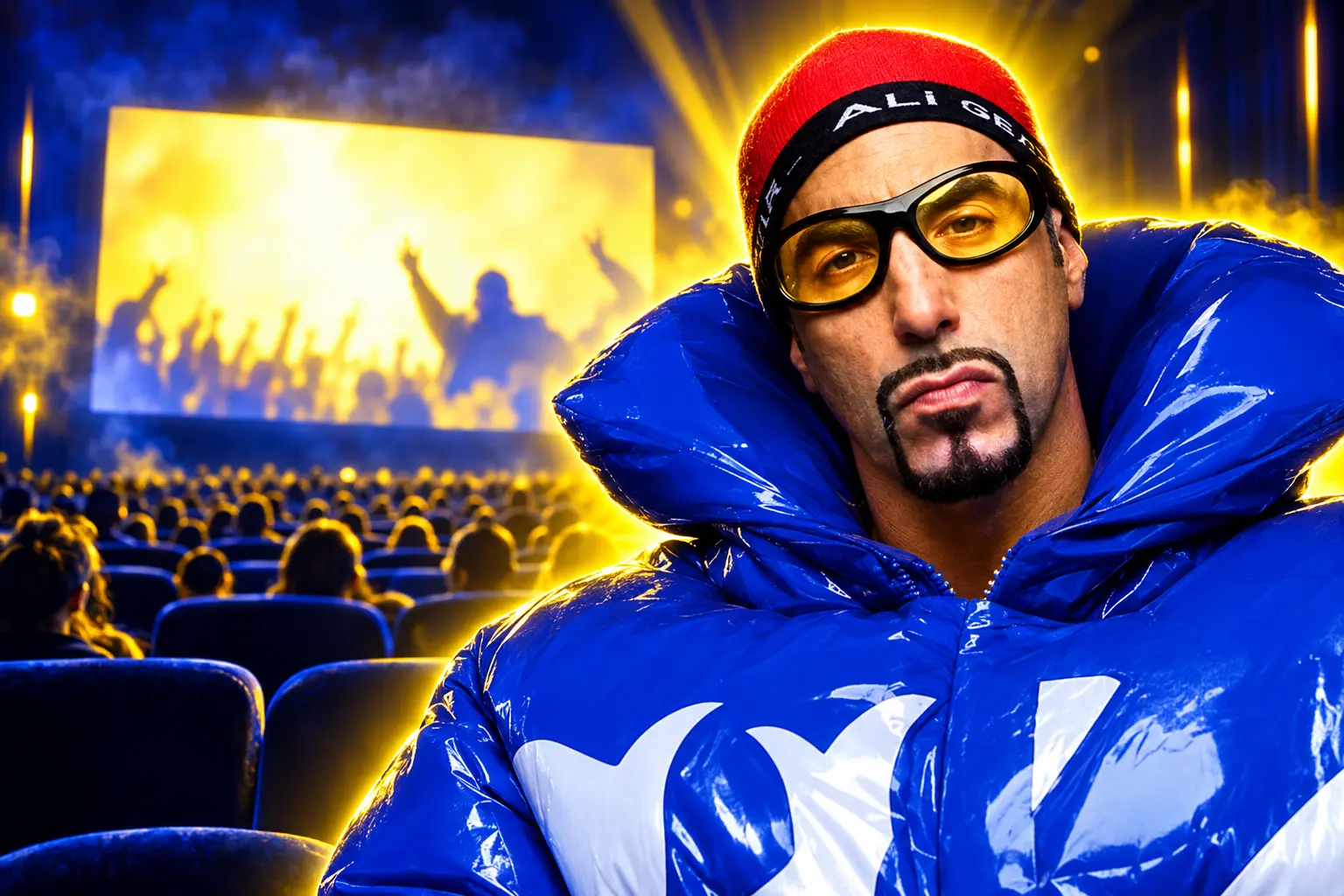
Sacha Baron Cohen’s Ali G: Who Iz I? opens in U.S. theaters on Friday, October 23, for one weekend only. Amazon MGM Studios is selling the 89-minute comedy as a three-night booking, then pulling it. Cohen, directing a feature for the first time, spent October 20 writing that the old character is meant to look wrong.
That is the same case Channel 4 made in January 2000, when black British comics first called Ali G racist. The 2026 boycott emails quote those years. The cinema window is the part of the story that did not exist then.
One Weekend Only, Says Amazon MGM
Amazon MGM Studios posted that the film is in theaters October 23 for one weekend only, with tickets on sale for the weekend. The studio had unveiled the title on July 22 as a theatrical date. By October 9 the ads had shrunk the promise to a single weekend.
Cohen wrote, produced and directed the film for Four by Two Films, with Amazon MGM distributing in the United States. British comic Morgana Robinson plays Julie, Ali G’s girlfriend, a role Kellie Bright had in 2002. The movie is rated R and runs 89 minutes. A Los Angeles premiere was held on October 14 at the Hollywood Legion Theater, where Cohen and Robinson arrived in a gold convertible and performed two songs, including “Richer Than Elon.”
THE FRIDAY BOOKING
- The date: Friday, October 23, 2026, in U.S. and U.K. cinemas.
- The window: Amazon’s own ads say one weekend only, with no public streaming date attached.
- The plot: After years of drifting, Ali G learns Julie is eight months pregnant and heads to America to try to get famous again.
- The method: Hidden cameras and unsuspecting interviews, the same trap Cohen used on Borat and Brüno.
The official Ali G account has been pushing that weekend in character, which is the whole marketing idea in one clip.
Ali G, the legend. Ali G: Who Iz I premieres in theaters October 23, one weekend only. Get tickets now. pic.twitter.com/RapCjGDq3s
— Ali G (@OfficialAli_G) October 19, 2026
Cohen already walked the character through Centre Court at Wimbledon in July, calling tennis a bad version of ping-pong. London also got an open-top bus of more than 300 lookalikes and a Tube-escalator stunt in yellow shell suits. The ads treat Ali G as a legend. The booking treats him as a short event.
The White Imbecile Defense
On October 20 Cohen published a long first-person essay arguing that satire is “more important than ever,” and that Ali G was built as one of his vehicles to expose prejudice, bias, and stupidity. He reached back to Philippe Gaulier, the French clown teacher who made him hunt for an “inner idiot,” and to the bouffon, an outcast figure Gaulier described as using cruel jokes against the people in charge.
Ali G is a white imbecile, a delusional cultural appropriator, who steals the fashion and lyrics from his favorite gangsta rap and dancehall idols, from Compton to Kingston. The joke is on him, and on the predominantly white male establishment who take him seriously enough to believe that HBO would hire the stupidest man in the world as an interview host. Like a good bouffon, he undermines that establishment, not the culture he loves and borrows from.
Sacha Baron Cohen, essay, October 20, 2026
He asked why bring back “that phony and unfunny guy,” a line he borrowed from Donald Trump, then answered himself. “The fact that Ali G is outdated and problematic is the very reason I resurrected him.” The world the character returns to is “in many ways, worse than the one he left 20 years ago,” he wrote, with old hatreds “fueled by the greatest propaganda machine in history, social media, and now by its monstrous child, AI.”
On CBS the same week his “primary objective” sounded simpler: “get people to laugh really hard,” with “a bit of satire” smuggled in. He also said he wanted to test whether, “in a matter of hours,” a crew could turn people who believed in race-replacement theory into murderers. The essay is the high-minded version of that pitch. The booking is the commercial one.
January 2000 Was the Same Argument
Ali G first appeared in autumn 1998 on Channel 4’s The 11 O’Clock Show as a fake “voice of youth” interviewer. Cohen, a white Jewish Cambridge graduate, put the character in a yellow tracksuit and a mashed London rude-boy accent, then sat him opposite people who thought they were on a real youth programme. Catchphrases stuck. “Booyakasha.” “Is it because I is black?”
By 11 January 2000, black British comics had had enough. Curtis Walker, then coming off the BBC Two show Urban Heat, called the act “offensive” and compared it to Al Jolson. “I don’t like the idea of a white guy playing a black guy anyway, and when he is playing to a stupid stereotype it is even worse,” he said. A black newspaper asked seven comics; only one did not find Ali G offensive. The same paper’s reader poll ran the other way, with more than 80 percent saying they were fans.
Channel 4’s answer in 2000 could be dropped into Cohen’s 2026 essay with almost no edits. A spokesman said the character “is satirising the way white kids try to copy the black street culture and look ridiculous. If it’s offensive to anyone, it’s offensive to white people.”
The fight did not end when the TV show did. At the West End premiere of Ali G Indahouse on 21 March 2002, Peter Akinti, then editor of the magazine Untold, led a Leicester Square protest and called Cohen “the new Al Jolson,” saying he had “effectively blacked up.” Akinti argued there was no way similar jokes would be tolerated about Jews. Protesters and packed houses occupied the same square.
ALI G, FROM CHANNEL 4 TO AMAZON
- Autumn 1998: Ali G debuts on Channel 4’s The 11 O’Clock Show.
- January 2000: Black British comics, including Curtis Walker, call the character racist; Channel 4 says the joke is on white poseurs.
- March 21, 2002: Peter Akinti protests the Ali G Indahouse premiere in Leicester Square.
- 2004: Da Ali G Show ends its regular run, and Cohen moves the hidden-camera act onto Borat and Brüno.
- November 3, 2006: Borat opens to $26.5 million in 837 theaters.
- July 22, 2026: Amazon MGM names Ali G: Who Iz I? and sets October 23.
- August 26, 2026: NewsCord starts a mass-email campaign asking chains not to book the film.
- October 23, 2026: The new film opens for one weekend only.
Dane Baptiste, the first black British comic nominated for an Edinburgh Comedy Award, says the damage was never only on screen. In the 2000s he heard white kids use “Is it because I is black?” until real complaints about racism shrank into a gag. That is the charge the new trailer reopened, before most of the public had seen a frame of the new film.
Tens of Thousands of Emails, Zero Chain Bans
NewsCord, a U.K. media-watch site, began mailing cinema chains the day after the August trailer. By early October the group said more than 50,000 emails had gone out, asking Odeon, Cineworld, Vue, Everyman, Regal and others not to give Ali G a screen. Its line is blunt. “Ali G trades on a caricature of Black British and Jamaican culture. That’s our complaint. It always has been.”
Some conservative papers tried to recast that campaign as punishment for Cohen’s support of Israel. NewsCord says that is a dodge. The group’s public complaint is still the 2000 one. Other voices in 2026 made the race case without any of that overlay.
WHO SAID WHAT THIS YEAR
- Paulette Hamilton: The Labour MP, speaking in September after the trailer, called the character racist and said Cohen would not get away with portraying another racial group “in the way he has done with the black community.”
- Jordan Stephens: The singer and presenter posted a run of TikToks against bringing the act back.
- Phil Clapp: The U.K. Cinema Association chief said cinemas “are not there to act as censors or arbiters of public taste.”
- Picturehouse: A reply that it had “no plans” to screen the film was treated by the campaign as a win; booking desks use that line when a title is not on their slate.
No major chain has announced a ban. Cohen saw the fight coming when he named the project, writing on X, “In an age where a comedian’s career can be ended by a single un-PC joke, I thought I’d play it safe and bring this guy back.” He later posted, in prosthetic old-man makeup, as a grey academic urging a boycott of his own movie. The joke was that the scold was him. The emails kept going anyway.
Online, the argument has split in a way 2000 did not need. One camp repeats Walker and Akinti. Another treats Cohen’s Israel politics as the real target and reaches for minstrel language to land the punch. Those are not the same complaint, and mixing them lets both sides dodge the only question the old clips actually pose: who is the audience laughing at?
Borat Opened in 837 Theaters
The politics fight is loud because the commercial one is already over. Cohen’s last huge theatrical shock was 20 years old this month on the calendar, and it did not need a wide net to work.
COHEN’S THEATRICAL OPENINGS
| Film | Opened | Opening weekend | Theaters | Domestic total |
|---|---|---|---|---|
| Borat | Nov. 3, 2006 | $26.5 million | 837 | $128.5 million |
| Brüno | July 10, 2009 | $30.6 million | 2,756 | $60.1 million |
| The Dictator | May 16, 2012 | $17.4 million | 3,008 | $59.7 million |
Borat, made for about $18 million, took a $26.5 million opening weekend in 837 theaters and reached $128.5 million in the United States and $261.4 million worldwide. Brüno opened even bigger, $30.6 million, but Universal had put it in 2,756 theaters, more than three times Borat’s start, and the second weekend fell 72.8 percent. The Dictator went wider still, 3,008 theaters, and opened at $17.4 million. The Brothers Grimsby, in March 2016, finished with $6.9 million domestic and $28.7 million worldwide, per The Numbers, a total, not an opening.
Amazon already knows this math. On October 23, 2020, the same calendar date as this Ali G opening, it put Borat Subsequent Moviefilm on Prime Video. Jennifer Salke, then head of Amazon Studios, said “tens of millions of customers” streamed it over the opening weekend. The sequel drew Oscar nominations for adapted screenplay and supporting actress. This new film is the same studio, the same secret-shoot method, and a much smaller cinema ask. Amazon has not named a Prime date. It does not have to, once the weekend is over.
Who Is the Joke On?
Cohen has always said the target is the white suburban kid copying rap videos, plus the officials who take that kid seriously. Colton Dunn, one of the film’s black writers, signed on on that reading. “From my point of view, Ali G is not a racist character. Ali G is a tool to expose racists,” Dunn said. “I wouldn’t sign on to work with somebody that I thought was racist.”
Sir Jacob Rees-Mogg, who once sat through an Ali G ambush, called it “clever, satirical humour which makes the country, and many of us look foolish, and that’s no bad thing.” In Staines-upon-Thames, the town the character claimed, resident Alex Balkan still wants a statue and calls the act a badge of local pride, a white man putting on a gangster pose, not a joke about black Britain.
The other camp never bought the alibi. Walker in 2000, Akinti in 2002, Hamilton and Baptiste in 2026, all say the laugh lands on a black caricature no matter what the creator intends. Baptiste’s point is practical. Once the catchphrase is in the playground, the creator no longer owns it. Cohen admits as much in the essay when he writes that satire can offend people “other than the intended targets,” then says he does not recognize himself “lumped in with the bigots I lampoon.”
He also put a second Cohen character into the new film. Erran Morad, the fake Israeli commando, says, “I’ve been in 14 terror attacks, and started two.” Cohen wrote that this one is meant to expose Islamophobia and “the ludicrous things people will do when they’re gripped by an irrational fear of ‘the other.’” That is a new pressure on an old act. Ali G used to make cabinet ministers look dim. The new footage, as Cohen describes it, is aimed at conspiracy boards and street hatred that no longer needs a drink to come out.
The Cameras Point at Conspiracy Theories Now
Cohen wrote that when he first built Borat, it took a few minutes, or a few drinks, to get racism on tape. Now, he says, those views have “gone mainstream,” and he cites World Cup abuse of black players and a July 4 march of white nationalists in Washington. He also wrote that Jews are 2 percent of the U.S. population and the target of nearly 70 percent of religion-based hate crimes, a claim he used to argue that the Borat bar-song era did not stay a joke.
The essay then turns to American television, saying CBS cancelled Stephen Colbert’s show days after Colbert mocked a $16 million legal settlement with Trump, and that the FCC chair appeared to threaten ABC’s licence after Jimmy Kimmel’s remarks on the killing of Charlie Kirk, after which ABC briefly suspended the show. Those are Cohen’s examples of power flinching at ridicule. They are also the section that will be read as a political pamphlet by people who have not bought a ticket.
He is still selling laughter first. The Impaulsive podcast got Ali G in the chair this month, roasting the Paul brothers and a string of internet famous names, which is closer to the 1998 street interviews than to a magazine essay about Juvenal. The relic talk around the film is not an accident. Cohen named the staleness as the point. Amazon named the weekend as the point. Friday, October 23, the character is back for three nights, in the houses the studio still has booked, with a 26-year-old argument in the next seat.

Cook Hands Democrats the House as Crypto’s Bill Stays Dead

Wicker’s Broken Bed Was the Short Story’s Punch Line

Nvidia’s $500 Billion Financing Plan Draws a $180 Sell

Maserati Bets the Grecale V6 Can Fill Porsche’s Gap

EV Cable Theft Follows the Old Railway Copper Playbook

Aramco Crash Kills 14 Two Days After Oil Restart

Salah Captained Egypt to Their First World Cup Win

Zelda’s 40th Switch 2 Ships Without a Zelda Game

Apple Labor Day Deals Hide June’s Memory Price Hike

Palworld 1.0.4 Adds Palpedia Search After the 1.0 Launch
-
 BUSINESS4 months ago
Aramco Crash Kills 14 Two Days After Oil Restart
-
 NEWS5 months ago
Salah Captained Egypt to Their First World Cup Win
-
 GAMING2 months ago
Zelda’s 40th Switch 2 Ships Without a Zelda Game
-
 NEWS2 months ago
Apple Labor Day Deals Hide June’s Memory Price Hike
-
 GAMING2 months ago
Palworld 1.0.4 Adds Palpedia Search After the 1.0 Launch
-

 NEWS4 months ago
El Niño Puts Israel’s Needed Winter Rain on a Flood Clock
-

 BUSINESS8 months ago
BAE’s 60-Year Saudi Franchise Now Runs Through Taif
-

 BUSINESS8 months ago
Egypt Bets EGP 638 Billion Can Open Sinai to Investors