
NEWS
Google Play Now Runs Personal Apps You Build Yourself
US adults can install AI Studio Android apps through Google Play with no developer account, 13 days after Android began checking who ships software outside the.

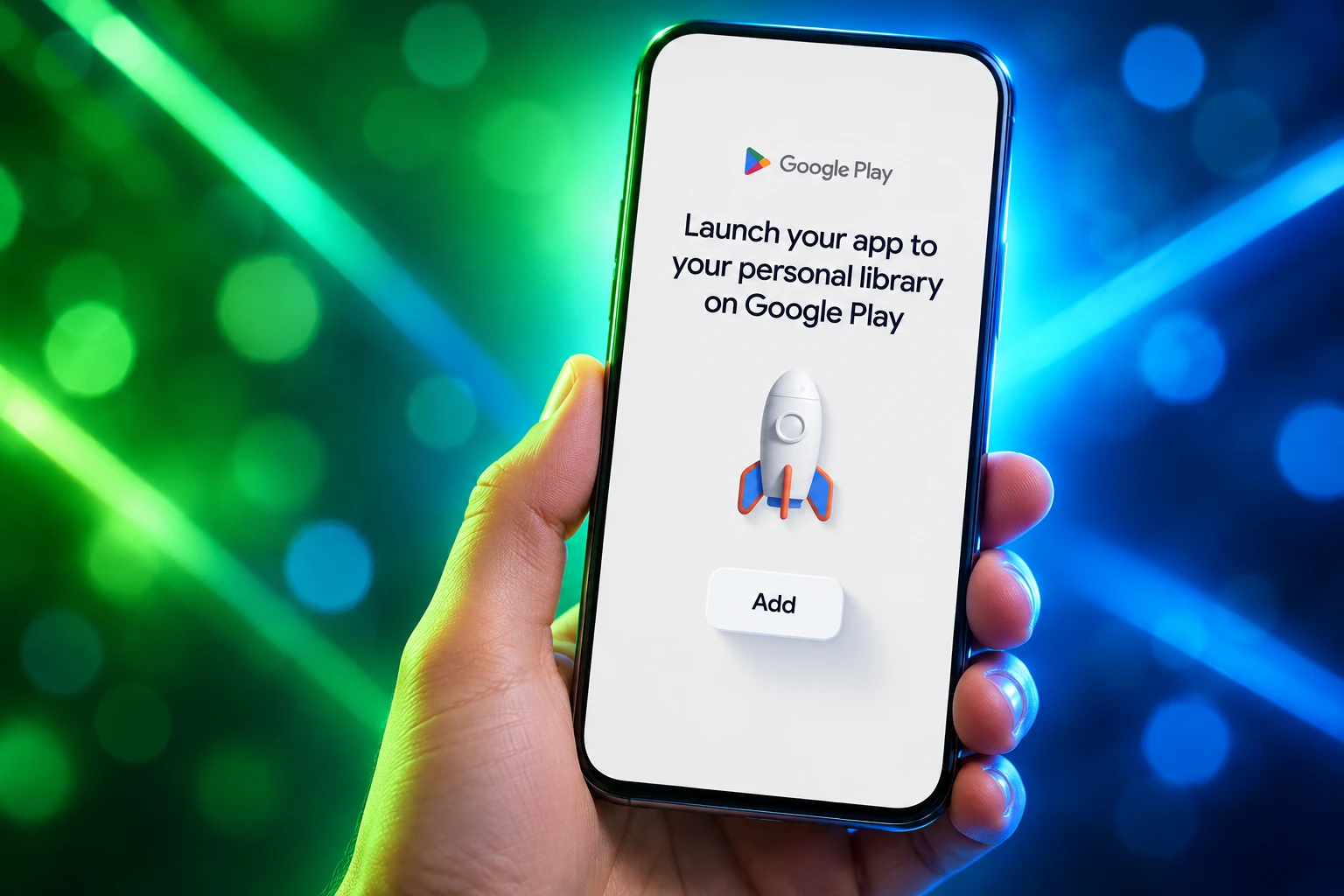
Google Play began rolling out personal apps on October 13, 2026, letting adults in the United States install AI Studio projects with a normal Google account. The apps stay off search and the public catalog, and Google says there is no developer account required.
That easy install lands 13 days after Android started checking who can ship software through participating stores in four countries. Friends-and-family sharing is still months away. A public listing still means a professional developer account and the usual Trust & Safety review.
A Play Library That Never Hits Search
Sam Bright, vice president and general manager of Google Play and its developer ecosystem, framed the store as a place to run apps you make, not only apps you download. Google’s phrase is “there’s an app for me.” In practice, a personal app is a private listing tied to your account and your hardware.
It will not show up in Play search, listing pages, or recommendations. At launch it installs only on the creator’s own device. Google’s examples include a stat tracker for a local rec league and a family organizer built around one household’s routine. The pitch is a tool that never needed a million other users.
The feature is rolling out to select markets, including the United States, for people 18 and over. Google has not named the other markets, and it has not said when younger users or more countries get it. You need the latest Play Store update, then you build in Google AI Studio while signed in with a standard Google account and deploy through Play.
Play still wants those projects inside its own install path. That is the part the fee waiver does not advertise.
USB Cables and the $25 Console Still Exist
Native Android generation in AI Studio is not new. On May 19, 2026, Google said the web tool could build entire Android apps for you in minutes from a prompt, with no local SDK. Getting the result onto a phone was the ugly step.
One route is a USB cable. AI Studio talks to the handset through WebUSB in Chrome or Edge, using Android Debug Bridge in the browser, so you do not install adb yourself. You do have to turn on Developer Options and USB debugging, pick the phone in a browser prompt, and wait while the APK copies over. That is a developer ritual dressed up as a button.
The other old route is Google Play’s internal testing track. AI Studio can sign the package, open an app record, and upload a build. Testers join through a link. The cap is 100 testers, and the app stays out of public search. That path still needs a Play developer account and a finished Play Console profile.
THREE WAYS TO GET AN AI STUDIO APP ON A PHONE
| Path | What you need | Who can run it now | Public catalog |
|---|---|---|---|
| USB from the browser | Chrome or Edge, a cable, Developer Options | The handset on the cable | No |
| Play internal testing | Play developer account, US$25, Console profile | Up to 100 testers with a link | No |
| Personal Play library | Standard Google account, 18 and over, supported market | The creator’s own devices | No |
The October 13 path is the first of those three that a non-developer can finish without a cable or a paid Console login. The generation step is the same product. The store just agreed to carry the file.
What AI Studio Puts on the Phone
AI Studio’s Android option asks the Antigravity Agent for a complete Kotlin and Jetpack Compose project, then runs it in a cloud emulator in the browser. You iterate in chat. The agent edits the project files. You can open the Code tab, download a ZIP, and keep going in Android Studio. Google calls this vibe coding: you describe the app in plain language and accept what comes back.
These are native apps, not wrapped web pages. On a real phone they can use the camera, GPS, the accelerometer, and Bluetooth. The May launch pointed at habit trackers, study quizzes, event itineraries, and small tools that talk to Gemini. The emulator in the browser is thinner. It has no camera, NFC, or Bluetooth, GPS is simulated, and Google Play services do not run there, so sign-in and Maps wait for a physical device.
LIMITS ON THE ANDROID BUILD
- Phone and tablet only: Wear OS and Android TV projects are not supported.
- One activity, one module: The agent will not produce multi-module or multi-activity apps.
- Compose, not Java: UI is Kotlin and Jetpack Compose. Java and XML layouts are out, and so is C or C++ through the NDK.
- On-device only: There is no server runtime, so secrets handling, multiplayer, Firebase, and Google Workspace APIs are not available in this flow.
- ZIP, not GitHub: Android projects download as a ZIP. GitHub export is still missing, per docs last updated August 18, 2026.
A personal app that compiles is not the same as an app that handles your data well. This drop did not claim a new model, a new test harness, or a new quality bar for generated code. It claimed a quieter way to install whatever the agent already emits. For a one-person tool, that can be enough, because nobody else has to live with the bugs. For anything that touches another person’s information, it is a weak promise.
Hobbyists Already Had a 20-Device Lane
Play’s personal library is not the only free way to move an app onto a small set of phones. In August 2026 Google opened limited distribution accounts aimed at students, teachers, and hobbyists. Those accounts need no government-issued ID and no registration fee. They let you share an app with up to 20 devices.
That lane does not create a Play Store listing. Recipients cannot find the app by searching the catalog. It is a signed package sent to hardware you authorize, which is closer to a clubhouse than a store. Personal Play apps sit in the other direction: the store is the installer, the listing is hidden, and the first audience is you.
People who already sideload with a cable may not switch. People who never turned on USB debugging might. Google is betting the second group is large, and that they would rather tap Play than learn Developer Options.
September 30 Closed an Easy Path in Four Countries
The calendar around this launch is tighter than the product copy. On September 30, 2026, Android protections begin for users installing apps from participating stores in Brazil, Indonesia, Singapore, and Thailand, on certified devices running Android 7 and newer. Google says it will keep rolling those protections out globally in 2027.
Play Console accounts already cover identity checks for most listed apps. Google says it automatically registers 99% of apps, with manual registration for the rest and for software shipped outside Play. The new work is aimed at developers who never opened a Console at all, including people who handed out APKs from a website.
The United States is not in the first four countries. US sideloading did not flip off on September 30. The sequence still matters, because the identity rules are designed to reach all certified devices next year, and the personal-app lane is being built in the US now, while that larger switch is still ahead.
THE YEAR PLAY TIGHTENED THE DOOR AND OPENED A PRIVATE ONE
- May 19, 2026: AI Studio starts building native Android apps from a prompt, with USB install and Play internal testing.
- August 2026: Limited distribution accounts and the power-user advanced sideload flow launch.
- September 30, 2026: Developer checks start for participating stores in Brazil, Indonesia, Singapore, and Thailand.
- October 13, 2026: Personal Play apps roll out in the United States and other unnamed markets, with no developer account.
- 2027: Google says verification expands globally for apps on certified Android devices.
Read in order, October 13 looks less like a sudden burst of openness and more like a store-shaped answer to a problem Google is also creating. If installing a random APK gets harder, the remaining simple path is the one that runs through Play.
The $25 Fee Still Guards the Public Catalog
A personal app is free at the Play door. A public app is not. Play Console signup still charges a US$25 one-time registration fee after you accept the Developer Distribution Agreement. You must be 18. Google may ask for a government ID and a card in your legal name, and it says an invalid file means the fee is not refunded. Personal developer accounts also have to meet testing and device checks before production.
Google is explicit about when the full review returns. Bright’s post puts the gate on the upgrade, not on the private copy.
And if you eventually want to share your app with the world, Google Play helps you graduate to a professional developer account. At that time, your app will go through the same Trust & Safety reviews and quality standards as every professional developer.
Sam Bright, Vice President and General Manager, Google Play + Developer Ecosystem
So the $25 and the review queue still sit in front of search, ratings, and a world-readable listing. What moved is the on-ramp for an audience of one. Independent developers who already pay that fee still wait in the same line they waited in on October 12. Casual makers skip it until they want strangers.
Sharing With Friends Comes Later
Google says that in the coming months you will be able to share a personal app with a close circle of friends and family. It has not given a date, a cap, or a country list for that step. Until then, the private library is a single-user shelf, including phones, tablets, and other hardware that can reach Play under the same account.
WHAT WE KNOW
- Who: People 18 and over in the United States and unnamed select markets, signed in with a standard Google account.
- Where it lives: A private Play library, off search and off the public catalog, on the creator’s own devices.
- How you go public: Graduate to a professional developer account, then the same Trust & Safety review as everyone else.
WHAT IS UNCONFIRMED
- Other countries: Google has not named the rest of the “select markets.”
- Review on the private copy: The company calls personal apps private and secure, and it only spells out Trust & Safety for the public graduate.
- The friend circle: No date, no size, and no rule list for the sharing step that is still months out.
The same October 13 package adds Ask Play side-by-side app comparisons, a Game Finder built on a Gamer DNA profile for US users in English, and 48-hour Sprints for groups of two to five players in all markets. Sidekick can record 30-second Playbacks on select devices. Dave the Diver and Warhammer 40,000: Boltgun are coming to Play with cloud save between Android and PC, with REPLACED, Chosen by Odin, and Over the Hill behind them. Parents can share a child’s age range through Family Link instead of richer personal data. A week-long Play Fest also started on October 13.
Those extras do not change the personal-app deal. You can prompt a Kotlin project in the browser and put it on your phone through Play without paying US$25. You cannot put it in front of the world that way, and you cannot yet hand it to your sister. The next date Google owes is the one for that small circle, because that is when a private library stops being a single-user trick and starts looking like a second, quieter store.

Cook Hands Democrats the House as Crypto’s Bill Stays Dead

Wicker’s Broken Bed Was the Short Story’s Punch Line

Nvidia’s $500 Billion Financing Plan Draws a $180 Sell

Maserati Bets the Grecale V6 Can Fill Porsche’s Gap

EV Cable Theft Follows the Old Railway Copper Playbook

Aramco Crash Kills 14 Two Days After Oil Restart

Salah Captained Egypt to Their First World Cup Win

Zelda’s 40th Switch 2 Ships Without a Zelda Game

Apple Labor Day Deals Hide June’s Memory Price Hike

Palworld 1.0.4 Adds Palpedia Search After the 1.0 Launch
-
 BUSINESS4 months ago
Aramco Crash Kills 14 Two Days After Oil Restart
-
 NEWS5 months ago
Salah Captained Egypt to Their First World Cup Win
-
 GAMING2 months ago
Zelda’s 40th Switch 2 Ships Without a Zelda Game
-
 NEWS2 months ago
Apple Labor Day Deals Hide June’s Memory Price Hike
-

 NEWS4 months ago
El Niño Puts Israel’s Needed Winter Rain on a Flood Clock
-
 GAMING2 months ago
Palworld 1.0.4 Adds Palpedia Search After the 1.0 Launch
-

 BUSINESS8 months ago
BAE’s 60-Year Saudi Franchise Now Runs Through Taif
-

 BUSINESS8 months ago
Egypt Bets EGP 638 Billion Can Open Sinai to Investors