
NEWS
Project Foundation Moves Upstream Into Europe’s Thermal Chips
Project Foundation would have two Kyiv camera firms make thermal sensors Europe cannot spare, even as Lynred scales a million-unit Grenoble plant.

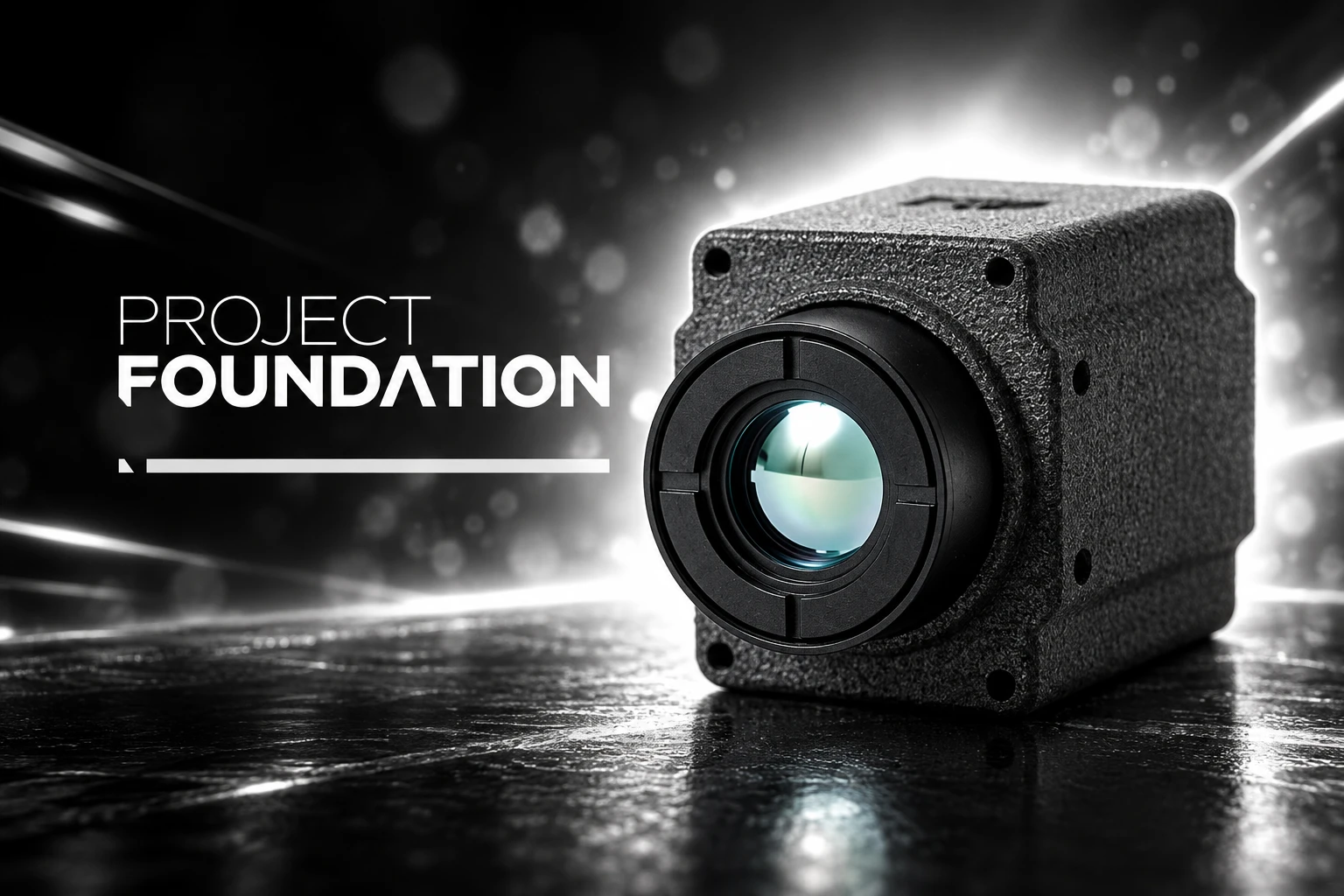
The Fourth Law and Odd Systems unveiled Project Foundation on October 8, 2026, a plan to quadruple European uncooled thermal sensor output within three years. The Eindhoven-based project also aims to double production in the United States, with the first sensors due in 2027.
The companies already sell the Kurbas thermal camera to more than 70 drone makers. They now want to make the chip inside it, in a market France’s Lynred is already expanding and that cheap Chinese cores still feed.
Ukraine Burns Through a Year of European Sensors in Five Months
Yaroslav Azhnyuk, CEO of The Fourth Law and co-founder of Odd Systems, put the shortage in units rather than slogans when he first sketched a plant in February 2026. Europe, he said, makes fewer than 500,000 of these sensors a year. Ukraine uses that much in about five months, a rate of 1.2 million a year if it held.
THE VOLUME THE FRONT ALREADY BURNS
- Europe’s output: Fewer than 500,000 thermal sensors a year, Azhnyuk said.
- Ukraine’s burn: About five months to consume that same pile.
- Annualized demand: 1.2 million sensors a year at the five-month rate.
- Global share: The companies’ February Kyiv briefing said one in five thermal cameras made worldwide goes to the Ukrainian front.
He was not describing a shopping list for Lynred parts. “Obviously, we’re not using European sensors: not only are they about five times more expensive than Chinese ones, but they’re also often of lower quality. But the biggest problem is that they’re almost impossible to buy, because Europeans need them too,” Azhnyuk said.
Europe currently produces fewer than 500,000 of these sensors per year; Ukraine consumes that amount in about five months. Obviously, we’re not using European sensors: not only are they about five times more expensive than Chinese ones, but they’re also often of lower quality. But the biggest problem is that they’re almost impossible to buy, because Europeans need them too.
Yaroslav Azhnyuk, co-founder of Odd Systems
At a closed Kyiv session on February 26, 2026, billed as Autonomy and Sovereignty, Odd Systems CEO Roman Medvedev and camera chief Andriy Taganskyi went further. Their briefing put one in five thermal cameras produced worldwide on the Ukrainian front, and said a full year of EU camera output would cover only three to four months of that need. They also previewed Odd Camera Factory One, a sensor line inside Ukraine, months before the Europe-and-U.S. branding landed.
Lynred Already Built a Million-Unit Answer in Grenoble
Europe is not starting from zero. Lynred, the French infrared group owned by Thales and Safran, spent €100 million on a Grenoble campus that doubled its cleanrooms from 4,000 to 8,000 square meters. In a June 10, 2026 note for the Eurosatory show, the company said the rebuild brings production capacity to one million bolometers.
That is a drone pitch, not a museum piece. Lynred is already pushing ATI640, a 640×480, 12 µm core that weighs 15 grams and measures 24 x 24 mm without optics, running at 60 Hz for compact airframes. Executive president Hervé Bouaziz said Campus lets the firm produce “competitively in large volumes” while it shrinks pixel pitch. Nadia Souhami, who runs the bolometer line, called the company a partner for drone makers with “sovereign solutions designed and manufactured in Europe.”
WHO ALREADY HOLDS THE VOLUME
| Player | Where | Stated scale |
|---|---|---|
| Lynred | Grenoble | Campus capacity of one million bolometers after the €100 million rebuild |
| Europe overall | EU | Fewer than 500,000 sensors a year, per Azhnyuk |
| Ukraine demand | Front line | About 500,000 sensors in five months, or 1.2 million a year at that rate |
| Project Foundation | Eindhoven HQ; plants planned in Europe and the United States | First sensors in 2027; 4x Europe and 2x U.S. output within three years |
If Azhnyuk’s European ceiling is right, Lynred’s new capacity is already in the same order of magnitude as the continent’s entire stated output. Project Foundation’s 4x target is a claim on a crop that a French incumbent is harvesting, not an empty field.
The Cameras on the Front Still Run on Chinese Cores
Odd Systems builds the Kurbas line in Kyiv and has, by Azhnyuk’s own account, left the sensor inside on foreign lines. He has said some parts, including camera sensors, still come from China. That is the dependency Project Foundation is trying to cut, and it is also the price the new plants have to beat.
WHAT EUROPEAN SENSORS FAIL ON, IN HIS TELLING
- The price: European units cost about five times as much as Chinese ones.
- The quality: He said they are often worse, not better, than the cheap cores Ukraine actually flies.
- The stock: They are almost impossible to buy, because European customers hold the limited supply.
Kurbas is already priced like a Chinese camera, which is how it spread. In July 2025 Azhnyuk listed Kurbas-256 units as low as $150 and Kurbas-640-alpha at $440, without VAT, for buyers in Ukraine. The 640-pixel Alpha series, he said in March 2026, had flown on tens of thousands of front-line FPV drones and in thousands of Shahed interceptions, including Wild Hornets’ Sting interceptors. Kurbas-640b, shown the same month, can switch image modes in flight.
That is a finished-camera business that already cleared the Chinese price bar. The remaining import is the die. Guide Infrared, Dali, Raytron and InfiRay sit on the high-volume uncooled side that Western defense catalogs treat as a separate world, and that is the world FPV builders actually buy from.
Why Odd Systems Is Climbing Into the Chip
A thermal camera is a lens, a housing, firmware, and a microbolometer: a MEMS array of tiny heat-sensitive bridges, usually vanadium oxide or amorphous silicon, read by a CMOS chip. The hard part is the array. Uncooled long-wave sensors are made in specialty MEMS fabs for microbolometers that standard logic foundries do not run, because the process needs surface micromachining, sacrificial etches and vacuum packaging. Incumbents keep that work in captive plants. Lynred’s is in the Grenoble area. Teledyne FLIR’s is in the United States. High-resolution uncooled arrays also sit under USML Category XII imaging controls, which is why the serious lines are not casually outsourced to a general Asian fab.
Azhnyuk and a team of engineers, operators and veterans founded both companies in Kyiv in 2023. The group says it carries 14 years of camera work, including more than one million consumer smart cameras from Azhnyuk’s earlier Petcube years. The Fourth Law builds autonomy so drones can keep flying when the radio dies. Odd Systems makes the thermal and daylight cameras those airframes carry. Project Foundation is the two of them walking one layer down the bill of materials, because the camera company now knows the sensor spec by flying it.
Igor Nakonechnyi, who holds a PhD in semiconductor chemistry, is CEO of Project Foundation. Azhnyuk called him a scout with that doctorate and the person who will run the team. That hire is the tell. They are not staffing a branding shop. They are trying to staff a materials line.
First Foundation Opens a 2027 Clock
The project is based in Eindhoven and plans two fabrication sites that share one sensor design: First Foundation in Europe and Second Foundation in the United States. The companies say they will mix partner foundry lines with plants of their own. Specific addresses were not named. Mass production is scheduled for 2027. Within three years of the launch, they want European output at four times today’s level and U.S. output at twice today’s level.
Azhnyuk posted the launch on October 9, 2026, a day after the joint release, and used the same line he gave the press pack: sensor supply for the EU and the United States on the shortest timeline possible, after 14 years of RGB and LWIR cameras.
It’s a big day today.@thefourthlawai and @SystemsOdd have announced the launch of Project Foundation, a semiconductor initiative to mass-produce thermal imaging sensors for Ukraine, the rest of Europe and the United States.
The initiative covers the development of LWIR sensors… pic.twitter.com/WkOd0qUCwZ
— Yaroslav Azhnyuk / Ярослав Ажнюк (@YaroslavAzhnyuk) October 9, 2026
The name is an Asimov joke the group has been running since The Fourth Law. Project Foundation borrows the novels about storing knowledge through a collapse. The industrial plan is plainer. In February they talked about a plant able to make one million sensors a year. October folded that ambition into a two-country network and a 2027 start.
HOW THE UPSTREAM BET WAS STAGED
- February 26, 2026: The Fourth Law and Odd Systems host the Autonomy and Sovereignty briefing in Kyiv and preview Odd Camera Factory One.
- February 2026: Azhnyuk describes a plant of one million sensors a year and the five-month European shortfall.
- March 5, 2026: Odd Systems launches Kurbas-640b, with in-flight mode changes on top of the Alpha series already on interceptors.
- June 10, 2026: Lynred says Campus is live and that bolometer capacity is now one million units.
- October 8, 2026: Project Foundation is unveiled, with Eindhoven as headquarters and first sensors due in 2027.
Replies under Azhnyuk’s post were congratulations, not diligence. The open argument had already been set in February: Europe cannot sell this part at the price or the volume the front uses. October added a Dutch address and a U.S. twin. It did not add a process node, a wafer size, or a customer contract.
A Price That Works at Scale Is the Test
Nakonechnyi’s brief is the commercial one. Building cameras, he said, showed what drone and auto makers want from the die: performance, a supply they can count on, and a price that still works when the order is in the tens of thousands.
We are building Project Foundation around those requirements. Sovereign production has to be commercially competitive to achieve widespread adoption.
Igor Nakonechnyi, CEO of Project Foundation
Azhnyuk’s October line was shorter. After 14 years of cameras, he said, the team knows what robotics, defense and automotive lines will need, and it wants that supply on the shortest path. The automotive mention is the second customer class. Lynred has been chasing the same one, arguing that cars, not only drones, are what turn a hundred thousand microbolometers into millions. Project Foundation is bidding for that volume from the cheap end of the camera business rather than from a defense-prime catalog.
If the new die cannot land near the Chinese price that already sits under a $150 Kurbas-256, Western plants will fill staffed programs and miss the FPV swarm. That is the test Nakonechnyi set, and it is stricter than a sovereignty slogan.
The Money and the Missing Plant Sites
The companies say they will fund the work with their own capital, outside equity, debt, grants and customer pre-sales. They also said specific financing will be announced once it is confirmed, and they have not published a raised figure. Partnerships with semiconductor labs, technology firms and large thermal-camera users are “being developed.” First Foundation and Second Foundation still have no city attached to them beyond Europe and the United States.
WHAT WE KNOW
- The aim: 4x European thermal sensor output and 2x U.S. output within three years, with first sensors in 2027.
- The product: Proprietary uncooled LWIR microbolometers for drones, vehicles and robots.
- The people: Azhnyuk’s camera group, Nakonechnyi as project CEO, Eindhoven as headquarters.
WHAT IS UNCONFIRMED
- The money: No disclosed round, grant or pre-sale total.
- The sites: No city, no foundry partner named, no wafer process.
- The price: No sensor ASP against the Chinese cores Kurbas already uses.
Azhnyuk closed his October 9 post by asking people to join. That is the honest next step for a camera company that has decided the shortage sits one layer below the product it already ships. Lynred’s Grenoble lines are open now. The first Project Foundation sensors are due in 2027, from plants that still need addresses, and from a cost curve that still has to beat China.

Cook Hands Democrats the House as Crypto’s Bill Stays Dead

Wicker’s Broken Bed Was the Short Story’s Punch Line

Nvidia’s $500 Billion Financing Plan Draws a $180 Sell

Maserati Bets the Grecale V6 Can Fill Porsche’s Gap

EV Cable Theft Follows the Old Railway Copper Playbook

Aramco Crash Kills 14 Two Days After Oil Restart

Salah Captained Egypt to Their First World Cup Win

Zelda’s 40th Switch 2 Ships Without a Zelda Game

Apple Labor Day Deals Hide June’s Memory Price Hike

Palworld 1.0.4 Adds Palpedia Search After the 1.0 Launch
-
 BUSINESS4 months ago
Aramco Crash Kills 14 Two Days After Oil Restart
-
 NEWS5 months ago
Salah Captained Egypt to Their First World Cup Win
-
 GAMING2 months ago
Zelda’s 40th Switch 2 Ships Without a Zelda Game
-
 NEWS2 months ago
Apple Labor Day Deals Hide June’s Memory Price Hike
-

 NEWS4 months ago
El Niño Puts Israel’s Needed Winter Rain on a Flood Clock
-
 GAMING2 months ago
Palworld 1.0.4 Adds Palpedia Search After the 1.0 Launch
-

 BUSINESS8 months ago
BAE’s 60-Year Saudi Franchise Now Runs Through Taif
-

 BUSINESS8 months ago
Egypt Bets EGP 638 Billion Can Open Sinai to Investors