
NEWS
Bessent Bets on a $1 Billion Iran Crypto Seizure
Scott Bessent says the U.S. will probably seize $1 billion in Iran-linked crypto, a custody bet that only works if the coins sit at freezeable issuers.

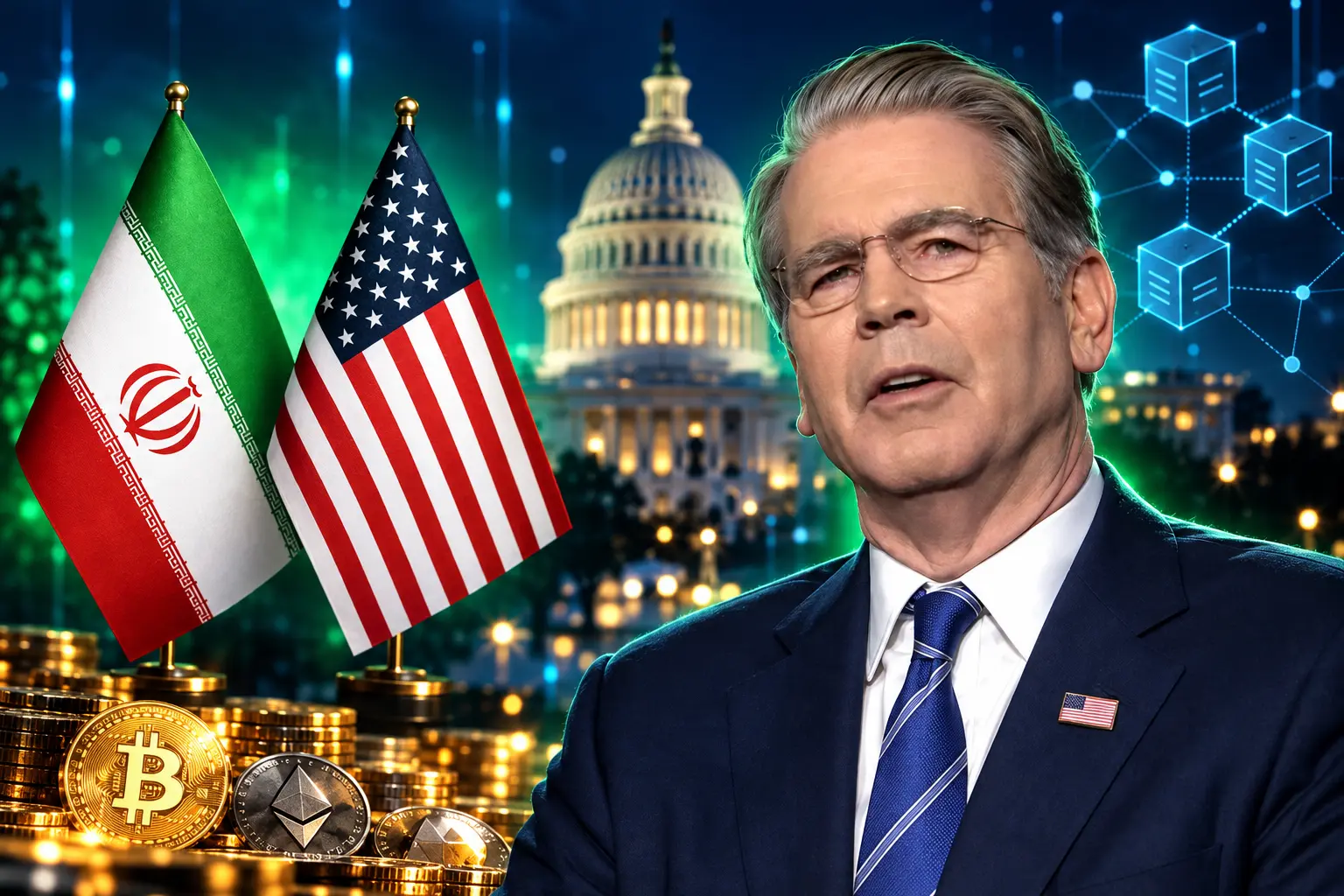
Treasury Secretary Scott Bessent said the United States will probably seize $1 billion in Iran-linked crypto this week, without naming a coin, a wallet or an exchange.
He told an audience in Washington on October 8 that officials already know where the assets sit and are isolating them. That line is a custody bet. Tracing a balance on a public chain is not the same as taking the keys.
Bessent Bets $1 Billion Without Naming a Wallet
Bessent spoke with Greta Van Susteren at the NPolicy Summit, folding the crypto target into what he called an “absolute isolation campaign” against Iran. The campaign, as he described it, covers money, ships, flights and land routes, not only digital wallets.
We’re probably gonna seize a billion dollars of crypto this week. We know where it is and we are isolating them.
Scott Bessent, U.S. Treasury secretary, at the NPolicy Summit
He also said the United States had moved from a maximum pressure campaign to absolute isolation, and that the new version was working. He did not name a blockchain, a token, a custodian or a court filing. Treasury has not published a matching seizure notice for that $1 billion pile.
The on-stage remarks are in the summit interview itself.
By October 11, posts repeating the pledge still treated it as a plan, not a completed transfer. No public wallet list, issuer freeze notice or forfeiture complaint had caught up with the number he used on stage.
Treasury’s Own Tally Was Half That Figure
This is not the first time Bessent has put a billion-dollar crypto figure on Iran. In May he said the United States had seized about $1 billion in Iranian crypto and had “just outright grabbed the wallets.” A Treasury release issued around the June 2 exchange action cited a different official number: the freezing of nearly $500 million in regime-linked cryptocurrency.
Those two statements are not the same claim. One is the secretary’s May description of a grab. The other is the department’s freeze figure tied to the June enforcement wave. Neither filing names the $1 billion Bessent floated on October 8, and he did not say whether the new target adds to the earlier haul or restates it.
THE PUBLIC CRYPTO SCOREBOARD
| Claim | Who said it | Date | What it describes |
|---|---|---|---|
| $1 billion, probable | Scott Bessent | October 8, 2026 | Seizure “this week,” wallets unnamed |
| About $1 billion seized | Scott Bessent | May 2026 | Wallets “grabbed,” not matched by Treasury’s freeze figure |
| Nearly $500 million frozen | U.S. Treasury | June 2, 2026 | Official freeze total around the exchange designations |
| About $550 million in USDT | Tether | 2026, stated September 28 | Issuer freezes on Iran-linked wallets |
A freeze and a seizure are different legal acts. OFAC can block property in the United States or in the hands of U.S. persons, and it can list a wallet on the sanctions list. Taking title still needs a forfeiture case. Bessent used “seize” on stage. The paper trail so far is heavier on freezes.
How a Stablecoin Freeze Gets Done
If the $1 billion is sitting in Tether’s dollar token, Washington does not need Iran’s private keys. The issuer can blacklist an address, after which the tokens cannot move. That is the route that has already produced the largest public Iran-linked crypto number of 2026.
On September 28, Tether said actions involving its token had frozen approximately $550 million in Iran-linked USDT during 2026, across wallets U.S. authorities tied to Iran’s Central Bank and sanctions networks. CEO Paolo Ardoino said public chains give authorities a view cash does not, and that Tether can act when law enforcement brings credible information.
THE USDT FREEZES TETHER HAS NAMED
- April 2026: More than $344 million frozen across two addresses, which OFAC then listed as Central Bank of Iran identifiers linked to the IRGC-Qods Force and Hezbollah.
- July 2026: More than $130 million frozen across four TRON wallets as Treasury expanded that same central-bank listing.
- 2026 total stated: About $550 million, a company-wide figure that is larger than the two named tranches and is not broken out beyond them.
The July freeze is the same action Treasury described when it said wallet sanctions had frozen funds after the central-bank listing grew. On-chain, that looks like a blacklist, not a raid. Bitcoin in a personal wallet does not have an issuer who can flip that switch.
That gap is why the October 8 number is a bet on location. If the coins are USDT at listed addresses, Tether can stop them in a day. If they are bitcoin already pulled into self-custody, “we know where it is” is a map, not a seizure.
Nobitex, CoinEx and the Reachable Pile
The United States has spent 2026 going after the platforms that sit between Iranian users and the rest of the market. On June 2, OFAC designated Iran’s four largest exchanges under counterterrorism and Iran-sector authorities, as part of the Economic Fury campaign.
Treasury said Nobitex processed more than 50 percent of all Iranian digital asset inflows in 2025, helped the Central Bank of Iran reach hundreds of millions of dollars in stablecoins, and moved funds after U.S. combat operations began, including during internet blackouts. OFAC also listed chairman Amir Hossein Rad, co-founders Seyed Mohammad Ali Aghamir and Seyed Mohammad Aghamir, and CEO Seyed Ali Khoee. Rad, Treasury said, helped rebuild the firm after a $90 million hack on June 18, 2025.
IRAN’S JUNE 2 EXCHANGE DESIGNATIONS
| Exchange | Treasury’s 2025 measure | Authority cited |
|---|---|---|
| Nobitex | More than 50 percent of Iranian digital asset inflows | E.O. 13224 and E.O. 13902 |
| Wallex | 12 percent of inflows; IRGC-linked transactions | E.O. 13902 |
| Bitpin | 10 percent of inflows; IRGC-linked transactions | E.O. 13902 |
| Ramzinex | More than $2.45 billion in lifetime transactions | E.O. 13902 |
TRM Labs later put those four platforms at 78 percent of Iran’s attributed domestic crypto volume. The Block counted seven Iranian exchanges sanctioned since June, after Shelbit and Aban Tether were added in August and BitBank in September over alleged bitcoin flows to the Islamic Revolutionary Guard Corps.
The international hop is the part OFAC has not fully closed. TRM Labs traced $3.84 billion through CoinEx and sanctioned Iranian entities over more than seven years, across more than 60 Iranian platforms. About $2.7 billion of that moved between CoinEx and Nobitex in some 6.2 million transfers, or about $1 million a day since 2018. The 2025 slice between those two venues was $763 million. TRM also traced about $67 million from the Central Bank of Iran to CoinEx-linked addresses from June 2025 to June 2026.
Ari Redbord, TRM’s global head of policy, said the June 2 designations took out 78 percent of Iran’s domestic crypto volume in a single action, while the international gateways that fed that system remained largely intact. CoinEx, which was not named in the June action, said it had started an Iran-related risk review, tightened geo-fencing and would freeze funds tied to sanctioned parties. A seizure of coins still sitting on a reachable exchange is a compliance letter. A seizure of coins that already left is a different case.
Seventeen Tankers Were Named the Same Day
Bessent’s crypto line landed on the same date Treasury rolled out a shipping action. On October 8, the department targeted 17 shadow fleet vessels under Operation Economic Outcast, the isolation drive Bessent announced on August 24 and dubbed Economic D-Day.
“Treasury is starving the tyrannical regime in Tehran of the money it uses to wage war in the region, and we will continue exposing those who enable the regime’s oil sales,” Bessent said in that release. “No enabler of Iranian sanctions evasion is safe from the full force of Treasury’s authorities.”
The vessels, Treasury said, had carried millions of barrels of Iranian crude, fuel oil, naphtha, methanol and gas to markets in South and East Asia. The Cameroon-flagged Shenzhen moved more than 3.5 million barrels of Iranian crude since November 2025. The Vanuatu-flagged Tina 5 carried more than 1.5 million barrels in August 2026. The Panama-flagged Starway moved more than 3 million barrels of Iranian naphtha since 2025. OFAC also took the Hakuna Matata and Pinocchio off the sanctions list after they left the shadow fleet and were sold to operators Treasury described as U.S.-aligned.
THE ISOLATION CALENDAR
- February 28, 2026: U.S. and Israeli strikes on Iranian nuclear sites open the current war, the backdrop for later financial moves.
- April 2026: Tether freezes more than $344 million in USDT at two addresses later listed to Iran’s central bank.
- June 2, 2026: OFAC lists Nobitex, Wallex, Bitpin and Ramzinex; Treasury cites nearly $500 million frozen in regime-linked crypto.
- July 2026: More than $130 million in USDT is frozen across four TRON wallets as the central-bank listing expands.
- August 24, 2026: Bessent announces Operation Economic Outcast, adding digital assets among the sectors at expanded sanctions risk.
- October 8, 2026: Treasury names 17 tankers, and Bessent says the United States will probably seize $1 billion in crypto.
The war track and the money track are meant to run together. The February strikes also sit behind the U.S. targeting tools still aimed at Iran, a separate fight over who still supplies the military stack. Bessent’s isolation list on October 8 put oil, flights, land borders and crypto in one sentence. The tanker paper came out the same day. The crypto paper did not.
Personal Bitcoin Wallets Sit Outside the Bet
Chainalysis put Iran’s crypto activity at more than $7.78 billion in 2025, with spikes around bombings, missile strikes and the June 2025 twelve-day war, when Nobitex and Bank Sepah were hit by cyberattacks. Addresses tied to the IRGC took over 50 percent of value received in the fourth quarter of 2025. Those IRGC-linked addresses took in more than $3 billion in 2025, up from over $2 billion in 2024, and Chainalysis called that a lower bound based on wallets already named by OFAC and Israel’s counter-terror bureau.
The same report tracked a different flow that cuts against a clean seizure. During protests from late December 2025 into early January 2026, withdrawals from Iranian exchanges to unattributed personal bitcoin wallets jumped. Chainalysis read that as a flight to safety after the rial’s long slide, about 90 percent since 2018, with inflation running 40 to 50 percent. Bitcoin in a wallet whose keys never touch a U.S. exchange, a U.S. custodian or a freezeable stablecoin is visible and still out of reach.
That is the objection that keeps coming back around the $1 billion line. Seeing a balance is not holding it. A blacklist at Tether can trap USDT. A designation can trap funds at an exchange that still answers email. Neither tool opens a cold wallet in Tehran. If a large share of the IRGC’s on-chain pile has already moved into self-custody, the October 8 number is a press-conference ceiling, not a ledger the government can debit.
Oil Money and Crypto Money Share One Campaign
Economic Fury in June went after the domestic exchanges. Economic Outcast in August widened the net to leftover oil routes and warned that digital assets were one of five sectors facing more sanctions risk. The October 8 tanker list and Bessent’s crypto remark are the same week’s version of that squeeze: cut the barrels, then talk about cutting the tokens used to get paid for them.
The reachable money is the money that still touches an issuer, a listed exchange or a bank that fears secondary sanctions. Tether has already frozen about $550 million in USDT this year. Treasury has already published a freeze figure of nearly $500 million. Bessent is now asking the public to believe another $1 billion is sitting somewhere those tools can still grab, and that the grab comes in the days after October 8.
Treasury had not, by October 11, published the wallet list or a completed seizure notice for the $1 billion Bessent described.

Cook Hands Democrats the House as Crypto’s Bill Stays Dead

Wicker’s Broken Bed Was the Short Story’s Punch Line

Nvidia’s $500 Billion Financing Plan Draws a $180 Sell

Maserati Bets the Grecale V6 Can Fill Porsche’s Gap

EV Cable Theft Follows the Old Railway Copper Playbook

Aramco Crash Kills 14 Two Days After Oil Restart

Salah Captained Egypt to Their First World Cup Win

Zelda’s 40th Switch 2 Ships Without a Zelda Game

Apple Labor Day Deals Hide June’s Memory Price Hike

Palworld 1.0.4 Adds Palpedia Search After the 1.0 Launch
-
 BUSINESS4 months ago
Aramco Crash Kills 14 Two Days After Oil Restart
-
 NEWS5 months ago
Salah Captained Egypt to Their First World Cup Win
-
 GAMING2 months ago
Zelda’s 40th Switch 2 Ships Without a Zelda Game
-
 NEWS2 months ago
Apple Labor Day Deals Hide June’s Memory Price Hike
-

 NEWS4 months ago
El Niño Puts Israel’s Needed Winter Rain on a Flood Clock
-
 GAMING2 months ago
Palworld 1.0.4 Adds Palpedia Search After the 1.0 Launch
-

 BUSINESS8 months ago
BAE’s 60-Year Saudi Franchise Now Runs Through Taif
-

 BUSINESS8 months ago
Egypt Bets EGP 638 Billion Can Open Sinai to Investors