
NEWS
Meta Tests Takes With Cred While States Freeze Cash Bets
Meta is testing Takes with cred points, a play-money prediction app built to scale while states freeze Kalshi and Polymarket.

Meta staff have started testing Takes, a prediction app that uses cred points instead of cash. The trial, described Friday, November 13, 2026, by people familiar with the work, is the kind of in-house run Meta often does before a public release.
Internal documents from June already said employees would try a prototype before any iPhone or Android launch. A Louisiana judge had frozen cash prediction platforms the afternoon before the staff trial became public.
Meta Employees Are Already Placing Takes
On Takes, workers bet cred, short for credibility, on questions and events. A right call adds points. A wrong call takes them away. The app is not public, and people close to the project said it is unclear when, or if, it will ship. Meta did not comment.
The working title can still change. In June the same build was called Arena, with older code names Antwerp and FBForecast. One question in the staff trial, those people said, is whether former Apple chief Tim Cook will be Nvidia’s next CEO.
Takes is a standalone app, not a tab inside Facebook or Instagram. June planning still called for those networks to send people toward it. More than 3 billion people open at least one Meta app each day, which is the distribution Kalshi and Polymarket cannot buy.
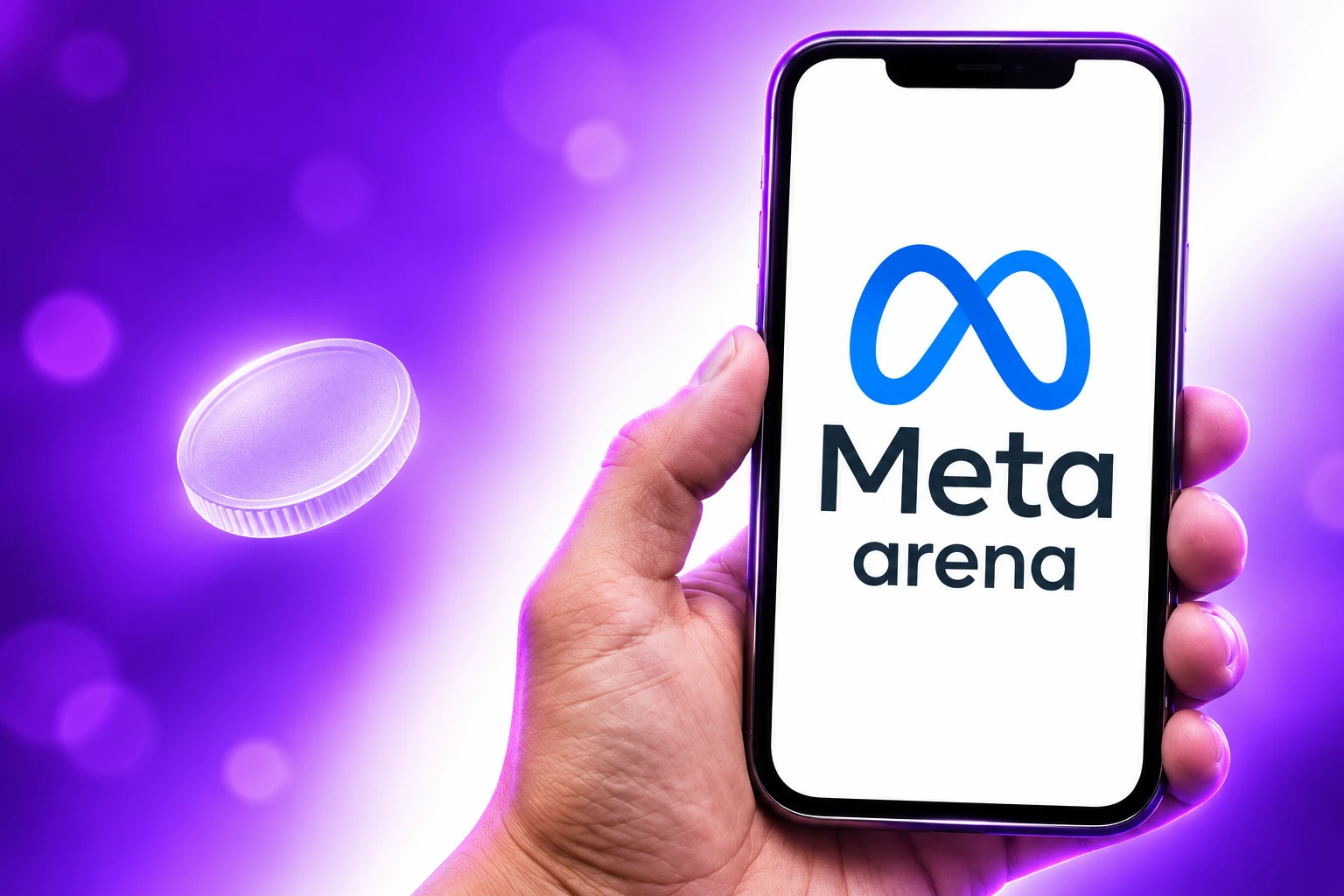
Play Money and a Daily Allotment
Cred is not a last-minute safety switch. Documents reviewed in June said users would get “a daily virtual allotment” of “play money” to bet on “the outcome of future events.” Mark Zuckerberg, Meta’s chief executive, had told a team to build the product and treated it as a top priority.
People who described the June plan said Meta had not closed the door on real-money betting later. Five months on, the staff build is still points-only. That gap is the product choice, because cash markets are the ones drawing state cases.
Daniel Wallach, a gaming lawyer who follows the sector, said a launch without cash could give Meta time to seek a federal license and wait for the court fight to settle.
We’re clearly in legal limbo. And we might not have a clear answer for another year or two.
Daniel Wallach, gaming lawyer
Wallach also said the current markets only became this large after federal rules started to move, which is why states and the Commodity Futures Trading Commission are now arguing over who is in charge. A points app does not collect a handle. It still trains the habit of tapping Yes or No on the news.
Who Decides If a Take Came True?
The June papers put Meta’s Llama model in three jobs. It would write yes-or-no questions from trending topics, push personalized market picks, and settle whether an event happened. Settlement was described as “near real-time,” with the model as the last word on the outcome.
Cash platforms hire people, write rulebooks, and argue over messy facts. Meta’s rebuild is aimed at the cost that killed the last attempt: humans having to invent and referee every question. Llama is how the company thinks it can run millions of prompts without a newsroom of editors.
That is also the risk. A model that both writes the market and calls the winner is grading its own homework. Kalshi and Polymarket already live with fights over insider tips and thin liquidity. A social app that lets an in-house model decide the truth of elections, sports, and celebrity news would inherit those fights at Facebook scale, even if no dollar moves.
13 Brands Caught in a Louisiana Order
On Thursday, November 12, Louisiana Attorney General Liz Murrill sued prediction platforms in the 21st Judicial District Court in Tangipahoa Parish. Judge Jeffrey Johnson signed a temporary restraining order at 3:48 p.m. the same day, without hearing from the companies. The order names 31 entities tied to 13 brands, including Kalshi, Polymarket US, Robinhood, Coinbase, Crypto.com, Gemini, ForecastEx, Novig, Underdog, ProphetX, IG Group, Rothera, and OG.com.
Murrill said the firms “have violated our laws with impunity.” Takes is not on that list.
🚨BREAKING: This morning I filed suit in Louisiana state court against Kalshi, Polymarket, and numerous other illegal online gambling operations. For too long, they have violated our laws with impunity. No longer: I am seeking an immediate restraining order and an injunction to… pic.twitter.com/VmoaKwPutl
— Attorney General Liz Murrill (@AGLizMurrill) November 12, 2026
Johnson wrote that the companies were breaking Louisiana’s ban on gambling by computer and that the harm to the state was immediate. The order treats an “event contract” as money or value risked on an uncertain outcome, including sports, elections, and awards, and it lists parlays, props, and in-play bets among the examples.
WHAT THE LOUISIANA ORDER BARS
- Unlicensed contracts: The firms cannot offer, list, clear, settle, or broker event contracts for anyone in Louisiana without a state gaming license.
- Local customers: They cannot take wagers from, or give market access to, anyone in the state.
- Geofence: They must block Louisiana, and they cannot tell customers there that the products are lawful or licensed.
- Clock: The order ends at the same hour on November 22, 2026, the tenth day, unless a judge extends it; a hearing on a longer ban is set for 9 a.m. on November 30.
Kalshi told Louisiana users on Friday, November 13, “Your government says you can’t use Kalshi anymore.” The notice said the state had ended access “without a hearing, notice, or due process.” Users could still buy contracts when that message went out, which shows how messy a same-day freeze is in practice.
A Polymarket spokesperson said prediction markets sit under the CFTC, “not a patchwork of state rules.” That is the same federal-versus-state split Wallach flagged in June. The CFTC publishes a federal primer on event contracts that frames them as derivatives, which is the argument states reject when they call the contracts wagers.
CASH MARKETS IN THE ORDER, TAKES OUTSIDE IT
| Product | Stake in the current build | Named in the Louisiana order | Who can use it now |
|---|---|---|---|
| Takes | cred points | No | Meta staff only |
| Kalshi | U.S. dollars | Yes | Public, with state fights |
| Polymarket US | U.S. dollars | Yes | Public, with state fights |
Cred may not keep Takes forever outside that definition of “value.” The order is written to catch more than a sportsbook ticket. A points balance that ranks employees, and later the public, is still a stake. The design is meant to look like a game while Kalshi’s founders, Tarek Mansour and Luana Lopes Lara, face 14 criminal charges in Utah from October. It is not a court ruling that Meta is in the clear.
A running log of state enforcement already counts 15 state lawsuits and public actions spread across dozens of jurisdictions. Louisiana’s filing is the one that bundled the big cash brands into a single restraining order in a single afternoon.
Forecast Shut Down Over Manual Question Costs
Takes is Meta’s second try at this mechanic. Facebook’s New Product Experimentation team shipped Forecast on June 23, 2020, as an invite-only iOS app in the United States and Canada. Users spent in-app points on questions that ranged from Covid-19 vaccine timing to whether a U.S. presidential election would be postponed. Staff had already tested it inside the company, the same pattern Takes is in now.
THE FIRST META PREDICTION APP
- June 23, 2020: Facebook launches Forecast, a points app for crowdsourced guesses about the news.
- October 15, 2021: Forecast shuts down after 16 months. The company said it began as an experiment “to help us understand how crowdsourced wisdom can arrive at truth.”
- June 23, 2026: Zuckerberg directs a small team to build a new standalone app, then called Arena.
- June 24, 2026: Internal papers describe a Llama-run rebuild, a daily play-money allotment, and a staff test before any public iOS and Android launch.
- November 12, 2026: Louisiana’s restraining order lands on the cash platforms.
- November 13, 2026: Meta employees are using Takes and cred, matching the June test plan.
The June documents blamed Forecast’s death on “the operational cost of manual question curation” and called the new app a rebuild. Llama is there to erase that bill. Forecast also never had Android, never had Facebook’s full funnel, and never sat next to a cash industry that now clears tens of billions of dollars a month. Takes is the same points idea with a model on the referee’s chair and a much larger audience waiting behind the login wall.
How Big Did Prediction Markets Get?
Play money looks small until you look at the cash the category already moves. Pew Research Center, using figures from The Block, found combined trading on Kalshi and Polymarket doubled to $53 billion in July from $26 billion in May.
KALSHI AND POLYMARKET COMBINED VOLUME
| Month | Combined notional volume |
|---|---|
| May 2026 | $26 billion |
| July 2026 | $53 billion |
Sports did most of that jump. In June and July, sports trading topped $58 billion on Kalshi and neared $22 billion on Polymarket, Pew found, a shift from 2024 when politics dominated both books. Cash traders will bet on a film’s Rotten Tomatoes score the same way they bet a ballgame. That is the feed Takes wants to copy without taking the ticket.
DraftKings, FanDuel, and Truth Social have already stood up their own prediction products. Event Horizon, a newsletter that tracks the trade, counted more than 70 firms in the category by June. Meta is late on cash. It is early on a social layer that does not need a gaming license on day one, which is why a points trial can still worry the exchanges that do.
The obvious objection is that people show up for money. A points balance named cred was, within minutes of the news, treated as a punch line, and a cashless board will not draw the same heat as a Kalshi contract that pays a dollar. Meta does not need that heat to win. It needs people tapping questions the way they tap Reels, then ranking friends on who called the news. The dollar books still have to geofence Louisiana. Takes, right now, only has to work on a staff phone.
The Staff Trial Still Has No Launch Date
Employee testing is a habit at Meta, not a ship date. June’s papers already warned the project could be pulled before the public ever saw it. The current name, Takes, is a working title. Real money is still an open clause, not a feature list.
What the trial does confirm is narrower, and harder. The company built the play-money path first, put Llama on question writing and settlement, and ran the staff test on the timetable those papers laid out. It did that as state attorneys general were treating cash event contracts as unlicensed gambling and as a Louisiana order showed how fast a cash book can be told to block a whole state.
Meta declined to comment in June and again after the staff trial became public. The November 30 hearing in Tangipahoa Parish will test how long Louisiana can keep those cash markets frozen. Takes does not have to be in that room.

One UI 9.5 Beta Puts the Galaxy S26 on Last Year’s Clock

DBS Puts a 24/7 USDC Window Inside the Bank

European Startups Head for $81 Billion as First Checks Shrink

US Stocks Lost $1.3 Trillion Before Nvidia’s Beat

Home Depot Bets on Finance Chief Richard McPhail as CEO

Aramco Crash Kills 14 Two Days After Oil Restart

Salah Captained Egypt to Their First World Cup Win

Zelda’s 40th Switch 2 Ships Without a Zelda Game

Apple Labor Day Deals Hide June’s Memory Price Hike

El Niño Puts Israel’s Needed Winter Rain on a Flood Clock
-
 BUSINESS5 months ago
Aramco Crash Kills 14 Two Days After Oil Restart
-
 NEWS6 months ago
Salah Captained Egypt to Their First World Cup Win
-
 GAMING2 months ago
Zelda’s 40th Switch 2 Ships Without a Zelda Game
-
 NEWS3 months ago
Apple Labor Day Deals Hide June’s Memory Price Hike
-
 NEWS4 months ago
El Niño Puts Israel’s Needed Winter Rain on a Flood Clock
-

 GAMING2 months ago
Palworld 1.0.4 Adds Palpedia Search After the 1.0 Launch
-

 NEWS4 months ago
Saudi Visa Routes Split Nigerian Travelers Into Two Speeds
-

 BUSINESS9 months ago
BAE’s 60-Year Saudi Franchise Now Runs Through Taif