
NEWS
Canada’s Norway Cable Still Needs a Majority Owner
Bulk’s Leif Erikson cable would skip the United States, yet the 2021 Norway-Canada plan still has no buyer, no customers, and no build contract.

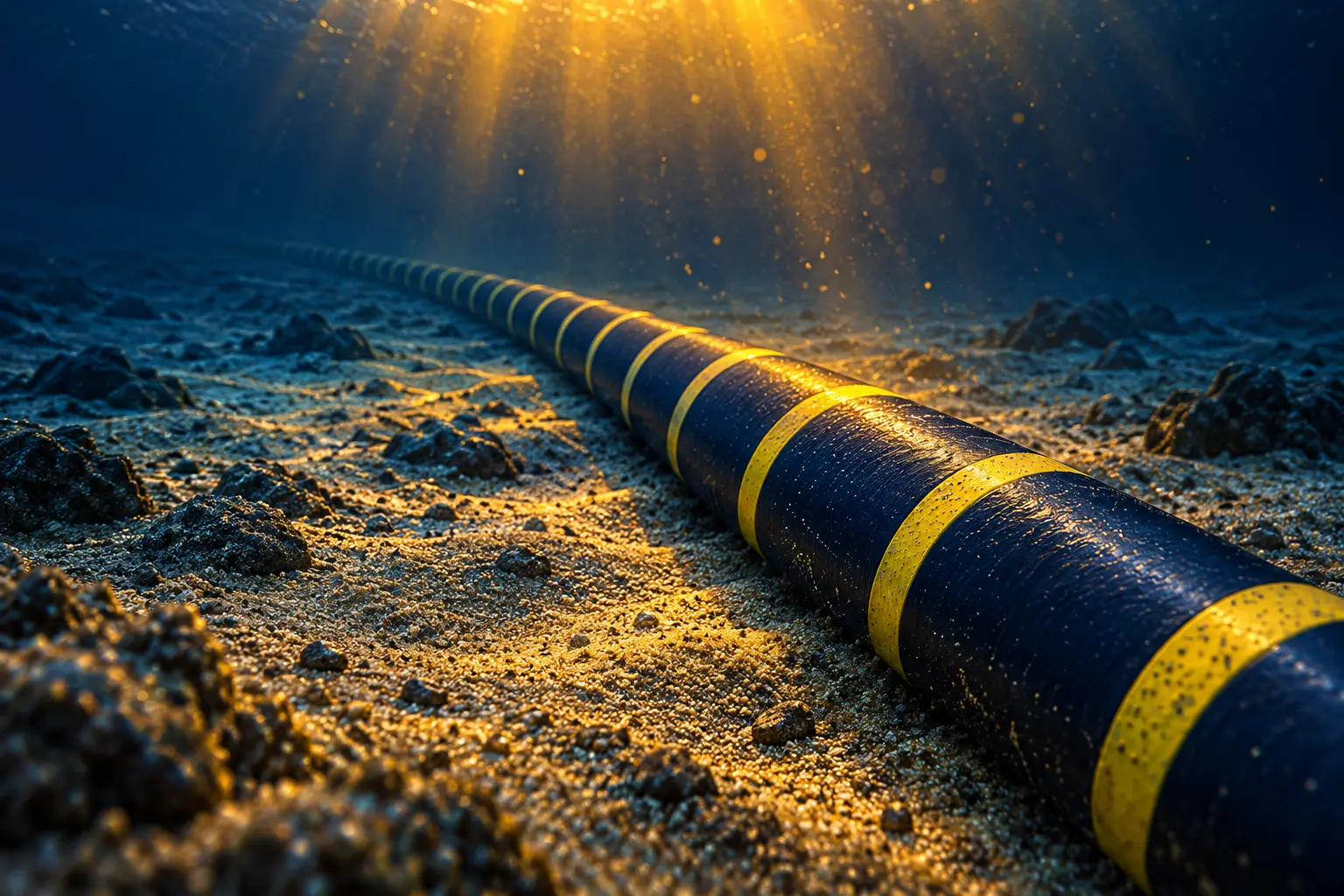
Bulk Infrastructure is seeking a Canadian majority owner for Leif Erikson, a planned 4,600-kilometer undersea cable from southern Norway to Labrador that would skip US soil. The build is pegged at more than $620 million, and the company’s project page still names 2026 as the year the system should be ready for service.
That date sits beside a second line on the same page. Service starts three years after a contract in force, and no such contract has been announced.
The Project Page Still Lists 2026
Bulk Fiber Networks would build and run the system from N01 Campus outside Kristiansand, Norway, to Montreal, with a landing at Happy Valley-Goose Bay in Newfoundland and Labrador. The ocean span is listed at 4,600 kilometers. An overland leg of 1,900 kilometers would then cross Quebec. Together the path is 6,500 kilometers.
A 2021 route study put the wet plant at 4,200 kilometers. Later planning lengthened the Atlantic crossing. Bulk’s public numbers are still forecasts, not measurements from a live network.
THE PLANNED SYSTEM
| Measure | Bulk figure |
|---|---|
| Subsea span | 4,600 km |
| Land span | 1,900 km |
| N01 to Goose Bay | 46 ms round trip |
| N01 to Montreal | 65 ms round trip |
| Listed ready year | 2026 |
| Service rule | Contract in force + 3 years |
| Cost | More than $620 million |
The company publishes an expected round-trip delay of 46 milliseconds from N01 to Happy Valley-Goose Bay, and 65 milliseconds from N01 to Montreal. It would sell fiber pairs as long-term leases or irrevocable rights of use, plus spectrum. It also says the system would run on 100% renewable power, tying Norwegian hydro to the dams of Quebec and Labrador.
N01 already terminates three subsea cables and four land routes, and Bulk advertises fiber from that campus to both the United States and Europe. The new line would add a northern Atlantic path whose western beach is Canadian. It would not be Bulk’s first US-facing route.
Canadians Already Hold Most of Bulk
Headlines treat Bulk as a Norwegian bidder. BGO, the real-estate arm of Toronto’s Sun Life Financial, holds about 65% of Bulk Infrastructure Group through two funds, after first putting money in during 2020. Canadian pension money already sits behind the parent.
That stake has not closed the pitch. Founder and executive chair Peder Nærbø told interviewers on October 19, 2026, that the cable itself has to be Canadian-controlled, which is why he wants a majority partner on the project, not only on the Oslo holding company.
It needs to be a Canadian sovereign cable system.
Peder Nærbø, founder and executive chair, Bulk Infrastructure
He said Canada’s Major Projects Office, public investment vehicles, and some of the country’s largest telecom groups have been in touch. The plan was shown to investors at a Canadian government summit in Toronto in September 2026. Some suppliers have joined. Paying customers and a full financing package have not been lined up.
Prime Minister Mark Carney’s government has reviewed how much Canadian phone and internet traffic still transits US networks after relations with Washington soured. Nærbø said that chill revived a plan he has worked on for more than five years. The politics are new. The route is not.
Halifax Has Landed Europe Traffic Since 2015
A direct Canada-Europe fiber landing is already in the water. EXA Express, the system first known as Hibernia Express, came ashore in Halifax County, Nova Scotia, on September 15, 2015. It runs about 4,600 kilometers to County Cork in Ireland and Brean in the United Kingdom, the same ocean length now quoted for Leif Erikson.
When that cable was finished, the product that sold it was a New York to London clock, with Halifax as the western beach and land fiber onward to the big metro markets. Extra Canadian landings do not, on their own, keep packets out of US networks, clouds, or switches.
CANADA’S ATLANTIC LANDINGS
| System | Canada landing | Opened | Owner |
|---|---|---|---|
| TAT-1 | Clarenville, NL | 1956 | Historic consortium, retired 1978 |
| Greenland Connect | Milton, NL | 2009 | TELE Greenland |
| EXA Express | Halifax County, NS | 2015 | EXA Infrastructure |
| Leif Erikson | Happy Valley-Goose Bay, NL (planned) | Not built | Bulk, seeking a Canadian majority |
Newfoundland was the western end of the first transatlantic telephone cable, TAT-1, opened on September 25, 1956, between Clarenville and Scotland with 36 voice channels. Greenland Connect has landed at Milton, on Trinity Bay, since March 23, 2009, and continues to Greenland and Iceland. Canada is not starting from zero on non-US beaches. What it does not have is a transatlantic system owned by a Canadian company, which is the hole Nærbø is selling.
Talk of a first-ever bypass of the United States skips that record. The live question is who would own the next path, and whether anyone will pay for a northern route whose busiest customers still live on US and European clouds.
The Hard Stretch Runs Through Quebec
The ocean headline hides the part that has to be dug. After Goose Bay, 1,900 kilometers of buried fiber would have to cross Labrador and Quebec to reach Montreal. Bulk’s own page says the land route should also improve links for local communities and Indigenous people. Current descriptions of the plan still say that stretch needs permits and community support.
In October 2021, CanArctic Inuit Networks signed a memorandum of understanding with Bulk Fiber Networks to share a nearshore segment and a common landing at Happy Valley-Goose Bay. CanArctic’s SednaLink was drawn as a 1,904-kilometre line from Sheshatsui toward Iqaluit, with branches into Nunatsiavut. Hooking into Leif Erikson would have cut about 500 kilometers off that northern build. Whether that landing share still stands has not been restated with the 2026 partner search.
The land haul is also why a Canadian civil partner matters more than a flag on the wet plant. Easements, winter work windows, and talks with communities sit on Canadian ground. A Norwegian sponsor can land a ship. It cannot, by itself, trench Quebec.
WHAT STILL HAS TO CLEAR
- Project owner: A Canadian majority partner on the cable itself, not only on Bulk’s parent company.
- Customers: Commitments to buy fiber pairs or spectrum, which have not been announced.
- Money: A full package to cover a build priced at more than $620 million.
- Studies: Further route work that Canada and the European Union would have to back.
- Land rights: Permits and Indigenous support along the Quebec and Labrador path.
- The clock: A contract in force, which is the date Bulk uses to start its three-year service count.
Until those items move, the latency table is a brochure. Packets cannot skip the United States on a path that has not been ordered.
Nærbø Drove the Labrador Highway in 2021
Bulk and WFN Strategies, a cable consultancy, announced the start of Leif Erikson on October 8, 2021. The name follows the Norse explorer whose crossing, in Bulk’s telling, ran from southern Norway to the shores now called Newfoundland and Labrador.
Nærbø was already clear that he did not want a Boston or Halifax landing. “Somebody asked me if I can put a cable into Boston. I said, ‘No, that’s not interesting.’ And I wouldn’t go to Halifax either, I wouldn’t go to Nova Scotia. I would like to go up north, so we can unlock these resources,” he said in early 2022. The point was hydro, cold air, and room for large data-center campuses, not a quarrel with Washington.
Quebec power left him more impressed than his home grid. “You eat Norway and the Nordics for breakfast,” he said after seeing the dams. He wanted a Montreal campus of several hundred megawatts, tied to N01 by the new cable, and he said the ocean span could be financed from data-center demand while the land line would need public money.
FIVE YEARS ON PAPER
- September 2021: WFN Strategies starts a route study for Bulk Fiber Networks.
- October 8, 2021: Bulk and WFN announce the Leif Erikson project.
- October 2021: Nærbø makes an 1,800-kilometre drive to Goose Bay, meets provincial officials and Indigenous groups, and CanArctic signs a landing MOU.
- October 2022: The feasibility study ran to October 2022, then guided a tender that began later that year.
- September 2026: The plan is presented at a Canadian government investment summit in Toronto.
- October 19, 2026: Nærbø says Bulk wants a Canadian majority partner to fund and build the system.
WFN’s brief was Arctic hazards, seabed risk, cost, and a sustainability plan for what it called the first transatlantic fiber system powered only by renewables. The study is done. The ships have not been booked for a lay.
A Sovereign Cable Still Needs a Buyer
Extra North Atlantic paths are a sound engineering case. Cables break, beaches get crowded, and Canada’s overseas traffic still leans on US networks. People who make and land fiber treat another span as capacity and repair cover. That case does not require a story in which this is the first cable to miss the United States, and it does not require the 2026 date still printed on Bulk’s site.
Skipping US ground is also not the same as leaving US platforms. Cloud regions, software stacks, and commercial interconnects would still sit behind many of the packets this line would carry. A sovereign wet plant is one layer. It is not a whole stack.
If Bulk signed a contract before the end of 2026, its own formula would put traffic on the line in 2029. The project page’s 2026 ready year only works if that contract had already been in force in 2023. It was not. Five years after the kickoff, Leif Erikson is still a named route, a latency table, and a search for a Canadian owner who will take most of the risk on 1,900 kilometers of land.

One UI 9.5 Beta Puts the Galaxy S26 on Last Year’s Clock

DBS Puts a 24/7 USDC Window Inside the Bank

European Startups Head for $81 Billion as First Checks Shrink

US Stocks Lost $1.3 Trillion Before Nvidia’s Beat

Home Depot Bets on Finance Chief Richard McPhail as CEO

Aramco Crash Kills 14 Two Days After Oil Restart

Salah Captained Egypt to Their First World Cup Win

Zelda’s 40th Switch 2 Ships Without a Zelda Game

Apple Labor Day Deals Hide June’s Memory Price Hike

El Niño Puts Israel’s Needed Winter Rain on a Flood Clock
-
 BUSINESS5 months ago
Aramco Crash Kills 14 Two Days After Oil Restart
-
 NEWS6 months ago
Salah Captained Egypt to Their First World Cup Win
-
 GAMING2 months ago
Zelda’s 40th Switch 2 Ships Without a Zelda Game
-
 NEWS3 months ago
Apple Labor Day Deals Hide June’s Memory Price Hike
-
 NEWS4 months ago
El Niño Puts Israel’s Needed Winter Rain on a Flood Clock
-

 NEWS4 months ago
Saudi Visa Routes Split Nigerian Travelers Into Two Speeds
-

 GAMING2 months ago
Palworld 1.0.4 Adds Palpedia Search After the 1.0 Launch
-

 BUSINESS9 months ago
BAE’s 60-Year Saudi Franchise Now Runs Through Taif