
NEWS
Vaeridion Closes €30 Million as a Larger EU Grant Waits
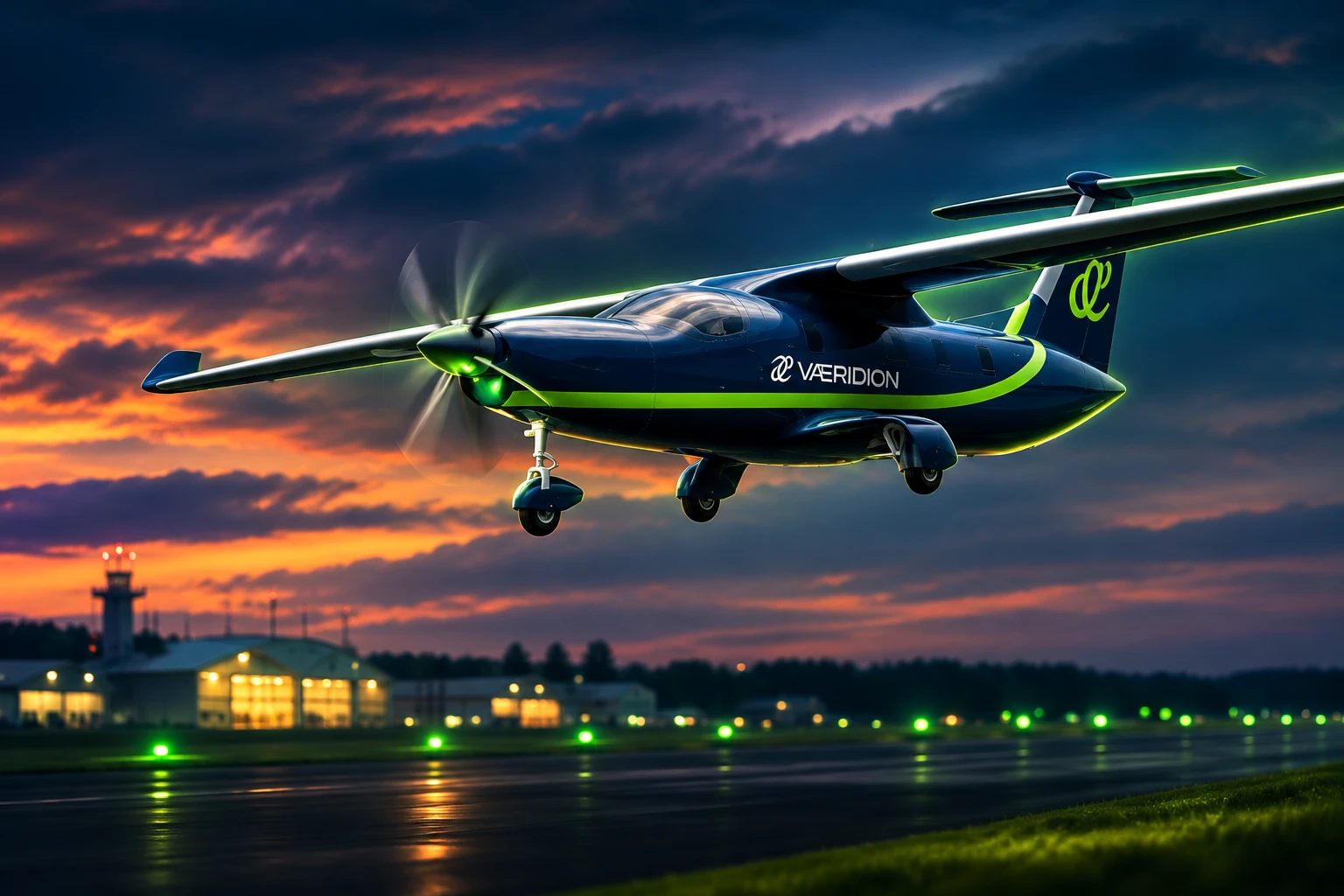
VÆRIDION closed €30 million to build a Microliner prototype, while a larger €94.5 million EU factory grant remains unsigned until 2027.

VÆRIDION closed a €30 million ($34 million) Series A2 on November 5 to build its first conforming electric Microliner. A separate €94.5 million EU grant would pay for a factory at Oberpfaffenhofen Airport near Munich. That larger cheque is selected, and it is not signed.
SHIFT Invest and Invest-NL, both Dutch, led the equity round. The grant, named CAROLUS, sits in the Commission’s Innovation Fund, which recycles EU Emissions Trading System revenue into net-zero plants. Together the two announcements add up to €124.5 million, but only the equity is in the bank.
The Closed Check Buys a Conforming Prototype
The Munich manufacturer said the €30 million Series A2 round will fund the first Microliner built to the design it wants certified, plus combined battery and motor tests. Including this round and earlier public money, it has raised about €60 million to date. That running total does not count the Innovation Fund selection.
World Fund, Project A and Vsquared Ventures followed on, as they did on earlier cheques. PAYBACK founder Alexander Rittweger joined as a deep-tech backer. SHIFT Invest, an Amsterdam climate fund whose limited partners include KLM, Schiphol and TU Delft, took the lead with the Dutch state’s investment institution.
Ivor van Dartel, founder and chief executive and a former Airbus manager, put the raise in hardware terms. Co-founder Dr Sebastian Seemann also came from Airbus when they started the firm in 2021.
Over the past year, we have turned the Microliner from a validated design into hardware, with exceptional capital efficiency. Our propulsion and battery technology is now being tested at our own facility in Oberpfaffenhofen. This equity round enables us to build our first conforming aircraft. The Commission’s selection of CAROLUS supports the next step: establishing the industrial capability for Microliner production.
Ivor van Dartel, Founder and CEO, VÆRIDION
A conforming aircraft is the one built to the drawings the European Union Aviation Safety Agency will judge, not a lab mule. That is the gap this round is meant to close. Serial production is a different bill, and it is the one Brussels may pick up later.
A €94.5 Million Grant Awaits a 2027 Contract
On October 19 the Commission picked 77 net-zero projects for €3.4 billion under the Innovation Fund call opened in December 2025. Large-scale awards were limited to 12 large-scale projects selected, which together asked for about €1.58 billion. The call drew 358 applications requesting €17.5 billion against a €2.9 billion budget.
VÆRIDION says CAROLUS was the only aviation file, and the only German one, in that large-scale group. The money would build and ramp a final assembly hall at Oberpfaffenhofen. Promoters have been invited to start grant-agreement work with CINEA, the agency that writes the contracts. The Commission said those results will be announced in the first quarter of 2027. The company expects a signature in 2027. Until then the factory cheque is a selection letter.
THE CAPITAL STACK
| Piece | Amount | Status |
|---|---|---|
| Series A2 equity | €30 million | Closed November 5, 2026 |
| Invest-NL inside that round | €5 million | Closed, with an InvestEU guarantee |
| Innovation Fund, CAROLUS | €94.5 million | Selected; contract due 2027 |
| Equity and earlier public funds | about €60 million | Includes this round; excludes the grant |
Wopke Hoekstra, Commissioner for Climate, Net Zero and Clean Growth, said the October wave is how the EU turns trading-scheme revenue into plants, jobs and a lower import bill. For VÆRIDION that means the public purse is being asked to finance the production line before a passenger has boarded.
WHAT WE KNOW
- Closed equity: The Series A2 is done and earmarked for a conforming prototype and powertrain tests.
- Grant status: CAROLUS is selected among 12 large-scale files, with a contract still to be written.
- Demand paper: The company counts commercial commitments for 130 aircraft, valued at over €730 million.
WHAT IS UNCONFIRMED
- Factory cash: No Innovation Fund payment lands until a 2027 grant agreement is completed.
- First flight: The November 5 notice does not set a maiden-flight date, only copper-bird work and prototype build.
- Firm orders: The 130-count is still letters of intent and other conditional paper, not a certified production backlog.
Private markets will fund a prototype. They have been slower to fund a certified small airliner after Europe’s electric air-taxi wave failed to reach regular service. The Innovation Fund is being used as the bridge across that gap.
Invest-NL Writes €5 Million Into a Delft Bet
Invest-NL is putting €5 million of the €30 million round, backed by a guarantee from InvestEU. The Dutch institution said VÆRIDION is based in Munich and keeps an office in Delft, where it works with TU Delft, NLR and GKN Fokker. It also has a Brussels subsidiary.
That is a supply-chain cheque as much as a climate cheque. Invest-NL said the aircraft should fly regional routes with no direct CO₂, and that fares could sit near a first-class train ticket because existing small airports would be used instead of new rail. Tim van Vledder, a senior investment manager there, is the contact named on the release.
Thijs Gitmans, general partner at SHIFT Invest, tied the lead to a rulebook pilots and regulators already know. “VÆRIDION has chosen a certification pathway regulators already understand and has delivered real hardware on a disciplined budget,” he said. SHIFT’s fourth fund is a €106 million vehicle still open to late closers, with KLM and Schiphol on the roster from earlier funds.
Daria Saharova, managing partner at World Fund, which led the December 2024 Series A of €14 million, framed the plane as a Bavarian sequel to Airbus rather than an air-taxi. The Dutch money, the Delft workshop and the ETS-backed factory grant point the same way: Europe is trying to industrialise a small electric airliner with state balance sheets, not only venture funds.
What the Microliner Can Fly on Batteries
The Microliner is a clean-sheet, battery-only aircraft for nine passengers and two pilots, or 10 m³ of cargo, on short hops. It is designed to EASA CS-23 rules, the code for smaller commercial types, which costs far less to work through than a large airliner code. Gitmans’s “pathway regulators already understand” is that choice.
VÆRIDION targets 400 km with nine passengers under instrument flight rules, or 550 km with four under visual flight rules, plus commercial IFR reserves on the nine-seat mission. The company brochure lists a 5,700 kg maximum takeoff weight, 1,000 kg of useful load including the pilots, a 23.99 m wingspan and a 13.51 m fuselage. Typical charging is listed at under 40 minutes. Maximum cruise is 190 knots equivalent, or 235 knots true at ceiling.
MICROLINER DESIGN CHOICES
- Wing and packs: A glider-style wing carries patented modular batteries in the structure rather than in a belly tank.
- Motors: Several electric engines drive a single propeller, a layout meant to meet European commercial twin-engine thinking without hanging a row of fans.
- Cost aim: Cash operating costs below €0.40 per seat-kilometre, cheap enough, the firm says, to match a first-class rail fare on thin routes.
- Noise: Lower noise than a turboprop, which the company argues could open night slots if airports allow them.
- Use cases: Scheduled and semi-scheduled passenger work, cargo, charter, training and public-service routes.
Van Dartel has argued that today’s cells can support a six-tonne aircraft out to about 500 km, which is why the cabin stops at nine seats. Stretch the plane and the batteries stop closing the mission. Keep it inside CS-23 Level 3 and the approval bill stays in the millions, not the billions.
130 Aircraft Sit on Letters of Intent
VÆRIDION now counts commercial commitments for 130 aircraft worth over €730 million. ASL Group, a Belgian business-aviation operator with a semi-scheduled network in the Benelux, is the launch customer. ASL signed for 10 aircraft in June 2025.
In June 2026, after the preliminary design review, the company added more than 100 new letters of intent from six customers. Named names then included ABS Jets, German regional carrier Avanti Air, Copenhagen Helicopter, E-Flight Academy, an unnamed Irish party and an undisclosed European lessor. Those files mix passenger, cargo, training and lease demand across Germany, Denmark, Ireland, the Czech Republic and the Netherlands.
KLM, BayernLB and lessor TrueNoord sit on a market advisory committee with other operators. That is not a type certificate, and none of it is a firm, non-refundable production order. It is a queue of operators who say they will take the plane if it is certified, financed and delivered around the 2030 target.
General Atomics Aeronautical Systems has also taken a first commercial tie-up on VÆRIDION’s airborne battery packs for unmanned aircraft, a side path that does not depend on passenger approval.
Oberpfaffenhofen Has Powered On the Motor
The firm opened its production and test site at Oberpfaffenhofen in March 2026 and has since powered on its electric engine there. Next comes a copper-bird rig, a ground test article that ties battery packs and the powertrain together before they go into a flying airframe. Wind-tunnel work runs in parallel. The November 5 plan is to use that campaign to support the first conforming Microliner and to get ready for flight test, without pinning a maiden-flight month.
In July it finished a second Pre-Application Contract with EASA, working with GKN Aerospace on high-voltage wiring. The first PAC, in 2024, covered the distributed electric propulsion layout. Together those contracts set how the novel bits will be shown to the agency. The company is applying for design organisation approval, the in-house privilege needed to keep certification work moving.
The European Investment Bank’s advisory arm had already been helping shape the Innovation Fund file under the Project Development Assistance scheme, a March 2026 arrangement that sat upstream of October’s selection.
THE MICROLINER MONEY AND HARDWARE CALENDAR
- 2021: Van Dartel and Seemann found VÆRIDION in Munich.
- December 19, 2024: Series A of €14 million closes, led by World Fund, after the first EASA pre-application contract.
- March 2026: Oberpfaffenhofen test and production site opens; EIB advisory support is announced.
- June 2026: Aircraft-level preliminary design review is completed and the order book steps past 100 new letters of intent.
- July 22, 2026: Second EASA pre-application contract on high-voltage systems closes with GKN Aerospace.
- October 19, 2026: Commission selects 77 Innovation Fund projects, including CAROLUS in the large-scale group.
- November 5, 2026: Series A2 of €30 million closes to build the first conforming prototype.
- 2027: Grant agreement work is due, with Commission results slated for the first quarter.
- 2030: Targeted entry into commercial service and first customer deliveries.
German LuFo climate funding for the BREEZE aerodynamics project, a German-Dutch effort with TSH money on the Dutch side, is scheduled from April 2026. Public cash is already in the programme at several layers, even before CAROLUS is signed.
Thin Routes Keep Losing to Jet Fuel
The commercial case is written against a shrinking map. VÆRIDION says more than 21,000 small turboprops still work regional routes worldwide, with an average age of 23 years, and that no new aircraft of this size has entered service in 30 years. It cites the European Regions Airline Association for about 120 European regional routes dropped in the five years before June 2026, as fuel and upkeep made short sectors hard to run.
The company says jet fuel more than doubled year on year by October 2026, and it points to Eurostat for the EU importing 57 percent of its energy. Germany, it adds, has more airfields the Microliner could use than ICE high-speed rail stations. Night flying on low noise is a claimed extra, subject to airport approval. McKinsey’s regional air mobility work, linked from the raise notice, puts the global market at up to $115 billion by 2035.
Those figures are the reason a nine-seat battery plane is being treated as industrial policy. They are also why the unsigned factory grant matters more than the headline round. If CAROLUS is contracted in 2027 while the first conforming airframe is still being built, Europe will have financed an assembly line for an aircraft that has not yet carried a paying passenger. If the contract slips, the €30 million still only buys a prototype and a test rig in Bavaria.
Van Dartel’s brief is unchanged either way: make regional flying pay again, from Europe, by 2030. The next proof is metal on the copper bird, then a grant signature, then a type certificate. Until those land, the Microliner is a funded design with a selected plant and a long list of letters.

One UI 9.5 Beta Puts the Galaxy S26 on Last Year’s Clock

DBS Puts a 24/7 USDC Window Inside the Bank

European Startups Head for $81 Billion as First Checks Shrink

US Stocks Lost $1.3 Trillion Before Nvidia’s Beat

Home Depot Bets on Finance Chief Richard McPhail as CEO

Aramco Crash Kills 14 Two Days After Oil Restart

Salah Captained Egypt to Their First World Cup Win

Zelda’s 40th Switch 2 Ships Without a Zelda Game

Apple Labor Day Deals Hide June’s Memory Price Hike

El Niño Puts Israel’s Needed Winter Rain on a Flood Clock
-
 BUSINESS5 months ago
Aramco Crash Kills 14 Two Days After Oil Restart
-
 NEWS6 months ago
Salah Captained Egypt to Their First World Cup Win
-
 GAMING2 months ago
Zelda’s 40th Switch 2 Ships Without a Zelda Game
-
 NEWS3 months ago
Apple Labor Day Deals Hide June’s Memory Price Hike
-
 NEWS4 months ago
El Niño Puts Israel’s Needed Winter Rain on a Flood Clock
-

 GAMING2 months ago
Palworld 1.0.4 Adds Palpedia Search After the 1.0 Launch
-

 NEWS4 months ago
Saudi Visa Routes Split Nigerian Travelers Into Two Speeds
-

 BUSINESS9 months ago
BAE’s 60-Year Saudi Franchise Now Runs Through Taif