
NEWS
The UK AI Biosecurity Lab Will Run on Model Credits
Britain’s new AI Biosecurity Lab draws £100 million in public cash and up to £200 million in OpenAI and Anthropic model credits, not a matching pile of money.

Britain is standing up an AI Biosecurity Lab with £100 million of public cash and up to £200 million in OpenAI and Anthropic model credits. The Cabinet Office published the plan on 24 October 2026 and called the new body the world’s first of its kind.
Those company lines are compute, model access and staff time, not a second cheque. The lab’s tools will come from the same frontier firms the government says can also make harmful biology easier.
Who Pays for the AI Biosecurity Lab?
The state puts in the only cash that founds the organisation. OpenAI and Anthropic then meter access to their systems, which the Cabinet Office counts as company commitments of up to £200 million and folds into a backing figure of up to £300 million. Google DeepMind and London firm Basecamp Research join as research partners with no pound figure attached.
THE CASH AND THE CREDITS
| Source | What it is | Stated value |
|---|---|---|
| UK government | Public cash to found AIBL | £100 million |
| OpenAI | Compute and model credits, plus trusted model access | £100 million |
| Anthropic | Model credits, trusted access and technical support | Up to £100 million |
| Google DeepMind | Research partnership; may offer Gemini and science models | Not priced |
| Basecamp Research | AI-biology models, skills and technical help | Not priced |
OpenAI’s £100 million is a stated commitment. Anthropic’s line is capped with “up to,” so the combined company figure is also a ceiling. Up to two-thirds of the advertised backing is therefore a draw on someone else’s cluster, billed as credits until the lab actually uses them.
Detection and Vaccines Come First
The Cabinet Office describes AIBL as the world’s first dedicated AI biosecurity organisation. It will sit as an independent non-profit, built to hire from industry and universities and to move with the speed of a frontier AI-bio company. A scientific advisory committee from academia, industry and the third sector is promised, with names to follow.
First work is narrow. The lab is to improve early detection of emerging biological threats, and to speed discovery, development and testing of vaccines, treatments and other medical countermeasures. It is being launched inside a National AI Biosecurity Initiative that also ties in the UK Health Security Agency, the Animal and Plant Health Agency and the Defence Science and Technology Laboratory, and it will work with the Medicines and Healthcare products Regulatory Agency on health emergencies and on how AI-designed medicines should be regulated.
Kanishka Narayan, the AI minister, said the lab “will be a major new global institution, bringing together world-leading scientific expertise to protect people from emerging biological threats and ensure Britain leads the world in AI safety and security.” The government also wants philanthropic money later. None of that names a director, a building, or a date when staff start.
The Same Models Lower the Barrier to Harm
The Cabinet Office puts the dual-use problem in the first paragraph of its own notice. AI can speed research, deepen knowledge of disease and help find new treatments, it says, and “increasingly capable AI systems also create new biological risks and could lower barriers to harmful activity.” AIBL is the official answer to both halves of that sentence, using frontier models as the defensive kit.
OpenAI has been building that kit in public. On 29 May 2026 it launched the Rosalind Biodefense programme to put GPT-Rosalind, its frontier reasoning model for life sciences, in the hands of vetted developers and allied government partners. The company already treats some systems as high capability in biology: in July 2025 it classed ChatGPT agent that way under its Preparedness Framework and tightened safeguards. The UK credit line now routes AIBL into that gated channel.
Anthropic spent September showing why the gate exists. The company said it had blocked accounts after users tried to get around controls while working on dual-use biology, including gain-of-function research, and it called biological misuse one of the most serious risks of frontier models. It also said it did not assert that those users meant harm. That is the bind AIBL inherits: the useful query and the dangerous one can look the same until someone decides.
Rapid advances in AI are creating new risks related to the design and modification of pathogens, increasing the potential for both accidental and deliberate harm. But, used safely and securely, the same technology can help us detect threats earlier and design lifesaving vaccines faster, fundamentally changing what is possible in pandemic preparedness.
Aurelia Nguyen, Deputy CEO, Coalition for Epidemic Preparedness Innovations
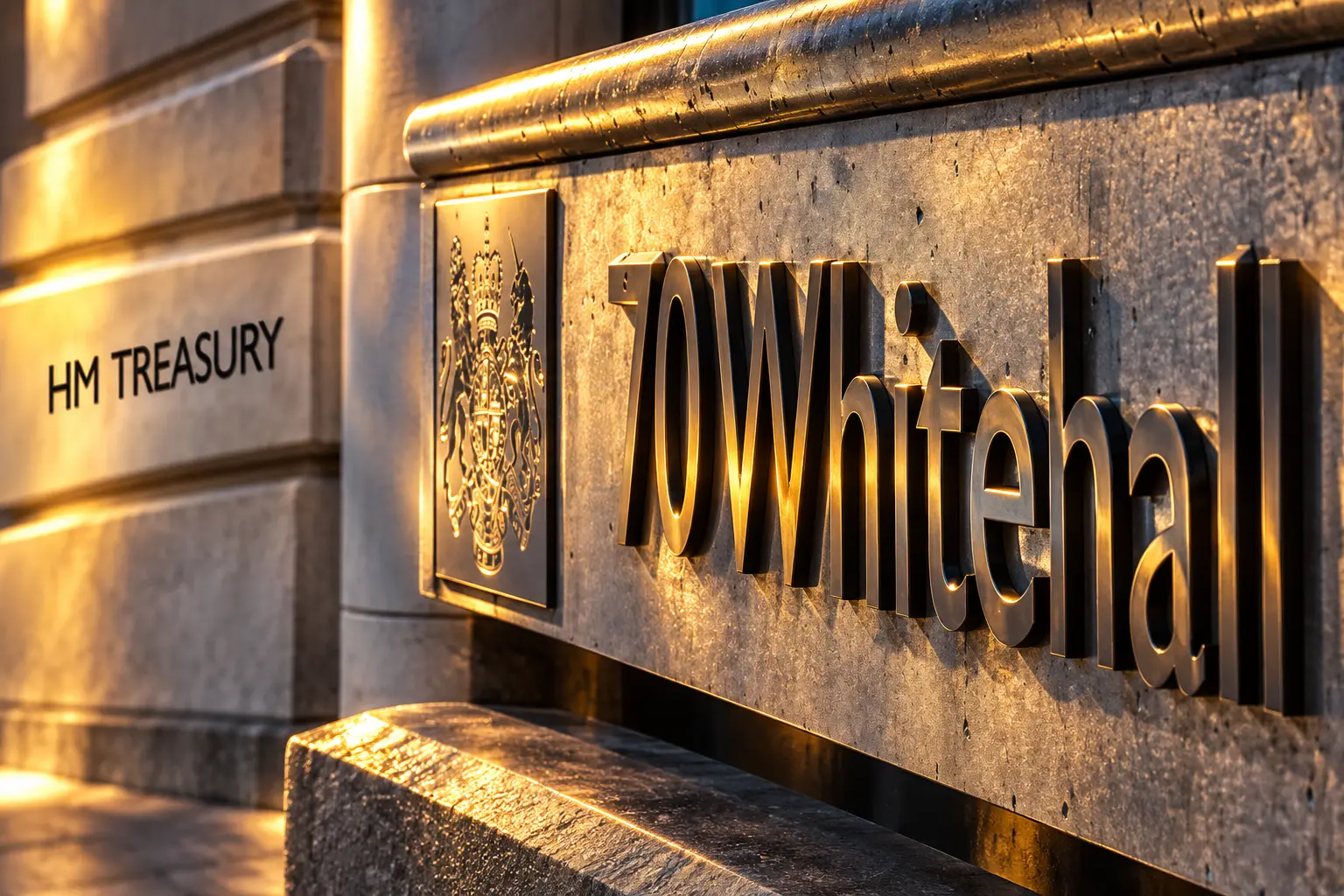
Nguyen’s statement sits on the Treasury page that unveiled the package. It is the cleanest official description of why the lab exists, and why its suppliers are also the source of the risk.
OpenAI, Anthropic and a London Biology Firm
The partnership list does two jobs at once. It gives a lab that does not yet exist day-one access to models it could not train, and it gives those vendors a government-adjacent home for defensive biology work they were already selling as trusted access.
WHO SITS IN THE TENT
- OpenAI: £100 million in compute and model credits, with trusted access to its most capable relevant models through Rosalind Biodefense.
- Anthropic: Up to £100 million in model credits, trusted access and dedicated technical support from its own staff.
- Google DeepMind: Scientists and biosecurity specialists on joint research, and a stated aim to offer trusted access to frontier Gemini and specialised science models.
- Basecamp Research: Access to its AI-biology models, capabilities and technical expertise on priority biosecurity problems.
- UK agencies: UKHSA, APHA and Dstl inside the wider initiative, with the MHRA on emergencies and AI-designed medicines.
Basecamp is the British name in that group. The London company, founded in 2019 by Glen Gowers and Oliver Vince, closed a $140 million Series C in September to train a new generation of its EDEN models and push AI-designed therapies toward the clinic. Its Trillion Gene Atlas, which it calls the largest proprietary biological training set of its kind, was built with partners including NVIDIA and Anthropic and draws on collection partnerships in more than 30 countries. Vince said Basecamp was “proud to support” the lab and called it “great that the UK government is deploying cutting edge AI capabilities to strengthen our resilience.”
DeepMind’s offer is the softest of the three US-linked houses: collaboration and a look toward access, with no credit total. The priced seats belong to OpenAI and Anthropic.
An AISI-Style Body for Pathogens
Ministers are copying a structure they already like. The AI Security Institute, created in 2023 to test frontier models, is the template: hire quickly, sit near government without being a classic department, and keep enough autonomy to match industry pace. AIBL is that model pointed at biology. The same 24 October package adds £120 million to AISI for testing, research and technical standards, so the two bodies will grow in parallel.
The biology brief is older than the AI one. On 12 June 2023 the Cabinet Office published the UK Biological Security Strategy, covering future infectious disease outbreaks, antimicrobial resistance, accidental releases of pathogens and deliberate biological attacks. AIBL is explicitly built on that strategy. The new lab is the AI layer on a three-year-old resilience plan, not a replacement for UKHSA labs or Dstl’s existing work.
FROM THE 2023 STRATEGY TO THE LAB
- 12 June 2023: Cabinet Office publishes the UK Biological Security Strategy on outbreaks, resistance, accidents and attacks.
- 2023: The AI Security Institute is created to evaluate frontier models for the state.
- July 2025: OpenAI treats ChatGPT agent as high capability in biology and tightens safeguards.
- 29 May 2026: OpenAI launches Rosalind Biodefense and extends trusted GPT-Rosalind access to selected allied government partners.
- September 2026: Anthropic says it blocked accounts tied to dual-use biology work; Basecamp Research closes its $140 million Series C.
- 24 October 2026: Cabinet Office and Treasury announce AIBL, with company credits counted in the backing total.
- 28 October 2026: Chancellor John Healey is due to put the public money into the Budget.
Professor Hugh Brady, president of Imperial College London, said biosecurity is “one of the defining challenges of our generation” and that both the chance of a threat and its potential impact are rising, whether it starts in nature or is engineered. Imperial’s Global Biosecurity Network, he said, cannot close that gap alone. The lab is being asked to be the extra institution that keeps pace.
Healey Puts the Lab in the 28 October Budget
The lab is the flagship of a wider AI security spend that Healey will set out on 28 October 2026. On 24 October the Treasury said AIBL sits inside a £165 million National AI Biosecurity Initiative, of which £100 million founds the lab and £65 million goes to biological surveillance and medical countermeasures for priority pathogens. A written statement to the Commons on 26 October put those same figures on the parliamentary record.
The company credits sit outside that £165 million. They do not enlarge the public total; they change what the public lab can call on. Around it, the Treasury listed an extra £120 million for AISI, £60 million for a National Cyber Shield (including a £25 million challenge fund), £70 million for a National Exposure and Real-Time Vulnerability Centre, extra money for the Sovereign AI Fund and its research procurement scheme, an £18 million chip-design academy, and smaller pots for local AI partnerships and economic research. Julian David, chief executive of techUK, called it “a strong £600m+ package focused on AI adoption, trust and security, investment and AI’s impact on jobs and society.”
Healey said he was setting out “a distinctively British approach to AI,” one that “doesn’t leave workers behind and defends our national interest.” Narayan, on the same page, said Britain “cannot afford to rely entirely on technology built overseas.” The biosecurity lab still depends on US model vendors for the systems that make the AI half of its name real.
No Director, No Site, No Start Date
The announcement is a design, not a working institute. The Cabinet Office has not named a leader, a host city, a headcount or a date when the first detection tool is due. The scientific advisory committee, which is supposed to keep a non-profit honest when its compute arrives as vendor credit, has no published membership.
WHAT WE KNOW
- Public cash: £100 million founds AIBL; £65 million more sits in the same initiative for surveillance and countermeasures.
- Company lines: OpenAI commits £100 million in compute and credits; Anthropic commits up to £100 million in credits, access and support.
- Legal form: Independent non-profit, with AISI as the stated organisational comparison.
- First tasks: Earlier threat detection, and faster vaccines, treatments and other medical countermeasures.
WHAT IS UNCONFIRMED
- Leadership: No director, board or advisory committee names.
- Home: No site, host university or agency campus.
- Metering: No public schedule for how credits are drawn, audited or cut off.
- Scrutiny: No stated process for the lab to test the same models its funders supply.
That last gap is the one that will decide whether AIBL is a customer or a check. A lab that lives on OpenAI and Anthropic credits can still do useful defensive work. It cannot claim independence from those firms until it can say no to a model, publish a fault in one, or take its workload elsewhere. Healey’s Budget on 28 October 2026 will lock in the public cash. The unnamed committee is what has to make the rest of the bargain real.

One UI 9.5 Beta Puts the Galaxy S26 on Last Year’s Clock

DBS Puts a 24/7 USDC Window Inside the Bank

European Startups Head for $81 Billion as First Checks Shrink

US Stocks Lost $1.3 Trillion Before Nvidia’s Beat

Home Depot Bets on Finance Chief Richard McPhail as CEO

Aramco Crash Kills 14 Two Days After Oil Restart

Salah Captained Egypt to Their First World Cup Win

Zelda’s 40th Switch 2 Ships Without a Zelda Game

Apple Labor Day Deals Hide June’s Memory Price Hike

El Niño Puts Israel’s Needed Winter Rain on a Flood Clock
-
 BUSINESS5 months ago
Aramco Crash Kills 14 Two Days After Oil Restart
-
 NEWS6 months ago
Salah Captained Egypt to Their First World Cup Win
-
 GAMING2 months ago
Zelda’s 40th Switch 2 Ships Without a Zelda Game
-
 NEWS3 months ago
Apple Labor Day Deals Hide June’s Memory Price Hike
-
 NEWS4 months ago
El Niño Puts Israel’s Needed Winter Rain on a Flood Clock
-

 GAMING2 months ago
Palworld 1.0.4 Adds Palpedia Search After the 1.0 Launch
-

 NEWS4 months ago
Saudi Visa Routes Split Nigerian Travelers Into Two Speeds
-

 BUSINESS9 months ago
BAE’s 60-Year Saudi Franchise Now Runs Through Taif