
BUSINESS
Russia’s New Crypto Floor Goes to Exchanges and State Banks
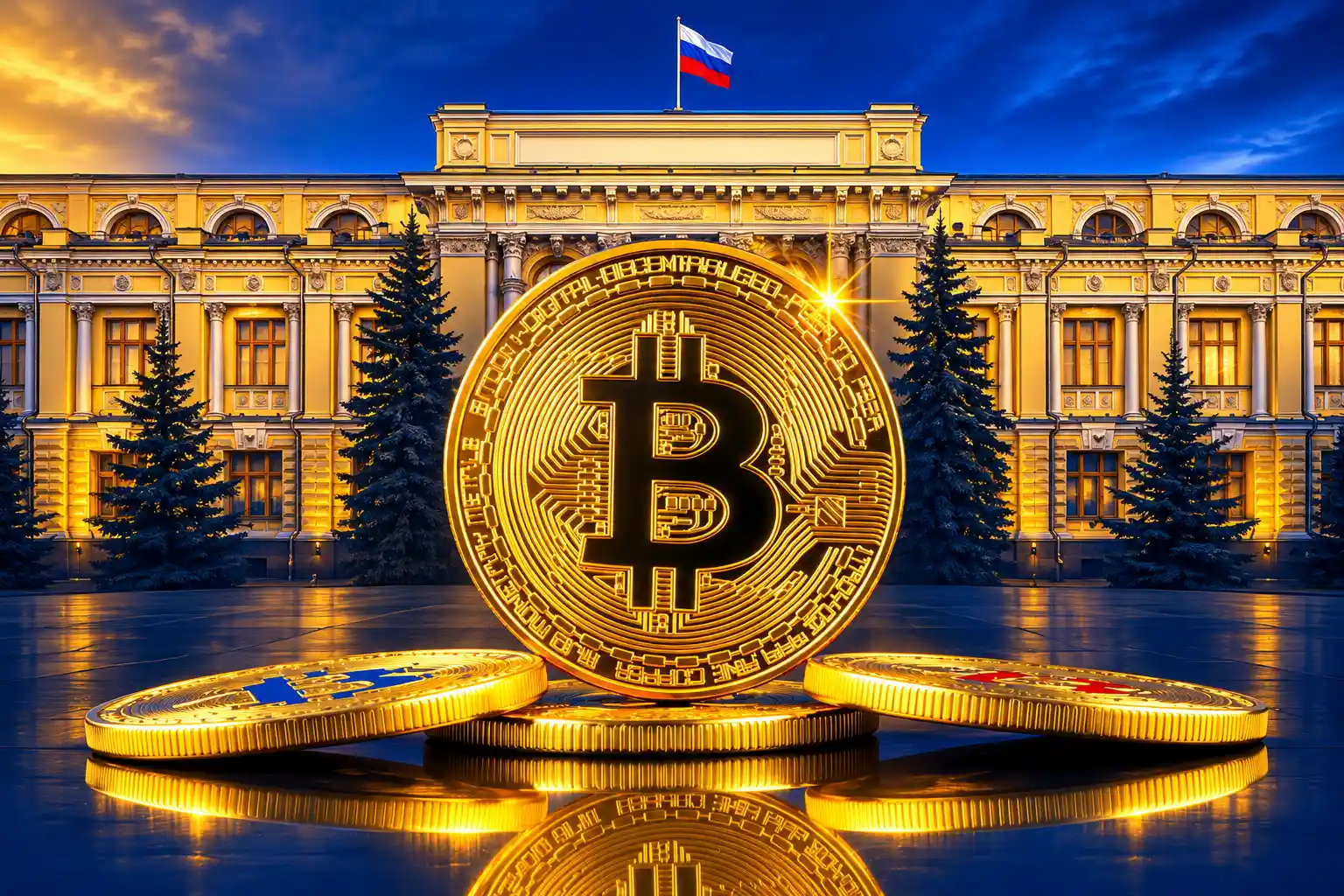
Russia will let exchanges trade crypto from November 22 after a central bank rules review, under a 300,000-ruble retail cap and a domestic payments ban.

The Bank of Russia said on November 11 that exchanges may begin cryptocurrency trading from November 22, once the regulator has approved each venue’s rulebook.
That date falls five days after bitcoin, ether and USDT become eligible for public trading, and nine days before Moscow Exchange plans its first official crypto session. Ordinary buyers still cannot spend those coins inside Russia.
Exchanges Can Start on November 22 After a Rules Review
The central bank’s notice is a permission with a veto attached. Venues start organized crypto trading on November 22 only after they have agreed their trading rules with the regulator. The Bank of Russia did not say that any exchange has already cleared that review.
The order, registered by the Ministry of Justice, tells exchanges how to run the sessions they already run for stocks and bonds. They must register the brokers, trust managers and central counterparties that take part in crypto trades, keep registers of orders and deals, and watch the activity. They also have to publish a current price, a weighted-average price, a market price and a closing price, then send trading results to the central bank in the same way they already do for other assets.
November 22 is therefore a date on which a licensed exchange may switch the product on, if its rulebook is already signed. It is not a date on which crypto becomes legal tender, and it is not a date on which every Russian broker will have a live book. Moscow Exchange has already said it will wait until December 1 and open with pilot deals.
What Non-Qualified Investors May Buy
A separate Bank of Russia order, published on November 6 and due to take effect on November 17, names the only coins that ordinary retail buyers may purchase: Bitcoin, Ether, and USDT for non-qualified investors. From that date, exchanges may admit those three assets to public trading. The coins were chosen, the central bank said, as the most liquid names that meet tests written into the law: market capitalisation, average daily trading volume, and at least five years of pricing history on foreign exchanges.
Retail access is narrow in amount as well as in ticker. Purchases through a single intermediary may not exceed ₽300,000, about $3,700, in a calendar year. The cap is per desk, so a buyer who uses more than one broker, trust manager or crypto exchange office is counted separately at each one. Qualified investors may buy any cryptoasset with no amount cap. Both groups must pass a knowledge test and read a risk notice before they trade.
THE TWO INVESTOR TRACKS
| Rule | Non-qualified buyers | Qualified buyers |
|---|---|---|
| Assets | Bitcoin, ether, USDT | Any cryptoasset |
| Yearly purchase cap | ₽300,000 per intermediary | None |
| Knowledge test | Required | Required |
| Risk notice | Required | Required |
| Where they buy | Brokers, trust managers, crypto exchange offices, on-exchange or OTC | Same channels |
The test is the one gate that does not change with wealth. A professional account still has to sit it. What changes is the menu and the ceiling. For a non-qualified client, three liquid coins and ₽300,000 a year at each licensed desk is the entire onshore product.
Only Bitcoin, Ether and USDT for Retail
The short list is the policy. Bitcoin and ether are treated as digital currencies. USDT is admitted as a foreign digital instrument that still clears the five-year pricing test. The Bank of Russia has already said in its public questions that USDT can be listed on organised trades once the relevant order is in force. Nothing in the November 6 notice adds a fourth retail coin, and nothing in the November 11 trading-rules notice widens that menu for ordinary buyers.
The Cap Applies Per Desk, Not Across Them
Because the ₽300,000 ceiling is drafted per intermediary, a determined retail buyer can, on paper, repeat the limit at a second licensed desk. The central bank’s own wording is “through a single intermediary.” That is a leak in the ceiling, not a hole in the system: every desk still has to be on a Bank of Russia register, run the test, and report. Qualified status is the only way off the amount cap, and even then the coins still cannot be spent in a Russian shop.
Moscow Exchange’s December 1 Pilot
Moscow Exchange said on November 2 that it plans to offer digital-currency deals from December 1, calling the venue the first organized digital currency market in Russia. The first stage is pilot trades, with members joining as they are ready rather than a full book on day one. Trading will use the exchange’s stock-market technology and go through unified clearing at the National Clearing Centre, the group’s clearing house.
MOEX’S OPENING PRODUCT SET
- Hours: Sessions run with the stock market, from 6:50 a.m. to 11:50 p.m. Moscow time.
- Coins: BTC, ETH and USDT at launch, in both anonymous and addressed modes, with more international and Russian instruments later.
- Settlement: Same-day (TOD) and next-day (TOM) deals, plus swaps for liquidity.
- Retail limit: Non-qualified clients buy only after the test, and only up to ₽300,000 a year through one broker.
The December 1 date is a launch plan, not a central-bank mandate. It sits after November 22, which is the earliest an exchange may operate a crypto book if its rules are already approved. Moscow Exchange is using a partner digital depository for settlement and custody, and it is pitching the product at the brokers and professional clients already wired into its equity market. Interest, the exchange said, is coming both from those traditional members and from firms that already handle digital currencies in investment and settlement work.
Sberbank and VTB Landed on the First Registers
The people who will actually sell the coins are already on the central bank’s books. On October 6 the Bank of Russia admitted the first five digital depositories and four crypto exchange operators under the new law’s transitional rules. Digital depositories record and transfer digital currencies and digital rights and give clients access to the address identifiers where those assets sit. Exchange operators may buy and sell digital currencies in their own name, off organised venues.
VTB appeared on both lists on day one. Sberbank entered as a depository, then gained exchange-operator status later in October. T-Technologies said its units Atomyze, as a depository, and T-Invest Lab, as an exchange operator, had obtained the permissions they needed. Holding both statuses lets a bank keep the record of a client’s coins and deal in those coins as principal.
Vitaly Sergeichuk, VTB’s deputy president and chairman of the management board, said the bank expects to open access “for a wide range of investors via VTB My Investments and directly via the bank’s crypto exchange as early as November and December 2026 respectively.” Sberbank has pointed to December 1 for its first crypto products, with the timing still tied to remaining rule-making. Those desks inherit the legal flow as offshore platforms that halted Russian operations leave the onshore market to licensed banks.
The winners of November 22 are therefore not retail traders hunting a new casino. They are the exchanges that already clear ruble stocks, and the state banks that already hold the depository and exchanger slots. The product they will sell to ordinary clients is three coins, a test, and a yearly ticket of ₽300,000 at each desk.
Spending Crypto Inside Russia Stays Illegal
The same law that builds the trading rails keeps crypto out of the till. When the State Duma passed the bill in July, the Bank of Russia restated the bar in plain language.
it still will be prohibited to use cryptocurrencies in payments within Russia.
Bank of Russia, 21 July 2026 statement
Exporters and importers get the exception that retail does not. They may use cryptocurrencies in cross-border payments without amount limits, through intermediaries or directly, with any type of wallet and any coin. Russian residents who deal abroad must do so across foreign bank accounts, and they may send coins bought in Russia to other countries only through regulated intermediaries. Holdings recorded abroad must be reported to the tax authorities.
That split is the design. Crypto is being admitted as a supervised investment and as a tool for foreign-trade settlement. It is not being admitted as money on the domestic high street. The digital coins a broker may sell from November 17, and that Moscow Exchange plans to match from December 1, stop at the point of purchase.
The September Law Set a 2027 Grey-Market Cutoff
The November dates are the operating manual for a statute whose main provisions have been in force since September 1. The federal law on digital currencies and digital rights, No. 282-FZ, puts circulation through licensed exchanges, brokers, crypto exchange offices and digital depositories. Market participants have a transition period through 1 July 2027 to obtain licences and bring their operations into line. After that cutoff, residents who are not themselves licensed organisers of crypto circulation are expected to deal only through those organisers, or with them.
THE DATES THAT BUILT THIS MARKET
- 21 July 2026: The Bank of Russia describes the bill as it clears the Duma, including the ₽300,000 retail cap, the test, and the domestic payments ban.
- 1 September 2026: Main provisions of Federal Law No. 282-FZ take effect.
- 6 October 2026: The central bank admits the first five digital depositories and four crypto exchange operators.
- 2 November 2026: Moscow Exchange sets a December 1 start for BTC, ETH and USDT, with pilot deals first.
- 6 November 2026: The Bank of Russia publishes the retail list of bitcoin, ether and USDT.
- 11 November 2026: The organised-trading order is published; exchanges may go live from November 22 after a rules review.
- 17 November 2026: The retail list takes effect and the three assets may be admitted to public trading.
- 22 November 2026: Licensed exchanges may open crypto books if the central bank has agreed their rules.
- 1 December 2026: Moscow Exchange plans to begin its organised digital-currency market.
- 1 July 2027: The transition period for licences ends.
By the time that 2027 deadline arrives, the legal market is meant to live on venues the central bank can see. November 22 is the first day those venues may quote a crypto book. December 1 is when the largest securities exchange says it will try. The banks that already sit on both registers will take the orders. Retail still gets three coins, ₽300,000 a year at each desk, a test, and no right to pay the grocer in bitcoin.
The next figure that matters is whether any exchange has actually had its crypto rulebook signed before November 22, and how many brokers are wired into Moscow Exchange’s pilot on December 1. Until those two facts land, the date is a gate, not a crowd.
Disclaimer: This article is news reporting on Russian market rules and exchange plans, and it is for information only. It is not investment, trading, tax or legal advice, and it is not a recommendation to buy, sell or hold bitcoin, ether, USDT or any other cryptoasset. Readers who are considering an account, a test, or a trade should consult a qualified financial adviser and, where needed, a lawyer licensed in their jurisdiction before acting. Figures, lists of coins, licence statuses and launch dates reflect the Bank of Russia and Moscow Exchange notices cited here and may change as rulebooks are approved or delayed.

One UI 9.5 Beta Puts the Galaxy S26 on Last Year’s Clock

DBS Puts a 24/7 USDC Window Inside the Bank

European Startups Head for $81 Billion as First Checks Shrink

US Stocks Lost $1.3 Trillion Before Nvidia’s Beat

Home Depot Bets on Finance Chief Richard McPhail as CEO

Aramco Crash Kills 14 Two Days After Oil Restart

Salah Captained Egypt to Their First World Cup Win

Zelda’s 40th Switch 2 Ships Without a Zelda Game

Apple Labor Day Deals Hide June’s Memory Price Hike

El Niño Puts Israel’s Needed Winter Rain on a Flood Clock
-
 BUSINESS5 months ago
Aramco Crash Kills 14 Two Days After Oil Restart
-
 NEWS6 months ago
Salah Captained Egypt to Their First World Cup Win
-
 GAMING2 months ago
Zelda’s 40th Switch 2 Ships Without a Zelda Game
-
 NEWS3 months ago
Apple Labor Day Deals Hide June’s Memory Price Hike
-
 NEWS4 months ago
El Niño Puts Israel’s Needed Winter Rain on a Flood Clock
-

 GAMING2 months ago
Palworld 1.0.4 Adds Palpedia Search After the 1.0 Launch
-

 NEWS4 months ago
Saudi Visa Routes Split Nigerian Travelers Into Two Speeds
-

 BUSINESS9 months ago
BAE’s 60-Year Saudi Franchise Now Runs Through Taif