
BUSINESS
Previsia Raises €3.8 Million to Cover Sites Insurers Skip
Toulouse insurtech Previsia raised €3.8 million after a 2025 profit, to put AI risk prevention on sites that still lack a real survey.

Previsia raised €3.8 million to put AI risk prevention on sites insurers rarely visit. The Toulouse insurtech closed the seed round with IRDI Capital Investissement and ARIS on November 17, 2026, after turning a profit in 2025.
Co-founder and chief executive Hélie Brouchet says fewer than 5% of insured sites get genuine risk prevention, because a specialist visit still costs about €3,000. That is the gap the cheque is meant to close, not a science project in search of a market.
Engineer Visits Still Run About €3,000 Each
Brouchet, an HEC graduate who worked at EY and JPMorgan, founded the company in October 2023 with David Salom, a physicist who ran high-risk industrial sites. Their first broker client was Diot-Siaci. The brief was blunt: how do you run prevention for a client with more than 1,000 locations if the default is to send an engineer to each one?
“The current solutions are outdated. It’s like it’s sending engineers on every site and it’s about €3,000 per visit, and it’s not scalable,” Brouchet said. A thousand visits at that price come to about €3 million for a single survey cycle, before anyone has fixed a lock or a sprinkler.
Jewelers, restaurants and garages sit on the wrong side of that maths. They generate too little premium to justify a specialist on the forecourt, so they stay off the inspection list until a fire, a theft or a flood puts them on it. Previsia is aiming the product at those accounts, and at the brokers who have to place them.
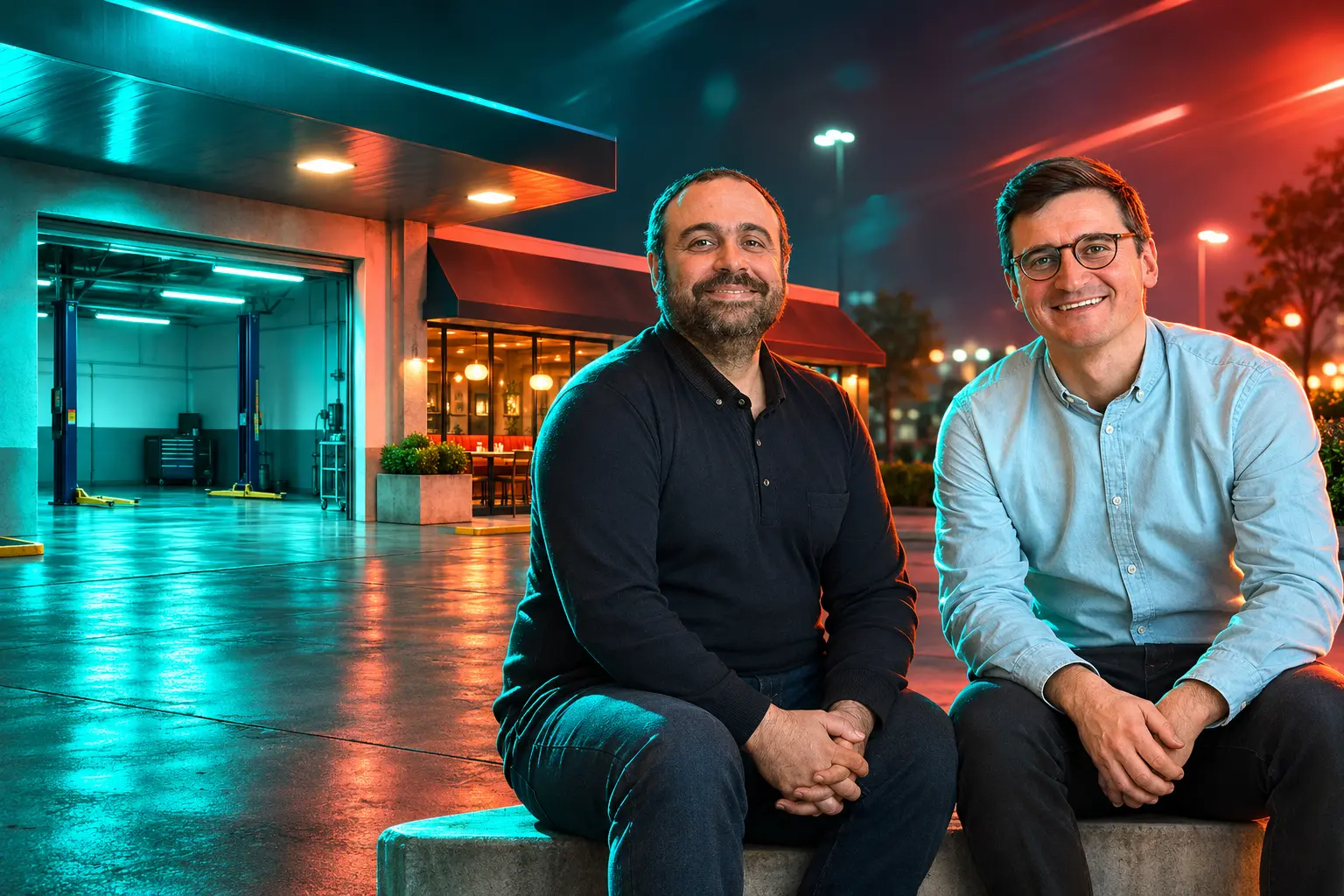
What the Platform Does on a Site Visit
The company sells a single platform for surveys and action plans that insurers, brokers and policyholders share. A broker can open a car dealership profile in minutes, walk the site, talk to staff and take photographs. The questionnaire fills itself. An underwriter-ready report can go out the same day.
THE PREVENTION CHAIN ON ONE FILE
- Setup: The intermediary builds a site profile by trade, from garages to woodworking plants, before anyone arrives.
- Survey: Visits run on site, by video call or as a self-assessment, including offline, with voice notes and photos.
- Score and plan: The model writes a risk score, a summary and a ranked action list for that location.
- Follow-up: The business ticks off work on a phone, while the broker and insurer watch the portfolio.
Brouchet is clear that a general chatbot is not enough for this kind of visit. Previsia’s model was tuned by its own engineers, and a person still signs off the output. “It’s always a human that has to validate the results that the AI gives. Our platform does not replace engineers because today it helps engineers do more visits,” he said.
Brokers, Insurers and the 40 Large Accounts
Distribution runs through intermediaries, not a direct app store. “It’s not about 40 businesses, it’s really 40 large customers,” Brouchet said. The company site puts the book at more than 40 clients. Named users include Groupama, Diot-Siaci, Verspieren, MSIG Europe and Helvetia, which run the software across sites in their networks.
Diot-Siaci asked to triple the contract about six months in. The insurer paid for that expansion, and the broker saw the same gap in other books. For the broker, the file is leverage at renewal. For the insurer, it is a view of locations that used to be blank. For the site manager, it is a list of jobs that can be closed without waiting for the next specialist tour.
Previsia calls itself an independent third party, hosted in the European Union and built to leave a trail for the ACPR. That pitch only works if the three parties trust the same record. The product is less a chatbot than a shared notebook that underwriting can actually read.
€9.4 Billion in Professional Property Premiums
Previsia’s site puts the rise in corporate claims at 74% over ten years, across fire, theft, operating risks and climate events, and says sites with high prevention ratings show claims costs four times lower. That 74% figure is the company’s reading of the decade. The trade body’s own 2024 book is a different cut of the same market, and it is heavy enough on its own.
France Assureurs recorded professional property premiums of €9.4 billion in 2024, up 8.1% from 2023, excluding farm risks. The claims-to-premium ratio, excluding natural catastrophes, was 59%, down 3 points. Large losses of €2 million or more still rose: 223 files and €1,342 million in payouts, up 13.8% in number and 2.3% in cost.
FRANCE ASSUREURS 2024 PROFESSIONAL PROPERTY BOOK
| Segment | 2024 premiums | Share |
|---|---|---|
| Industrial risks | €2.9 billion | 31% |
| Artisans, traders and services | €2.4 billion | 26% |
| Other (local authorities, buildings, technical, garages, cyber) | €4.1 billion | 43% |
| Total (ex-farm) | €9.4 billion | 100% |
Industrial, technical and garage books did not ease with the rest. France Assureurs said claims in those lines rose 16% and 17%, and their claims-to-premium ratios rose 5 to 8 points. For 2025, the same body said professional and company claims stayed 25% above the ten-year average, the second-costliest year in 20 years, with serious losses at €935 million. Summer wildfires added about 22,500 claims and losses estimated at up to €563 million.
Headline commercial rates in Europe have been falling for risks that look clean on paper. Marsh’s Global Insurance Market Index had European commercial prices down 6% in the second quarter of 2026, with property down 9%, the seventh quarterly decline. The split is the point. Documented sites still get a hearing. Blank sites do not, even when the index says the market is soft.
Six Surveys in Three Years, Then 70 in Three Months
One client with more than 200 locations in a high-risk trade had completed only six risk surveys through its insurer in three years. On Previsia it assessed 70 sites in under three months. The broker went into renewal with a thicker file, and each site could run its own prevention plan.
Today, fewer than 5% of insured sites benefit from genuine risk prevention. Built on the expertise of our engineers, our AI platform makes it simple to identify, analyze and manage risks. Prevention is no longer the preserve of specialists: sales teams, brokers and business leaders can now carry it out themselves. It becomes accessible to everyone, with a clear promise, risks under control and fewer claims, in exchange for insurance tailored to each business.
Hélie Brouchet, co-founder and CEO, Previsia
That is the commercial offer in one breath: more files, fewer claims, and a policy that matches the site. The missing proof is the last clause. One insurer told the company it could pay for a larger rollout. Neither Brouchet nor the firm’s materials say premiums have actually fallen on the sites already scored.
IRDI Backed a Firm That Was Already in Profit
Revenue rose 2.5 times over the past year, and the company was already making money before this round. Brouchet said the raise was harder than it would have been in 2020. “We’re not in 2020 when the money was easier to get for startups,” he said. Investors now want profits, or teams that have shipped before. A seed cheque after the books turn black is a speed round. It is not a rescue.
WHAT WE KNOW
- The round: €3.8 million seed from IRDI and ARIS, with 15 staff in Toulouse, Paris and Hamburg.
- The book: More than 40 clients, including Groupama, Diot-Siaci, Verspieren, MSIG Europe and Helvetia.
- The unit cost: A classic engineer visit still sits around €3,000, which prices small sites out of prevention.
WHAT IS UNCONFIRMED
- The premium: No public figure shows that a Previsia score has cut the rate a client pays.
- The Series A: Brouchet is looking at a larger round in about two years, with no terms set.
IRDI Capital Investissement is the Toulouse private-equity firm with about €550 million under management, and it put €56.8 million into Occitanie and Nouvelle-Aquitaine companies in its 2024/2025 year. ARIS joined the ticket. The money is earmarked for a new app for insured businesses, natural-hazard coverage across Europe, prevention data inside underwriting tools, more sales staff, and a wider broker and insurer network.
Hamburg Is the First Stop Outside France
The company already has an office in Hamburg and an international director, with traction it describes as strong in Spain, Italy, Belgium and Germany. Brouchet’s line is that risk has no borders, and that the same inspection bottleneck shows up in those markets. A priority on the product side is building-by-building natural hazard analysis, built with engineers and hydrologists, so a flood, hail, drought or wildfire score sits next to the site survey rather than in a separate map shop.
FROM A TOULOUSE START TO A EUROPEAN FILE
- October 2023: Brouchet and Salom found Previsia in Toulouse and land Diot-Siaci as the first broker customer.
- 2025: The company turns a profit and later posts revenue 2.5 times the prior year.
- November 17, 2026: IRDI and ARIS close the €3.8 million seed as the Hamburg office is already open.
French supervisors have already put insurance-gap risk on paper. The ACPR’s French supervisor’s climate stress tests asked carriers what happens when premiums rise and some property becomes uninsurable. Previsia’s answer is a file on the 95 sites in 100 that never see an engineer. Until someone publishes a rate that moved because of that file, the raise is a bet that brokers will keep paying for the notebook, not proof that the market has changed its prices.
Frequently Asked Questions
Who Founded Previsia and What Did They Do Before?
Hélie Brouchet, the chief executive, is an HEC Paris graduate who worked at EY and JPMorgan before the October 2023 launch. David Salom, the other co-founder, is a physicist who previously headed high-risk industrial sites, which is why the questionnaires are split by trade rather than copied from a generic property form.
What Is Previmap on the Previsia Platform?
Previmap is the natural-hazard add-on. It geolocates a site, runs a flood algorithm and other maps, and returns a PDF that can be merged with the visit report, so underwriters see climate exposure and the prevention score in one pack rather than two.
Where Does Previsia Host Its Risk Data?
The company says it is an independent trusted third party, with systems hosted in the European Union and run under GDPR. Brokers are told the risk data belongs to them, which is the argument for putting a visit file into a renewal pack without handing the whole relationship to the insurer’s own portal.
Which Small Businesses Is Previsia Targeting First?
Brouchet has pointed to jewelers, restaurants and garages, trades that cannot absorb a €3,000 engineer visit on a small premium. The same stack is also sold for industry, agriculture, local authorities, woodworking, logistics and retail, from a single site to a portfolio of thousands.
Disclaimer: This article is news reporting on a private company’s seed round and on published insurance-market figures. It is for information only and is not a recommendation to buy, sell or hold any security, and it is not insurance, risk-management or underwriting advice. Readers who need to place cover, price a risk or commit capital should speak with a licensed insurance broker, underwriter or investment adviser before acting. Amounts, client lists and product plans reflect company statements and France Assureurs data as published with this report and may change.

One UI 9.5 Beta Puts the Galaxy S26 on Last Year’s Clock

DBS Puts a 24/7 USDC Window Inside the Bank

European Startups Head for $81 Billion as First Checks Shrink

US Stocks Lost $1.3 Trillion Before Nvidia’s Beat

Home Depot Bets on Finance Chief Richard McPhail as CEO

Aramco Crash Kills 14 Two Days After Oil Restart

Salah Captained Egypt to Their First World Cup Win

Zelda’s 40th Switch 2 Ships Without a Zelda Game

Apple Labor Day Deals Hide June’s Memory Price Hike

El Niño Puts Israel’s Needed Winter Rain on a Flood Clock
-
 BUSINESS5 months ago
Aramco Crash Kills 14 Two Days After Oil Restart
-
 NEWS6 months ago
Salah Captained Egypt to Their First World Cup Win
-
 GAMING2 months ago
Zelda’s 40th Switch 2 Ships Without a Zelda Game
-
 NEWS3 months ago
Apple Labor Day Deals Hide June’s Memory Price Hike
-
 NEWS4 months ago
El Niño Puts Israel’s Needed Winter Rain on a Flood Clock
-

 GAMING2 months ago
Palworld 1.0.4 Adds Palpedia Search After the 1.0 Launch
-

 NEWS4 months ago
Saudi Visa Routes Split Nigerian Travelers Into Two Speeds
-

 BUSINESS9 months ago
BAE’s 60-Year Saudi Franchise Now Runs Through Taif