
NEWS
Jensen Huang Faces Congress After Nvidia Stops China Sales
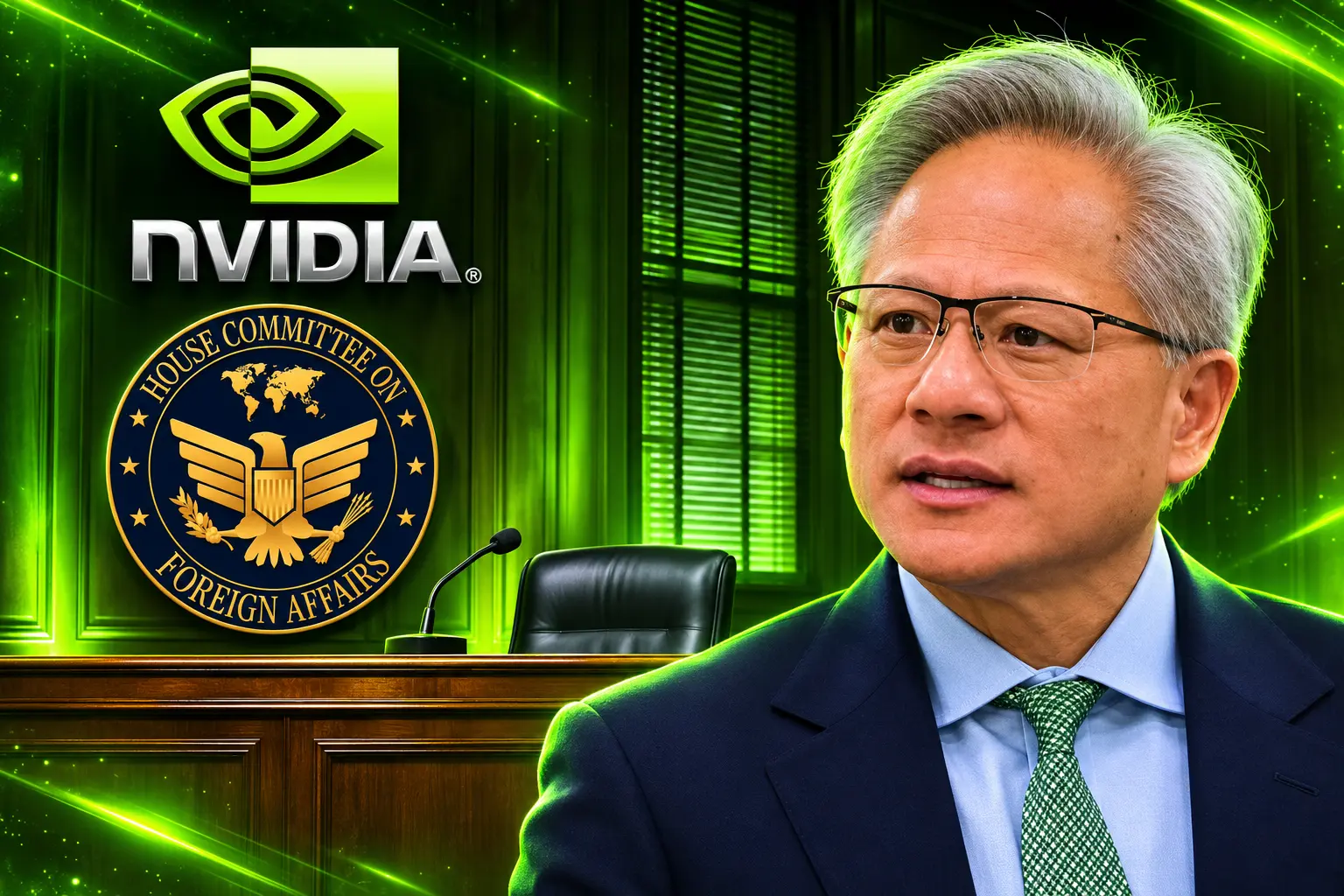
Former Nvidia CEO Jensen Huang faces three House panels on December 1 after the company stopped China chip shipments and rejected his return.

Former Nvidia CEO Jensen Huang will sit for a closed-door transcribed interview with three House committees on December 1 over AI chip exports to China. He will do it as a private citizen. The board accepted his resignation on November 11, five days after those chairs first asked him to appear as CEO.
On November 17 the same chairs said he had agreed to the December date, and that Nvidia general counsel Tim Teter will follow on December 2. That same Tuesday, Huang offered to return as CEO, chairman Harvey C. Jones told investors the board does not intend to reinstate him, and interim CEO Colette Kress said the company is no longer shipping licensed Hopper data center products to China.
Three House Committees Locked a December Date
House Foreign Affairs Chairman Brian Mast, Select Committee on China Chairman John Moolenaar, and House Intelligence Chairman Rick Crawford requested a joint closed-door briefing on November 5, while Huang still held the job. They asked him to discuss his dealings with Megaspeed executive Alice Huang, whom they called a publicly reported intelligence asset of the People’s Republic of China, and Nvidia’s safeguards against foreign espionage. They wanted him on November 18, with a yes or another date by November 11.
He did not sit on that November date. After he left the company, the chairs sent a second letter seeking a transcribed interview on December 1 and told him the Foreign Affairs Committee would issue a subpoena if he did not accept by 8 p.m. EST on November 13. Negotiations ran past that deadline. The deal that landed is not a public hearing. It is a closed-door transcribed interview with the three panels together, 19 days after Nvidia told the market he was gone.
THE PATH TO THE DECEMBER INTERVIEW
- November 5, 2026: The three chairs ask sitting CEO Jensen Huang for a closed-door briefing on November 18.
- November 8, 2026: Huang tells staff he was unfaithful to his wife. The board opens an independent investigation into reports he had been targeted by a foreign intelligence effort.
- November 11, 2026: The board accepts his resignation as president, CEO, and director, effective immediately.
- November 12, 2026: Nvidia files the news. The chairs ask the now-former CEO for a December 1 interview, with a subpoena warning.
- November 16, 2026: Commerce and Justice detail the Megaspeed probe. Commerce files a new remote-access chip rule.
- November 17, 2026: The chairs announce Huang for December 1 and Teter for December 2. Jones rules out reinstatement. Kress reports results and cuts China Hopper shipments from guidance.
- December 1, 2026: Huang sits with the three House committees.
- December 2, 2026: Teter sits with the same panels.
Moolenaar said on November 15 that Huang had already agreed to come in and that Nvidia would work with the committees, with exact dates still being set. Senate Banking Chairman Tim Scott has separately asked Huang to appear in the first week of December and has said the panel can use a subpoena if he will not come voluntarily.
The Singapore Customer at the Center of the Probe
The customer in the letters is Megaspeed International, a Singapore cloud firm that became one of Nvidia’s large Asia buyers. Alice Huang, also known as Huang Le, is a Chinese citizen and a former Megaspeed chief executive, chair, and controller. She is not related to Jensen Huang. U.S. officials have suspected she had ties to Chinese intelligence. Beijing has rejected that. She has not been charged.
Who Is Alice Huang in This Case?
Alice Huang is the former Megaspeed executive named in the House chairs’ November 5 letter, and the woman Huang has admitted having an affair with. Singapore’s Ministry of Home Affairs said she left the country on February 26, 2026, after police returned her passport, and that she is barred from re-entry. Police found insufficient evidence that she committed offences over suspected false declarations on server purchases, and warned her for giving inaccurate information that played down her role. Megaspeed said she left the company on August 30, 2025, and that it runs a legitimate and lawful business.
Commerce and Justice, in a joint statement on November 16, said they were putting facts out because of inaccurate public reporting. Their file is older than the affair headlines.
THE MEGASPEED FILE FROM COMMERCE AND JUSTICE
| When | What the departments said happened |
|---|---|
| 2024 | Commerce opened an investigation into Megaspeed for possible export-control violations after monitoring for semiconductor diversion. |
| May 2025 | Commerce investigators asked Nvidia for records of direct or indirect sales to Megaspeed. |
| June 2025 | Nvidia put Megaspeed on its no-sell list. U.S. agents and Singapore police ran an on-site end-use check and interviewed Alice Huang, then CEO. Justice then took the lead on a criminal investigation. |
Singapore has said its own investigation into Megaspeed and six other individuals is still open, and that it will keep talking with Washington about the company. Treasury Secretary Scott Bessent has said Treasury, the Pentagon, the State Department, and the U.S. trade representative’s office had favored putting Megaspeed on a trade blacklist for months, and that Commerce, which holds that list, had not. No public finding has established that Megaspeed broke U.S. export rules. Megaspeed has hired U.S. lawyers to count its chips and review compliance.
Moolenaar, talking about the company Alice Huang built, said she is a Chinese national who “set up a company that has been able to access over $12 billion of high-end chips,” and that investigators are looking at whether those chips were smuggled into China. That $12 billion figure is his, not a number Nvidia has published. Other tallies of Megaspeed’s buying have circulated and do not match, so the working congressional figure here is the one the China committee chair has used on the record.
Commerce Added Chip Licenses for Five Transit Countries
Four days after Huang left, Commerce’s Bureau of Industry and Security filed an interim final rule on remote access to advanced semiconductors, scheduled for publication on November 19. The rule, signed by Under Secretary for Industry and Security Jeffrey I. Kessler, adds a license requirement for shipping advanced chips to Indonesia, Malaysia, Singapore, Thailand, or Brazil. Those are the countries Commerce flagged as a higher risk that chips, or remote use of chips, would be routed to China.
The same rule targets overseas data centers that supply a large volume of computing power to firms headquartered in China. The point is the loophole that made Singapore and nearby markets useful: a chip can sit in an approved hall while a customer in a restricted country uses it over the network. Closing that path does not wait for Huang’s transcribed answers. It is already in the pipeline as a Commerce text.
The louder argument around Huang’s exit is that Washington used the scandal to do in a week what export hawks had wanted for years. The sequence is simpler than a plot. The Megaspeed file started in 2024. The no-sell list landed in June 2025. The affair reporting in November gave the chairs a named person, a CEO resignation, and a political opening, and Commerce then wrote the transit-country licences while the founder was already off the payroll.
The $2.4 Billion China Line That Left Guidance
Kress ran Nvidia’s first earnings call after the resignation on November 17 and put a number on the China business Huang had spent years defending. The company sold $2.4 billion of licensed Hopper data center products to China in the quarter ended October 25. She said guidance includes none of those products, and that Nvidia is no longer shipping them to China.
NVIDIA’S QUARTER WITHOUT HUANG ON THE CALL
- Total revenue: Nvidia reported $115.8 billion, up 103 percent from a year ago.
- Data center: That business did $107.6 billion, up 110 percent from a year ago.
- China Hopper line: $2.4 billion of licensed Hopper data center products went to China in the quarter, and Kress took that line out of forward guidance.
- Who spoke: Jones opened as the board’s first chair, then handed the call to Kress, who remains CFO.
Those China Hopper sales sit beside a much larger book of orders. They are also the product line that grew out of the licence fight over H200-class chips, including the case-by-case review Washington opened in January after President Donald Trump said approved Chinese customers could receive that generation. Blackwell-class chips stayed restricted. Kress did not give a long explanation for stopping the licensed Hopper shipments. She did not need to. The guidance already shows the choice.
Jones Told Investors Huang Will Not Return
Nvidia’s accepted the resignation of Jen-Hsun Huang in an 8-K for an event on November 11. The next morning the company named Colette Kress as interim CEO, kept her as finance chief, and appointed longtime director Harvey C. Jones, 73, as its first board chair. Kress, 59, has been CFO since 2013. Jones said the board has full confidence in her and the leadership team. The release gave no reason for the resignation and did not mention the investigation.
The board had opened that investigation on November 8 after reporting that Huang had been targeted by a foreign intelligence effort, and on November 10 the independent directors retained former acting U.S. Attorney Joon H. Kim and Wachtell, Lipton, Rosen & Katz to run it. Huang told staff he supported the inquiry. The board said then it had no reason to believe national security or company secrets had been compromised, and it expressed confidence in him. Additional reports of a relationship with Kimberly Powell, then Nvidia’s vice president of healthcare and a direct report, preceded the November 11 meeting that accepted his resignation. He had led the company for 33 years, since co-founding it in 1993.
His first public statement after leaving came on November 17, the day the House dates were announced. He said employees, investors, partners, and customers had asked him to come back.
If the Board of Directors decides that my return is in the best interest of our shareholders, our employees, the company, and America, I would be honored to answer these calls and return as CEO.
Jensen Huang, former Nvidia CEO, November 17 statement
Jones answered on the earnings call. He said the board unanimously accepted the resignation and does not intend to reinstate Huang as CEO. The board has hired Heidrick & Struggles to find a permanent chief and is looking at internal and external names. Huang owns more than 3.5 percent of Nvidia, which is short of the 15 percent that can call a special shareholder meeting, so a comeback without the current board still runs through other holders.
A Stand with Jensen petition had passed more than 193,000 signatures by the afternoon of November 17, with Elon Musk, Shopify chief Tobias Lütke, Epic Games chief Tim Sweeney, and Uber co-founder Travis Kalanick among the public backers. Affiliations on the site are self-reported and not verified, and the campaign has warned about fake entries. Musk wrote, “A petition is underway to reinstate Jensen and I’m signing it too.” Trump said he would not mind seeing Huang return. Bessent has argued the next chief should come from outside the company and called for a dramatic shakeup on compliance. The investigation into Huang’s conduct is still open, which is the fact the petition asks the board to wait on, and the fact the board is not treating as a reason to reverse course.
What the December 1 Interview Can Still Change
The December 1 session cannot put Huang back in the chair, and it cannot restart the Hopper shipments Kress already removed from guidance. It can still build a record on what he knew about Megaspeed, what he told directors and when, whether any privileged information moved through the relationship with Alice Huang, and whether that relationship touched Nvidia’s lobbying on export rules. Moolenaar has said those are the questions, including “to what degree this potential alleged Chinese spy influenced Nvidia’s philosophy.”
WHAT WE KNOW
- The format: Huang will sit for a closed-door transcribed interview on December 1 with Foreign Affairs, the China select committee, and Intelligence; Teter follows on December 2.
- His status: He is a former CEO and director, not the person who now signs Nvidia’s filings or sets China shipment policy.
- The company track: Licensed Hopper shipments to China are out of guidance, and a new Commerce rule adds licences for five transit countries.
WHAT IS UNCONFIRMED
- Diversion: Whether Megaspeed moved advanced Nvidia chips, or remote access to those chips, to China in violation of U.S. rules has not been established in a public finding.
- Intelligence role: Alice Huang has not been charged as a Chinese intelligence asset; the allegation is contested and denied by Beijing.
- The transcript: The chairs have not said whether any portion of the closed-door record will be released.
QUESTIONS THE CHAIRS HAVE PUT ON THE RECORD
- The relationship: Huang’s interactions with Alice Huang, and whether she obtained privileged information.
- The customer: How Megaspeed obtained advanced chips, and whether any of that hardware was diverted.
- The lobbying: Whether the relationship shaped Nvidia’s position on U.S. export limits.
- The safeguards: What security protocols Nvidia had against foreign espionage, and how they were used.
On November 17, the same day as the earnings call, Nvidia also created a board-level National Security and Export Control Oversight Committee, chaired by director Suzanne Nora Johnson, with Stephen C. Neal and John O. Dabiri as members. The company’s national security and global trade teams will report to that committee and to Kress. That is a governance answer to the hearing the founder is about to sit, built while he is outside the building.
Teter Faces the Same Panels One Day Later
Teter is still Nvidia’s general counsel. The chairs want him on chip smuggling, possible military use of the products by an adversary, and reports of interference in U.S. export-control work, including work that involves Megaspeed. An Nvidia spokesperson said the company looks forward to meeting the chairmen on December 2. Huang’s own representatives had no immediate comment when the dates were announced.
We look forward to hearing from Jensen Huang and Tim Teter on their roles in a potential breach of our national security. The American people need answers on Mr. Huang and Nvidia’s role in allowing dangerous PRC actors to access our most advanced chips, as well as the role of a potential Chinese intelligence asset in this scandal.
Reps. Brian Mast, John Moolenaar, and Rick Crawford, joint statement, November 17, 2026
Moolenaar has already called the relationship with a Chinese national in that position “simply irresponsible and a direct threat to our national security.” That is the frame Huang will walk into, after the company has stopped the China Hopper line, after Commerce has written licences for the transit states around it, and after Jones has told investors the founder is not returning as CEO.
Huang will answer questions in a transcribed interview on December 1. Teter will do the same on December 2. Neither session is a public hearing.
Disclaimer: This article is news reporting and analysis of congressional, corporate, and regulatory developments around Nvidia and is for information only. It is not investment advice, legal advice, or a recommendation to buy, sell, or hold any security, and it is not a finding that any person or company violated export-control or criminal law. Readers who may act on matters involving Nvidia shares, export licences, or related legal exposure should consult a qualified financial adviser, export-control counsel, or attorney before doing so. Figures, schedules, and investigation statuses reflect the public statements and filings cited here as of November 17, 2026, and can change as committees meet, as Commerce publishes the remote-access rule, and as company and government inquiries proceed.

One UI 9.5 Beta Puts the Galaxy S26 on Last Year’s Clock

DBS Puts a 24/7 USDC Window Inside the Bank

European Startups Head for $81 Billion as First Checks Shrink

US Stocks Lost $1.3 Trillion Before Nvidia’s Beat

Home Depot Bets on Finance Chief Richard McPhail as CEO

Aramco Crash Kills 14 Two Days After Oil Restart

Salah Captained Egypt to Their First World Cup Win

Zelda’s 40th Switch 2 Ships Without a Zelda Game

Apple Labor Day Deals Hide June’s Memory Price Hike

El Niño Puts Israel’s Needed Winter Rain on a Flood Clock
-
 BUSINESS5 months ago
Aramco Crash Kills 14 Two Days After Oil Restart
-
 NEWS6 months ago
Salah Captained Egypt to Their First World Cup Win
-
 GAMING2 months ago
Zelda’s 40th Switch 2 Ships Without a Zelda Game
-
 NEWS3 months ago
Apple Labor Day Deals Hide June’s Memory Price Hike
-
 NEWS4 months ago
El Niño Puts Israel’s Needed Winter Rain on a Flood Clock
-

 GAMING2 months ago
Palworld 1.0.4 Adds Palpedia Search After the 1.0 Launch
-

 NEWS4 months ago
Saudi Visa Routes Split Nigerian Travelers Into Two Speeds
-

 BUSINESS9 months ago
BAE’s 60-Year Saudi Franchise Now Runs Through Taif