
NEWS
Granter’s €1.6M Seed Hits an Already Packed Grant Queue
Granter’s €1.6 million seed, led by a Portugal recovery-fund vehicle, pays for AI that writes grant bids into programmes already turning most good proposals away.

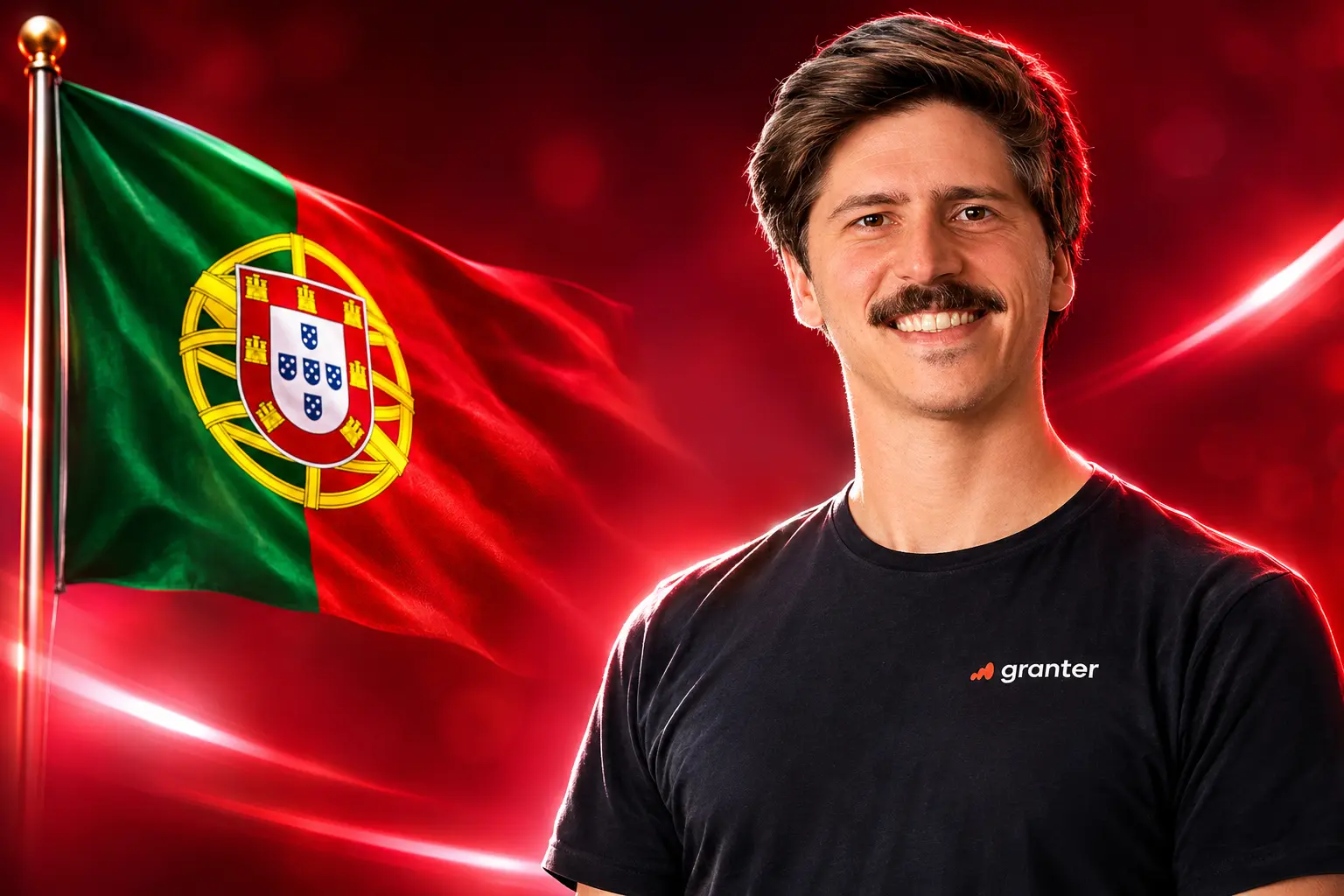
Portuguese startup Granter closed a €1.6 million seed round on 3 November 2026 for an AI agent that finds, writes and files public-funding applications. The lead investor is a Lisbon impact fund that is itself 70 percent co-financed by Portugal’s recovery-and-resilience capital, and the European programmes in the product’s sights already turn away most of the proposals that pass quality checks.
Bernardo Seixas, Granter’s CEO and co-founder, says the tool exists because solid projects miss out for lack of time and paperwork skill, not merit. The new money will push a five-person team toward 15 by the end of 2026 and take that pitch into Spain, Germany and Italy.
Portugal’s Recovery Fund Is Paying for the Grant Writer
3xP Global led the round through its Impact Innovation Fund, under the Venture Capital Programme of the Capitalisation and Resilience Fund (FdCR), which Banco Português de Fomento, the state development bank, manages. Celtis Venture Partners, Gateway Ventures (with Austrian and German backers), US payroll group Deel, and angel Bracken Darrell, the VF Corporation chief and former Logitech CEO, also joined. Granter’s total funding is now €2 million, after an earlier €400,000 from Techstars, Mission and AngelsWay.
The €25 million Impact Innovation Fund is co-financed 70 percent by FdCR and is built to back Portugal and Spain companies that claim social or environmental impact. Granter is already on that portfolio page, described as an AI platform that automates matching, drafting and post-award work for European SMEs chasing public money. Seixas said choosing 3xP felt natural because both sides treat company financing as a broken process.
THE MONEY BEHIND THE SEED
- The cheque: €1.6 million led by 3xP Global, taking Granter’s total to €2 million.
- The vehicle: a €25 million impact fund, 70 percent co-financed by FdCR.
- The programme: Banco Português de Fomento’s €367 million Venture Capital Programme, aimed at early-stage SMEs and mid-caps.
- The hire plan: Seixas said the raise takes the team from five people to 15 by the end of 2026, mostly on the tech side.
Rita Branco, a 3xP Global board member, said Granter fits the fund because it eases access to European money for innovation, energy transition and social projects. That is also the loop: public capital is staking a company whose product is built to pull more public capital.
Horizon Europe Already Turns Away Most Good Proposals
Seixas’s claim is that thousands of worthy firms never apply. The constraint on the other side of that sentence is not a shortage of dossiers. Horizon Europe, the EU’s main research and innovation programme, is oversubscribed in a way that extra applications cannot fix.
European Commission figures compiled through June 2026 put the programme-wide success rate at 14 percent. That rate fell from 17% in 2022 to 10% on calls closed in 2025, a year that drew over 47,000 proposals, 16,000 more than in 2024. About 55 percent of Horizon proposals meet the quality threshold. Around 75 percent of those high-quality bids still go unfunded because the budget runs out, a different 75 percent from Granter’s own claim that its users spend 75 percent less time preparing applications.
The Commission’s interim evaluation, with a 6 January 2025 cutoff, put a number on that gap: an extra €81.8 billion would have been needed to fund every proposal that external experts rated as high quality. The European Innovation Council Accelerator, the SME-heavy instrument closest to Granter’s startup clientele, has sat under 7 to 8 percent success for five years.
WHERE THE BIDS ALREADY PILE UP
| Slice of Horizon Europe | Success rate | What the figure covers |
|---|---|---|
| Programme-wide | 14% | Current rate across the programme |
| Calls closed in 2022 | 17% | Earlier, less crowded year |
| Calls closed in 2025 | 10% | Over 47,000 proposals that year |
| Share above quality threshold | 55% | About 75% of those still unfunded |
| EIC Accelerator | Under 7-8% | Five-year run, SME-heavy calls |
Not every public pot is that tight. Small voucher schemes still clear most bids. The money Galp, a navy, or a research-heavy SME actually wants lives in the slammed programmes, where a cheaper application is another folder on a desk that is already full.
The Agent That Drafts the Dossier in Under an Hour
Granter, founded in 2023 by Seixas and Bernardo Tavares, the CTO, sells what it calls an AI Grant Consultant. The company says work that took weeks with a specialist consultant can now be finished in under an hour. It has just relaunched the product as a chat agent, with a free trial so a firm can start a bid on day one, and it still offers QuickMatch, a free scanner of open and upcoming calls.
On its site, Granter says organisations using the agent see twice the approval rate and spend 75 percent less time on preparation, and it lists €30 million in grants submitted through the platform. Those are company figures, not awards. The 3 November announcement says Granter has supported more than 140 businesses on applications for over €30 million since the Web Summit win.
WHAT THE AGENT TAKES ON
- Matching: It scans public and private funding databases, then checks eligibility against official criteria so a team spends time only on calls it can actually contest.
- Writing: It drafts the full application from the organisation’s context and past playbooks, then scores each section against the call so gaps show up before filing.
- Managing: After an award, it tracks milestones, reporting and the paperwork that releases each payment.
Seixas prices the product as an annual subscription. The minimum is now €1,500 a year, and he wants to add a small success fee when the software helps land a grant. At Web Summit in 2025 the pitch still quoted a higher flat fee; the floor has come down as the company chases volume.
Today, thousands of companies with solid projects are left out of public funding, not for lack of merit, but because they do not have the time, the team or the knowledge to deal with complex, bureaucratic processes. Granter exists to change that. Our technology removes that barrier and democratises access to public funding, putting it within reach of those who generate jobs, innovation and impact in their communities.
Bernardo Seixas, CEO and co-founder, Granter
If that sentence is true at scale, the scarce input is no longer a consultant’s week. It is an evaluator’s afternoon, and a line item that did not grow when the drafting got cheap.
Galp and the Navy Sit Beside the SME Pitch
The mission line is SMEs and startups. The named accounts are not only those. Granter lists ANA Airports, MC Sonae, Galp, the Portuguese Navy and Fidelidade among clients, and it has run a Navy pilot it wants to extend to other branches of the armed forces and to security forces. Those are organisations that can already buy advice. They are also organisations that file into the same competitive pots as a ten-person shop in Braga.
João Guimarães, CEO of Intuitivo, wrote that his team contacted Granter a week before a deadline and still got a quality application in. João Rosado, head of portfolio at Unicorn Factory Lisboa, said the product made it easy to connect startups with relevant calls and to generate an application. Both lines describe speed. Neither describes a larger envelope.
That is the awkward fit in the cap table. A state development bank, an impact fund, a US HR unicorn and a consumer-goods chief are financing a machine that lowers the cost of entry for everyone, including the incumbents already on the client slide. Democratising access, in a 10 percent-success call, also democratises the rejection letter.
Twelve Months From the Web Summit Stage
The seed lands almost a year after Granter took Web Summit’s PITCH competition in November 2025, beating a field of 2,725 startups and 105 finalists with 80 percent of the audience vote and the jury’s top mark. Runners-up were Nigeria’s VarsityScape and the UK’s SegmentStream. Granter was the third UPTEC-incubated winner in consecutive years, and Seixas is a Católica Lisbon alumnus.
THE PATH TO THE SEED
- 2023: Seixas and Tavares found Granter in Portugal and begin selling an AI grant consultant to companies that cannot staff a funding team.
- November 2025: Granter wins Web Summit PITCH in Lisbon, launches QuickMatch as a free matcher, and talks about European expansion with a seven-figure sales target already in sight.
- 2026: The product is rebuilt as a chat agent that keeps company and programme context, then scored against official criteria before submit.
- 3 November 2026: The €1.6 million round closes, led by 3xP’s FdCR-backed fund, with Deel and Darrell in the syndicate.
In the months before the close, Seixas was already drawing a line between Europe and the United States. He said Granter has an easier path in Europe, and that a US hire package is too expensive until a later round. The seed is the European chapter, not the American one.
Spain, Germany and Italy Are the Next Queue
Portugal stays the home market. The announced expansion map is Spain, Germany and Italy, where Granter says it already has investors and first commercial ties. Seixas put the opening move more tightly: start with Spain and the Germany-Austria region. Gateway Ventures’ Austrian and German backers sit in that geography. Italy is on the round’s list; it is not the first stop he named.
A US launch is pencilled in for 2028. Until then the spend is product, a headcount that triples from five to 15, and a free trial meant to put a draft in front of firms that have never paid a consultant. Deel’s presence in the round is the obvious bridge if that US date firms up, because the HR platform already runs payroll and compliance for companies that straddle both sides of the Atlantic.
That does not change the arithmetic inside a Horizon call. A chat agent that files in under an hour, sold from €1,500 a year and backed by Lisbon’s recovery-fund VC, will put more complete, criteria-scored proposals in front of the same committees. The committees were already sending most of the good ones home.

One UI 9.5 Beta Puts the Galaxy S26 on Last Year’s Clock

DBS Puts a 24/7 USDC Window Inside the Bank

European Startups Head for $81 Billion as First Checks Shrink

US Stocks Lost $1.3 Trillion Before Nvidia’s Beat

Home Depot Bets on Finance Chief Richard McPhail as CEO

Aramco Crash Kills 14 Two Days After Oil Restart

Salah Captained Egypt to Their First World Cup Win

Zelda’s 40th Switch 2 Ships Without a Zelda Game

Apple Labor Day Deals Hide June’s Memory Price Hike

El Niño Puts Israel’s Needed Winter Rain on a Flood Clock
-
 BUSINESS5 months ago
Aramco Crash Kills 14 Two Days After Oil Restart
-
 NEWS6 months ago
Salah Captained Egypt to Their First World Cup Win
-
 GAMING2 months ago
Zelda’s 40th Switch 2 Ships Without a Zelda Game
-
 NEWS3 months ago
Apple Labor Day Deals Hide June’s Memory Price Hike
-
 NEWS4 months ago
El Niño Puts Israel’s Needed Winter Rain on a Flood Clock
-

 GAMING2 months ago
Palworld 1.0.4 Adds Palpedia Search After the 1.0 Launch
-

 NEWS4 months ago
Saudi Visa Routes Split Nigerian Travelers Into Two Speeds
-

 BUSINESS9 months ago
BAE’s 60-Year Saudi Franchise Now Runs Through Taif