
NEWS
Claimlane Raises €5.6 Million to Flip the Aftersales Bill
Claimlane’s €5.6 million Series A funds AI agents on who-pays warranty files, after half of new customers already come from the US.

Claimlane raised €5.6 million on November 5, 2026, to put software on the aftersales file that decides who pays when a product breaks. The Copenhagen company, which runs warranty claims, repairs, replacements and supplier recovery for brands including Skechers, Black Diamond, tonies and Hummel, took the Series A from Verb Ventures, Skagerak Capital and Vendep Capital.
The cheque is small next to what US factories already spend on broken goods. The wager is that a connected claim file can pull cash back from suppliers, salvage and paid repairs, and that American brands are already buying.
When a Product Breaks, Someone Still Pays
A customer sees one broken thing. Behind it sit a warranty rule, a supplier contract, a retailer, a repair shop and a credit note that often never gets issued. Claimlane’s pitch is that those parties should share one case, with the product, the policy, the supplier terms and the history in the same place, so a repair, a replacement, a refund or a credit can actually move.
CEO and co-founder Anders Sommer said the firm wants to change the economics of aftersales on both sides of the counter: fix the issue in a way that keeps the customer, get more value back from the product, and give teams time to improve the line. Tess Jordan, senior manager of customer experience at Black Diamond Equipment, is the specimen the company now leads with.
Claimlane helped us turn our aftersales department from a cost center into a profit center. By reducing the manual work involved in handling claims, we freed up our team to build a repairs program that generates revenue through paid repairs and sales of repaired products.
Tess Jordan, Senior Manager of Customer Experience, Black Diamond Equipment
That is the second cheque inside the round. Faster tickets are the visible win. The cash that moves is the repair you can sell, the part you can charge back, and the failed SKU you stop repeating. Jordan’s line sits in Claimlane’s own Series A note, which treats the shift from aftersales into a profit center as the point of the product, not a slogan around it.
WHAT THE CASE FILE HAS TO SETTLE
- Cover: Whether the fault sits inside the warranty, a supplier deal or neither.
- Path: Repair, replace, refund, spare part or a credit note through a connected system.
- Payer: The brand, the retailer, the maker or the repair partner, with the file travelling with the goods.
- Loop: Recurring faults that should go back into product and supplier talks, not another spreadsheet row.
Lauren Cooper, director of global customer happiness at tonies, said the same workflow has to feel as simple as putting a Tonie on the Toniebox while the brand adds markets. Frederikke Raahede Andersen, customer care team lead at OMHU, said complex new claims now go straight to suppliers under one record, so root-cause talks are not split across inboxes.
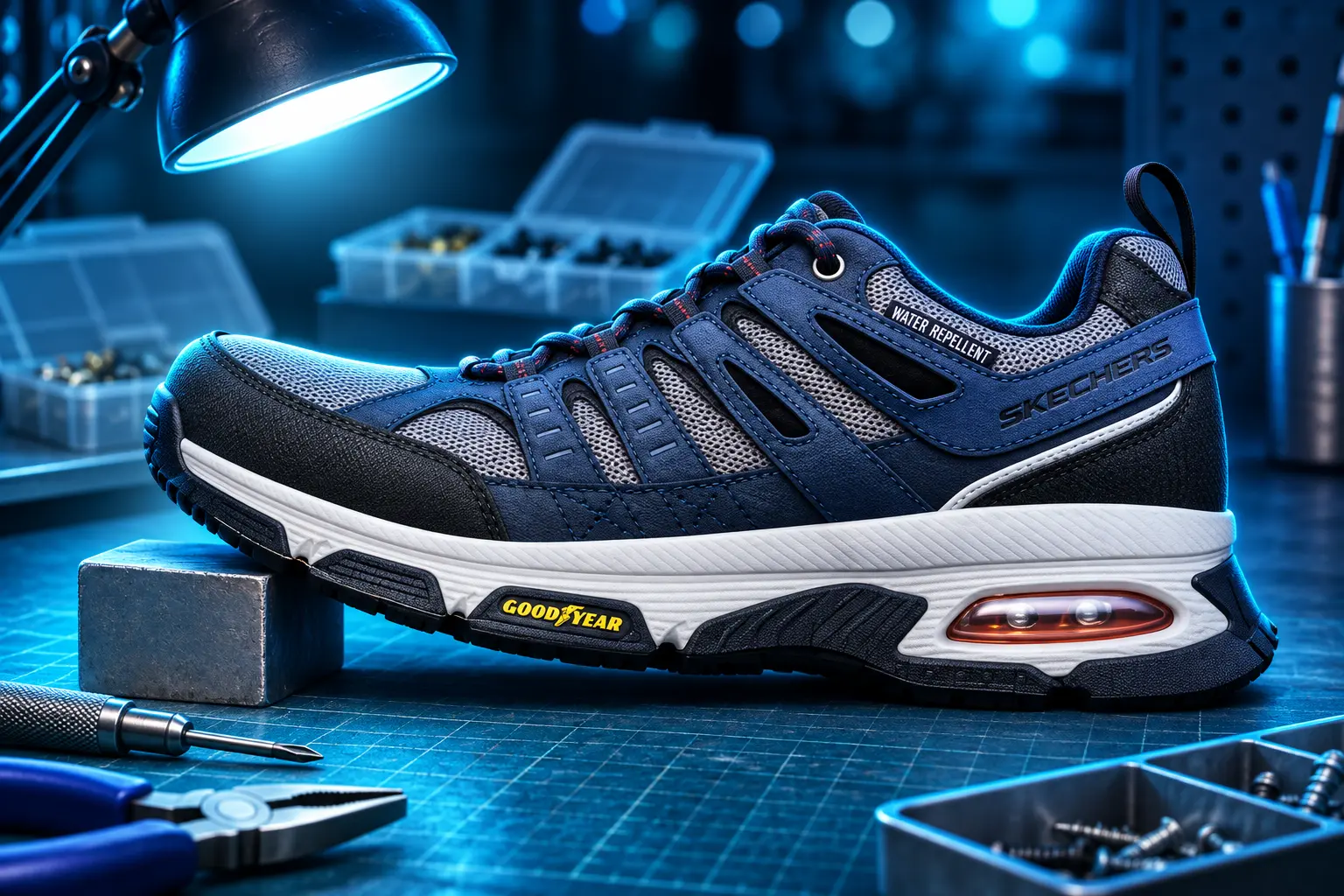
Skechers Claims Fell From Two Weeks to Days
The cleanest published clock sits with Sports Connection, the Nordic distributor that runs Skechers claims. The team was on Excel. Faulty shoes sat in stores and showrooms. Claims were often waved through on trust, and credit notes were a second manual job. In June 2020 it put Claimlane’s self-service portal on webshops, more than 50 Skechers-operated stores in the Nordics, and more than 1,500 wholesale partners including Skoringen, Intersport and Eurosko.
Claimlane’s case write-up says that stack let Sports Connection cut handling time by 80%, from an average of two weeks to one to two days. Nicklas Smedegård, business controller at Sports Connection, said the manuals and support were what got stores and wholesalers onto the same path. The speed is not a model trick. It is complete photos, serials and fault detail captured before anyone starts typing an email.
PUBLISHED CUSTOMER CLOCKS
| Operator | What was stuck | Published result |
|---|---|---|
| Sports Connection (Skechers, Nordics) | Excel claims across 50+ stores and 1,500+ partners | 80%+ faster, two weeks down to 1-2 days |
| Konges Sløjd | Retailer claims across 1,000+ shops in 80+ countries | Time per retailer claim from 15 minutes to 5 |
| F. Engel | B2B warranty claims through wholesale | Up to a week down to within 24 hours |
Across its book, Claimlane says it now processes more than 800,000 claims a year on a network of more than 20,000 retailers and brands. Plans start at $800 a month, listed as €700, then rise with ticket volume. David Outen, returns coordinator at The Hut Group, said he can handle 5-10 claims in the tool in the time it takes to handle one by email. That is the labour the AI agents are being asked to eat next, not a new category invented for the raise.
A $30.37 Billion Warranty Bill in America
Sommer’s move only makes sense against the size of the US tab. Warranty Week, which reads product-warranty lines out of SEC filings, said US-based manufacturers paid $30.37 billion in warranty claims in 2025, up 4% from 2024. They set aside $33.41 billion in accruals, up 7%, and held $71.89 billion in reserves at year end, up 17%.
U.S. WARRANTY CASH IN 2025
- Claims paid: $30.37 billion, at an average claims rate of 1.30% of product sales.
- Accruals: $33.41 billion, at an average accrual rate of 1.43% of sales.
- Reserves held: $71.89 billion at the end of 2025.
- Vehicles: $20.81 billion of claims, 69% of the US total, a pool Claimlane is not selling into first.
Most of that cash sits in cars, trucks, parts and aerospace, where Syncron, SAP and PTC already sell dealer and OEM suites. Claimlane is aiming at the mid-market slice those suites price out: footwear, outdoor gear, furniture, baby products, electronics accessories. The US consumer-electronics makers that even file warranty lines set aside only $117 million in accruals in 2025, a reminder that a lot of branded goods never show up in those 10-K totals and still generate retailer and supplier fights Claimlane can bill for.
Enterprise OEM warranty contracts are quoted in the tens and hundreds of thousands of dollars a year. A list price from $800 a month is how a Danish case tool shows up in a US retailer’s stack without an ERP programme. The risk is the same number: a round of €5.6 million does not buy a multi-year displacement of those suites. It buys agents on catalogs Claimlane already sees, and a CEO on the ground where new logos are arriving.
Why Anders Sommer Relocated to Austin
North America was already Claimlane’s largest market for new customers in 2026. US sales opportunities were up 150% year on year, and newly created pipeline value had doubled, the company said in the raise note. Timo Felin, partner at Vendep Capital, was blunter: his firm first backed Claimlane in 2024, and half of its new customers now come from the US.
Sommer has relocated to Austin to run that phase, joining a local team while Copenhagen and London stay on the books. The Austin listing is 310 Comal Street, floor 2. “The demand we’re seeing from US brands and retailers makes our next move clear: we’re investing in building a major business here,” he said. “With this funding, we’ll continue building AI agents that learn and handle complex aftersales workflows across the supply chain.”
Co-founder Michael Kruse Sørensen remains part of the founding pair the company thanked in its own update, alongside angels Mette Høi Davidsen, Jesper Eiby and Nicolaj Reffstrup, the GANNI founder and former chief executive. André Edvardsen, managing partner at Skagerak Capital, put the customer-trust test in one line: nothing tests loyalty like a broken product, and brands keep the ones that resolve the claim well. The geography is the tell. A Danish aftersales tool does not usually pick Austin unless the pipeline already has.
What Returns Software Leaves on the Table
Loop, Narvar, AfterShip and parcel networks are built to move a box the customer no longer wants. Claimlane is built for the case in which the product failed, a part is missing, or a wholesale partner is filing on behalf of a shopper. A returns hub can grade and resell a jacket. It does not check a supplier clause, book a repair, or push a credit note when the factory owns the fault.
That gap is why the company keeps repeating the same four jobs: connect the parties, read the case against policy and history, act in the order-management and warehouse tools already in place, and keep a person in the loop when the call needs judgement. The new money is for agents trained on each customer’s products, policies, supplier agreements and workflows, then for deeper skill in electronics, furniture and outdoor equipment. Human sign-off stays on the calls that spend money.
US retailers already run some version of this on email. The failure mode is not a missing chatbot. It is a missing payer. If the agent only accelerates refunds, the brand eats a cost it could have sent upstream. If it only auto-closes tickets, the repair programme Jordan described never gets built. The Series A only pays off if the file keeps asking who owes the fix, and if US catalogs are messy enough that a specialised agent beats a generic desk tool.
Bulygin’s Thesis Runs Through the Claim File
Alexey Bulygin, a principal at Verb Ventures, is the new name on the cap table and the one who said out loud what the round is buying. Verb presents itself as a late-seed to Series A firm that has spent a decade on logistics, compliance and procurement rails rather than consumer apps. Aftersales claims, if they sit inside real workflows, look like that kind of rail.
We believe enduring AI businesses will combine specialised knowledge with the ability to execute within real workflows. Claimlane’s network and operational role provide a foundation that is difficult to replicate with AI alone. That is central to our investment thesis.
Alexey Bulygin, Principal, Verb Ventures
Read that against the 20,000-node network. An agent that has never seen the supplier packet, the photo set, or the last five credit notes on a SKU is guessing. An agent sitting on those records can propose a path a clerk already takes. Bulygin is not underwriting a demo. He is underwriting the file the demo needs, which is also why a €5.6 million cheque can look large for a claims inbox and small for a US land grab at the same time.
Vendep is the through-line. The Finnish firm led Claimlane’s €1.8 million seed round in May 2024, when the story was still UK and mainland Europe, with early British logos at FFX, The Hut Group and Cult Furniture, and Felin talking about B2B return handling. Two years on he is talking about the US supplying half of new customers. Skagerak sat with them on this round. The AI language is new. The network the AI needs is not.
Category Agents for Electronics, Furniture and Outdoor
ClaimLane ApS was incorporated in Copenhagen in May 2015. The product started as a way to get Danish brands off spreadsheets; Hummel, Matas, Rains, Søstrene Grene and Silver Cross showed up in the seed-era roster, and Black Diamond and tonies are the names the Series A leads with now. The raise funds two workstreams only: customer-specific agents, and US headcount around Sommer.
FROM THE COPENHAGEN BOOKS TO AUSTIN
- May 2015: ClaimLane ApS is incorporated in Copenhagen to sell software for claims and related work.
- June 2020: Sports Connection puts the self-service portal on Skechers webshops, stores and wholesale partners in the Nordics.
- May 2024: Vendep Capital leads an €1.8 million seed aimed at the UK and the rest of Europe, after a year in which Claimlane said revenue more than doubled.
- November 5, 2026: Verb Ventures, Skagerak Capital and Vendep back a €5.6 million Series A; Sommer is already in Austin to run US growth.
Electronics, furniture and outdoor gear are the three catalogs named for deeper agent skill. They are also the catalogs where a sofa leg, a bike part or a failed heater is cheaper to fix than to ship, and where a supplier clause is worth more than a returns label. If those agents only summarise the ticket, the round has bought a faster inbox. If they keep attaching the invoice to the factory that owes it, Black Diamond’s paid-repair shop is the template, and Austin is where Claimlane will find out whether US brands will pay for that file.
Sommer now sits a few hours from the retailers that already make up half of new logos, with the Copenhagen and London teams still closing European cases. The agents still have to learn each catalog the hard way, policy by policy, because that is the context Bulygin said a generic model will not copy on its own.

One UI 9.5 Beta Puts the Galaxy S26 on Last Year’s Clock

DBS Puts a 24/7 USDC Window Inside the Bank

European Startups Head for $81 Billion as First Checks Shrink

US Stocks Lost $1.3 Trillion Before Nvidia’s Beat

Home Depot Bets on Finance Chief Richard McPhail as CEO

Aramco Crash Kills 14 Two Days After Oil Restart

Salah Captained Egypt to Their First World Cup Win

Zelda’s 40th Switch 2 Ships Without a Zelda Game

Apple Labor Day Deals Hide June’s Memory Price Hike

El Niño Puts Israel’s Needed Winter Rain on a Flood Clock
-
 BUSINESS5 months ago
Aramco Crash Kills 14 Two Days After Oil Restart
-
 NEWS6 months ago
Salah Captained Egypt to Their First World Cup Win
-
 GAMING2 months ago
Zelda’s 40th Switch 2 Ships Without a Zelda Game
-
 NEWS3 months ago
Apple Labor Day Deals Hide June’s Memory Price Hike
-
 NEWS4 months ago
El Niño Puts Israel’s Needed Winter Rain on a Flood Clock
-

 GAMING2 months ago
Palworld 1.0.4 Adds Palpedia Search After the 1.0 Launch
-

 NEWS4 months ago
Saudi Visa Routes Split Nigerian Travelers Into Two Speeds
-

 BUSINESS9 months ago
BAE’s 60-Year Saudi Franchise Now Runs Through Taif