
NEWS
Atlas Bio Turns Failed Phase II Drugs Toward New Diseases
Atlas Bio exits stealth with $12.5 million to match shelved drugs to new diseases in 12-week RNA simulations, while FDA still treats live human trials as the proof.

Atlas Bio left stealth on October 27, 2026 with $12.5 million for in silico clinical trials that score a drug against many diseases before a human study is locked. Creandum led a $10 million Seed. First Momentum Ventures and LEA Partners had already put in $2.5 million.
The first paying use is not a funeral for Phase II. After a simulation across a pipeline, a large pharma client identified a promising new indication for an asset it had written off and is now pursuing it.
Creandum’s $10 Million Bet on Indication Rescue
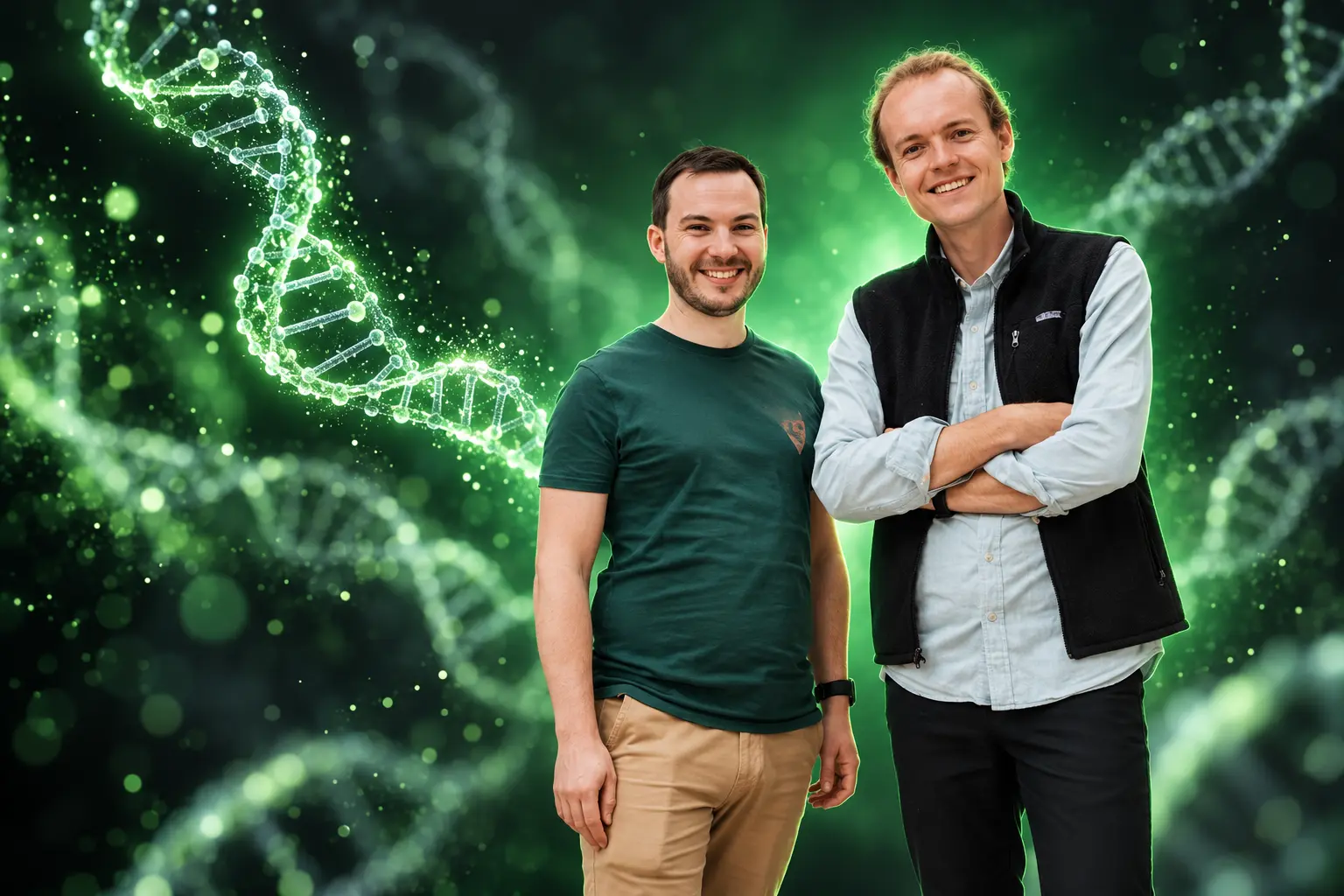
The Basel firm was founded in 2024 by Simon Romanski, chief executive, and Sebastian Bayer, chief technology officer. Dominik Hartl, who leads scientific strategy, spent more than a decade in translational medicine. The company is incorporated in Delaware, keeps a Swiss subsidiary, and sits in Basel, inside Europe’s densest pharma cluster.
Romanski trained at KIT, EPFL, and Stanford and worked on self-driving systems from 2015. He lives with type 1 diabetes, and he said that gap between fast-improving diabetes care and the rest of the clinic is what pulled him over. Before writing code, he ran about 300 conversations across drug development to map where programs actually break.
Bayer led language-model research at Google for Search, YouTube, and Google Play after building perception models for autonomous driving in thin-data settings. Hartl was a doctoral fellow at the Friedrich Miescher Institute for Biomedical Research. Creandum says he had already used an early version of this approach to keep a Phase II trial alive, which is why he joined.
Katharina Wilhelm, a Creandum partner, is joining the board. She described a first wave of AI that designs molecules, and a second wave that tries to change clinical development. Sebastian Böhmer, founding partner at First Momentum, called the prize the ability to read and predict human biology instead of treating most failures as luck.
THE ROUND IN FOUR FIGURES
- Total capital: $12.5 million raised across pre-seed and Seed.
- Seed lead: $10 million from Creandum, with Wilhelm on the board.
- Pre-seed: $2.5 million from First Momentum Ventures and LEA Partners.
- Training set: about 2 million RNA readouts from human tissue.
Atlas said it will use the money to hire scientific and commercial staff, deepen validation, and bring on more enterprise clients through 2026. It is already under contract with a top-10 global pharma company and in talks with more than a dozen of the world’s largest drug makers. Creandum added that every prospective prediction the firm has made on real trial outcomes has so far proved correct, a claim that still sits with the company and its lead investor.
Phase II Still Stops Most Candidates Cold
The Biotechnology Innovation Organization, working with Biomedtracker and Amplion, studied 9,985 clinical and regulatory phase transitions from 2006 to 2015 across 7,455 programs and 1,103 companies. Phase II was the weakest step. Only 30.7 percent of Phase II programs advanced to Phase III, on 3,862 transitions. That is the study Atlas rounds into a 70 percent failure line in its launch remarks.
Atlas puts a Phase II program at more than $100 million and two to three years. Direct trial-conduct costs measured by the Tufts Center for the Study of Drug Development are a different, narrower figure: $23,737 per day across an average 1,028 days, about $24.4 million if a study runs the full distance.
PHASE II TRANSITION RATES, 2006 TO 2015
| Program | Success rate | Transitions |
|---|---|---|
| All Phase II programs | 30.7% | 3,862 |
| Hematology Phase II | 56.6% | 83 |
| Psychiatry Phase II | 23.7% | 169 |
| Phase I to approval, all diseases | 9.6% | Full BIO set |
The spread inside Phase II is the point the model is built to exploit. Hematology cleared the hurdle more than twice as often as psychiatry. A molecule can be biologically active and still die because the protocol picked the wrong patients, the wrong endpoint, or the wrong disease.
Atlas and Creandum say that among drugs that eventually win approval, roughly 60 percent treat another condition better than the one they were first tested for. That 60 percent figure is theirs, not BIO’s. If it holds, a large share of “failed” Phase II files are unmatched indications, not dead chemistry, and the people who currently get paid to discover that mismatch are the ones who run the two-to-three-year study.
What a 12-Week Virtual Cohort Does
The foundation model is trained on about 2 million RNA readouts, the gene-on and gene-off signals in human tissue. Because it learns biology rather than a sponsor’s treatment-outcome files, Bayer said it can generalise across indications and mechanisms without ingesting sensitive trial data. A virtual run is billed as a 12-week project.
Most biological effects are not caused by drugs. To predict unknown drug effects, we need to learn biology in an unbiased way.
Sebastian Bayer, CTO and co-founder, Atlas Bio
The public product page currently frames live work in immunology, a narrower field than the all-disease pitch. In one published specimen, a clinical-stage biotech asked how its bispecific antibody might beat standard care in asthma. Atlas ran an in silico trial across 78 asthma patients, predicted each patient’s full gene-activity response, and reported a larger drop in eosinophils than standard care, with responses that varied person by person, ahead of Phase II.
MOVES A LIVE TRIAL CANNOT COPY
- Same patient, several drugs: Several treatments can be scored on one virtual profile at the same disease state.
- One molecule, many diseases: A drug can be run across indications in a single pass before a protocol is frozen.
- No sponsor efficacy file: The model is trained on human RNA, so it does not need a company’s sensitive treatment data.
- Twelve weeks, not years: Atlas compresses the learning loop to a 12-week simulation project.
Hartl called that compression a decision tool. Drug teams, he said, need to de-risk earlier without slowing programs, and in silico runs can shrink learning cycles from years to weeks. Romanski is blunter. He said drug development has spent sixty years on two assumptions, that mice predict humans and that the only way to learn whether a drug works is to give it to thousands of patients and wait, and that both are becoming outdated.
A Basel Program Dropped the Animal Study
One Basel biotech has already taken the next step. Atlas said that client removed animal testing from a specific development workflow and went toward human trials on the strength of the simulation. The company calls it one of the first commercial uses of AI-driven simulation as a direct substitute for preclinical animal studies.
That is the product that fits the rulebook now on the table. The U.S. Food and Drug Administration’s March 18, 2026 draft guidance sets four core validation principles for NAMs: context of use, human biological relevance, technical characterization, and fit-for-purpose. A sponsor that wants a computer model to stand in for an animal study has to show those four, then sit down with the review division. The guidance does not bless a virtual cohort as a Phase II readout.
The $12.5 million is modest next to later-stage trial-simulation vendors, and that is the right scale for a Seed company selling go/no-go tools. Buyers will use a 12-week RNA run if it even trims early waste. They will not retire a human efficacy study until a regulator says the output counts as evidence.
Regulators Opened the Animal Door First
Congress removed the statutory animal-testing mandate for human drugs in December 2022. The agency then spent four years turning that sentence into a path. New approach methodologies, in the FDA’s definition, include in vitro human systems, organs-on-chips, and in silico models. The agency says drugs that look safe in animals still see over 90 percent fail in humans, which is the scientific case for leaving mice as the default.
THE FDA SHIFT OFF ANIMAL DEFAULTS
- December 2022: The FDA Modernization Act 2.0 lets nonclinical tests other than animal studies support an investigational drug.
- April 2025: FDA publishes a roadmap to reduce animal testing in preclinical safety studies, starting with monoclonal antibodies.
- December 2025: Draft guidance tells sponsors when long primate toxicology studies for certain monoclonal antibodies can be cut or skipped.
- March 18, 2026: Draft guidance sets how to validate NAMs, including computer simulations, for drug applications.
- April 20, 2026: FDA reports it hit its first-year roadmap goals and posts a follow-up on the path forward.
- September 2026: A direct final rule swaps “animal” for “nonclinical” in drug and biologic regulations, with an effective date of February 4, 2027.
Comments on that terminology rule were due by December 7, 2026. The rule does not lower the evidence bar. It says a computer model or an organ chip can be a nonclinical test, then leaves the review staff to decide whether a given model is good enough.
Technological advances are allowing us to move beyond animal testing in drug development, which has a poor track record of predicting safety and efficacy in humans.
Marty Makary, FDA commissioner, March 18, 2026 NAM guidance announcement
HHS Secretary Robert F. Kennedy Jr. said the same draft would help modern tools earn regulatory confidence. Acting CDER Director Tracy Beth Hoeg said the default should shift from animals toward human-centric models that predict reactions before clinical trials. None of those statements retire Phase II. They reopen the IND package that comes before the first patient.
Digital Twins Shrink Placebo Arms in Live Trials
Atlas is not walking into an empty category. Unlearn, founded in San Francisco in 2017, builds a digital twin of each participant’s likely course on placebo or standard care from baseline data. Sponsors add those forecasts as a pre-specified covariate so a randomized trial can keep power with a smaller control arm, or keep the same arm and see a treatment effect more clearly.
The European Medicines Agency qualified Unlearn’s PROCOVA method in 2022 for Phase II and Phase III randomized trials with continuous outcomes. U.S. reviewers treated the same idea as a form of covariate adjustment already allowed under existing guidance, not as a new class of evidence. Unlearn closed a $50 million Series C in 2024. Its job is to make a live trial cheaper and sharper. Atlas’s job, as pitched, is to decide whether that trial should exist, and in which disease.
TWO WAYS TO PUT AI IN THE CLINIC
| Item | Atlas Bio | Unlearn |
|---|---|---|
| Founded | 2024, Basel | 2017, San Francisco |
| Capital | $12.5 million | $50 million Series C in 2024 |
| Input | About 2 million human RNA readouts | Trial and registry records for twin forecasts |
| Job | Pick an indication before Phase II | Shrink control arms inside Phase II and III |
| Regulator mark | One Basel client used output to skip an animal study | EMA qualification for PROCOVA in 2022 |
A 2025 systematic review of in silico trials found that most models add to clinical data rather than replace it. That is the industry’s present tense. Digital twins, virtual control arms, and RNA simulations are being bought as design and go/no-go tools. Replacement of a registrational human study remains a claim, not a cleared path.
Shelved Molecules Are the First Paying Clients
If the matching engine works, the gain lands with indication-expansion teams and with patients whose disease was never in the original protocol. The loss lands with the vendors paid to discover a mismatch the slow way: Phase II contract research, site networks, recruitment firms, and the animal-testing labs that still fill most IND packages. A 12-week RNA run that reopens a written-off asset is a budget line those groups do not invoice.
Romanski called Atlas the end of Phase II as we know it, and the end of animal testing as the price of progress. The animal half now has a federal roadmap, a draft validation guide, a terminology rule due to take effect on February 4, 2027, and at least one Basel workflow that has already moved. The Phase II half still needs a human readout that a review division will accept.
Atlas said it expects first trial results within six weeks of the October 27 launch, which lands in early December 2026. Until those prospective calls are public, the product on sale is a matching engine for shelved chemistry, running in 12 weeks, trained on about 2 million human RNA readouts, and already used once to leave the animal room.
Disclaimer: This article is news reporting on a company launch, investor materials, and public FDA and BIO documents. It is informational only and is not medical advice, investment advice, or a judgment on any drug, trial protocol, or security. Readers should consult a qualified physician about treatment decisions and a licensed financial adviser before acting on any company or funding information. Figures, client examples, and regulatory statuses reflect the cited materials and may change as validation data and agency rules move.

One UI 9.5 Beta Puts the Galaxy S26 on Last Year’s Clock

DBS Puts a 24/7 USDC Window Inside the Bank

European Startups Head for $81 Billion as First Checks Shrink

US Stocks Lost $1.3 Trillion Before Nvidia’s Beat

Home Depot Bets on Finance Chief Richard McPhail as CEO

Aramco Crash Kills 14 Two Days After Oil Restart

Salah Captained Egypt to Their First World Cup Win

Zelda’s 40th Switch 2 Ships Without a Zelda Game

Apple Labor Day Deals Hide June’s Memory Price Hike

El Niño Puts Israel’s Needed Winter Rain on a Flood Clock
-
 BUSINESS5 months ago
Aramco Crash Kills 14 Two Days After Oil Restart
-
 NEWS6 months ago
Salah Captained Egypt to Their First World Cup Win
-
 GAMING2 months ago
Zelda’s 40th Switch 2 Ships Without a Zelda Game
-
 NEWS3 months ago
Apple Labor Day Deals Hide June’s Memory Price Hike
-
 NEWS4 months ago
El Niño Puts Israel’s Needed Winter Rain on a Flood Clock
-

 GAMING2 months ago
Palworld 1.0.4 Adds Palpedia Search After the 1.0 Launch
-

 NEWS4 months ago
Saudi Visa Routes Split Nigerian Travelers Into Two Speeds
-

 BUSINESS9 months ago
BAE’s 60-Year Saudi Franchise Now Runs Through Taif