
BUSINESS
NYSE Hands Avalanche Settlement for Stocks It Has Not Listed
Avalanche will settle NYSE-linked tokenized stock trades on a gated ledger, while matching, issuance, and issuer consent still sit elsewhere.

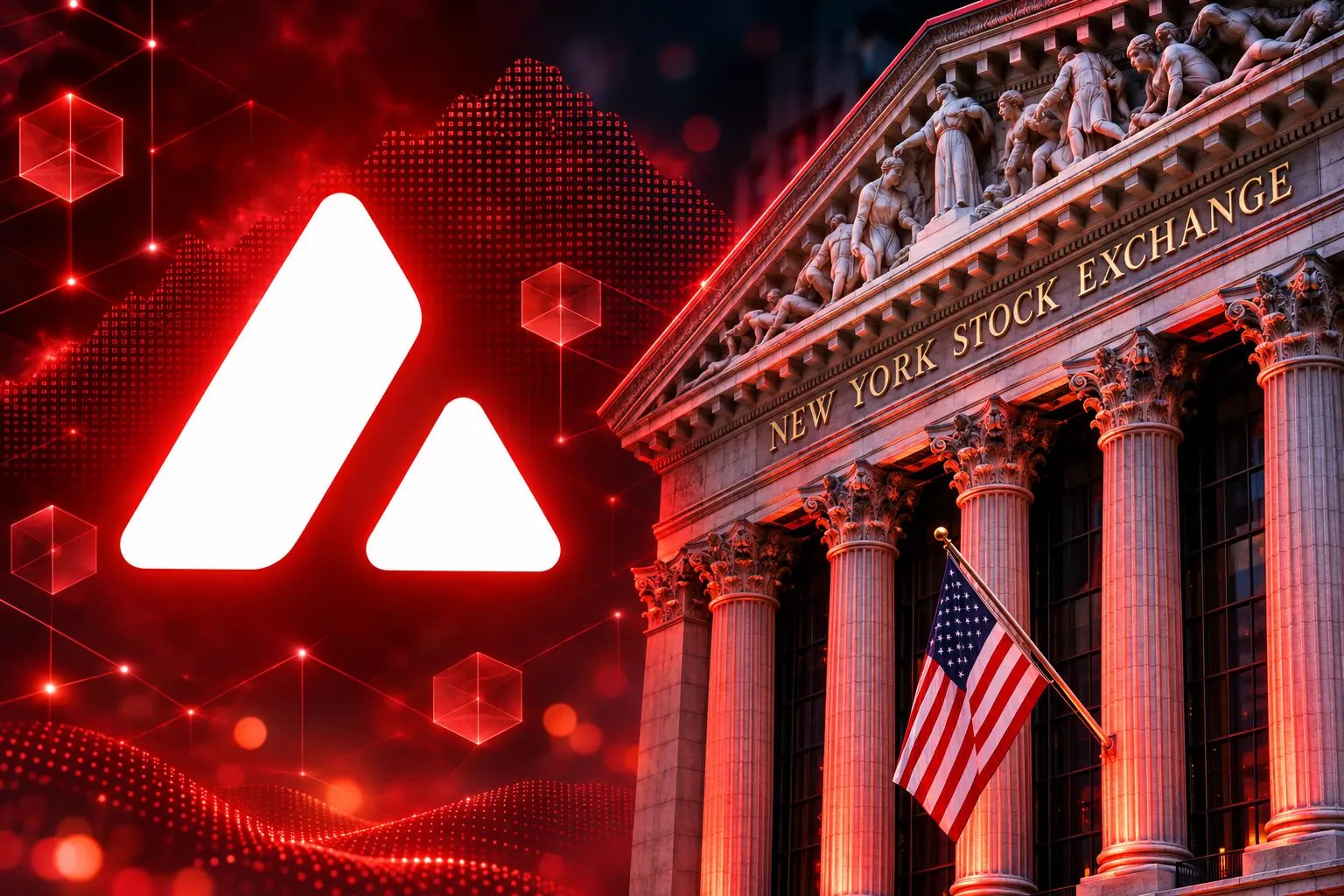
Ava Labs said on Nov. 9 that Avalanche will supply the core ledger for the clearing firm behind an NYSE-linked venue for tokenized stocks. The platform is built for 24/7 trading and instant settlement, and it still needs approval from regulators.
NYSE systems will pair the orders. Avalanche’s job is the book that records who owns what after the trade. Intercontinental Exchange, which owns the NYSE, is also backing a separate OKX tokenized-stock venue that 67 issuers have already told to keep third-party tokens of their shares off the platform.
Avalanche Gets the Clearing Book, Not the Matching Engine
Ava Labs, the New York company that builds Avalanche, put the assignment in a release dated Nov. 9, 2026, at 8:00 a.m. Eastern. Avalanche will provide core ledger technology to the clearing firm of an NYSE-linked digital alternative trading system, a venue that trades securities without being a stock exchange itself. The clearing firm is not named. No contract value is disclosed.
The official Avalanche account described the same split on X: the core clearing and settlement layer sits on Avalanche technology, and the chain will support the platform’s clearing firm as it builds 24/7 trading, clearing, and settlement.
BREAKING: Upcoming NYSE-affiliated tokenized securities platform’s core clearing and settlement layer will be built on top of Avalanche technology.
Avalanche will support the platform’s clearing firm, supporting the development of infrastructure for 24/7 trading, clearing, and… pic.twitter.com/LSzeFbGegN
— Avalanche🔺 (@avax) November 9, 2026
NYSE’s Pillar matching engine still decides which buy meets which sell. Avalanche writes the post-trade record and is meant to finish cash and shares together, so the trade does not sit open until the next business day. Dennis Lee, NYSE’s head of digital issuance, put the two jobs in different places on purpose.
The upcoming digital trading platform will support equities listed on a range of blockchains, though the ledger that records and settles trades needs to be fast and reliable, let us control who can take part, keep costs predictable, and have a large community of developers behind it. Avalanche meets all those needs.
Dennis Lee, Head of Digital Issuance, NYSE, Ava Labs release
Shares can still be issued on more than one chain. The book that finishes the trade is supposed to be Avalanche alone. That is a narrower win than the headline that NYSE “picked Avalanche over Ethereum and Solana,” and it is the win the exchange actually described.
WHO DOES WHICH JOB ON THE PLANNED VENUE
| Job | Who runs it | What it covers |
|---|---|---|
| Order matching | NYSE Pillar | Pairs buys and sells on NYSE technology |
| Clearing and settlement ledger | Avalanche, via an unnamed clearing firm | Records the trade and aims to finish both legs at once |
| Share issuance | A range of blockchains | Tokens can live on more than one chain |
| Shareholder records and votes | Six transfer agents | Ownership files, dividends, and proxy votes |
The NYSE account followed the Ava Labs release with a video of Charley Cooper, Ava Labs president and chief operating officer, walking through that clearing-firm role. The exchange is not moving listed trading off Pillar. It is plugging a blockchain into the step that used to wait for T+1.
A Ledger the Exchange Can Close to Outsiders
Lee’s list is a control list. Speed and cost sit next to the right to decide who may take part. Emin Gün Sirer, founder and chief executive of Ava Labs, used the same language in the release, talking about dedicated systems, predictable performance and costs, and “the control to meet its regulatory and operational requirements.”
On X, Sirer went further. He wrote that markets no longer have a technical reason to keep fixed hours and delayed settlement, and that Avalanche was designed so institutions can configure a network to their own rules and reach near-instant finality without giving up control over how the network runs. Margaret Hyde, head of communications at Ava Labs, who was on the NYSE floor that morning, wrote that customization is the reason, and that settlement is supposed to fade into the background.
John Nahas, chief business officer at Ava Labs, said the work had been over a year in the making and that NYSE would run its own custom blockchain on Avalanche technology, cut to the platform’s regulatory needs, rather than settle on Avalanche’s public chain. The Ava Labs release does not use the words “custom chain.” It does keep repeating control, dedicated systems, and who is allowed in.
A public mempool does not give a stock exchange a switch for that. Ethereum and Solana can still host a tokenized share if an issuer or a custodian puts it there. They are a poor fit for a clearing book the operator wants to gate, price in a straight line, and show a regulator. That is the second-order choice inside the announcement: NYSE hired a chain it can shape, not a chain with the most tokenized-stock chatter.
The hard wiring is still ahead of the press release. Regulated custody, identity checks, and tokenized collateral have to meet on-chain finality before a trade can actually finish. Until those links are in production, Avalanche is the named ledger for a market that has not opened.
67 Issuers Already Walked Off ICE’s Other Venue
ICE is running two tokenized-stock tracks at once, and they are easy to mash together. The NYSE-linked ATS is built around issuer-sponsored tokens and third-party custodial tokens that are supposed to be fungible with ordinary shares, with dividends and votes attached. The other track is OKXICE TSV, a joint venue owned by ICE and OKX, working under an SEC innovation exemption that lets a venue offer third-party tokens of U.S. stocks unless the issuer objects in time.
The exemption, described in a Sept. 17 framework from the SEC, gives a company 30 days after written notice to block that venue from listing an unaffiliated token of its stock. An objection stops that venue. It does not stop a company from tokenizing its own shares, and it does not bind every other market.
OKXICE’s Nov. 5 public notice listed 67 issuers that had filed objections. That full list is larger than the original roster. Of the 62 companies first named for the venue, 56 objected, leaving six with no disclosed objection, all of them tied to crypto: Coinbase, Circle, Strategy, Robinhood, BitGo, and Securitize.
Apple, Microsoft, Alphabet, Amazon, Nvidia, Tesla, and Meta, the so-called Magnificent Seven, are all on the objector list. Amazon, Tesla, and SpaceX appeared on a Nov. 2 update; Apple and Meta completed the seven-name sweep in the Nov. 5 notice. Banks, retailers, and chipmakers are on it too, including JPMorgan Chase, Goldman Sachs, Walmart, and Coca-Cola.
Those walk-offs do not, on the paper we have, apply to the NYSE-linked ATS that Avalanche is settling. They do show what happens when a 24/7 tokenized-stock product tries to list famous names without the issuer in the room. ICE now has a gated NYSE venue that still needs the SEC, and a sister venue that already lost the household tickers.
The Six Firms That Keep Shareholder Records
If the NYSE venue is going to list anything issuers will claim as a real share, transfer agents have to move with it. On Nov. 2 the exchange said it had added Broadridge Financial Solutions, Computershare, Equiniti, and Superstate to a roster that already included Securitize and tZERO.
Computershare, Equiniti, and Broadridge together serve close to 5,000 publicly listed companies, including nearly 99% of the S&P 500, the NYSE said. That is a measure of who already keeps the files, not a claim that those issuers have agreed to tokenize. Broadridge’s own release says its distributed ledger repo platform is tokenizing over $360 billion a day.
THE SIX TRANSFER AGENTS ON THE NYSE VENUE
- Securitize: Named in March as NYSE’s first digital transfer agent and a design partner for issuer-sponsored tokens.
- tZERO: Signed earlier; its chief executive, Alan Konevsky, pointed to a regulated digital transfer-agent layer already in use.
- Broadridge: Digital transfer agency plus on-chain proxy votes, meeting agendas, and wallet checks tied to voting rights.
- Computershare: Traditional transfer-agent scale; Ann Bowering, CEO of issuer services for North America, called issuer-sponsored tokens a way to add choice without dropping servicing standards.
- Equiniti: Issuer relationships and operational scale, per CEO Dan Kramer.
- Superstate: Crypto-native recordkeeping; CEO Robert Leshner called tokenization a partnership among issuers, transfer agents, and exchanges.
Tim Gokey, Broadridge’s chief executive, said the firm is “building the governance layer for tokenized equities” and wants issuers to use one stack whether shares sit in a brokerage account or a wallet. Lynn Martin, president of NYSE Group, said onboarding Broadridge “marries trust and innovation” and ties tokenized trading and clearing to shareholder votes. Broadridge’s smart contracts are meant to connect tokenized securities to agendas, voting rules, and checkable results, with investors able to vote through supported wallets, broker screens, or ProxyVote.
That is the on-ramp the OKXICE product did not wait for. The NYSE design asks an issuer’s transfer agent to mint or recognize a token that still pays dividends and still votes. Until those agents actually mint, Avalanche is settling an empty book.
January’s Multi-Chain Design Meets a Single Settlement Chain
The Nov. 9 ledger pick closes a choice the exchange left open in winter. On Jan. 19, 2026, NYSE said it was building a platform for trading and on-chain settlement of tokenized securities, subject to approvals, with 24/7 hours, instant settlement, dollar-sized orders, fractional shares, and stablecoin funding. The write-up on the transfer-agent page still carries that original architecture: Pillar for matching, blockchain for post-trade, “including the capability to support multiple chains for settlement and custody.”
Lee’s November line keeps multiple chains for listed equities and puts a single ledger under the trade. Issuance can stay scattered. Settlement cannot, if the clearing firm wants one book, one cost curve, and a known set of participants.
HOW THE NYSE TOKENIZED VENUE TOOK SHAPE
- January 19, 2026: NYSE announces a platform for tokenized securities with 24/7 trading, instant settlement, and Pillar plus multi-chain post-trade systems, and says it will seek approvals.
- March 24, 2026: NYSE names Securitize the first digital transfer agent eligible to mint blockchain-native securities for corporate or ETF issuers on the planned digital trading platform.
- November 2, 2026: Broadridge, Computershare, Equiniti, and Superstate join Securitize and tZERO; Broadridge takes on-chain votes.
- November 9, 2026: Ava Labs says Avalanche will be the core ledger for the platform’s unnamed clearing firm, with 24/7 atomic settlement as the design goal.
The venue is still described as handling both issuer-sponsored tokens and third-party custodial tokens, each meant to be fungible with traditionally issued securities. Distribution is supposed to run through qualified broker-dealers on a non-discriminatory basis. That is not live. The NYSE has not published a ticker list for the ATS, and the Ava Labs release does not name a launch day.
AVAX Jumped on a Venue With No Named Stocks
CoinGecko listed AVAX at $8.68 at 00:50 UTC on Nov. 10, up 8.8% over 24 hours, with a market value of $3.87 billion and $521.8 million of volume. That print was 94.0% below the November 2021 high of $144.96. The bounce is a reaction to a named role, not to a live flow of NYSE trades.
The NYSE-linked venue is targeting a fourth-quarter launch, pending approval. Fourth quarter is not a date. The clearing firm is still unnamed. The first stock that will settle on that ledger is unnamed. The SEC has not, in the materials around this announcement, posted a matching approval for the ATS.
WHAT WE KNOW
- The ledger job: Avalanche is the intended core ledger for the NYSE-linked ATS clearing firm, with Pillar still matching orders.
- The issuance split: Equities on the venue may be listed on a range of blockchains; the settlement book is meant to be Avalanche.
- The agent roster: Six transfer agents are signed, and three of them already serve close to 5,000 listed companies.
- The other ICE venue: OKXICE’s Nov. 5 notice lists 67 objecting issuers, including all seven Magnificent Seven names.
WHAT IS UNCONFIRMED
- A launch day: A fourth-quarter target is in circulation; Ava Labs did not put a date in the Nov. 9 release.
- The first tickers: No issuer list has been published for the NYSE-linked ATS.
- The public chain question: Nahas described a custom Avalanche-based chain; the formal release speaks only of dedicated systems and participant controls.
- The clearing firm: The customer in the Ava Labs release is “the platform’s clearing firm,” with no name attached.
Avalanche now has the post-trade book on a New York Stock Exchange project that wants to run all week. The matching engine is still NYSE’s. The shares, if they appear, will have to come from issuers and transfer agents who choose to mint. Until that happens, and until Washington signs off, the chain is the ledger for a market that has not opened.
Disclaimer: This article is news reporting and analysis for information only. It is not investment advice, a recommendation to buy or sell AVAX or any security, or legal advice on SEC rules or tokenized-share structures. Readers should consult a licensed financial adviser and, where needed, a securities lawyer before making any investment or listing decision. Prices, partner lists, objection counts, and approval statuses reflect the company statements and market data cited for the dates named and can change.

One UI 9.5 Beta Puts the Galaxy S26 on Last Year’s Clock

DBS Puts a 24/7 USDC Window Inside the Bank

European Startups Head for $81 Billion as First Checks Shrink

US Stocks Lost $1.3 Trillion Before Nvidia’s Beat

Home Depot Bets on Finance Chief Richard McPhail as CEO

Aramco Crash Kills 14 Two Days After Oil Restart

Salah Captained Egypt to Their First World Cup Win

Zelda’s 40th Switch 2 Ships Without a Zelda Game

Apple Labor Day Deals Hide June’s Memory Price Hike

El Niño Puts Israel’s Needed Winter Rain on a Flood Clock
-
 BUSINESS5 months ago
Aramco Crash Kills 14 Two Days After Oil Restart
-
 NEWS6 months ago
Salah Captained Egypt to Their First World Cup Win
-
 GAMING2 months ago
Zelda’s 40th Switch 2 Ships Without a Zelda Game
-
 NEWS3 months ago
Apple Labor Day Deals Hide June’s Memory Price Hike
-
 NEWS4 months ago
El Niño Puts Israel’s Needed Winter Rain on a Flood Clock
-

 GAMING2 months ago
Palworld 1.0.4 Adds Palpedia Search After the 1.0 Launch
-

 NEWS4 months ago
Saudi Visa Routes Split Nigerian Travelers Into Two Speeds
-

 BUSINESS9 months ago
BAE’s 60-Year Saudi Franchise Now Runs Through Taif