
BUSINESS
CFTC Clears Equity Perps as Cboe Files Suit
Equity perpetual futures can trade on dual-registered U.S. exchanges, recycling the 2000 security-futures law as Cboe sues and Kalshi lists four names.

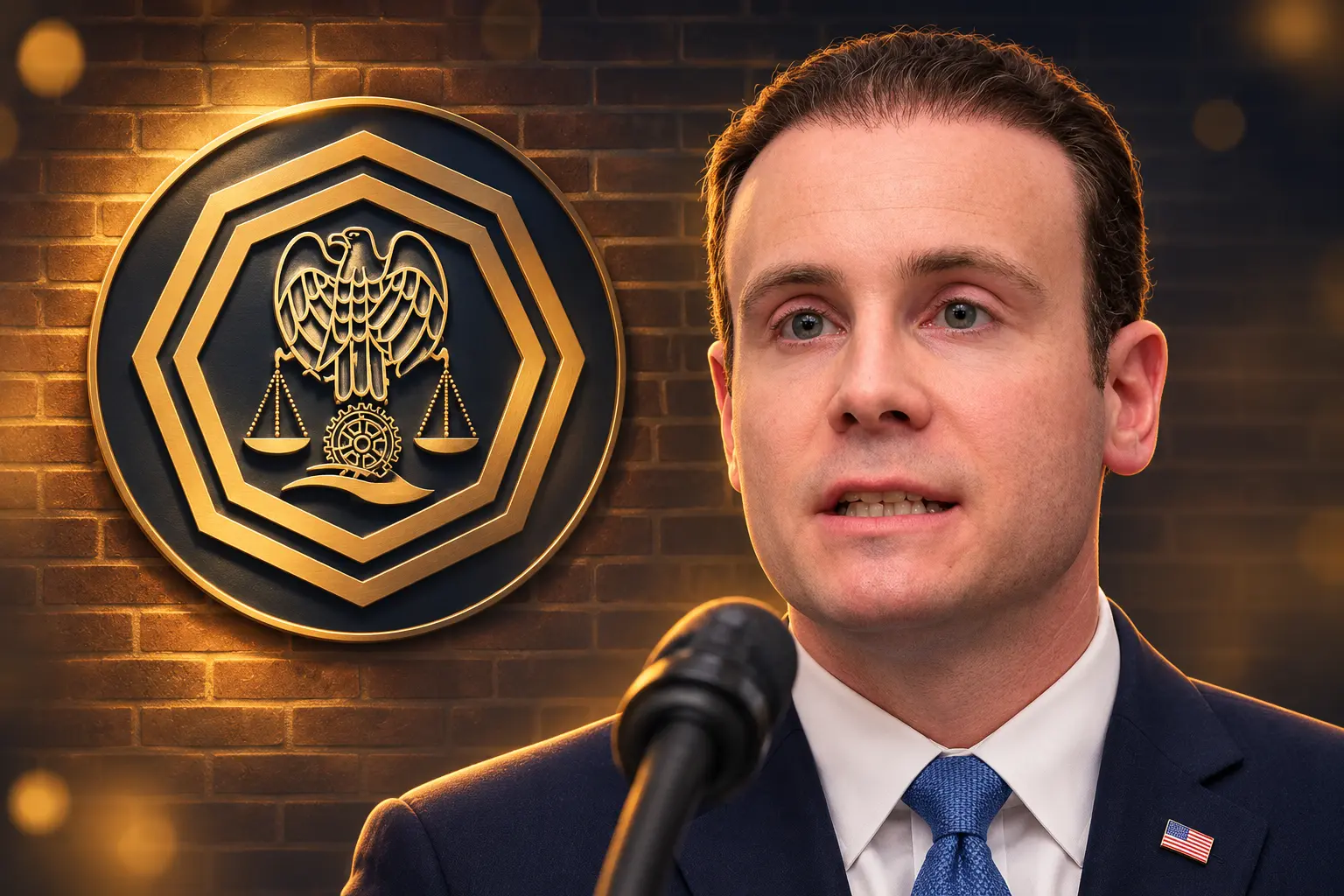
CFTC Chairman Michael S. Selig said on November 3, 2026 that perpetual futures on individual stocks can begin trading on U.S. futures exchanges that also hold SEC notice registration for security futures. He named no venue, no ticker and no start date. Kalshi still put Amgen, Costco, McDonald’s and Qualcomm on a public board the same day, and a group backed by Cboe Global Markets and Citadel Securities sued in Manhattan to unwind the move.
The legal box is older than the crypto nickname. Selig said the contracts were deemed approved as security futures under the Commodity Futures Modernization Act of 2000, the same dual CFTC-SEC path used by OneChicago until that exchange went dark on September 18, 2020.
A 2000 Law in a Crypto Wrapper
Selig’s statement is a chairman’s note, not a Commission vote. The products cleared under Regulation 40.3 after the review clock ran out. He wrote that Equity Perps, his label, “can begin trading for the first time on CFTC-registered exchanges,” then footnoted that those exchanges must be designated contract markets that are also notice-registered with the SEC to trade security futures products.
That is the CFMA design, not a new statute. Congress split security futures across both agencies in 2000 so a contract that looks like a future on a single stock would sit under commodity law and securities law at once. Selig said the CFTC and SEC signed a memorandum of understanding on March 11, 2026, to coordinate that overlap, and he quoted SEC Chairman Paul S. Atkins’s line that innovative products had been left in a regulatory “no man’s land.”
The tenor is what is new. A dated single-stock future expires and has to be rolled. A perpetual future has no expiry. Longs and shorts exchange a funding payment to keep the contract near the cash price. Selig tied Tuesday’s note to the May 29, 2026 order that let KalshiEX list BTCPERP, a bitcoin perpetual, and to his January 29, 2026 instruction that staff onshore perpetual derivatives rather than leave them offshore.
He sold the listing as investor protection. “Bringing these types of innovative products into our regulated markets ensures that American investors and traders can access these products within the protections of the CFTC’s proven regulatory framework, rather than being forced to turn to offshore, and often unregulated, venues,” he wrote. He posted a shorter version of the same pitch on X.
Today, equity perps can begin trading for the first time on @CFTC registered exchanges.
This move reflects my commitment to ensuring that America’s markets remain the most innovative, liquid, and well-regulated in the world. Instead of being forced to turn to offshore,… https://t.co/6nagthvmoS
— Mike Selig (@ChairmanSelig) November 3, 2026
Kalshi Listed Four Names Before the Close
Kalshi’s own product pages did the naming the chairman skipped. A Kalshi Pro update said Amgen, Costco, McDonald’s and Qualcomm are tradable on its perpetuals board, long or short with leverage. The help center said the exchange “now offers perpetual futures on individual stocks,” and it warned that the stock book follows a set schedule.
Each stock perp is small. One contract is 0.02 shares, so 50 contracts match one share. On a $200 stock that is about $4 of exposure. Funding posts once a day at 4:00 p.m. ET. Positions settle at 12:00 p.m. ET and 4:00 p.m. ET. Clearing sits at Kalshi Klear LLC. The four names showed a 4.9x cap on Kalshi’s board, well below the double-digit leverage common on offshore crypto books.
KALSHI’S FIRST FOUR SINGLE-STOCK PERPS
| Ticker | Max leverage on the board | 24-hour volume |
|---|---|---|
| QCOM | 4.9x | $3,793,679 |
| COST | 4.9x | $1,882,547 |
| MCD | 4.9x | $1,150,332 |
| AMGN | 4.9x | $833,542 |
Those four prints add to $7,660,100. That is a first-day tape, not a market. Qualcomm led. Amgen lagged. Index perps already on Kalshi, including a U.S. large-cap contract, are a separate product and are not part of Tuesday’s single-stock clearance.
Why OneChicago Shut in 2020
U.S. law banned single-stock futures for years, then the CFMA opened a narrow door. Nasdaq-LIFFE’s NQLX listed them first and folded. OneChicago, a joint venture that at various points included CME Group, Cboe and Interactive Brokers, kept the product alive until 2020. It listed security futures on equities, ADRs and ETFs and cleared through OCC or CME.
The joint CFTC-SEC minimum margin sat at 20 percent of notional, a cash-heavy number next to options or a portfolio-margin stock account. Brokers had little reason to push a product that competed with stock loan and with listed options. The SEC and CFTC cut the minimum to 15 percent in November 2020, after the venue was already gone.
THE SECURITY-FUTURES CLOCK
- 2000: Congress passes the CFMA and puts security futures under both the CFTC and the SEC.
- May 14, 2001: Cboe and CME announce the OneChicago joint venture; NQLX also launches and later closes.
- September 18, 2020: OneChicago’s last session; 99.4 percent of open interest expires that day.
- February 11, 2021: The SEC grants OneChicago’s request to withdraw its notice registration after OneChicago’s last day of trading.
- May 29, 2026: The CFTC approves Kalshi’s BTCPERP bitcoin perpetual, the onshore template Selig later extends to stocks.
- September 18, 2026: Bitnomial Exchange, Coinbase Derivatives and KalshiEX file to list equity perpetuals as security futures.
- November 2, 2026: The 45-day Regulation 40.3 clock on those September 18 filings ends without a notice of non-approval.
- November 3, 2026: Selig says trading can begin; Kalshi lists four names; Capital Markets Alliance sues in the Southern District of New York.
Cboe’s fingerprints are on both chapters. It helped own the last U.S. single-stock futures book, then spent Tuesday arguing that a perpetual version of the same idea does not belong on a CFTC platform at all.
Cboe Takes the Fight to Manhattan
Capital Markets Alliance Association sued the CFTC and Selig in his official capacity in case 1:26-cv-09608, filed at 12:09 p.m. EST on November 3. Cboe said the alliance includes Cboe, Citadel Securities and Healthy Markets Association. The complaint treats the contracts as security-based swaps that Congress gave the SEC alone, and it asks the court to vacate the deemed approvals and to enjoin them. It also argues the agency violated the Administrative Procedure Act by letting the 40.3 clock lapse without a written legal basis.
Cboe CEO Craig Donohue put the commercial objection in investor-protection clothes and said Cboe could list the same products on its own CFTC platforms if this were only a turf fight.
Single-stock perpetual derivatives are the latest example of a troubling trend in which securities products are being offered on CFTC platforms, outside the appropriate regulatory framework and customer protection regime established by Congress.
Craig Donohue, CEO, Cboe Global Markets
Cboe said it had Capital Markets Alliance legal challenge papers seeking injunctive relief. A CFTC spokesperson called the suit “troubling” interference and said, “Our markets should be governed by law, not litigation campaigns intended to block innovation.”
The filing is not a one-off tantrum. CME Group already sued the CFTC in June over perpetual products tied to digital assets at Kalshi and Coinbase. SIFMA, writing to the SEC on November 2, asked both agencies to stay the equity-perp rule filings and force a fuller public process, citing cash-market impact, cross-market surveillance and trading when the stock is quiet. Futures shops have also tried to block Kalshi’s oil perps, so the equity docket sits on a longer fight about who may copy crypto’s contract design onto traditional underlyings.
The Dual-Registration Bottleneck
Selig’s footnote does more work than the headline. Equity perps cannot list on a plain CFTC futures exchange, and they cannot list on a plain stock exchange. The venue has to be a designated contract market and a notice-registered national securities exchange for security futures. That filter is why this is not a general “stocks now have perps” event.
SIFMA’s November 2 letter is the clean roster of who actually tried. It said four designated contract markets filed with both agencies, and that those DCMs had recently notice-registered with the SEC under Exchange Act Section 6(g).
WHO FILED TO LIST EQUITY PERPETUALS
| Venue | SEC release | Filing date |
|---|---|---|
| Bitnomial Exchange, LLC | 34-106421 | September 18, 2026 |
| Coinbase Derivatives, LLC | 34-106420 | September 18, 2026 |
| KalshiEX LLC | 34-106422 | September 18, 2026 |
| North American Derivatives Exchange, Inc. | 34-106521 | September 29, 2026 |
Only the September 18 trio sat inside the 45-day window that closed on November 2. Nadex filed 11 days later, so it does not ride that deemed-approval date. SIFMA added that ICE Futures U.S. filed a Form 1-N to become notice-registered for security futures, with equity perpetuals discussed as a possible use of that status, not as a live listing.
The bottleneck is the point of the 2000 law and the reason the 2026 sequel can move faster at prediction-market and crypto DCMs than at the big options incumbents. Those smaller venues already live on CFTC paper. Notice-registering for security futures is a form, not a new exchange build. Cboe’s objection is that this path lets a securities-linked product skip the full SEC exchange rulebook.
ICE Is Building the Book That Stays Open
Five days before Selig’s note, Intercontinental Exchange, parent of the New York Stock Exchange, said it would partner with TradeXYZ to bring Hyperliquid-based perpetual markets onshore. ICE would run exchange and clearing. TradeXYZ would design the contracts. Hyperliquid would supply the market tech. The planned book would cover equities, indices, commodities, FX and crypto, through participating brokers, pending U.S. approvals. ICE is taking a stake in TradeXYZ. Existing offshore Hyperliquid markets would keep running on a separate book.
That deal is not Tuesday’s listing. It is the version of the product that actually copies the offshore habit of never closing. Selig’s statement never mentioned Hyperliquid, ICE or TradeXYZ. The first replies under his X post still answered with that one name, because traders read the CFTC note as permission for the onshore Hyperliquid pipe, not as a Kalshi product launch.
The bitcoin step in May already showed how the agency wants to classify these contracts. It treated Kalshi’s BTCPERP as a future, not a swap, and it opened an optional lane for retail crypto leverage alongside that order. Equity perps now test whether the same future-not-swap reading survives when the underlying is Apple’s cousin on a U.S. listing, and whether a New York court will let the reading stand.
These Perps Still Close Overnight
Kalshi’s help center is blunter than the onshoring speech. Stock perps are not open 24/7. They follow a trading schedule and close at set times. The Pro note says the same thing in trader language: unlike crypto, stocks do not trade around the clock, so check the hours before planning an exit. Dividends become cash adjustments. Longs receive them, shorts pay them. Holders do not get the shares, the vote, or the issuer relationship.
HOW KALSHI’S STOCK PERP IS BUILT
- Contract size: 0.02 shares per contract, 50 contracts per share, about $4 of exposure on a $200 stock.
- Hours: A set cash-market schedule with regular closures, not a weekend book.
- Funding: Once daily at 4:00 p.m. ET, not the hourly drip used on many offshore venues.
- Leverage: 4.9x on the first four names, a margin load closer to old security futures than to crypto perps.
- Clearing: Kalshi Klear LLC, with twice-daily settlement at 12:00 p.m. and 4:00 p.m. ET.
That design will pull accounts that need a U.S. rulebook, a U.S. clearer and a product compliance can put in an existing futures account. It will not pull the offshore crowd that wants 20 times leverage on Nvidia at 3 a.m. Sunday. The louder gap is hours, not the swap-versus-future theory in the Manhattan complaint. ICE and TradeXYZ are still the parties trying to close that gap, and they still need their own approvals.
OneChicago died on a 20 percent haircut, dual-agency friction and a brokerage complex that preferred options and stock loan. Tuesday’s sequel has a crypto name, a 4.9x board, four tickers and a lawsuit filed before the cash close. The 2000 law is open again. The overnight book is not.
Disclaimer: This article is news reporting and analysis of a CFTC statement, exchange listings and a federal complaint. It is informational only and is not investment, trading, tax or legal advice. Equity perpetual futures are leveraged derivatives; posted margin can be lost, and additional funds can be required, so readers should consult a licensed financial adviser and, if needed, a securities or commodities lawyer before trading. Listings, leverage caps, volumes, court status and regulatory positions reflect the public statements and product pages cited and can change as the exchanges, the CFTC, the SEC and the court act.

One UI 9.5 Beta Puts the Galaxy S26 on Last Year’s Clock

DBS Puts a 24/7 USDC Window Inside the Bank

European Startups Head for $81 Billion as First Checks Shrink

US Stocks Lost $1.3 Trillion Before Nvidia’s Beat

Home Depot Bets on Finance Chief Richard McPhail as CEO

Aramco Crash Kills 14 Two Days After Oil Restart

Salah Captained Egypt to Their First World Cup Win

Zelda’s 40th Switch 2 Ships Without a Zelda Game

Apple Labor Day Deals Hide June’s Memory Price Hike

El Niño Puts Israel’s Needed Winter Rain on a Flood Clock
-
 BUSINESS5 months ago
Aramco Crash Kills 14 Two Days After Oil Restart
-
 NEWS6 months ago
Salah Captained Egypt to Their First World Cup Win
-
 GAMING2 months ago
Zelda’s 40th Switch 2 Ships Without a Zelda Game
-
 NEWS3 months ago
Apple Labor Day Deals Hide June’s Memory Price Hike
-
 NEWS4 months ago
El Niño Puts Israel’s Needed Winter Rain on a Flood Clock
-

 GAMING2 months ago
Palworld 1.0.4 Adds Palpedia Search After the 1.0 Launch
-

 NEWS4 months ago
Saudi Visa Routes Split Nigerian Travelers Into Two Speeds
-

 BUSINESS9 months ago
BAE’s 60-Year Saudi Franchise Now Runs Through Taif