
BUSINESS
BNY Adds XRP Custody as C2FO Moves Invoice Pay On-Chain
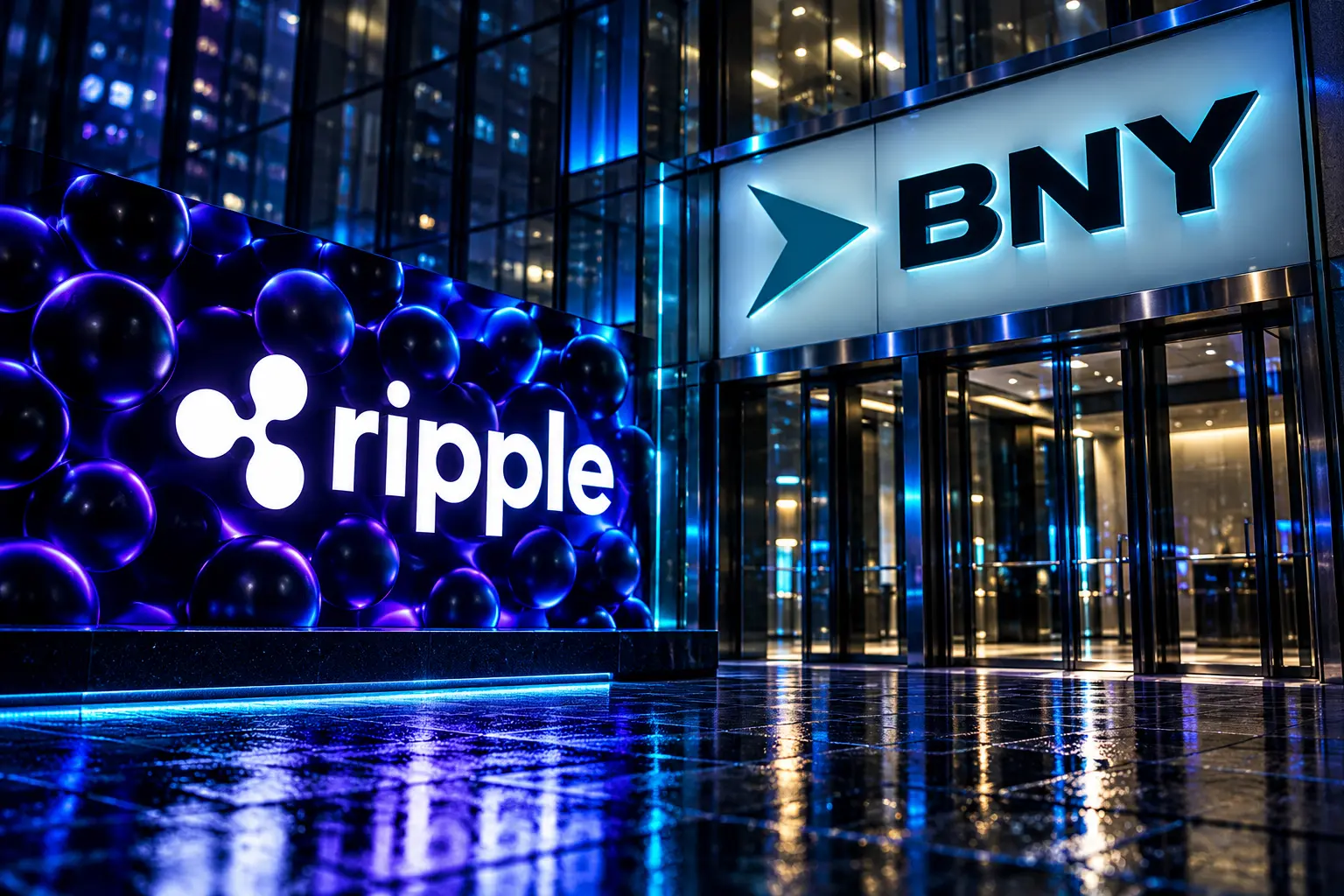
BNY added XRP and RLUSD custody as C2FO moves Instant Pay for unpaid suppliers onto the XRP Ledger in RLUSD.

BNY added XRP and RLUSD to its Digital Asset Custody platform on October 27, 2026, and named C2FO as the first trade-finance partner on the XRP Ledger. Eligible clients can now safekeep, hold and transfer both tokens at the bank. The invoice product that would use that rail is still a waitlist.
The Bank of New York Mellon Corporation, which styles itself BNY, already held the cash behind Ripple USD. Tuesday’s switch puts the tokens themselves inside the same servicing stack, and it does so beside a working-capital marketplace whose suppliers still wait 30, 60 or 90 days to get paid.
BNY Now Holds XRP and RLUSD for Institutions
Ripple and BNY announced an digital asset custody and tokenized trade finance expansion during Ripple’s Swell 2026 event in New York. BNY reported $63.4 trillion in assets under custody and/or administration as of September 30, 2026. For more than 240 years it has sat at the centre of safekeeping, and it says it serves over 90% of Fortune 100 companies.
The live change is narrow. BNY already served as primary reserve custodian for RLUSD and already had a custody relationship with Ripple Prime. Its Digital Asset Custody platform now supports XRP, the native asset of the XRP Ledger (XRPL), and RLUSD, so institutions that already bank with BNY can hold those two assets under the bank’s existing controls.
BREAKING: $BNY expands strategic collaboration with @Ripple across digital asset custody to now include @XRP, and explore new institutional use cases for blockchain technology, including tokenized trade finance.
Learn more: https://t.co/LXlIp1bIPv$RLUSD $XRPL
— BNY (@BNYglobal) October 27, 2026
BNY intends to widen support for tokenized assets and investment products issued on XRPL, and to let clients mint and redeem RLUSD directly through the bank. Ripple’s release states that those product plans are subject to final BNY and regulatory approvals, and neither firm gave a launch date.
WHAT WE KNOW
- Live custody: BNY’s Digital Asset Custody platform now supports XRP and RLUSD for eligible institutional clients.
- Reserve role: BNY remains the primary reserve custodian for RLUSD, a job it took on July 9, 2025.
- Instant Pay: C2FO said financing and settlement for Instant Pay will run on XRPL in RLUSD, and it opened a waitlist.
WHAT IS UNCONFIRMED
- Mint and redeem: Direct RLUSD minting and redemption through BNY has no public timetable and still needs approvals.
- Wider XRPL products: Broader support for tokenized investment products on the ledger is intended, not scheduled.
- Receivables project: Ripple and BNY are exploring a supply-chain finance plan with C2FO, subject to client requirements, which is a separate track from Instant Pay.
That split matters because the X conversation treated the whole package as one live print. Custody of the tokens is on. The trade-finance work is a plan sitting on top of it.
The Suppliers Still Waiting 30 to 90 Days
C2FO calls itself the world’s largest platform for working capital. Across global supply chains, businesses can wait 30, 60 or even 90 days after delivering goods and services to be paid, tying up cash they would otherwise use for payroll, inventory and new orders.
Its Early Pay programs, including Dynamic Discounting and Dynamic Supply Chain Finance, have already helped businesses access more than $525 billion in working capital through the accelerated payment of approved invoices. Even when an invoice is paid early, funds can still take several days to move through bank settlement.
That second delay is the gap Instant Pay is built to close. The firms are not asking suppliers to change invoice terms. They are trying to shorten the wait between an approved early payment and cash in hand.
We’ve spent years building a platform that gives businesses more information and control over their working capital. The next opportunity is to make the financial infrastructure behind our marketplace as efficient and connected as the experience we’ve created for customers.
Ragui Selwanes, President and COO, Americas, C2FO, October 27, 2026 statement
Ripple put the same delay in public view when it said businesses can wait 30, 60 or 90 days to get paid, and that even early payments can take days to arrive through bank settlement.
Trade finance keeps global commerce moving. Ripple and @C2FO are bringing it onto the @XRP Ledger: https://t.co/AHAGJRrGKM
Businesses can wait 30, 60 or 90 days to get paid. Even early payments can take days to arrive through bank settlement.
Together, we’re bringing financing… pic.twitter.com/hbWdU3r672
— Ripple (@Ripple) October 27, 2026
C2FO’s own line is blunter: early payment only helps when the money arrives. Instant Pay is the product it built with Ripple to test that claim on XRPL, using RLUSD for settlement.
How C2FO Instant Pay Settles in Seconds
Suppliers will keep requesting early payment through C2FO the way they do now. The change sits under the marketplace, in how funded invoices are settled once a capital provider steps in.
HOW INSTANT PAY IS MEANT TO RUN
- The request: Businesses still access early payment through C2FO’s existing platform.
- The funders: Instant payment is funded by participating capital providers, not by rewriting the buyer’s invoice.
- The rail: Settlement moves on the XRP Ledger in RLUSD, Ripple’s U.S. dollar-backed stablecoin.
- The contract: Invoice terms and due dates stay exactly as agreed.
- The clock: C2FO said suppliers receive funds in seconds rather than days of bank settlement, against XRPL’s 3 to 5 second settle time.
Markus Infanger, senior vice president of RippleX at Ripple, said working capital is a place where blockchain can make an existing market work better, and that C2FO brings an established marketplace, real commercial activity and demonstrated financing demand. Together with C2FO, he said, the work creates a chance to address billions of dollars in commercial activity and make approved receivables easier to finance.
Businesses that want Instant Pay can join C2FO’s waitlist. The companies did not publish a live volume figure, a go-live date, or a count of participating funders. Until those show up, Instant Pay is a designed rail with a signup page, not a flow of paid invoices anyone can measure.
No Date Yet for Direct Minting
The expansion of their strategic collaboration has a second planned leg that never left the future tense. BNY intends to work with Ripple so its clients can mint and redeem RLUSD directly through the bank, cutting a step that today still runs through Ripple.
Monica Long, president of Ripple, said the firms are moving past the initial issuance of assets onchain. The job now, she said, is making those tokenized assets “usable for payments and collateral across financial markets.” With BNY, she added, Ripple is connecting the pieces of financial infrastructure on XRPL so institutions can move from holding digital assets to using them in capital markets and trade finance.
Carolyn Weinberg, BNY’s chief innovation and market transformation officer, framed the same work as a bridge between scaled bank systems and always-on blockchain rails, and said the two firms are working toward a more continuous payments, liquidity, collateral and securities stack.
Direct mint and redeem would matter for Instant Pay only if capital providers and BNY clients actually use that window to get RLUSD in and out without a side trip. The October 27 release gives no clock for that window. It also repeats that intended product plans need final BNY and regulatory approvals.
The reserve relationship that would sit behind those conversions is already old by crypto standards. On July 9, 2025, Ripple selected BNY for primary custody of Ripple USD reserves. RLUSD is issued under a New York Department of Financial Services Trust Company Charter, and BNY also provides transaction-banking services around those reserves. Tuesday’s news adds custody of the token, not a replacement of that reserve role.
Aviva Put Tokenised Fund Shares on XRPL
The trade-finance plan is not BNY’s first turn on this ledger. On October 26, 2026, Aviva Investors launched a tokenised share class of the Sterling Liquidity Fund on XRPL, working with Ripple. The underlying fund, Aviva’s largest, has about £22 billion in assets. That figure is the whole fund, not the amount sitting in the new digital share class.
Aviva invested £50 million ($66 million) in the new sterling class. Across that class and a dollar liquidity share class launched earlier in 2026, Aviva said it now has over £86 million invested in its two tokenised money-market offerings. The sterling fund remains an Ireland-domiciled UCITS money-market fund that started in 2002. Holdings can be represented onchain while the off-chain fund structure stays in place.
All of the fund’s assets are held by its custodian, BNY. Digital-asset custody for the wallet layer sits with other firms named in that launch. The point for Tuesday’s story is simpler: a day before BNY added XRP and RLUSD token custody, it was already the safekeeper for a fund whose new share class lives on XRPL.
BNY’S THREE TOUCHES ON THIS LEDGER
| Relationship | Date | What BNY holds |
|---|---|---|
| RLUSD reserves | July 9, 2025 | Assets backing the stablecoin, plus transaction banking around those reserves |
| Aviva Investors Sterling Liquidity Fund | October 26, 2026 | The fund’s assets; a tokenised share class is recorded on XRPL |
| XRP and RLUSD tokens | October 27, 2026 | The tokens themselves, for eligible Digital Asset Custody clients |
Ripple and BNY also said they intend to advance tokenized trade finance on XRPL, using the ledger to represent assets such as receivables, with the potential to widen investor access. As a first step toward that, they are exploring a supply-chain finance initiative with C2FO focused on expanding investor access to the asset class. That investor-access project is not Instant Pay. Instant Pay is the supplier-facing settlement product. The BNY work is about whether those receivables can be packaged for a broader set of funders.
Why the Settlement Asset Is RLUSD
Purpose-built for institutional use, RLUSD has grown to about $2.5 billion in market capitalization, Ripple said in the BNY release. More than $1 billion of that has been issued on XRPL, according to the C2FO announcement. XRPL has processed more than 4.6 billion transactions since launch, with transactions settling in 3 to 5 seconds.
THE RAIL IN FOUR FIGURES
- Bank scale: BNY reported $63.4 trillion in assets under custody and/or administration as of September 30, 2026.
- Stablecoin size: RLUSD stands at about $2.5 billion, with more than $1 billion issued on XRPL.
- Marketplace history: C2FO Early Pay has helped businesses access more than $525 billion, none of that figure claimed as XRPL volume.
- Settle time: XRPL prints 3 to 5 seconds; Instant Pay uses that clock in RLUSD, not in XRP.
XRP is now a custody asset at BNY, which is the live fact holders seized on. The invoice rail the companies described still names RLUSD as the dollar that moves. Treating BNY’s XRP listing as proof that trade invoices will pay in XRP skips the product the press releases actually specified.
C2FO has not said Instant Pay is in production at scale. BNY has not said how many clients already hold XRP or RLUSD on the new custody books. Mint and redeem remains a plan with an approvals footnote. The suppliers who wait 30, 60 or 90 days can join a waitlist. The tokens, at least, now have a drawer at the oldest custody bank in the room.
Disclaimer: This article is news reporting and analysis for information only. It is not investment advice, a recommendation to buy or sell XRP, RLUSD or any other digital asset, and it is not a solicitation to join C2FO Instant Pay or to use BNY custody. Readers should consult a qualified financial adviser or licensed broker before making any investment or treasury decision involving cryptoassets or working-capital products. Figures, product statuses and approval language reflect the company statements cited here and may change as Instant Pay, mint-and-redeem access and tokenized trade-finance plans move from announcement to operation.

One UI 9.5 Beta Puts the Galaxy S26 on Last Year’s Clock

DBS Puts a 24/7 USDC Window Inside the Bank

European Startups Head for $81 Billion as First Checks Shrink

US Stocks Lost $1.3 Trillion Before Nvidia’s Beat

Home Depot Bets on Finance Chief Richard McPhail as CEO

Aramco Crash Kills 14 Two Days After Oil Restart

Salah Captained Egypt to Their First World Cup Win

Zelda’s 40th Switch 2 Ships Without a Zelda Game

Apple Labor Day Deals Hide June’s Memory Price Hike

El Niño Puts Israel’s Needed Winter Rain on a Flood Clock
-
 BUSINESS5 months ago
Aramco Crash Kills 14 Two Days After Oil Restart
-
 NEWS6 months ago
Salah Captained Egypt to Their First World Cup Win
-
 GAMING2 months ago
Zelda’s 40th Switch 2 Ships Without a Zelda Game
-
 NEWS3 months ago
Apple Labor Day Deals Hide June’s Memory Price Hike
-
 NEWS4 months ago
El Niño Puts Israel’s Needed Winter Rain on a Flood Clock
-

 GAMING2 months ago
Palworld 1.0.4 Adds Palpedia Search After the 1.0 Launch
-

 NEWS4 months ago
Saudi Visa Routes Split Nigerian Travelers Into Two Speeds
-

 BUSINESS9 months ago
BAE’s 60-Year Saudi Franchise Now Runs Through Taif