
NEWS
CyberKord Raises €2.7 Million for AI That Applies Fixes
CyberKord’s €2.7 million pre-seed funds an AI digital twin that applies live IT fixes, if European CISOs grant a nine-month-old startup write access.

Milan cybersecurity startup CyberKord raised €2.7 million in pre-seed funding on November 3 for an AI that applies IT and security fixes on live systems. 360 Capital led the round, with Plus Partners, Addendum Capital and Vento, Exor’s early-stage fund, also in.
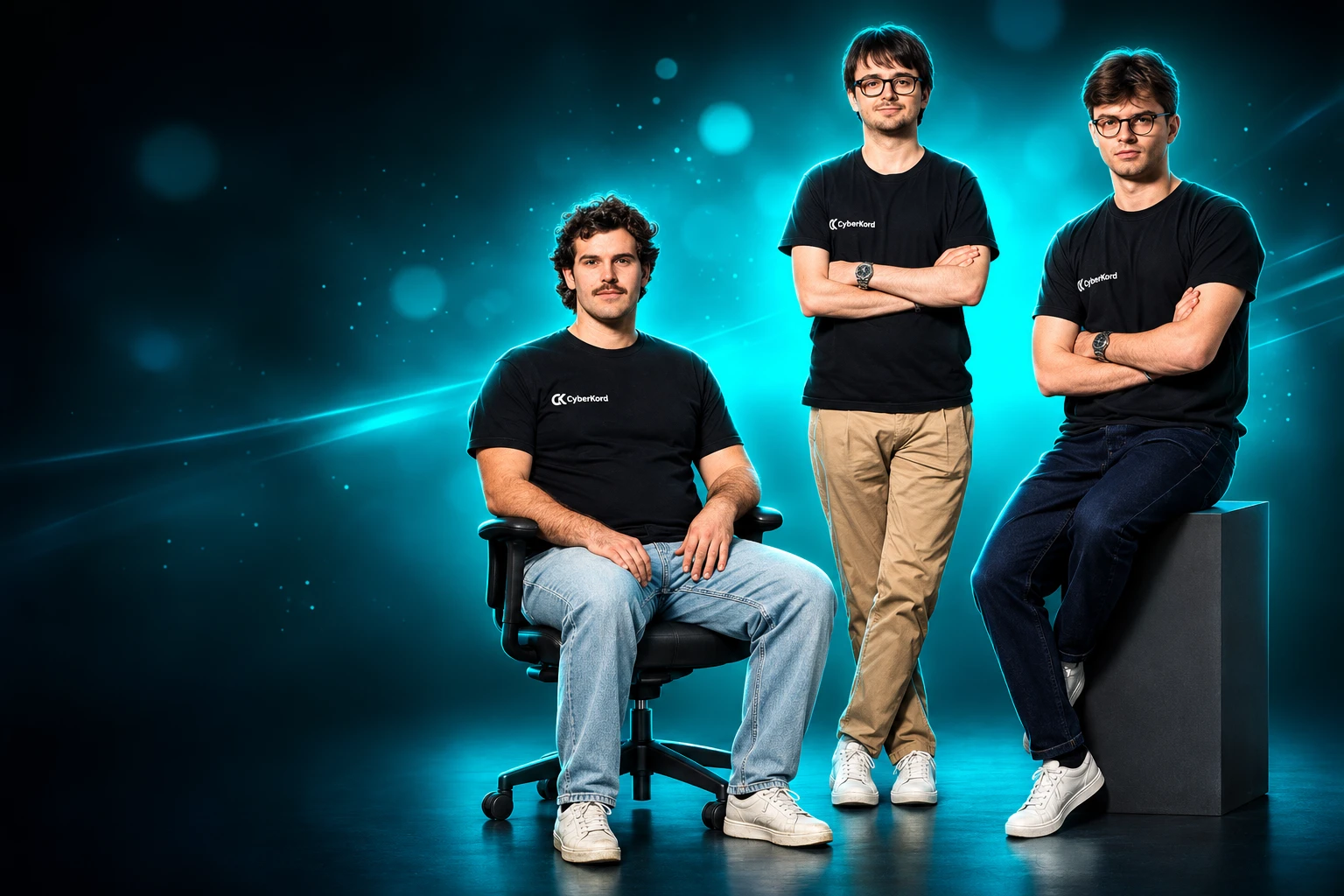
The firm was founded in February 2026 by Alessandro Maggio, Dragos Tanasa and Cosimo Michelagnoli. The cheque pays for product work, hiring and first pilots. A security chief still has to let the software write to production.
A Milan Startup Wants to Touch Live Systems
Maggio, the chief executive, describes a weekly pile-up. Companies add systems, software and AI agents faster than any operations team can staff the tickets those additions create. Expert time goes into patches, access requests and incidents, one ticket at a time.
CyberKord’s answer is a digital twin of a company’s IT estate. The twin maps how systems and identities connect, reads an alert or a ticket, proposes a fix, tests that fix on a copy, then applies it with the tools the company already runs. Cloud and on-premises gear both stay in place. The buyer sets how far the AI may go, and every step is logged.
The software can start from a security alert, a support ticket, or a message in Microsoft Teams or Slack. Maggio’s pitch is that the team then spends its hours on architecture and projects instead of the queue. That only happens if someone grants write access to a company that did not exist at the start of the year.
Tanasa is listed as chief AI officer and Michelagnoli as chief technology officer. The public record on the three of them still begins with this round. The product, not the resumes, is what 360 Capital is underwriting.
The Clock After the Alert Still Runs in Days
Detection is no longer the scarce skill. Endpoint tools, SIEMs and scanners already raise the alarm. The delay sits in the next hour, when an analyst has to triage, map blast radius and get a change agreed while an attacker keeps moving.
IBM’s Cost of a Data Breach Report 2026, run with the Ponemon Institute, put the global average cost of a data breach at $4.99 million, a 12% rise and a record. The same study found a 56% increase in AI-driven attacks. Firms that used security AI and automation extensively saved $1.93 million per breach compared with those that used none.
Mean time to identify and contain still ran to 247 days in that study, 183 days to find the breach and 64 to shut it down, up from 241 the year before. That is a defender’s lifecycle clock. It is not the same number as how fast an intruder moves once inside.
THE CLOCKS THAT DO NOT MATCH
| Clock | Figure | Whose measurement |
|---|---|---|
| Attacker breakout once inside | 29 minutes average, 27 seconds fastest | CrowdStrike Global Threat Report 2026 |
| Exploit of a hole before a patch exists | 7 days | Mandiant M-Trends 2026 |
| Identify and contain a breach | 247 days | IBM Cost of a Data Breach Report 2026 |
CyberKord cites CrowdStrike’s average breakout time of 29 minutes on its product page, and Mandiant’s week-before-the-patch window. Those figures belong to attackers. IBM’s figure belongs to companies cleaning up after. The product is aimed at the hours in between, after an alert fires and before a person has signed the change.
Attackers already use AI to raise volume and speed. This round asks defenders to match that speed by handing an AI the keyboard. That is a larger operational decision than a pre-seed cheque implies.
Why Italian Factories Sit First in Line
The first pilots are booked for large European firms in manufacturing, technology, healthcare and telecommunications. That list tracks where incidents hurt, and where a bad automated change would hurt more.
ITALY’S ATTACK TALLY
- Full year 2025: The Clusit association counted 507 serious incidents in Italy, up 42%.
- First half of 2026, Italy: 245 known serious incidents, with 57% classed as high impact.
- First half of 2026, world: 4,911 serious incidents, the highest half-year Clusit has recorded.
Clusit’s October 2026 mid-year update put manufacturing at the top of the Italian target list, at 18.4% of known incidents, up from 11.7% in the prior report. Italian factories also accounted for a large share of manufacturing victims worldwide, even as Italy’s slice of global incidents fell. Healthcare remains IBM’s costliest sector at $6.64 million a breach.
A factory floor that mixes office IT with industrial controls is a hard place to let an unproven agent apply a patch. It is also the place where ticket volume grows each time a new line, vendor or software agent is added. Maggio is selling into the sector Clusit just named as the most hit, which makes the first pilots a test of nerve as much as of software.
Five Steps From a Slack Ping to a Patch
The product page walks a night shift with nobody in the chair. At 02:14 a detection tool flags an actively exploited hole. The twin maps affected assets at 02:15, keeps only what is exploitable here at 02:19, runs containment on a copy at 02:22, and, if the customer’s rule says act, applies the change at 02:41. The CISO reads the report in Teams at 08:30. That 27-minute path is the company’s own illustration, not a named customer case.
FROM ALERT TO CONTAINMENT
- Understand: A live map shows which assets are hit and which ones those assets can reach.
- Re-score: Findings are cut to what is actually exploitable in this estate, not what a scanner marked critical everywhere.
- Simulate: The proposed change runs on a copy so the twin can show what moves and what breaks.
- Decide: A customer rule chooses act now or ask first.
- Contain: The change is applied with existing tools, checked, and written into a report.
Those steps start from feeds a SOC already has: EDR and XDR, SIEM, CVE scans, tickets, Teams and Slack. The company says it can simulate the change on a copy first and stay read-only until a buyer opens the next setting. Day one is a single container that only reads. Week two is reports on real alerts with no production change. After that the customer picks which alerts may go further.
The patch case is the one the page leans on hardest. CyberKord points to Verizon’s 2026 Data Breach Investigations Report, which found that 31 percent of breaches start with exploited vulnerabilities, ahead of stolen credentials. Other worked examples on the site are a compromised account whose reach has to be mapped, and a leaver whose access still sits in a dozen systems weeks later.
Companies add infrastructure, software and AI agents every week, and operational work grows faster than any team. We built an artificial intelligence that does that work on its own, from start to finish, and shows every step. The team chooses how far to let it act and takes back time for architecture, projects and the decisions it was hired for.
Alessandro Maggio, co-founder and CEO, CyberKord
The same site also advertises live action with no person in the loop, day and night. Maggio’s quote and that line can both sit in the brochure if the slider starts on simulate and only later reaches machine speed. The pilots will show which setting buyers actually switch on.
Exor and Italy’s Recovery Fund Join the Round
Four names sit on the cap table, and a fifth line of public money sits in the footer of the company site.
WHO PUT MONEY IN
| Name | Role in the round |
|---|---|
| 360 Capital | Lead investor |
| Plus Partners | Participating |
| Addendum Capital | Participating |
| Vento | Participating; labelled on the company site as Exor’s fund |
CyberKord S.r.l. also records an investment from 360 Digitaly, a 360 Capital digital-transition fund, under Italy’s PNRR recovery plan, Mission 4, Component 2, Investment 3.2. That vehicle draws on NextGeneration EU money routed through CDP Venture Capital. The site does not split how much of the €2.7 million is recovery-fund cash and how much is classic venture.
Dealroom’s funding tracker put European cybersecurity venture funding at €1.3 billion in the first half of 2026, with €22 million of that in pre-seed rounds. This close landed in November, so it is not a slice of that first-half pool. It does sit in a market where late-stage cyber cheques are large and very early ones are scarce.
Companies already have advanced tools to detect cyber threats, but turning that information into concrete action remains a complex, slow and often manual process. This is exactly where we see the potential of CyberKord: not another security tool, but a platform that integrates existing tools, reconstructs the relationships between systems and identities and makes interventions faster and more targeted.
Francesco Zambelli, investor, 360 Capital
Zambelli is buying the reconstruction of relationships, the map of systems and identities, as much as the model that writes the fix. If the twin is wrong, the action is wrong. That is the technical risk the recovery-fund line and the Exor line are both underwriting.
The CISO Still Holds the Write Key
The product ships with three settings, task by task, and the company is explicit that write access is earned rather than assumed.
THREE SETTINGS FOR THE AI
- Simulate and report: No write access. The twin shows what it would have done on real alerts.
- Act with approval: The change is proven on the copy, a person signs off, then it is applied.
- Act at machine speed: After enough clean outcomes on record, it acts on its own unless the customer wants a person in the way.
A service restart is an easier yes than an access change or a deletion of data. The first deployments will likely sit on simulate and report, which is the only rung that asks nothing of production. The raise is, in large part, a budget to make the twin faithful enough that a CISO moves the slider on a factory network or a hospital identity store at 02:14.
Liability does not move with the slider. If the agent isolates the wrong host or revokes the wrong account, the company still owns the outage. Logging every step makes the post-mortem readable. It does not decide who is on the hook. NIS2-era buyers in the EU will want that question in the contract before they open rung three.
WHAT WE KNOW
- The close: €2.7 million pre-seed, led by 360 Capital, announced November 3, 2026.
- The product: A digital twin that reads alerts, simulates a fix and can apply it with existing tools.
- The plan: Platform work, technical and commercial hiring, and first pilots in manufacturing, technology, healthcare and telecom.
WHAT IS UNCONFIRMED
- Named customers: No pilot company has been identified.
- Write access in the wild: No public case shows a buyer past simulate-and-report.
- Valuation and split: The round’s valuation, and the PNRR share of the cash, were not disclosed.
The next public fact worth waiting for is not another quote about tickets. It is a named factory, hospital or telecom that has moved the slider off read-only, and a log that shows the twin applied a change a person later judged was the right one.

One UI 9.5 Beta Puts the Galaxy S26 on Last Year’s Clock

DBS Puts a 24/7 USDC Window Inside the Bank

European Startups Head for $81 Billion as First Checks Shrink

US Stocks Lost $1.3 Trillion Before Nvidia’s Beat

Home Depot Bets on Finance Chief Richard McPhail as CEO

Aramco Crash Kills 14 Two Days After Oil Restart

Salah Captained Egypt to Their First World Cup Win

Zelda’s 40th Switch 2 Ships Without a Zelda Game

Apple Labor Day Deals Hide June’s Memory Price Hike

El Niño Puts Israel’s Needed Winter Rain on a Flood Clock
-
 BUSINESS5 months ago
Aramco Crash Kills 14 Two Days After Oil Restart
-
 NEWS6 months ago
Salah Captained Egypt to Their First World Cup Win
-
 GAMING2 months ago
Zelda’s 40th Switch 2 Ships Without a Zelda Game
-
 NEWS3 months ago
Apple Labor Day Deals Hide June’s Memory Price Hike
-
 NEWS4 months ago
El Niño Puts Israel’s Needed Winter Rain on a Flood Clock
-

 GAMING2 months ago
Palworld 1.0.4 Adds Palpedia Search After the 1.0 Launch
-

 NEWS4 months ago
Saudi Visa Routes Split Nigerian Travelers Into Two Speeds
-

 BUSINESS9 months ago
BAE’s 60-Year Saudi Franchise Now Runs Through Taif